• Welcome to the new Macedonian Truth Forum. All posts, members and private messages have been moved over from the old forum.

    Passwords from the old forum could not be carried over, so please use Forgot your password? to set a new one. The reset link is emailed to the address on your account.

  • Rules and Regulations at the forum of the Macedonian Truth Organisation (MTO)

    (1) The national-ethnic and cultural-linguistic identity of the Macedonian people is historically Macedonian, and derives its character from the native, indigenous and geographic homeland of the Macedonians, which is called Macedonia. To ensure that their human rights, integrity and heritage are appropriately respected, the only nouns and adjectives acceptable when reference is made to the above character and identity markers is Macedon, Macedonia, Macedonian and Macedonians.

    (2) The nation-state of the Macedonian people is the Republic of Macedonia, and is to be referred to by this official title so long as the 'republic' prefix is consistently applied to other states. Alternative references are the Macedonian Republic, or simply, Macedonia.

    (3) The 'ethnic' prefix is only acceptable for Macedonians in cases where differentiation is specifically required - so long as it is in context and consistent where it concerns its application to other ethnic groups.

    (4) Should any other differentiation be specifically required, the names of other ethnic groups that reside with Macedonians in either the Republic of Macedonia or the occupied Macedonian regions in Greece, Bulgaria, Serbia or Albania, are to be given a prefix.

    (5) Negating the identity, language and culture of the Macedonian people by deliberate avoidance of the terms Macedonia, Macedonian and Macedonians, or by any other means, is not permitted.

    (6) Systematic anti-Macedonian propaganda and rhetoric are not permitted.

    (7) Threads irrelevant to the Macedonian Cause, the community at the Macedonian Truth Organisation or the Macedonians in general may be considered as spam or not in the spirit of the forum. In such cases they are not permitted.

    (8) Continual posting of messages in threads with the sole purpose of deviating from the initial topics with the use of unrelated and unnecessary information is not permitted.

    (9) All posts, external articles, reports, etc that are cited in languages other than Macedonian or English, must be accompanied with a translation in one or both of the said languages.

    (10) Despite the possibility of some conversations and debates becoming heated, extreme abuse and/or racism, vulgar language and/or terminology, threats, revelation of personal information about others, harassment, and other such behavior will not be permitted. If deemed necessary all relevant information including member details will be reported to the appropriate authorities for investigation which may result in legal action.

    (11) Threads that are created must have a summary of a topic or excerpt of an article found in pertinent link(s) that have been included. One line threads will be considered unaccetable spam and are therefore not permitted.

    (12) Compulsive and deliberate lies, irrespective of the topic, are not permitted.

    (13) Any symbols or avatars found to be perceived as offensive to Macedonians are not permitted.

    (13) Any explicit or extreme material is not permitted.

    Failure to adhere to the above rules and regulations will result in a ban after 3 breaches. This may be reconsidered in some cases should the circumstances be of an unorthodox nature and/or require special consideration. To assure an effective deterrent against an individual or individuals with the sole purpose of causing dissent through spamming, racism or other improper means, the above rules will be strictly enforced.

    The MTO administration will monitor all discussions as reasonably practical and reserve the right to remove any post and/or member from the forum, and update the rules and regulations as required. Members are encouraged to immediately report any post and/or member to the MTO administration if they feel that these rules have not been abided by.

    The views expressed on this forum are those of the individuals. The only official representation of the MTO is made by the "Macedonian Truth Organisation (Site Owner)" username, and no other.

  • Macedonian Cause

    The Macedonian Truth Organisation calls on God in Heaven to protect, bless and guide the endeavour it is committing to undertake, and that is to work towards:

    Securing Macedonia as a free, independent and democratic republic in which sovereignty lies with the Macedonian citizens; as the nation-state of the Macedonian people in which they can preserve their culture, language and identity; as a state in which the Macedonian language and culture form the basis of public life and act as important unifying elements of Macedonian society; as the home of all its citizens to which it guarantees and obliges their inalienable natural rights and corresponding responsibilities;

    The acknowledgment as self-evident and irrefutable the existence of the:

    1) Indigenous, ethnonational name of Macedonia;
    2) Macedonian people, language and identity;
    3) Macedonian culture, symbols and folklore;
    4) Macedonian ancestry, heritage and history in its entirety; and
    5) Macedonian Orthodox Church;

    Securing recognition by the International Community of the tragedies endured by the Macedonian people, of the division of Macedonia with the signing of the Treaty of Bucharest on August 10, 1913, and the genocide committed against the Macedonian people at the hands of the Greek, Bulgarian and Serbian states and their respective churches during the 19th and 20th centuries;

    Ensuring that the Interim Accord is declared ‘null and void’ and that all constitutional provisions, acts, commitments, agreements, legislation, regulations, policies or programs emanating from, supporting or consequential to the Interim Accord are also declared ‘null and void’, including the use of any symbols and the completion of any acts imposed by, or originating from, the Interim Accord.

    Ensuring that the Framework Agreement is abolished and that all constitutional provisions, acts, commitments, agreements, legislation, regulations, policies and programs emanating from, supporting or consequential to the Framework Agreement are also abolished and replaced by a framework of constitutional and statutory law based on inalienable natural rights and corresponding responsibilities and universally codified human rights mechanisms.

    Securing the abolishment of any existing constitutional provisions, acts, agreements, legislation, regulations, policies and programs that discriminate against the Macedonian people, in any international organisation or any of the countries of the International Community where such constitutional provisions, acts, agreements, legislation, regulations, policies and programs exist, and thereby ensuring the freedom for Macedonians to exercise their inalienable natural rights and fulfil their corresponding responsibilities, and practice their culture, language and religious faiths in all the countries of the International Community without hindrance;

    The empowerment of Macedonians to undertake a moral revolution and to instil and/or reinvigorate within themselves a deep-rooted national, cultural, linguistic and historical dignity and a commitment to the exercise of freedom based on inalienable natural rights and corresponding responsibilities;

    The recognition of the Macedonian minorities in the neighbouring states of Macedonia as well as the respect for the inalienable rights and freedoms of the Macedonian minorities, as provided for by natural law and as codified by the United Nations Charter, the Universal Declaration of Human Rights and other universally codified human rights mechanisms;

    The full and unreserved respect of, and the support for, the rights of all people of non-Macedonian descent living in Macedonia and around the world, who share a reciprocal full and unreserved respect for the Macedonian people, their homeland and their state;

    The cultural unification and solidarity of the Macedonian people living in all parts of historical Macedonia and adjacent territories, as well as Macedonians throughout the world;

    The unity of all Macedonians on the principles, objectives and achievement of the Macedonian cause as defined by this declaration.

Common Macedonian Soldier Proud NOT To Be Greek

Facts and logical communication often draws out the truth besides I was never allowed to paint in case I got it on the carpet so I’m not really into painting.
 
They had every chance to promote their own language, why didnt they ?

To find meaning in events we need to put them in context to what else was going on around them and then see if it makes sense.

You would no doubt be aware of the speed in which Alexander moved his army over the middle east and Asia but also remember he wasn’t going on a tourist trek but fighting wars every inch of the way so

1. we have lack of time to stop a smell the roses

2. Greek was the most common language used at that time so why bother with teaching millions of newly conquered people all of different nationalities with different native tongs a new language when the already know Greek.

3. To teach a language requires setting up schools which is not only an expense…too good for you mongrels ie the conquered people

4. Sometimes languages are not learned by schools ie the poor but through use and application and Greek was already in common use. To spread any new language by word of mouth would first need a purpose…if the whole world knew English why would I bother learning any other language…and proximity…if no one around me speaks this other language where am I going to hear it to learn it.

From every respect in the climate of the time using Greek made more sense than any other language.

Think about if the whole world spoke English fluently for a couple of centuries and also each knew their native tong and somehow china did some world war and now are rulers of the world do you think Chinese would be used any time soon.

And lets not forget
5. The home advantage…if everybody knows Greek we can tell each other secrets or make battle calls without the enemy knowing your move before you have done it.

So if one is practical economical and logical it made no sense to introduce any new language.
 
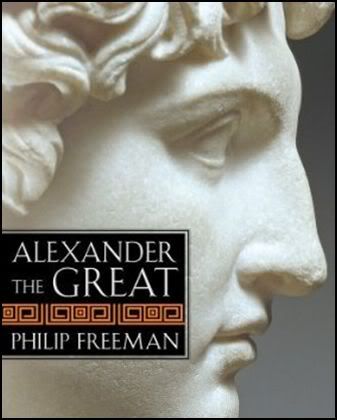
PhilipFreeman.jpg

PhilipFreeman5.jpg


Have not finished reading this book, just got it recently. Will post more from it in due time.
Philip Freeman is a classic scholar who apparently lacks even basic linguistic knowledge which one who writes books on the ancient Macedonian language should have.Otherwise he is just lying.Let me explain:He claims ancient Macedonians couldn't pronounce properly the "Greek sounds" because they said "ΒΙΛΙΠΠΟΣ","ΞΑΝΔΟΣ" and "ΓΑΙΤΕΑΣ" instead of "proper Greek" ΦΙΛΙΠΠΟΣ,ΞΑΝΘΟΣ and ΧΑΙΤΕΑΣ,i.e the known Macedonian habbit to turn in some words voiceless aspirate consonants of standard Greek Φ,Θ and Χ to voiced stops Β,Δ and Γ.Had Mr. Freeman bothered himself with studying the Macedonian words that are recorded by ancient lexicographers like Hesychius,Amerias e.t.c,he would have known that these consonants were not unknown to Macedonian phonology and they could indeed pronounce them.Few examples that expose Mr. Freemans ignorance,i.e. Macedonian words containing the consonants Φ,Θ and Χ,which Macedonians "could not pronounce because they were Greek" according to Mr. Freeman:

1)The Macedonian word ἀρφύς (synonymous with Attic ἱμάς,i.e. "cestus")
http://www.perseus.tufts.edu/hopper/text?doc=Perseus:text:1999.04.0057:entry=#15825&redirect=true
2)The Macedonian word Ἠμαθίη,the first name of Macedonia.
http://www.perseus.tufts.edu/hopper/text?doc=Perseus:text:1999.04.0073:entry=#4287&redirect=true
3)The Macedonian word θούριδες,synonymous with Attic νύμφαι and Μοῦσαι,i.e. "brides","Muse".
http://www.perseus.tufts.edu/hopper/text?doc=Perseus:text:1999.04.0057:entry=#48989&redirect=true
4)The Macedonian word χάρων,synonymous with Attic λέων,i.e. "lion"
http://en.wikipedia.org/wiki/Ancient_Macedonian_language#Other_Sources
And because i know you will question the reliability of a wikipedia article,here is this word in Hesychius lexicon (right column,15th word) :
http://books.google.com/books?id=Gp1fAAAAMAAJ&pg=PA1035
 
vultron for yout information in the book the ptofessor wrote that the ordinary macedonian never spoke greek only macedonian.The only people that spoke greek was the royal house.But the royal house spoke their mother tounge as well which was macedonian.So they spoke greek because of commercial reasons.SO your greek government's claim that all macedonians spoke greek is Totally FALSE.
If this professor really wrote that,then he nead to read the following passage of Arrian's Indica:

"Some of them advanced some distance inland, breaking away from the main force, some in pursuit of this, and some of that. There a man appeared to them, wearing a Greek cloak, and dressed otherwise in the Greek fashion, and speaking Greek also. Those who first sighted him said that they burst into tears, so strange did it seem after all these miseries to see a Greek, and to hear Greek spoken. They asked whence he came, who he was; and he said that he had become separated from Alexander's camp, and that the camp, and Alexander himself, were not very far distant. Shouting aloud and clapping their hands they brought this man to Nearchus; and he told Nearchus everything, and that the camp and the King himself were distant five days' journey from the coast".
http://books.google.com/books?id=XTzTaSZBY-AC&pg=PA25
 
Voltron said:
My approach is to look at the facts on the ground, and use common sense.
Lol, thanks, I needed a good laugh in the morning.
The Macedonians back then were regarded somewhat of a village hillybilly.
Unsubstantiated garbage. No writer from antiquity ever wrote that.

There is nothing to suggest, even today of a seperate language.
There is plenty, try using that common sense you claim to posses.
They had every chance to promote their own language, why didnt they ? For commercial purposes ?
Why didn't the Thracians or Illyrians? Why did they use Greek instead? Why didn't the Mongols use their own language but instead used Persian in India? Why do the Irish and Scottish still use English when they have their own Celtic tongues that are still alive today? I will tell you why, because it made practical sense to use languages with an already established literature at the time, and could reach larger commercial and religious audiences as a lingua franca. Use that common sense you claim to have.
Agamoi Thytai said:
Had Mr. Freeman bothered himself with studying the Macedonian words that are recorded by ancient lexicographers like Hesychius,Amerias e.t.c,he would have known that these consonants were not unknown to Macedonian phonology and they could indeed pronounce them.
I wouldn't say that sort of phonology was unknown to Macedonians, it just wasn't common for them, meaning most of those words are foreign loans. The fact that these linguistic particulars exist in Macedonian which differentiates it from Greek really bothers you, doesn't it? I've seen you do all sorts of dances trying to downplay their significance, and to no avail.
 
To find meaning in events we need to put them in context to what else was going on around them and then see if it makes sense.

You would no doubt be aware of the speed in which Alexander moved his army over the middle east and Asia but also remember he wasn’t going on a tourist trek but fighting wars every inch of the way so

1. we have lack of time to stop a smell the roses

2. Greek was the most common language used at that time so why bother with teaching millions of newly conquered people all of different nationalities with different native tongs a new language when the already know Greek.

3. To teach a language requires setting up schools which is not only an expense…too good for you mongrels ie the conquered people

4. Sometimes languages are not learned by schools ie the poor but through use and application and Greek was already in common use. To spread any new language by word of mouth would first need a purpose…if the whole world knew English why would I bother learning any other language…and proximity…if no one around me speaks this other language where am I going to hear it to learn it.

From every respect in the climate of the time using Greek made more sense than any other language.
Greek was definitely not the lingua france in the Middle East and especially in the territory of the Persian empire before Alexander.Instead Aramaic was the lingua franca in that area.Greek became the lingua franca only after Alexander conquered those areas.

"In the following centuries,as the cuneiform-writing Assyrians extended their empire westwards,they adopted the whole package of Aramaic language and script to ease official communication between the new provinces of the Assyrian Empire.It soon became the one common language of the Middle East, and its use became even more widespread during the Persian period.As Aramaic gained wider currency as the language and script of government, it was increasingly written by people for whom it was not their first language, many of whom doubtless had prodigious volumes of official writing to produce….
Although this Imperial Aramaic script developed some regional variations,for as long as the Persian Empire was the unifying power it retained a broad similarity throughout the
Persian-ruled territories.But a century or two after the Persian collapse in the fourth century BC at the hands of Alexander the Great,local differences began to proliferate. In the new Hellenistic kingdoms of the Seleucids and Ptolemies,Greek was now the official language of government:but the existing peoples or tribes within these territories were by now too habituated to Aramaic to change to a new and unknown language".
http://books.google.com/books?id=FcAoBq4_EnEC&printsec=frontcover&pg=PA151

“From the sixth to the fourth centuries B.C. Israel was a satrapy within the vast Persian empire. At its height this empire extended from India in the cast to the Aegean in the west and from the Black Sea in the north to Egypt in the south.The Aramaic language, the lingua franca of the Persian empire, became the language of the Jewish people, including Jesus himself. His words spoken from the cross—"Eloi, Eloi, lama sabachthani" (Mk 15:34)—are Aramaic”.
http://books.google.com/books?id=NlFYY_iVt9cC&pg=PA47

And this:
http://img340.imageshack.us/img340/8293/aramaic.gif
 
Agamoi Thytai said:
Greek was definitely not the lingua france in the Middle East and especially in the territory of the Persian empire before Alexander.Instead Aramaic was the lingua franca in that area.Greek became the lingua franca only after Alexander conquered those areas.
Can you name all of the Hellenic colonies in and around Asia prior to the 4th century BC?
 
Seeing as you've conveniently disappeared again, let me do it for you, using your very own favourite wikipedia to ease your mind, lol:

http://en.wikipedia.org/wiki/Ancient_Greece#Colonies
During the Archaic period, the population of Greece grew beyond the capacity of its limited arable land (according to one estimate, the population of ancient Greece increased by a factor larger than ten during the period from 800 BC to 400 BC, increasing from a population of 800,000 to a total estimated population of 10 to 13 million).[15]

From about 750 BC the Greeks began 250 years of expansion, settling colonies in all directions. To the east, the Aegean coast of Asia Minor was colonized first, followed by Cyprus and the coasts of Thrace, the Sea of Marmara and south coast of the Black Sea.

Eventually Greek colonization reached as far northeast as present day Ukraine and Russia (Taganrog). To the west the coasts of Illyria, Sicily and Southern Italy were settled, followed by Southern France, Corsica, and even northeastern Spain. Greek colonies were also founded in Egypt and Libya.

Modern Syracuse, Naples, Marseille and Istanbul had their beginnings as the Greek colonies Syracusae (Συρακούσαι), Neapolis (Νεάπολις), Massalia (Μασσαλία) and Byzantion (Βυζάντιον). These colonies played an important role in the spread of Greek influence throughout Europe, and also aided in the establishment of long-distance trading networks between the Greek city-states, boosting the economy of ancient Greece.


As can be clearly seen, there were a number of Hellenic colonies already in existence, so trade, commerce, cultural and religious interaction in the Greek language was not unfamiliar in Asia. The Macedonian campaign merely gave pencil-pushers an avenue to disseminate the Greek language. It was a by-product, and not a specific intention.

And it all begins from the south of Greece, which means that, a Greek origin for Macedonians, or Macedonians being the 'pure' and 'primitive' Greeks that ran out of petrol and finally decided to enter the world of their apparent 'brethren' centuries later - is a load of garbage.
 
Agamoi that soldier you mentioned falling behind & getting lost & being found that he spoke greek well yes he was greek why because all the greeks alexander had he put them behind
of his entourage remember alexanders army was a macedonian one.Also the peole who found this person were surprised that he spoke greek,why because macedonians in alexanders army spoke macedonian only.So you keep your charade of saying that because someone speaks greek they must be greek.You know agamoi if you beleive it long enough pigs can fly.Ako mislish za dolgo vreme prasinata ke pustat krilca i ke letat.
 
Last edited:
If this professor really wrote that,then he nead to read the following passage of Arrian's Indica:

"Some of them advanced some distance inland, breaking away from the main force, some in pursuit of this, and some of that. There a man appeared to them, wearing a Greek cloak, and dressed otherwise in the Greek fashion, and speaking Greek also. Those who first sighted him said that they burst into tears, so strange did it seem after all these miseries to see a Greek, and to hear Greek spoken. They asked whence he came, who he was; and he said that he had become separated from Alexander's camp, and that the camp, and Alexander himself, were not very far distant. Shouting aloud and clapping their hands they brought this man to Nearchus; and he told Nearchus everything, and that the camp and the King himself were distant five days' journey from the coast".
http://books.google.com/books?id=XTzTaSZBY-AC&pg=PA25

Agamoi
Who wrote this book?
 
Greek was definitely not the lingua france in the Middle East and especially in the territory of the Persian empire before Alexander.Instead Aramaic was the lingua franca in that area.Greek became the lingua franca only after Alexander conquered those areas.

This is wrong. You can come to Turkey and see many monuments which shows amalgamation of ancient Greek and Persian cultures prior to Alexander. You know, Anatolia was belonged to the Persians b4 Alexander the Great. Persian rulers and elites would surely speak ancient Greek tongue much earlier than the campaigns of Alexander. Already, Persians and ancient Greeks was already mixed culturally b4 Alexander`s campaigns. You can see that by looking at the ancient Persian remains and mausoleums prior to Alexander`s era.
 
Greek was definitely not the lingua france in the Middle East and especially in the territory of the Persian empire before Alexander.Instead Aramaic was the lingua franca in that area.Greek became the lingua franca only after Alexander conquered those areas.

"In the following centuries,as the cuneiform-writing Assyrians extended their empire westwards,they adopted the whole package of Aramaic language and script to ease official communication between the new provinces of the Assyrian Empire.It soon became the one common language of the Middle East, and its use became even more widespread during the Persian period.As Aramaic gained wider currency as the language and script of government, it was increasingly written by people for whom it was not their first language, many of whom doubtless had prodigious volumes of official writing to produce….
Although this Imperial Aramaic script developed some regional variations,for as long as the Persian Empire was the unifying power it retained a broad similarity throughout the
Persian-ruled territories.But a century or two after the Persian collapse in the fourth century BC at the hands of Alexander the Great,local differences began to proliferate. In the new Hellenistic kingdoms of the Seleucids and Ptolemies,Greek was now the official language of government:but the existing peoples or tribes within these territories were by now too habituated to Aramaic to change to a new and unknown language".
http://books.google.com/books?id=FcAoBq4_EnEC&printsec=frontcover&pg=PA151

“From the sixth to the fourth centuries B.C. Israel was a satrapy within the vast Persian empire. At its height this empire extended from India in the cast to the Aegean in the west and from the Black Sea in the north to Egypt in the south.The Aramaic language, the lingua franca of the Persian empire, became the language of the Jewish people, including Jesus himself. His words spoken from the cross—"Eloi, Eloi, lama sabachthani" (Mk 15:34)—are Aramaic”.
http://books.google.com/books?id=NlFYY_iVt9cC&pg=PA47

And this:
http://img340.imageshack.us/img340/8293/aramaic.gif

Agamoi
Why do you keep quoting ridiculous sources and try to make them seem credible? Tell us who is Jane Taylor who wrote the book you refer to!
A little help for you:-
Jane Taylor is a writer and photographer who has lived in Amman, Jordan since 1989. Her photographs have been used not only in her own books, but also in a wide range of magazines and books, and in advertising/marketing campaigns.


Her photographic archives are available to publishers, designers and advertising agencies – wherever spectacular images are required. Specific picture searches can be undertaken.


Apart from extensive coverage of Jordan (including many aerial shots), the archives include Yemen, Egypt, Saudi Arabia, Syria, Palestine, Israel, Ethiopia, Iran, Peru, Turkey, China, Nepal, South Africa, Botswana and Namibia. She has also photographed in Iraq for UNICEF and other relief agencies in April-May 1991 and Jan.-Feb. 1992 to show the effects of the war and sanctions on the people of Iraq, in particular the children.


The range of her books, and where they are available, can be seen in the Books page.


For permission to reproduce any image, or for a picture search, please contact jt@janetaylorphotos.com
 
George, sometimes I have a hell of a time understanding a Greek Cypriot. What is that supposed to mean though ? That they arent Greek ? There are many examples.

Voltron
News flash - all the Cyprians I know refuse to call themselves Greek, they rather prefer "Cyprian". They get offended if you call them Greek, imagine that, there are actually people out there who don't want to be Greek, who would have thought?
 
There are conflicting stories regarding that incident and not just limited to that one either. I still firmly believe that it was a dialect. They had every chance to promote their own language, why didnt they ? For commercial purposes ? Thats ridiculous. Are we going to speak Chinese within the next decade ? Should I start calligraphy lessons ?

Voltron
If the Chinese keep buying up ports and other properties in Greece, damn right you better learn how to speak Chinese! Hell it may even do you good to broaden those narrow minded horizons that limit your cognitive abilities to only things that are Greek - which according to you Greeks is.... well, just about ..."everything".
 
Philip Freeman is a classic scholar who apparently lacks even basic linguistic knowledge which one who writes books on the ancient Macedonian language should have.Otherwise he is just lying.Let me explain:He claims ancient Macedonians couldn't pronounce properly the "Greek sounds" because they said "ΒΙΛΙΠΠΟΣ","ΞΑΝΔΟΣ" and "ΓΑΙΤΕΑΣ" instead of "proper Greek" ΦΙΛΙΠΠΟΣ,ΞΑΝΘΟΣ and ΧΑΙΤΕΑΣ,i.e the known Macedonian habbit to turn in some words voiceless aspirate consonants of standard Greek Φ,Θ and Χ to voiced stops Β,Δ and Γ.Had Mr. Freeman bothered himself with studying the Macedonian words that are recorded by ancient lexicographers like Hesychius,Amerias e.t.c,he would have known that these consonants were not unknown to Macedonian phonology and they could indeed pronounce them.Few examples that expose Mr. Freemans ignorance,i.e. Macedonian words containing the consonants Φ,Θ and Χ,which Macedonians "could not pronounce because they were Greek" according to Mr. Freeman:

1)The Macedonian word ἀρφύς (synonymous with Attic ἱμάς,i.e. "cestus")
http://www.perseus.tufts.edu/hopper/text?doc=Perseus:text:1999.04.0057:entry=#15825&redirect=true
2)The Macedonian word Ἠμαθίη,the first name of Macedonia.
http://www.perseus.tufts.edu/hopper/text?doc=Perseus:text:1999.04.0073:entry=#4287&redirect=true
3)The Macedonian word θούριδες,synonymous with Attic νύμφαι and Μοῦσαι,i.e. "brides","Muse".
http://www.perseus.tufts.edu/hopper/text?doc=Perseus:text:1999.04.0057:entry=#48989&redirect=true
4)The Macedonian word χάρων,synonymous with Attic λέων,i.e. "lion"
http://en.wikipedia.org/wiki/Ancient_Macedonian_language#Other_Sources
And because i know you will question the reliability of a wikipedia article,here is this word in Hesychius lexicon (right column,15th word) :
http://books.google.com/books?id=Gp1fAAAAMAAJ&pg=PA1035

Agamoi
Of course he is.....according to you! Given your record here of posting references to laughable sources with no credentials, you are the last one who should be challenging anybody else here! :6:
 
I dont think this guy has ever set foot in Greece or Macedonia for that matter.
http://philipfreemanbooks.com/author.html

Author
There's a story I'd like to tell you about my choice to become a Classics professor. In that story I sit as a child at my father's knee listening to tales of Greek gods and heroes, practice conjugating Latin verbs at the dinner table, and dream of the day I could travel to Greece and Rome to see the fabled lands of Plato and Caesar. I'd like to tell that story, but the truth is very different.

When I was a boy, I cared much more about comic books than Homer or Virgil. My father was stationed in Italy for a year when I was twelve. I spent the whole time earning Boy Scout merit badges and bowling with my friends rather than trekking around the country looking at Roman ruins. When I got back to the states and entered high school, I signed up for French rather than Latin because a dead language was the last thing I was interested in.

When I started my first year of college I thought Latin might be fun (and not too hard). I lasted a week before I dropped the class. I just couldn't understand the notion of declensions, verb-final syntax, and the dreaded ablative case. But I eventually gave it another try and persevered. Then I ended up adding Greek, mythology, and archaeology classes to my schedule until I figured out I might as well be a Classics major. By the time I was nearing the end of my undergraduate years, I decided that I wanted to teach in college even though I had never taught anything to anyone up to that point.

After finishing my degree at the University of Texas, I applied to a number of Ph.D. programs. At the last minute, I sent in an application to Harvard. I couldn't believe it that spring when I got the letter from them saying I was accepted.

There's nothing quite as much fun as standing in front of a group of college students and opening new worlds to them. It's such a privilege that I would probably do it for free (don't tell the dean I said that). There's nothing better than sharing stories with bright young people about Achilles and how anger can destroy a person's life; or Odysseus and why he gave up immortality; or Dante and how the worst sin you could ever commit isn't murder, but betrayal of someone who loves you.

I've taught at Boston University, Washington University, and now Luther College in the beautiful hills (yes, hills) of northeast Iowa. I've also been a visiting scholar at the Harvard Divinity School, the American Academy in Rome, and the Center for Hellenic Studies in Washington, D.C. I've given talks on the ancient world at the Smithsonian Institution and interviews on National Public Radio, but my best audience ever was a class of enthusiastic elementary school students in St. Louis.

A few years ago, I decided that I wanted to share stories about the ancient world with an audience beyond my students, so I started writing books for anyone with a library card. Of course, I still teach full time, run a small Classics department, and attend lots of faculty meetings. Most of my writing is done during the summers and college breaks, or at spare moments between Greek and Latin classes.

I hope you enjoy the books as much as I enjoyed writing them.

In his book he thanks his "guides who guided me in Alexander's footsteps and my wife for all her photography" which can be seen in his book as well.
 
TM this guy has got credentials & he is bigPHD & a professor.He certainly knows his stuff & what his talking about.
 
Agamoi your references don't make sense.Did you see the quote TM gave & makes sense alexander did not want to share the glory with the greeks why because it was a macedonian conquest.THe greeks hardly did anything as they were placed at the back of the entourage.Another thing that i'm reminded of is that there were more greeks fighting for the persian army against alexander than the much fewer on the macedonian army.THe greeks were not even used in the conquests it was an all out macedonian conquest.
 
Last edited:
In his book he thanks his "guides who guided me in Alexander's footsteps and my wife for all her photography" which can be seen in his book as well.

Who were his guides ? The Hunza's ? Seriously has this guy stepped foot in either Greece or Macedonia ?

This guy dropped out of Latin because he didnt like the syntax for pete's sake. It might be a good read but thats about it.
 
Back
Top