• Welcome to the new Macedonian Truth Forum. All posts, members and private messages have been moved over from the old forum.

    Passwords from the old forum could not be carried over, so please use Forgot your password? to set a new one. The reset link is emailed to the address on your account.

  • Rules and Regulations at the forum of the Macedonian Truth Organisation (MTO)

    (1) The national-ethnic and cultural-linguistic identity of the Macedonian people is historically Macedonian, and derives its character from the native, indigenous and geographic homeland of the Macedonians, which is called Macedonia. To ensure that their human rights, integrity and heritage are appropriately respected, the only nouns and adjectives acceptable when reference is made to the above character and identity markers is Macedon, Macedonia, Macedonian and Macedonians.

    (2) The nation-state of the Macedonian people is the Republic of Macedonia, and is to be referred to by this official title so long as the 'republic' prefix is consistently applied to other states. Alternative references are the Macedonian Republic, or simply, Macedonia.

    (3) The 'ethnic' prefix is only acceptable for Macedonians in cases where differentiation is specifically required - so long as it is in context and consistent where it concerns its application to other ethnic groups.

    (4) Should any other differentiation be specifically required, the names of other ethnic groups that reside with Macedonians in either the Republic of Macedonia or the occupied Macedonian regions in Greece, Bulgaria, Serbia or Albania, are to be given a prefix.

    (5) Negating the identity, language and culture of the Macedonian people by deliberate avoidance of the terms Macedonia, Macedonian and Macedonians, or by any other means, is not permitted.

    (6) Systematic anti-Macedonian propaganda and rhetoric are not permitted.

    (7) Threads irrelevant to the Macedonian Cause, the community at the Macedonian Truth Organisation or the Macedonians in general may be considered as spam or not in the spirit of the forum. In such cases they are not permitted.

    (8) Continual posting of messages in threads with the sole purpose of deviating from the initial topics with the use of unrelated and unnecessary information is not permitted.

    (9) All posts, external articles, reports, etc that are cited in languages other than Macedonian or English, must be accompanied with a translation in one or both of the said languages.

    (10) Despite the possibility of some conversations and debates becoming heated, extreme abuse and/or racism, vulgar language and/or terminology, threats, revelation of personal information about others, harassment, and other such behavior will not be permitted. If deemed necessary all relevant information including member details will be reported to the appropriate authorities for investigation which may result in legal action.

    (11) Threads that are created must have a summary of a topic or excerpt of an article found in pertinent link(s) that have been included. One line threads will be considered unaccetable spam and are therefore not permitted.

    (12) Compulsive and deliberate lies, irrespective of the topic, are not permitted.

    (13) Any symbols or avatars found to be perceived as offensive to Macedonians are not permitted.

    (13) Any explicit or extreme material is not permitted.

    Failure to adhere to the above rules and regulations will result in a ban after 3 breaches. This may be reconsidered in some cases should the circumstances be of an unorthodox nature and/or require special consideration. To assure an effective deterrent against an individual or individuals with the sole purpose of causing dissent through spamming, racism or other improper means, the above rules will be strictly enforced.

    The MTO administration will monitor all discussions as reasonably practical and reserve the right to remove any post and/or member from the forum, and update the rules and regulations as required. Members are encouraged to immediately report any post and/or member to the MTO administration if they feel that these rules have not been abided by.

    The views expressed on this forum are those of the individuals. The only official representation of the MTO is made by the "Macedonian Truth Organisation (Site Owner)" username, and no other.

  • Macedonian Cause

    The Macedonian Truth Organisation calls on God in Heaven to protect, bless and guide the endeavour it is committing to undertake, and that is to work towards:

    Securing Macedonia as a free, independent and democratic republic in which sovereignty lies with the Macedonian citizens; as the nation-state of the Macedonian people in which they can preserve their culture, language and identity; as a state in which the Macedonian language and culture form the basis of public life and act as important unifying elements of Macedonian society; as the home of all its citizens to which it guarantees and obliges their inalienable natural rights and corresponding responsibilities;

    The acknowledgment as self-evident and irrefutable the existence of the:

    1) Indigenous, ethnonational name of Macedonia;
    2) Macedonian people, language and identity;
    3) Macedonian culture, symbols and folklore;
    4) Macedonian ancestry, heritage and history in its entirety; and
    5) Macedonian Orthodox Church;

    Securing recognition by the International Community of the tragedies endured by the Macedonian people, of the division of Macedonia with the signing of the Treaty of Bucharest on August 10, 1913, and the genocide committed against the Macedonian people at the hands of the Greek, Bulgarian and Serbian states and their respective churches during the 19th and 20th centuries;

    Ensuring that the Interim Accord is declared ‘null and void’ and that all constitutional provisions, acts, commitments, agreements, legislation, regulations, policies or programs emanating from, supporting or consequential to the Interim Accord are also declared ‘null and void’, including the use of any symbols and the completion of any acts imposed by, or originating from, the Interim Accord.

    Ensuring that the Framework Agreement is abolished and that all constitutional provisions, acts, commitments, agreements, legislation, regulations, policies and programs emanating from, supporting or consequential to the Framework Agreement are also abolished and replaced by a framework of constitutional and statutory law based on inalienable natural rights and corresponding responsibilities and universally codified human rights mechanisms.

    Securing the abolishment of any existing constitutional provisions, acts, agreements, legislation, regulations, policies and programs that discriminate against the Macedonian people, in any international organisation or any of the countries of the International Community where such constitutional provisions, acts, agreements, legislation, regulations, policies and programs exist, and thereby ensuring the freedom for Macedonians to exercise their inalienable natural rights and fulfil their corresponding responsibilities, and practice their culture, language and religious faiths in all the countries of the International Community without hindrance;

    The empowerment of Macedonians to undertake a moral revolution and to instil and/or reinvigorate within themselves a deep-rooted national, cultural, linguistic and historical dignity and a commitment to the exercise of freedom based on inalienable natural rights and corresponding responsibilities;

    The recognition of the Macedonian minorities in the neighbouring states of Macedonia as well as the respect for the inalienable rights and freedoms of the Macedonian minorities, as provided for by natural law and as codified by the United Nations Charter, the Universal Declaration of Human Rights and other universally codified human rights mechanisms;

    The full and unreserved respect of, and the support for, the rights of all people of non-Macedonian descent living in Macedonia and around the world, who share a reciprocal full and unreserved respect for the Macedonian people, their homeland and their state;

    The cultural unification and solidarity of the Macedonian people living in all parts of historical Macedonia and adjacent territories, as well as Macedonians throughout the world;

    The unity of all Macedonians on the principles, objectives and achievement of the Macedonian cause as defined by this declaration.

The Thracian people and language

Here is what Strabo says about the inhabitants of Greece and other adjacent areas before the Greeks arrived:

Hecataeus of Miletus says of the Peloponnesus, that, before the time of the Greeks, it was inhabited by barbarians. Perhaps even the whole of Greece was, anciently, a settlement of barbarians, if we judge from former accounts. For Pelops brought colonists from Phrygia into the Peloponnesus, which took his name; Danaus brought colonists from Egypt; Dry- opes, Caucones, Pelasgi, Leleges, and other barbarous nations, partitioned among themselves the country on this side of the isthmus. The case was the same on the other side of the isthmus; for Thracians, under their leader Eumolpus, took possession of Attica; Tereus of Daulis in Phocaea; the Phoenicians, with their leader Cadmus, occupied the Cadmeian district; Aones, and Temmices, and Hyantes, Boeotia. Pindar says, `there was a time when the Boeotian people were called Syes.' Some names show their barbarous origin, as Cecrops, Codrus, Ceclus, Cothus, Drymas, and Crinacus. Thracians, Illyrians, and Epirotae are settled even at present on the sides of Greece. Formerly the territory they possessed was more extensive, although even now the barbarians possess a large part of the country, which, without dispute, is Greece. Macedonia is occupied by Thracians, as well as some parts of Thessaly; the country above Acarnania and Aetolia, by Thesproti, Cassopaei, Amphilochi, Molotti, and Athamanes, Epirotic tribes.
 
The below map which is a snapshot from the clip displays the Thracians living in almost the same expanse as the Slavic-speaking nations of Europe. It supports the theory of Thracian origins for the Slavs.


http://www.thracian.info/thrace_peoples.htm

Homer in his Iliad, describes the Thracians as the breeders of beautiful and fast running horses.
Thucydides in his account says, that the people of the area between the Ionian Sea and Pontus Euxinus are the richest in income and all kinds of goods.

Strabo describes the Thracians 22 in number of tribes living in the villages and in a close distance to each other. That must be true, because we do not know any big town or city in Thrace before Alexander the Great and his successors.

Herodotus in his History, about the Thracians ; "The most populated area after India, is Thrace. If they were under one rule and of one mind, they would have been the mightiest people on earth. But the unity of these peoples have never been achieved, that's the weakest point of the Thracians. They take different names by the area they live around, but they all have common customs and traditions".

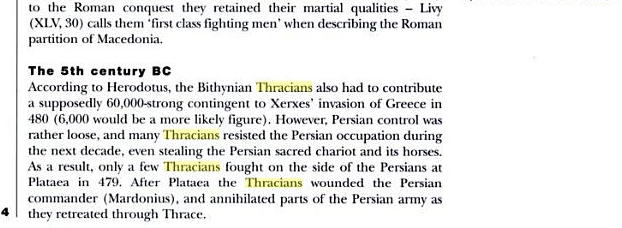
Pausanias makes a similar description of the Thracians. "If compared to other nations of the earth, Thracians altogether are the most crowded people after the Celts. For this reason, no other nation before the Romans has been able to cover the Thracians under their hegemony. Only Romans was the first to rule Thracians
.
 
http://www.1911encyclopedia.org/Thrace

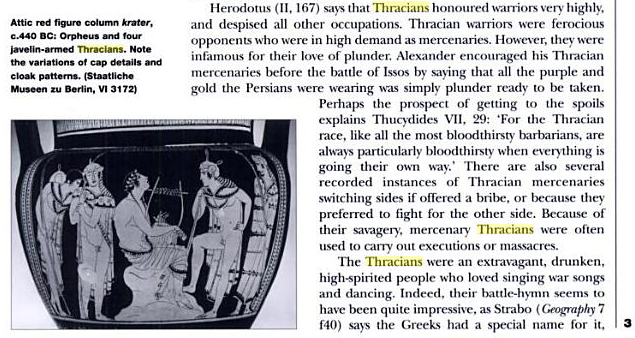
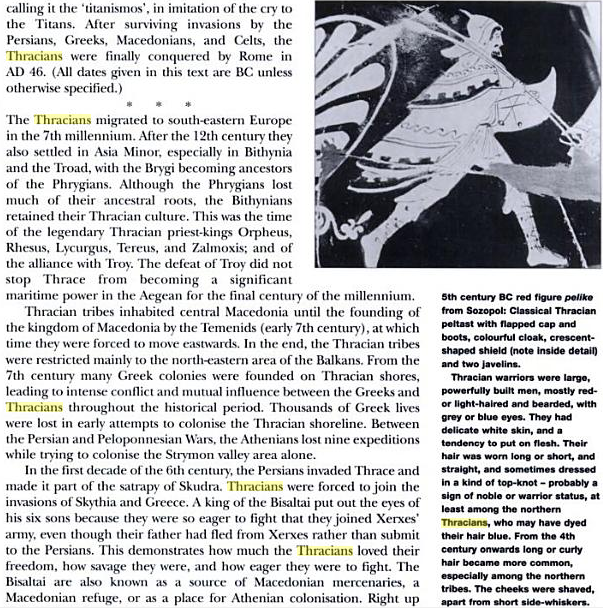
The name "Illyrian" (see Illyria) was applied to all the tribes of this stock who dwelt west of the northern extensions of the Pindus range and in what was termed Upper Macedonia in later times, and who extended right up to the head of the Adriatic. In Homer the name Macedonia is not yet known, and the term Thracian is applied to all the tribes dwelling from Pieria to the Euxine. There is no well-defined difference between aboriginal Thracians and Illyrians. Thus there was an Illyrian tribe Brygi, a Thracian one Bryges; some of the latter had passed into Asia and settled in the land called from them Phrygia, whence some of them later passed into Armenia; some of the Mysians (regarded by Strabo as Thracians) had also crossed into what was later known as Mysia: closely connected with the Mysians were the Dardanii, of Trojan fame, who had a city Dardania or Dardanus. In Strabo's time a tribe called Dardanii, then reckoned Illyrian, living next the Thracian Bessi (in whose land was the oldest oracle of Dionysus), were probably as much Thracian as Illyrian. All the Thracian and Illyrian tribes tattooed, thus being distinguished from the Celtic tribes who had conquered many of them. The Thracians differed only dialectically from the Illyrians (Strabo), their tongue being closely allied to Greek.


I would be interested to know which quote of Strabo has inspired this person to make such a statement.
 
What I find interesting is that the ancent author knew that the Indians were so vast in numbers and yet lived so far away relative to the Thracians (whom he considered the second most populated after the Indians). And yet according to the you know what model these people (the Thracians) along with others were “wiped out” by the Slavs (or at least “eventually”)

Again a people so numerous and spread all around the Balkans and beyond – could cease to exists because of no one else (not the romans, not the Macedonians, not the greeks, not the Persians but by another “barbaric” people the “slavs.”

What I also found interesting from the statement is that they were known to take different names pending the area they live in and were never united

This latter statement may even reflect somewhat the drastic changes that were taking place by the emergence of leaders in the Balkans (5-6th century etc), and how Florin Curta mentions as such. Further, by making sense of who was who amidst the confusion (and across both sides of the Danube) the Byzantine authors grouped people together hence the eventual Slavs etc


I’m also curious, did the Thracians even refer to themselves as such (initially or later on) and/or was it a label imposed on them from the outside (e.g by the ancient Greeks)?

Because if the Thracians are known to take different names where ever they reside it may appear the name didn’t carry much weight for them (at least not in the sense as can be applied today), considering also todays Bulgarians using the name from the Asiatic Bulgars.
 
http://www.1911encyclopedia.org/Thrace


I would be interested to know which quote of Strabo has inspired this person to make such a statement.

This is a great thread.

If, according to Herodotus, Thrace is the most populated region of the world, and Macedonia had been "occupied by Thracians" since some dark age in the past - the question is where did all the Thracian go? How could they disappear without leaving a trace? I believe this idea pushed by the New Greeks that the 5th century constitutes "a clean break" is a cunning way of blind siding people from the fact that there are little or no traces of the ancient Thracians because the are indistinguishable from the current Slavic (Thracian) speakers living their today.

I find the reference to tattoos interesting, because Macedonians tattoo themselves, and their children, and this custom is also practiced by the Croatians along the Dalmation coast line.
 
I find the reference to tattoos interesting, because Macedonians tattoo themselves, and their children, and this custom is also practiced by the Croatians along the Dalmation coast line.

Yap,evan today it is the same,if we do not count modern tatoos you will find Macedonians and Croats most tatooed,my father chest is tatooed arms,my grand father fas also tatooed on chest and arms,and today me on back arms and legs?;)
 
Pelister said:
I believe this idea pushed by the New Greeks that the 5th century constitutes "a clean break" is a cunning way of blind siding people from the fact that there are little or no traces of the ancient Thracians because the are indistinguishable from the current Slavic (Thracian) speakers living their today.
Absolutely.
 
I of Macedon,

There are huge gaps in our history, from late antiquity to the present. It is very possible that the land inhabited by Thracians, as mentioned by Herodotus, took on new names, down the centuries, but again, we are forced to go back to the question, how can such a numerous people, culturally advanced, and organized into kingdoms, simply "disappear"? I think you are onto something, when you raise the point that the Thracians, were described at different periods in history, by different names, but that they are one and the same people. The other point you raised about "who named them" is important to, because much of what we know about the history of the region, and its people, comes down to us in Greek, and/or Latin. Who knows why some names were in vogue, and others not, or why the Thracians stopped being called Thracians, and were now called Dacians, or Getae or Slavs ...etc? I guess we have to account for the possibility that the ancient Thracians, and Illyrians were so numerous, that by the 4th century A.D, they had broken off into various, more distinguishable, Slavic spaeking tribes.
 
This is plausible.

Otherwise, there would have to be some record in history or archaeology which would show the most numerous people (Thracians) migrating out of the area. Such a large number of people cannot disappear without a trace, they can however become more tribal (breaking off into their own, smaller communities which today form nations, etc).
This goes to the heart of modern nationalism.
Of course this is the case and anybody who feels they need to ignore 2000 or so years of modern history in order to define an exclusive claim on an ancient race is either completely stupid or Greek ... or both.
 
RTG, they are probably just being Greek, or I should say New Greek.

Given the evidence available, I already see a strong connection to the ancient Thracians, but that is only because we know so litte about the ancient Macedonians. Knowing that Greek wasn't their native langauge is not enough, though. It is possible that this vast tribe of Thracians broke off into separate nations, much earlier than we realize, very possibly in early antiquity, hence, the Illyrians, Macedonians ...etc. The Thracians were the only ones that did not, have to pay tribute to the Macedonians, and a large section of the Macedonian army, was of Thracian origin. How did they communicate, I wonder?
 
I was trying to find some more info and I found this from the wonderful world of wiki that may just be of interest'

"The Wealth of the Thracians indicates a historical extent of Thracian settlement including most of the Ukraine, all of Hungary and parts of Slovakia."

I believe this was also mentioned in one of the books listed above, that they reached southern Russia

Ironic isn’t it, the same place of which the Slavs were to come from in the 5 to 6th century just so happened to be the same time the Thracians are to be swallowed up by the earth.


Also remember Mario Alinei’s work where he wrote the following about the new Thracian hypothesis (it may have been mentioned before but I can't recall).


Herodotus, as is known, describes the Thracians as the most numerous people after the Indians. Mallory comments that it is a “sad irony” they “have left no modern descendant of their language” (Mallory 1989, 72).

But is it really so?

First of all, if it is hard to admit that a numerous people might completely extinguish, it is even less likely that this pre-existing people would have left no traces in the archaeological record. And since, as we have seen, the demographic explosion of the Slavs must be placed in Neolithic, we could then advance the hypothesis that Thracians
was the name that Herodotus gave to the Slavs, owing to the fact the Thracians were one of the most powerful and representative elites of Slavic speaking Eastern Europe, seen with Herodotus’ inevitably colonialist eyes. In a first approximation, then, the Thracians would appear to be a Southern Slavic geo-variational group, out of which
came a Bronze age elite, first dominating then extinguished.

This hypothesis could be further developed and refined in the light of the results of research on the

Thracian language which, with the caution due to the scarcity of
materials, can be so summarized:

(1) Thracian is an IE satem language, like Baltic and Slavic;

(2) as discovered by Trubačev (see above), Thracian place names show a surprising similarity with the Baltic ones;

(3) in some cases, however, Thracian affinities seem stronger with Slavic: the Thr. place-name suffix -dizos e -diza, for example, to which the meaning of ‘fortress’ has been attributed on the basis of the comparison with Gr. teĩkhos ‘wall’ (IEW 244), has a much closer counterpart in the metathetic forms of OSl. ziždoã, zydati ‘to build’ zydŭ, zidŭ ‘wall’, than in the Baltic ones (also methatetic), meaning ‘to form’. And the vocalism of the Thr. river name Stry¤mōn and place name Stry¤mē seems closer to Pol. strumień ‘brook’ and OSlav. struja ‘stream’ than to Latv stràume ‘stream’ (IEW 1003).

Mario then goes on to state that:

The most plausible hypothesis would be then that Thracian was a conservative type of Slavic, still preserving Baltic features and spoken by a peripheral group of Southern Slavs, somehow parallel to the Northern peripheral Balts (following the geolinguistic well-known rule, according to which the center innovates, and the periphery preserves).


I'm starting to think that it just may be that the Thracians are the key to the unknown...
 
Last edited:
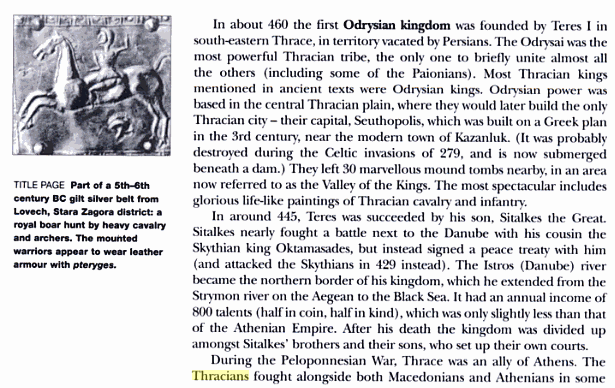
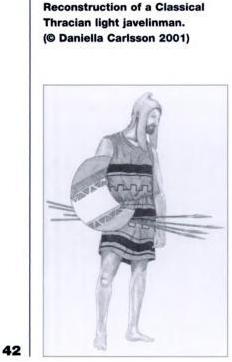
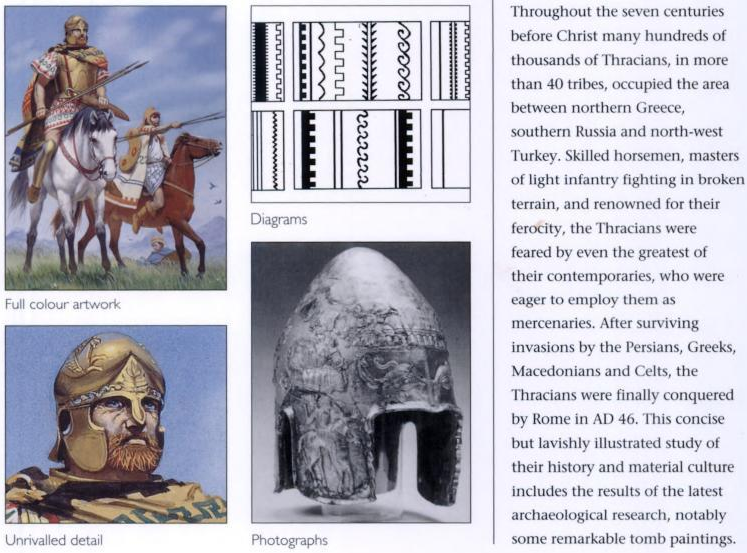
Here is a picture of Thracian soldiers, a reconstruction of a picture painted by Thracians themselves. It's from a tomb at Kazanluk from 4th-early 3rd century BC:

thracians2.jpg


In the upper picture on the left are what seems to be Macedonian soldiers. This reconstruction is a bit inaccurate since in the original (which is a bit damaged, but still clearly visible) the two soldiers in the middle hold one spear together, which is most likely a peace gesture. But in all, both pictures depict the war between the Thracian king Seuthes III and a Macedonian king Lysimachos.
 
Pelister Wrote...

How can such a numerous people, culturally advanced, and organized into kingdoms, simply "disappear"?

I think this is the most important question that has never been satisfactorily answered by the proponents of the 6th century 'migration' theory. Without conclusive proof of the wholscale extinction of not only the Thracians, but also the Illyrians and numerous other indigenous peoples, the 6th century 'migration' theory simply cannot be sustained. The fact that the 6th century 'migration' theory was propagated so widely during the 19th century obviously has more to do with German, Austrian and English politics than an honest view of history.

If the 6th century 'migration' theory were fact, and wholescale extinction of the Thracians and Illyrians took place as a result of an 'invasion' by 'migrating' Slavs, one would expect to find numerous archaeological evidence of this just about everywhere in the Balkans. One would also expect to find a clear break in the material culture (art, burial styles, type of dwellings etc) of the region where the Thracian and Illyrian ceases and the 'Slavic' begins...yet there is none.

In fact when considering material culture, there is a high degree of continuity from the ancient right up until modern times in the Balkan region in general (except for Albania and Greece where the opposite is true).
 
Back
Top