
• Welcome to the new Macedonian Truth Forum. All posts, members and private messages have been moved over from the old forum.

    Passwords from the old forum could not be carried over, so please use Forgot your password? to set a new one. The reset link is emailed to the address on your account.

  • Rules and Regulations at the forum of the Macedonian Truth Organisation (MTO)

    (1) The national-ethnic and cultural-linguistic identity of the Macedonian people is historically Macedonian, and derives its character from the native, indigenous and geographic homeland of the Macedonians, which is called Macedonia. To ensure that their human rights, integrity and heritage are appropriately respected, the only nouns and adjectives acceptable when reference is made to the above character and identity markers is Macedon, Macedonia, Macedonian and Macedonians.

    (2) The nation-state of the Macedonian people is the Republic of Macedonia, and is to be referred to by this official title so long as the 'republic' prefix is consistently applied to other states. Alternative references are the Macedonian Republic, or simply, Macedonia.

    (3) The 'ethnic' prefix is only acceptable for Macedonians in cases where differentiation is specifically required - so long as it is in context and consistent where it concerns its application to other ethnic groups.

    (4) Should any other differentiation be specifically required, the names of other ethnic groups that reside with Macedonians in either the Republic of Macedonia or the occupied Macedonian regions in Greece, Bulgaria, Serbia or Albania, are to be given a prefix.

    (5) Negating the identity, language and culture of the Macedonian people by deliberate avoidance of the terms Macedonia, Macedonian and Macedonians, or by any other means, is not permitted.

    (6) Systematic anti-Macedonian propaganda and rhetoric are not permitted.

    (7) Threads irrelevant to the Macedonian Cause, the community at the Macedonian Truth Organisation or the Macedonians in general may be considered as spam or not in the spirit of the forum. In such cases they are not permitted.

    (8) Continual posting of messages in threads with the sole purpose of deviating from the initial topics with the use of unrelated and unnecessary information is not permitted.

    (9) All posts, external articles, reports, etc that are cited in languages other than Macedonian or English, must be accompanied with a translation in one or both of the said languages.

    (10) Despite the possibility of some conversations and debates becoming heated, extreme abuse and/or racism, vulgar language and/or terminology, threats, revelation of personal information about others, harassment, and other such behavior will not be permitted. If deemed necessary all relevant information including member details will be reported to the appropriate authorities for investigation which may result in legal action.

    (11) Threads that are created must have a summary of a topic or excerpt of an article found in pertinent link(s) that have been included. One line threads will be considered unaccetable spam and are therefore not permitted.

    (12) Compulsive and deliberate lies, irrespective of the topic, are not permitted.

    (13) Any symbols or avatars found to be perceived as offensive to Macedonians are not permitted.

    (13) Any explicit or extreme material is not permitted.

    Failure to adhere to the above rules and regulations will result in a ban after 3 breaches. This may be reconsidered in some cases should the circumstances be of an unorthodox nature and/or require special consideration. To assure an effective deterrent against an individual or individuals with the sole purpose of causing dissent through spamming, racism or other improper means, the above rules will be strictly enforced.

    The MTO administration will monitor all discussions as reasonably practical and reserve the right to remove any post and/or member from the forum, and update the rules and regulations as required. Members are encouraged to immediately report any post and/or member to the MTO administration if they feel that these rules have not been abided by.

    The views expressed on this forum are those of the individuals. The only official representation of the MTO is made by the "Macedonian Truth Organisation (Site Owner)" username, and no other.

  • Macedonian Cause

    The Macedonian Truth Organisation calls on God in Heaven to protect, bless and guide the endeavour it is committing to undertake, and that is to work towards:

    Securing Macedonia as a free, independent and democratic republic in which sovereignty lies with the Macedonian citizens; as the nation-state of the Macedonian people in which they can preserve their culture, language and identity; as a state in which the Macedonian language and culture form the basis of public life and act as important unifying elements of Macedonian society; as the home of all its citizens to which it guarantees and obliges their inalienable natural rights and corresponding responsibilities;

    The acknowledgment as self-evident and irrefutable the existence of the:

    1) Indigenous, ethnonational name of Macedonia;
    2) Macedonian people, language and identity;
    3) Macedonian culture, symbols and folklore;
    4) Macedonian ancestry, heritage and history in its entirety; and
    5) Macedonian Orthodox Church;

    Securing recognition by the International Community of the tragedies endured by the Macedonian people, of the division of Macedonia with the signing of the Treaty of Bucharest on August 10, 1913, and the genocide committed against the Macedonian people at the hands of the Greek, Bulgarian and Serbian states and their respective churches during the 19th and 20th centuries;

    Ensuring that the Interim Accord is declared ‘null and void’ and that all constitutional provisions, acts, commitments, agreements, legislation, regulations, policies or programs emanating from, supporting or consequential to the Interim Accord are also declared ‘null and void’, including the use of any symbols and the completion of any acts imposed by, or originating from, the Interim Accord.

    Ensuring that the Framework Agreement is abolished and that all constitutional provisions, acts, commitments, agreements, legislation, regulations, policies and programs emanating from, supporting or consequential to the Framework Agreement are also abolished and replaced by a framework of constitutional and statutory law based on inalienable natural rights and corresponding responsibilities and universally codified human rights mechanisms.

    Securing the abolishment of any existing constitutional provisions, acts, agreements, legislation, regulations, policies and programs that discriminate against the Macedonian people, in any international organisation or any of the countries of the International Community where such constitutional provisions, acts, agreements, legislation, regulations, policies and programs exist, and thereby ensuring the freedom for Macedonians to exercise their inalienable natural rights and fulfil their corresponding responsibilities, and practice their culture, language and religious faiths in all the countries of the International Community without hindrance;

    The empowerment of Macedonians to undertake a moral revolution and to instil and/or reinvigorate within themselves a deep-rooted national, cultural, linguistic and historical dignity and a commitment to the exercise of freedom based on inalienable natural rights and corresponding responsibilities;

    The recognition of the Macedonian minorities in the neighbouring states of Macedonia as well as the respect for the inalienable rights and freedoms of the Macedonian minorities, as provided for by natural law and as codified by the United Nations Charter, the Universal Declaration of Human Rights and other universally codified human rights mechanisms;

    The full and unreserved respect of, and the support for, the rights of all people of non-Macedonian descent living in Macedonia and around the world, who share a reciprocal full and unreserved respect for the Macedonian people, their homeland and their state;

    The cultural unification and solidarity of the Macedonian people living in all parts of historical Macedonia and adjacent territories, as well as Macedonians throughout the world;

    The unity of all Macedonians on the principles, objectives and achievement of the Macedonian cause as defined by this declaration.

Macedonia: Early-Mid Ottoman Period (1500-1800)

Soldier of Macedon

Senior Member
With the assumption of control in the Balkans by the Ottomans, the Archbishopric of Ohrid in Macedonia had its widespread power and influence marginalised, while the Patriarchate of Constantinople found itself in a rejuvenated position resulting from its new found friendship with the recently arrived Muslim overlords. With the renewal of the Archbishopric of Pech in Serbia in the year 1557, the Archbishopric of Ohrid in Macedonia began to lose even more ground and traditional territories, however, the Macedonian people stood firm behind their church and the main foe continued to be the Turk. Tensions between the Macedonian Christians and Ottoman Muslims increased significantly from the 1560's onwards, which saw places like Debar, Ohrid, Tetovo, Gostivar, Skopje, Prilep, Mariovo, etc explode in sporadic revolt and resistance against the foreign oppressor.

http://www.maknews.com/html/articles/stefov/stefov136.html

In 1571 a group of about 300 well-armed Christian rebels who had refused to pay taxes for the last two years banded together near the village of Ezerani and stormed the Ottomans. This rebellion too was instigated by the priests of Venice through the consultation of archbishop Atanasij I from Ohrid. This particular rebellion lasted longer than expected due to lack of Ottoman resources to quell it...........
In the same year, 1571, the Ottoman navy was destroyed near Corinth by Don John of Austria, a victory which encouraged the local populace around the Aegean mainland and the islands to rebel against the Ottoman overlords. One of the Macedonians that partook in the anti-Ottoman movement on the side of the Venetians was actually responsible for the death of Müezzinzade Ali, and was subsequently knighted for his deed and provided with financial reward by Don John of Austria. Although Ottoman authority was swiftly re-established in the south, the rebellions emanating from Ohrid in western Macedonia continued to expand to adjacent regions such as Prespa as late as 1573.

The autonomous status of the Archbishopric of Ohrid in Macedonia was always a source of contention with the Patriarchate of Constantinople, and the latter's close relations with the Ottomans resulted in the rebellious Macedonians and neighbouring Slavic peoples looking towards Russia, Austria, and the Roman West for assistance. In the year 1589, the Archbishop of Ohrid, Gavril, wrote to Ferdinand the Archduke of Habsburg, and spoke of how "the Turk, who from day to day has pursued and blackmailed us and our ancestors ....in the whole of Macedonia, Greece and the nearby countries...then among our countries we have Bulgaria, Serbia, Macedonia....". Once again, the Archbishopric of Ohrid in Macedonia was engaged in activities in support of the local population. Due to certain efforts at collaboration against the Turks between the people of Macedonia and Albania, who were often unified under the 'guidance' of Catholic Roman clergy, a letter sent by an 'Albanian' to Pope Clement VIII in the year 1593 was imprinted with a title that read Stamp of the Kingdom of Macedonia and Albania. (Stojcev, Vance. "Military History of Macedonia". P.132)
 
In the year 1611 Epirus experienced a short-lived revolt led by Bishop Dionysius the Philosopher, which resulting in severe Ottoman reprisals. Peace was by no means assured as the Archbishopric of Ohrid continued to be a dominant and influental factor on the territory of Macedonia and the greater region. In a letter from Pope Urban VIII to the Archbishop of Ohrid Porphyrius Palaelogus, which was written in the year 1624, the following address is made: "To the respected brothers Porphyrius Paleologus, Patriarch of Justiniana Prima of Ohrid and the other subordinate archbishops, bishops of Bulgaria, Serbia, Albania and of the other side of Macedonia".

The fact that the local population cited in these regions speak a Slavonic language is further corroborated in the links below from the year 1630, which cite Slavonic as the dominant tongue of the region, it is the vulgar speech of the Macedonians.

http://www.macedoniantruth.org/forum/showthread.php?t=387
http://www.macedoniantruth.org/forum/showthread.php?t=390


Another short-lived revolt against the Turks occured in the year 1639 which began in the village of Gaveto in Macedonia, but a few decades later stakes were raised as the activity of the Macedonian rebels coincided with an Austrian push southward against the common enemy. In the years prior to the Karposh Uprising, places like Bitola, Voden, Veles and Prilep had been rebelling against the Turks due to the regular injustices endured by the Christian populations. During the 1680's the Austrians did battle against the Turks and encouraged the local population under Ottoman rule to revolt. Their declarations were addressed to the Christians of "Albania, Servia, Mysia, Bulgaria, Silistria, Illyria, Macedonia and Rashka", and the Macedonians appear most emboldened by the events. Parts of the region errupted in rebellion, the most notable in Macedonia being led by Karposh the "King of Kumanovo", as another declaration by the Emperor Leopold of Austria spoke about "two Macedonians, Marko Kraida born in Kozhani and Dimitri Georgi Popovic, born in Macedonian Salonika, have told us that the Macedonian people, with respect for our most righteous task......"

http://www.macedoniantruth.org/2008...ion-of-the-holy-roman-emperor-leopold-i-1690/

Unfortunately, the rebellion was short-lived as the Turks captured and executed Karposh while regaining control of the Macedonian regions.
 
During the early 1700's the Russians had their turn at war against the Turks, this time in Wallachia and Moldavia, where they enjoyed the support of the local Romanians. The Turks won the battle and as a form of punishment against the Romanians they instated the Phanariot Hospodars in Wallachia and Moldavia.

http://www.macedoniantruth.org/2008/04/23/proclamations-sent-to-the-macedonians-in-1711/
The Russian Czar Petar sent proclamations to the "Albanians, Macedonians, and Bosnians who were subject to the porte".......

It is very likely that another local uprising in Macedonia took place in 1739, as the battle between the Turks and the European Powers continued intermittently, while the Macedonian population had shown itself quite welcoming to revolt and emboldened by Russian efforts and proclamations towards them and other Orthodox Balkan people.

http://wsu.edu/~dee/OTTOMAN/17TH.HTM
In the eighteenth century, the Ottomans fought a series of wars with European powers. Between 1714 and 1718, they fought with the small country of Venice; between 1736 and 1739, they fought with Austria and Russia in order to stop the expansion of these powers into Muslim territories.

After the peace treaty with the European Powers the Turks inflicted a severely harsh reprisal on the Macedonians, which prompted some of the first signs of emigration into Austria and Russia. Several Christians of the Ottoman Empire made requests for emigration to Russia, and in the year 1751 these requests were granted to Macedonians, Serbs, Vlachs and Bulgarians. The following year in 1752 infantry regiments were established within the Russian army which were divided according to nationality, described in a Russian royal edict as the "Orthodox Serbian, Macedonian, Bulgarian and Vlach peoples”.

In the year 1757 Montenegrin Metropolitan Vasilije Petrovic wrote a letter to the Russian Count Shuvalov expressing the feelings of the “Albanians, Macedonians, Bosnians, Serbs and Bulgarians”, who viewed Russia as the great Orthodox Slavic power and their saviour from the Turks. The Macedonians in the Russian regiments were still active in the mid 1760's as a number of them were sent back into Balkan lands to fight for the cause of freedom from the Turks.

http://www.macedoniantruth.org/2008/05/04/macedonian-immigration-in-russia-1763-1765/
As a result the possibility to form the two additional regiments in new Serbia was created: Macedonian and Bulgarian field hussar from the unmarried and lonely people, which did not wish to manage in the settling.

Meanwhile, the increase of Austrian power in the region also made it a safe haven for Christian fugitives from the Ottoman Empire, particularly during the years 1765-66, as the struggle of the Macedonians, Serbs, Bosnians and others against the Turks became relentless. The strength and attraction of the powerful empires belonging to Austria and Russia were to assist in sustaining the hope of the Christians in the Ottoman Empire during the 18th and 19th centuries.

http://www.macedoniantruth.org/2008/03/14/macedonians-mentioned-as-fugitives-in-austria-1765/
All these fugitives, Uskoks....Albanians, Macedonians, Serbians and Wallachians, were hospitably received in Austria, and settled as beforein...the Banat, for the defence of the frontier.

During these turbulent times the Greek-speaking Romans appear to be missing from most if not all of these rebellions, and instead of joining their Christian brothers in revolt they were forging closer ties with the Ottoman Turks. The endless uprising initiated by the Macedonians and other Orthodox Slavic and Latin peoples in the region had turned the Turks sharply against this part of the Ottoman population. That the Turks showed favour to these Greek-speaking Romans as a result of the latter's obedience (and greed for control among Christians) is evident in two things above all - Phanariot domination in Wallachia and Moldavia, and the forced cessation of Romanian and Slavic-speaking church liturgy and schools during the 1766-67 in the Balkans.

The Macedonians were quite brave and lively even after these events during the 1780's when they were met by Baron De Tott, who speaks of "twenty-two Macedonians, each with his musket on his shoulder, went thither, and met in a tavern, where they sang the victories of Alexander". However, from this period onwards assimilative propaganda in the Balkans and among the Balkan people spread, and it was chiefly orchestrated by the Greek-speaking Romans.
 
With the assumption of control in the Balkans by the Ottomans, the Archbishopric of Ohrid in Macedonia had its widespread power and influence marginalised, while the Patriarchate of Constantinople found itself in a rejuvenated position resulting from its new found friendship with the recently arrived Muslim overlords. With the renewal of the Archbishopric of Pech in Serbia in the year 1557, the Archbishopric of Ohrid in Macedonia began to lose even more ground and traditional territories, however, the Macedonian people stood firm behind their church and the main foe continued to be the Turk. Tensions between the Macedonian Christians and Ottoman Muslims increased significantly from the 1560's onwards, which saw places like Debar, Ohrid, Tetovo, Gostivar, Skopje, Prilep, Mariovo, etc explode in sporadic revolt and resistance against the foreign oppressor.

http://www.maknews.com/html/articles/stefov/stefov136.html


In the same year, 1571, the Ottoman navy was destroyed near Corinth by Don John of Austria, a victory which encouraged the local populace around the Aegean mainland and the islands to rebel against the Ottoman overlords. Although Ottoman authority was swiftly re-established in the south, the rebellions emanating from Ohrid in western Macedonia continued to expand to adjacent regions such as Prespa as late as 1573.

The autonomous status of the Archbishopric of Ohrid in Macedonia was always a source of conention with the Patriarchate of Constantinople, and the latter's close relations with the Ottomans resulted in the rebellious Macedonians and neighbouring Slavic peoples looking towards Russia, Austria, and the Roman West for assistance. In the year 1589, the Archbishop of Ohrid, Gavril, wrote to Ferdinand the Archduke of Habsburg, speak of how "the Turk, who from day to day has pursued and blackmailed us and our ancestors ....in the whole of Macedonia, Greece and the nearby countries...then among our countries we have Bulgaria, Serbia, Macedonia....". Once again, the Archbishopric of Ohrid in Macedonia was engaged in activities in support of the local population. Due to certain efforts at collaboration against the Turks between the people of Macedonia and Albania, who were often unified under the 'guidance' of Catholic Roman clergy, a letter sent by an 'Albanian' to Pope Clement VIII in the year 1593 was imprinted with a title that read Stamp of the Kingdom of Macedonia and Albania. (Stojcev, Vance. "Military History of Macedonia". P.132)

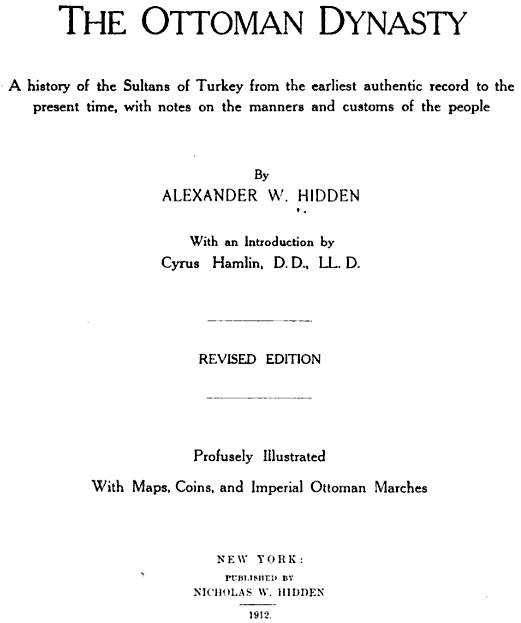
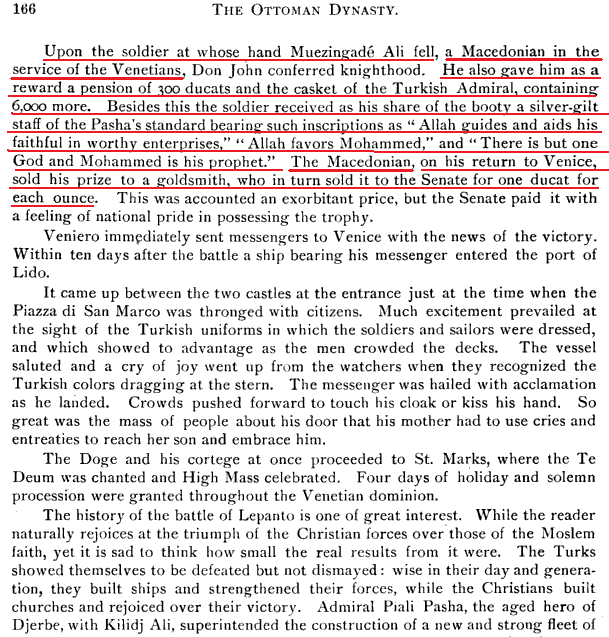
This is a very good breakdown of this period. SoM you have a knack for creating these chronological threads. So here's something I hope you add into what I made bold in your post.


hidden.png

hidden166.png


A Macedonian killed Müezzinzade Ali and was Knighted (I don't know why I didn't highlight that part) by Don John (Don Juan) of Austria.
 
Amazing, I didn't know how much the Macedonians rebelled. From my reading:
1) The Archbishop of Ohrid had immense power in the region, organizing revolts across the entire Balkans.
2) It seems Patriarchate of Constantinople didn't care for the freedom of the people, they simply wanted to take power away from the Archbishop of Ohrid in order to achieve their own agenda.
3) The amount of Christian Albanians must have been immense, much more then is stated today. It seems they have fought with the Macedonians in most of the rebellions. My guess is the assimilation processes of Greece has reduced the amount of Christian Albanians significantly.
4) As with Macedonians helping the countries of Greece, Serbia and Bulgaria during the first Balkan War, Macedonians fought with other powers such as Venice, Austria and Russia in order to achieve freedom.
All good observations, with point one, I would say that the Archbishopric of Ohrid more often supported rather than initiated local revolts and movements.
TrueMacedonian said:
This is a very good breakdown of this period. SoM you have a knack for creating these chronological threads. So here's something I hope you add into what I made bold in your post.
Done.
 
...
1) The Archbishop of Ohrid had immense power in the region, organizing revolts across the entire Balkans.
2) It seems Patriarchate of Constantinople didn't care for the freedom of the people, they simply wanted to take power away from the Archbishop of Ohrid in order to achieve their own agenda.
3) The amount of Christian Albanians must have been immense, much more then is stated today. It seems they have fought with the Macedonians in most of the rebellions. My guess is the assimilation processes of Greece has reduced the amount of Christian Albanians significantly.
4) As with Macedonians helping the countries of Greece, Serbia and Bulgaria during the first Balkan War, Macedonians fought with other powers such as Venice, Austria and Russia in order to achieve freedom.

1. one of the reasons why the Sultan, against all Church Rules (Kanoni), made the decision to shut it down
2. exactly, or to simplify it: they wanted the tax money and the power Ohrid had
3. many western writers were calling the Macedonians "Albanians", from various reasons. The "original" Albanians fought against the Turks (probably) as well, but if you compare several sources for later periods, it is clear that big percent of the population on the teritories of today Albania were Macedonians.
4. some did it for money. some with hope for Freedom and better life. look on today´s "peacekeepers" and mercenaries...


@SoM and TM: nice :) i guess each time they (the "greeks" and "bulgars") are reading "the Macedonian" , a knife of envy is stabing their dirty hearts :)
 
During the early 1700's the Russians had their turn at war against the Turks, this time in Wallachia and Moldavia, where they enjoyed the support of the local Romanians. The Turks won the battle and as a form of punishment against the Romanians they instated the Phanariot Hospodars in Wallachia and Moldavia.

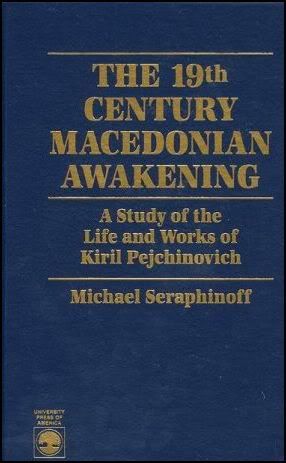
It seems that this certain period in Macedonia's history is marked by revolt. Here's something I hope you consider adding into the chronological order you have already established SoM;

Seraphinoff.jpg

Seraphinoff5.jpg


Lesok is in the Tetovo region. My theory http://www.macedoniantruth.org/forum/showthread.php?t=948&page=5 is that a majority of these revolts centered in the Northernly areas of Macedonia.
 
Last edited:
In the year 1611 Epirus experienced a short-lived revolt led by Bishop Dionysius the Philosopher, which resulting in severe Ottoman reprisals. Peace was by no means assured as the Archbishopric of Ohrid continued to be a dominant and influental factor on the territory of Macedonia and the greater region. In a letter from Pope Urban VIII to the Archbishop of Ohrid Porphyrius Palaelogus, which was written in the year 1624, the following address is made: "To the respected brothers Porphyrius Paleologus, Patriarch of Justiniana Prima of Ohrid and the other subordinate archbishops, bishops of Bulgaria, Serbia, Albania and of the other side of Macedonia".

The fact that the local population cited in these regions speak a Slavonic language is further corroborated in the links below from the year 1630, which cite Slavonic as the dominant tongue of the region, it is the vulgar speech of the Macedonians.

http://www.macedoniantruth.org/forum/showthread.php?t=387
http://www.macedoniantruth.org/forum/showthread.php?t=390


Another short-lived revolt against the Turks occured in the year 1639 which began in the village of Gaveto in Macedonia, but a few decades later stakes were raised as the activity of the Macedonian rebels coincided with an Austrian push southward against the common enemy. In the years prior to the Karposh Uprising, places like Bitola, Voden, Veles and Prilep had been rebelling against the Turks due to the regular injustices endured by the Christian populations. During the 1680's the Austrians did battle against the Turks and encouraged the local population under Ottoman rule to revolt. Their declarations were addressed to the Christians of "Albania, Servia, Mysia, Bulgaria, Silistria, Illyria, Macedonia and Rashka", and the Macedonians appear most emboldened by the events. Parts of the region errupted in rebellion, the most notable in Macedonia being led by Karposh the "King of Kumanovo", as another declaration by the Emperor Leopold of Austria spoke about "two Macedonians, Marko Kraida born in Kozhani and Dimitri Georgi Popovic, born in Macedonian Salonika, have told us that the Macedonian people, with respect for our most righteous task......"

http://www.macedoniantruth.org/2008...ion-of-the-holy-roman-emperor-leopold-i-1690/

Unfortunately, the rebellion was short-lived as the Turks captured and executed Karposh while regaining control of the Macedonian regions.

Писмо на австpoyнгарскиот император Леополд I, 26. IV 1690.

http://www.mn.mk/istorija/8644-Pismo-na-avstpoyngarskiot-imperator-Leopold-I-26-IV-1690

“...Соопштувам дека од двајца Македонци: Димитар Георги Попович од Солун и Марко Краида од Кожани добивме уверување дека македонскиот народ со почит спрема нашата праведност е целосно подготвен да ја признае нашата врховна власт. Ние сесрдно го земаме македонскиот народ целосно под наша заштита, и истиот не смее да биде нападнат од нашите трупи...“

pismo-leopold-1.jpg

pismo-leopold-2.jpg
 
In the year 1611 Epirus experienced a short-lived revolt led by Bishop Dionysius the Philosopher, which resulting in severe Ottoman reprisals. Peace was by no means assured as the Archbishopric of Ohrid continued to be a dominant and influental factor on the territory of Macedonia and the greater region. In a letter from Pope Urban VIII to the Archbishop of Ohrid Porphyrius Palaelogus, which was written in the year 1624, the following address is made: "To the respected brothers Porphyrius Paleologus, Patriarch of Justiniana Prima of Ohrid and the other subordinate archbishops, bishops of Bulgaria, Serbia, Albania and of the other side of Macedonia".

The fact that the local population cited in these regions speak a Slavonic language is further corroborated in the links below from the year 1630, which cite Slavonic as the dominant tongue of the region, it is the vulgar speech of the Macedonians.

http://www.macedoniantruth.org/forum/showthread.php?t=387
http://www.macedoniantruth.org/forum/showthread.php?t=390


Another short-lived revolt against the Turks occured in the year 1639 which began in the village of Gaveto in Macedonia, but a few decades later stakes were raised as the activity of the Macedonian rebels coincided with an Austrian push southward against the common enemy. In the years prior to the Karposh Uprising, places like Bitola, Voden, Veles and Prilep had been rebelling against the Turks due to the regular injustices endured by the Christian populations. During the 1680's the Austrians did battle against the Turks and encouraged the local population under Ottoman rule to revolt. Their declarations were addressed to the Christians of "Albania, Servia, Mysia, Bulgaria, Silistria, Illyria, Macedonia and Rashka", and the Macedonians appear most emboldened by the events. Parts of the region errupted in rebellion, the most notable in Macedonia being led by Karposh the "King of Kumanovo", as another declaration by the Emperor Leopold of Austria spoke about "two Macedonians, Marko Kraida born in Kozhani and Dimitri Georgi Popovic, born in Macedonian Salonika, have told us that the Macedonian people, with respect for our most righteous task......"

http://www.macedoniantruth.org/2008...ion-of-the-holy-roman-emperor-leopold-i-1690/

Unfortunately, the rebellion was short-lived as the Turks captured and executed Karposh while regaining control of the Macedonian regions.

Where is Gaveto? Can't find any info on it
 
I suspect it could be Gjavato, that is being referred to in the document - a Bitola village located on the slopes of Baba Planina. This used to be a very large Macedonian village back in the day. Really interesting stuff and a pity not enough information survives about this revolt as I'm sure it would have attracted volunteers from many of the surrounding mountain villages in the area, including my own, Brusnik.
 
I suspect it could be Gjavato, that is being referred to in the document - a Bitola village located on the slopes of Baba Planina. This used to be a very large Macedonian village back in the day. Really interesting stuff and a pity not enough information survives about this revolt as I'm sure it would have attracted volunteers from many of the surrounding mountain villages in the area, including my own, Brusnik.

Does the village still exist?
 
Does the village still exist?

Yes it does and I finally found some info on this rebellion. It was in the Bitola village of Gjavato as I suspected and it happened in the year 1639.


Селото се споменува во османлиски даночни регистри на немуслиманското население од вилает Манастир од 1611-1612 година со 60 домаќинства.

Во 1639 во Ѓавато имало буна против Османлиската власт. Непосреден повод за нејзиното избувнување било апсењето на ајдутинот Белче. Селаните се спротивставиле. Спомнати во предводувањето на буната во с. Ѓавато се Митре, Никола, Илија и Голе. Започнала борба во која Турците имале пушки и сабји, а селаните вили и стапови. Неколку селани загинале, Белче бил убиен, по што Турците му ја отсекле главата и му ја однеле на кадијата како доказ дека бил ликвидиран.

Translation:
In 1639, in Gjavato, a rebellion was undertaken against Osmanli rule. The ultimate reason for it's occurence was the arrest of the aydutin, Belche.
(Note: aydutin is deived from the Turkish word, hayduk, meaning bandit. To Macedonians, the word aydutin came to signify something more. Ayduci were heroic men that gave up a normal way of life and left everything they knew behind them to go and live in the mountains, dedicating their lives to protecting the local Christian peasantry from certain particularly savage-types of Turkish overlords and/or Albanian opportunists.)
The villagers rebelled as a result. The leadership of the rebellion in Gjavato included Mitre, Nikola, Ilija and Gole. A battle ensued in which the Turks used guns and sabres while the villagers used pitchforks and wooden clubs. Some villagers perished, including Belche, whom the Turks decapitated and presented his head to the Turkish Kadia as proof of his liquidation.

https://mk.wikipedia.org/wiki/Ѓавато_(Битолско)
 
There may have been another uprising in Macedonia in 1571: English Wikipedia's entry on Ser states the Christians in the city rebelled in that year following the Ottoman loss at Lepanto. The source referenced is Siroz (1997) by Alexandra Yerolimpos, which was published in the Encyclopaedia of Islam
 
Back
Top