• Welcome to the new Macedonian Truth Forum. All posts, members and private messages have been moved over from the old forum.

    Passwords from the old forum could not be carried over, so please use Forgot your password? to set a new one. The reset link is emailed to the address on your account.

  • Rules and Regulations at the forum of the Macedonian Truth Organisation (MTO)

    (1) The national-ethnic and cultural-linguistic identity of the Macedonian people is historically Macedonian, and derives its character from the native, indigenous and geographic homeland of the Macedonians, which is called Macedonia. To ensure that their human rights, integrity and heritage are appropriately respected, the only nouns and adjectives acceptable when reference is made to the above character and identity markers is Macedon, Macedonia, Macedonian and Macedonians.

    (2) The nation-state of the Macedonian people is the Republic of Macedonia, and is to be referred to by this official title so long as the 'republic' prefix is consistently applied to other states. Alternative references are the Macedonian Republic, or simply, Macedonia.

    (3) The 'ethnic' prefix is only acceptable for Macedonians in cases where differentiation is specifically required - so long as it is in context and consistent where it concerns its application to other ethnic groups.

    (4) Should any other differentiation be specifically required, the names of other ethnic groups that reside with Macedonians in either the Republic of Macedonia or the occupied Macedonian regions in Greece, Bulgaria, Serbia or Albania, are to be given a prefix.

    (5) Negating the identity, language and culture of the Macedonian people by deliberate avoidance of the terms Macedonia, Macedonian and Macedonians, or by any other means, is not permitted.

    (6) Systematic anti-Macedonian propaganda and rhetoric are not permitted.

    (7) Threads irrelevant to the Macedonian Cause, the community at the Macedonian Truth Organisation or the Macedonians in general may be considered as spam or not in the spirit of the forum. In such cases they are not permitted.

    (8) Continual posting of messages in threads with the sole purpose of deviating from the initial topics with the use of unrelated and unnecessary information is not permitted.

    (9) All posts, external articles, reports, etc that are cited in languages other than Macedonian or English, must be accompanied with a translation in one or both of the said languages.

    (10) Despite the possibility of some conversations and debates becoming heated, extreme abuse and/or racism, vulgar language and/or terminology, threats, revelation of personal information about others, harassment, and other such behavior will not be permitted. If deemed necessary all relevant information including member details will be reported to the appropriate authorities for investigation which may result in legal action.

    (11) Threads that are created must have a summary of a topic or excerpt of an article found in pertinent link(s) that have been included. One line threads will be considered unaccetable spam and are therefore not permitted.

    (12) Compulsive and deliberate lies, irrespective of the topic, are not permitted.

    (13) Any symbols or avatars found to be perceived as offensive to Macedonians are not permitted.

    (13) Any explicit or extreme material is not permitted.

    Failure to adhere to the above rules and regulations will result in a ban after 3 breaches. This may be reconsidered in some cases should the circumstances be of an unorthodox nature and/or require special consideration. To assure an effective deterrent against an individual or individuals with the sole purpose of causing dissent through spamming, racism or other improper means, the above rules will be strictly enforced.

    The MTO administration will monitor all discussions as reasonably practical and reserve the right to remove any post and/or member from the forum, and update the rules and regulations as required. Members are encouraged to immediately report any post and/or member to the MTO administration if they feel that these rules have not been abided by.

    The views expressed on this forum are those of the individuals. The only official representation of the MTO is made by the "Macedonian Truth Organisation (Site Owner)" username, and no other.

  • Macedonian Cause

    The Macedonian Truth Organisation calls on God in Heaven to protect, bless and guide the endeavour it is committing to undertake, and that is to work towards:

    Securing Macedonia as a free, independent and democratic republic in which sovereignty lies with the Macedonian citizens; as the nation-state of the Macedonian people in which they can preserve their culture, language and identity; as a state in which the Macedonian language and culture form the basis of public life and act as important unifying elements of Macedonian society; as the home of all its citizens to which it guarantees and obliges their inalienable natural rights and corresponding responsibilities;

    The acknowledgment as self-evident and irrefutable the existence of the:

    1) Indigenous, ethnonational name of Macedonia;
    2) Macedonian people, language and identity;
    3) Macedonian culture, symbols and folklore;
    4) Macedonian ancestry, heritage and history in its entirety; and
    5) Macedonian Orthodox Church;

    Securing recognition by the International Community of the tragedies endured by the Macedonian people, of the division of Macedonia with the signing of the Treaty of Bucharest on August 10, 1913, and the genocide committed against the Macedonian people at the hands of the Greek, Bulgarian and Serbian states and their respective churches during the 19th and 20th centuries;

    Ensuring that the Interim Accord is declared ‘null and void’ and that all constitutional provisions, acts, commitments, agreements, legislation, regulations, policies or programs emanating from, supporting or consequential to the Interim Accord are also declared ‘null and void’, including the use of any symbols and the completion of any acts imposed by, or originating from, the Interim Accord.

    Ensuring that the Framework Agreement is abolished and that all constitutional provisions, acts, commitments, agreements, legislation, regulations, policies and programs emanating from, supporting or consequential to the Framework Agreement are also abolished and replaced by a framework of constitutional and statutory law based on inalienable natural rights and corresponding responsibilities and universally codified human rights mechanisms.

    Securing the abolishment of any existing constitutional provisions, acts, agreements, legislation, regulations, policies and programs that discriminate against the Macedonian people, in any international organisation or any of the countries of the International Community where such constitutional provisions, acts, agreements, legislation, regulations, policies and programs exist, and thereby ensuring the freedom for Macedonians to exercise their inalienable natural rights and fulfil their corresponding responsibilities, and practice their culture, language and religious faiths in all the countries of the International Community without hindrance;

    The empowerment of Macedonians to undertake a moral revolution and to instil and/or reinvigorate within themselves a deep-rooted national, cultural, linguistic and historical dignity and a commitment to the exercise of freedom based on inalienable natural rights and corresponding responsibilities;

    The recognition of the Macedonian minorities in the neighbouring states of Macedonia as well as the respect for the inalienable rights and freedoms of the Macedonian minorities, as provided for by natural law and as codified by the United Nations Charter, the Universal Declaration of Human Rights and other universally codified human rights mechanisms;

    The full and unreserved respect of, and the support for, the rights of all people of non-Macedonian descent living in Macedonia and around the world, who share a reciprocal full and unreserved respect for the Macedonian people, their homeland and their state;

    The cultural unification and solidarity of the Macedonian people living in all parts of historical Macedonia and adjacent territories, as well as Macedonians throughout the world;

    The unity of all Macedonians on the principles, objectives and achievement of the Macedonian cause as defined by this declaration.

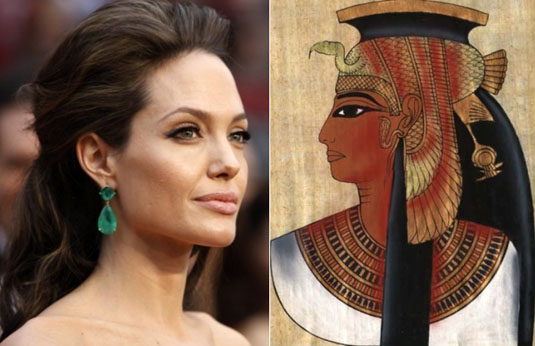
Cleopatra and the Macedonians of Egypt

Great show man!
I followed it religiously, and bought the DVD sets
I recomend it to any history buff, as it is very accurate.
Pity it was only 2 seasons though.

Marc Antony is by far the best charachter, with Pullo a close second.
I also liked Caesars Greek slave/advisor/assistant- he was pretty sharp too.

They make many references to Macedonia in the show, but dont forget TM, one of the reasons for this is that that our region was broken up into provinces by the Romans.
Macedonia, Epirus and Achaea.


Also, I remember someone posted a map of the boundaries of these 3 provinces, and I found it interesting where the romans made the southern border of Macedonia. It was almost to Athens in the south!
 
Its funny you say that my friend.
This is the whole problem in the Balkans today as I see it.
Every country in the region thinks its smaller than it should have been...
 
CLEOPATRA: A Life, by Stacy Schiff

CLEOPATRA: A Life, by Stacy Schiff

CLEOPATRA: A Life, by Stacy Schiff (Little, Brown, $29.99.) It’s dizzying to contemplate the ancient thicket of personalities and propaganda Schiff penetrates to reconstruct the Macedonian-Egyptian queen in all her ambition, audacity and formidable intelligence.

http://www.nytimes.com/2010/11/07/books/review/Harrison-t.html?pagewanted=1&ref=review

Papyri crumble away. What remains of her home is 20 feet underwater. She died before Jesus was born. Her first biographers never met her, and she deliberately hid her real self behind vulgar display. A cautious writer would never consider her as a subject. Stacy Schiff, however, has risen to the bait, with deserved confidence. “Saint-Exupéry: A Biography” and “Véra (Mrs. Vladimir Nabokov)” demonstrated her mastery of the form. “The Great Improvisation,” Schiff’s analysis of Benjamin Franklin’s years in Paris, revealed a different genius: the intellectual stamina required to untangle the endlessly tricky snarls created by the intersection of human personalities and international relations. “Mostly,” Schiff says of “Cleopatra: A Life,” “I have restored context.” The claim stops sounding humble when we understand what it entails. Although it’s not Schiff’s purpose to present us with a feminist revision of a life plucked from antiquity, in order to “restore” Cleopatra — to see her at all — one must strip away an “encrusted myth” created by those for

whom “citing her sexual prowess was evidently less discomfiting than acknowledging her intellectual gifts.” Lucan, Appian, Josephus, Dio, Suetonius, Plutarch — the poets, historians and biographers who initially depicted Cleopatra were mostly Roman and all male, writing, for the most part, a century or more after her death with the intent to portray her reign as little more than a sustained striptease.

And although Alexandria was the intellectual capital of the known world and Egypt an ancient pioneer of gender equality, the country had “no fine historian” to counter the agendas of those for whom “impugning independent-minded women was a subspecialty.” As Schiff observes, Cleopatra may boast “one of the busiest afterlives in history,” including incarnations as “an asteroid, a video game, a cliché, a cigarette, a slot machine, a strip club, a synonym for Elizabeth Taylor,” but the single piece of documentary evidence that might be traced to her own hand is “perhaps and at most, one written word” (translated as “Let it be done,” with which she or her scribe signed off on a decree). The woman left no primary

sources.

Born in 69 B.C., Cleopatra ascended the throne of Egypt at 18. As childhood was not a subject of great interest to the ancients, Schiff explains, “players tended to emerge fully formed” into the public consciousness, their recorded lives beginning when they first influenced history. To distract the present-day reader from the absence of her subject’s early years, Schiff neatly draws our attention to a different, albeit geographic, femme fatale — Alexandria. Balanced on the sparkling Mediterranean coast, with a parade-ready colonnade running the length of the city and mechanical marvels like hydraulic lifts, coin-operated machines and statues with flickering eyes, Egypt’s capital made Rome look like the “provincial backwater” it was. Schiff’s rendering of the city is so juicy and cinematic it leaves one with the sense of having visited a hopped-up ancient Las Vegas, with a busy harbor and a really good library.
When Cleopatra came to power it was, in accordance with her father’s will, as co-ruler with her 10-year-old brother, Ptolemy, to whom she was wed. Probably her parents were also full siblings. The Egyptian practice of incest among royals was adopted by her Macedonian forebears, who had ruled Egypt since the death of Alexander the Great. But Cleopatra had no more intention of consummating a pro forma marriage than she did of sharing power with a little boy. Educated rigorously with an eye to her future rule, she’d paid careful attention to her father’s missteps as well as his triumphs. To keep her crown required Rome’s allegiance, which she captured in 48 B.C., swiftly and with the flair and ingenuity for which she would be remembered. Goaded into exile as a result of a failed attempt to oust Ptolemy and his advisers, Cleopatra, 21, had herself stuffed into a sturdy sack, smuggled back into her own palace, and presented thus to Julius Caesar, who, taking advantage of Egypt’s political upheaval, had installed himself in the capital. While even her detractors agree, grudgingly, that Cleopatra was blessed with megawatt charisma as well as a formidable intelligence — she spoke nine languages — there is no record of how she persuaded Caesar to support her hegemony rather than making Egypt a province of Rome, and “no convincing political explanation” for his remaining with her in Alexandria for months while his own empire languished. We do know that when he left, Cleopatra was pregnant. Clearly a seduction had been accomplished, and she had far the most to gain from it.

To discover what truths remain after two millenniums, Schiff must consider her limited and inconsistent sources through the lenses of anthropology, archaeology and psychology, revealing a ruler who, centuries before those disciplines had been invented, used a similar set of tools to consolidate and maximize the power she inherited. What Schiff describes as Cleopatra’s ability “to slide effortlessly from one idiom to another” depended on what was in fact an astute and arduous campaign to secure the allegiance of a people whose religion and culture she borrowed to suit her own ends. Detractors misrepresented her use of jaw-droppingly over-the-top spectacle as proof of decadence rather than the art of a political visionary. From the beginning of her reign, the young queen had manipulated her largely illiterate populace by staging elaborate productions that underscored and cemented the idea of her divinity and her therefore incontestable rule.

Gliding up the Nile, having styled herself as Isis, Cleopatra presented Caesar to “cheering crowds” agog at the gigantic royal barge embedded with gold and ivory and bearing colonnades and 18-foot gilded statues. For as long as nine weeks Cleopatra displayed herself and her alpha mate as “the earthly visitation of two living gods.” And her auspiciously timed pregnancy allowed her to advertise the fertility of their union. When her child was born, she named him Caesarion and, in a further reworking of the myth she inherited, installed “little Caesar” as her co-ruler after his father’s assassination in 44 B.C. Caesar fit neatly into the role of Isis’s partner, Osiris. The supreme male divinity was murdered by enemies who spared his “young male heir and a devoted quick-thinking consort.” As Schiff dryly observes, “the Ides of March handily buttressed the tale.”

Egypt had the wealth to underwrite Roman wars; Cleopatra needed Roman clout to keep her throne; it had long been Rome’s intent to annex Egypt. In 41 B.C., Mark Antony, intending to learn where Cleopatra’s post-Caesar loyalties lay, summoned her to Tarsus. Fluent in pantheons other than Egypt’s, Cleopatra there descended as Venus, with an entourage befitting the goddess of love. Her silver-oared barge had purple sails and an orchestra of lyres, flutes and pipes, everything perfumed by “countless incense offerings.” Fair maidens dressed as nymphs and graces worked the ropes while beautiful cupids fanned the queen under her golden canopy. The “blinding explosion of color, sound and smell” captivated another gaping multitude, and the equally astonished Mark Antony followed Cleopatra back to Alexandria. Again using biology to shape destiny, she promptly bore him a son and a daughter, and then another son; she and her lover remained together for the better part of a decade. Death didn’t part so much as bind them together indefinitely, with tandem suicides concluding their biographies on a note of high drama and guaranteeing the staying power of a romance that had held their contemporaries in thrall.

Cleopatra mythologized herself before anyone else had the chance. Roman contemporaries misread the pageants she acted out; early biographers were biased, xenophobic, politically motivated and sometimes sensationalistic, writing for an audience that expected to be dazzled by intrigues reflecting its assumptions. It’s dizzying to contemplate the thicket of prejudices, personalities and propaganda Schiff penetrated to reconstruct a woman whose style, ambition and audacity make her a subject worthy of her latest biographer. After all, Stacy Schiff’s writing is distinguished by those very same virtues.

 
She was one of the few Macedonians in Egypt who could still speak Macedonian at the time.
This is true, and confirmed by Plutarch.

She spake unto few barbarous people by interpreter, but made them answer her self, or at the least the most part of them: as the Ethiopians, the Arabians, the Troglodytes, the Hebrews, the Syrians, the Medes, and the Parthians, and to many others also, whose languages she had learned. Whereas divers of her progenitors, the kings of Egypt, could scarce learn the Egyptian tongue only, and many of them forgot to speak the Macedonian. ("Life of Anthony", 27)
 
If they ever make a movie that's all we need for the grks to say cleopatra was greek.Of course that would happen if the dopey director was oliver stone.
 
lavce pelagonce i assumed it's going to be like alexander who had heaps of historical innaccuracies.One that he was greek.I was saying get a dopey director who doesn't know his history & you'll get anyhthing.
 
Last edited:
This is true, and confirmed by Plutarch.

She spake unto few barbarous people by interpreter, but made them answer her self, or at the least the most part of them: as the Ethiopians, the Arabians, the Troglodytes, the Hebrews, the Syrians, the Medes, and the Parthians, and to many others also, whose languages she had learned. Whereas divers of her progenitors, the kings of Egypt, could scarce learn the Egyptian tongue only, and many of them forgot to speak the Macedonian. ("Life of Anthony", 27)

thanks didn't know that, very interesting
 
Cleo7.jpg
 
Back
Top