• Welcome to the new Macedonian Truth Forum. All posts, members and private messages have been moved over from the old forum.

    Passwords from the old forum could not be carried over, so please use Forgot your password? to set a new one. The reset link is emailed to the address on your account.

  • Rules and Regulations at the forum of the Macedonian Truth Organisation (MTO)

    (1) The national-ethnic and cultural-linguistic identity of the Macedonian people is historically Macedonian, and derives its character from the native, indigenous and geographic homeland of the Macedonians, which is called Macedonia. To ensure that their human rights, integrity and heritage are appropriately respected, the only nouns and adjectives acceptable when reference is made to the above character and identity markers is Macedon, Macedonia, Macedonian and Macedonians.

    (2) The nation-state of the Macedonian people is the Republic of Macedonia, and is to be referred to by this official title so long as the 'republic' prefix is consistently applied to other states. Alternative references are the Macedonian Republic, or simply, Macedonia.

    (3) The 'ethnic' prefix is only acceptable for Macedonians in cases where differentiation is specifically required - so long as it is in context and consistent where it concerns its application to other ethnic groups.

    (4) Should any other differentiation be specifically required, the names of other ethnic groups that reside with Macedonians in either the Republic of Macedonia or the occupied Macedonian regions in Greece, Bulgaria, Serbia or Albania, are to be given a prefix.

    (5) Negating the identity, language and culture of the Macedonian people by deliberate avoidance of the terms Macedonia, Macedonian and Macedonians, or by any other means, is not permitted.

    (6) Systematic anti-Macedonian propaganda and rhetoric are not permitted.

    (7) Threads irrelevant to the Macedonian Cause, the community at the Macedonian Truth Organisation or the Macedonians in general may be considered as spam or not in the spirit of the forum. In such cases they are not permitted.

    (8) Continual posting of messages in threads with the sole purpose of deviating from the initial topics with the use of unrelated and unnecessary information is not permitted.

    (9) All posts, external articles, reports, etc that are cited in languages other than Macedonian or English, must be accompanied with a translation in one or both of the said languages.

    (10) Despite the possibility of some conversations and debates becoming heated, extreme abuse and/or racism, vulgar language and/or terminology, threats, revelation of personal information about others, harassment, and other such behavior will not be permitted. If deemed necessary all relevant information including member details will be reported to the appropriate authorities for investigation which may result in legal action.

    (11) Threads that are created must have a summary of a topic or excerpt of an article found in pertinent link(s) that have been included. One line threads will be considered unaccetable spam and are therefore not permitted.

    (12) Compulsive and deliberate lies, irrespective of the topic, are not permitted.

    (13) Any symbols or avatars found to be perceived as offensive to Macedonians are not permitted.

    (13) Any explicit or extreme material is not permitted.

    Failure to adhere to the above rules and regulations will result in a ban after 3 breaches. This may be reconsidered in some cases should the circumstances be of an unorthodox nature and/or require special consideration. To assure an effective deterrent against an individual or individuals with the sole purpose of causing dissent through spamming, racism or other improper means, the above rules will be strictly enforced.

    The MTO administration will monitor all discussions as reasonably practical and reserve the right to remove any post and/or member from the forum, and update the rules and regulations as required. Members are encouraged to immediately report any post and/or member to the MTO administration if they feel that these rules have not been abided by.

    The views expressed on this forum are those of the individuals. The only official representation of the MTO is made by the "Macedonian Truth Organisation (Site Owner)" username, and no other.

  • Macedonian Cause

    The Macedonian Truth Organisation calls on God in Heaven to protect, bless and guide the endeavour it is committing to undertake, and that is to work towards:

    Securing Macedonia as a free, independent and democratic republic in which sovereignty lies with the Macedonian citizens; as the nation-state of the Macedonian people in which they can preserve their culture, language and identity; as a state in which the Macedonian language and culture form the basis of public life and act as important unifying elements of Macedonian society; as the home of all its citizens to which it guarantees and obliges their inalienable natural rights and corresponding responsibilities;

    The acknowledgment as self-evident and irrefutable the existence of the:

    1) Indigenous, ethnonational name of Macedonia;
    2) Macedonian people, language and identity;
    3) Macedonian culture, symbols and folklore;
    4) Macedonian ancestry, heritage and history in its entirety; and
    5) Macedonian Orthodox Church;

    Securing recognition by the International Community of the tragedies endured by the Macedonian people, of the division of Macedonia with the signing of the Treaty of Bucharest on August 10, 1913, and the genocide committed against the Macedonian people at the hands of the Greek, Bulgarian and Serbian states and their respective churches during the 19th and 20th centuries;

    Ensuring that the Interim Accord is declared ‘null and void’ and that all constitutional provisions, acts, commitments, agreements, legislation, regulations, policies or programs emanating from, supporting or consequential to the Interim Accord are also declared ‘null and void’, including the use of any symbols and the completion of any acts imposed by, or originating from, the Interim Accord.

    Ensuring that the Framework Agreement is abolished and that all constitutional provisions, acts, commitments, agreements, legislation, regulations, policies and programs emanating from, supporting or consequential to the Framework Agreement are also abolished and replaced by a framework of constitutional and statutory law based on inalienable natural rights and corresponding responsibilities and universally codified human rights mechanisms.

    Securing the abolishment of any existing constitutional provisions, acts, agreements, legislation, regulations, policies and programs that discriminate against the Macedonian people, in any international organisation or any of the countries of the International Community where such constitutional provisions, acts, agreements, legislation, regulations, policies and programs exist, and thereby ensuring the freedom for Macedonians to exercise their inalienable natural rights and fulfil their corresponding responsibilities, and practice their culture, language and religious faiths in all the countries of the International Community without hindrance;

    The empowerment of Macedonians to undertake a moral revolution and to instil and/or reinvigorate within themselves a deep-rooted national, cultural, linguistic and historical dignity and a commitment to the exercise of freedom based on inalienable natural rights and corresponding responsibilities;

    The recognition of the Macedonian minorities in the neighbouring states of Macedonia as well as the respect for the inalienable rights and freedoms of the Macedonian minorities, as provided for by natural law and as codified by the United Nations Charter, the Universal Declaration of Human Rights and other universally codified human rights mechanisms;

    The full and unreserved respect of, and the support for, the rights of all people of non-Macedonian descent living in Macedonia and around the world, who share a reciprocal full and unreserved respect for the Macedonian people, their homeland and their state;

    The cultural unification and solidarity of the Macedonian people living in all parts of historical Macedonia and adjacent territories, as well as Macedonians throughout the world;

    The unity of all Macedonians on the principles, objectives and achievement of the Macedonian cause as defined by this declaration.

Origins of Albanian language and ethnos

thats interesting blue eyes and fair skin tone.

Nah, blue eye is rare among Turks but green and hazel is quite common for some reason. I think i heard that green eye is most common in 1-2 Balkan countries and Turkey in the world.

Iranian guy probably meant that they are whiter than the Iranians around there. Well, it`s obvious that Turks looks whiter than Iranians.
 
Last edited:
I think the important thing about this hat issue is that its used by Albanian propagandists as an example of 'continuity' between the ancient Illyrians and todays modern Albanians. If anything, it indicates the complete opposite.

Napoleon, your avatar is so cool. Siamese with a fez - Onur

Thanks...I saw the photo and I just couldn't resist it, it had to by my new avatar. BTW Onur, have you travelled much around Turkey? Its one place I've got on my most wanted to do list, especially the eastern part etc. Have you been to Nemrut Dagh, the place seems fascinating.
 
Onur i must say turkish women are georgeous! i dated one in highschool and her eyes were mesmerizing and with the way she moved her hips dancing wow! :37::lol:

Must be the ocean i hear you guys have some nice waters the women must get those green eyes from drinking the water :)
 
I think the important thing about this hat issue is that its used by Albanian propagandists as an example of 'continuity' between the ancient Illyrians and todays modern Albanians. If anything, it indicates the complete opposite.

I am really sick of this antiquity madness. Ofc Greeks are champions on that but Albanians are not far behind.


BTW Onur, have you travelled much around Turkey? Its one place I've got on my most wanted to do list, especially the eastern part etc. Have you been to Nemrut Dagh, the place seems fascinating.

I know Aegean, mediterranean and central Anatolia but I`ve never been to eastern part. Turkey got lots of fascinating places and it really takes time and effort to see them all. Nemrut daghi is one of them. I`d really like to see it too and ofc i`ll go there sooner or later.

People says that the top of Nemrut mountain has the best sunset view in the world and it`s really a mysterious experience with all that megalith statues all around you. Nemrut is yet another example of cultural exchange and mutual respect between east and west. There are statues of both ancient Greek, Armenian and Persian gods of pre-christianity era. After Armenians became christians, they smashed some of them and broke their heads, probably in 3rd century AD or something. Statues are laying around and stays damaged on top of the mountain atm.
 
Napoleon said:
Wikipedia and other dubious sources even go as far as stating the the Qeleshe originates from the ancient Illyrians.
Some archaeological finds do show that the Illyrians wore head caps, and because of this John Wilkes does suggest a connection to the Albanian skull-cap. However, he also suggests a connection to another Illyrian cap made of conical fur or leather that resembled those worn by Macedonian, Bulgarian, Serbian, etc peasants and shepherds. The Serbs (and Wilkes) call it a šubara. I would say, based on the assertion that the Albanians are not in fact descended from the Illyrians in any significant degree, that it is more probable they brought the skull-cap with them to the Balkans.
 
But...somebody forgot to tell all these propagandists that the Qeleshe is also a traditional hat of the various peoples of the Caucaus mountain region.

I highly doubt that traditional skull cap of Albanians is similar with traditional cap of Caucasus (Albania, Armenia or Georgia). Your image shows a black cap that has nothing in common with Albanian one except the form. Btw, we do not know how it is produced...from what materials?

Above is an example of a 'Qeleshe', also referred as being a 'traditional' Albanian hat. Wikipedia and other dubious sources even go as far as stating the the Qeleshe originates from the ancient Illyrians.

I don't think that many sources that point out the resemblances between Illyrian and Albanian cap are dubious. Many archeological excavations have provided that Southern Illyrians wore a cap that is identical with Albanian one.
 
The word 'qeleshe' in Albanian is pronounced 'cheleshe' - very similar to the Macedonian (and Slavic) word for 'forehead', which is 'chelo'. The Albanian word for 'forehead' is 'balle'. Makes you wonder, doesn't it......

I would say that even in Albanian 'qele' or 'çele' means 'forehead'. It's very likely that 'Qeleshe' consists of two words: 'qele' (='forehead') + 'lesh' (='wool') perhaps an implicit reference to the material of this skull cap.
 
Epirot, it's a loanword from Macedonian or Serbian, you already have a word for a 'forehead' which is 'balle'.
Epirot said:
Many archeological excavations have provided that Southern Illyrians wore a cap that is identical with Albanian one.
John Wilkes states the following on page 229:
Among a variety of close-fitting caps the familiar Balkan skull-cap (Albanian qeleshe) appears on a relief in Zenica.
Zenica is in Bosnia, not quite in the south of Illyria. Would you care to show us these identical examples?
 
Epirot, it's a loanword from Macedonian or Serbian, you already have a word for a 'forehead' which is 'balle'.

Not sure if this word is a loanword from Macedonian since we haven't enough evidences in which language is attested this word firstly.

I checked up in my dictionary for the exact meanings of 'Qeleshe' and it wrote that 'Qel' is not limited to denote only 'forehead' but even the upper part of head. For example, 'Qel' in Albanian means also 'bald-headed' which corresponds roughly with the part of head covered by 'Plis'.

John Wilkes states the following on page 229:

Zenica is in Bosnia, not quite in the south of Illyria. Would you care to show us these identical examples?

Actually I cannot bring any direct image of Illyrian hat discovered on archeological places of Illyrians because I have not the book of Alexander Stipcevic (I gave it to a mate of mine). But as far as I know, Illyrian cap did not differ much from Roman ones.

brutus_pileus2.jpg


u2_1.jpg


While I was searching for the origin of Albanian cap, I found also this one that may bring some more light on the question:

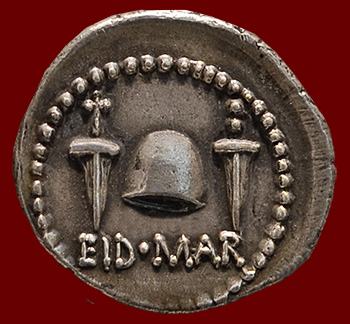
Latins called it ; 'Pileus Libertatis', or 'Cap of Liberty (Freedom)'. It was a symbol of freedom for the Romans (1). It is depicted on a coin of Brutus, struck in Macedonia, after the assasination of Julius Cesar (2), as well as on a number of other Roman coins struck under various Imperators, to name Caligula (3). In eighteenth century 'Plisi i Lirise' was also used as an American national symbol of freedom, and depicted on a number of American coins, too (4).
However, considering that Etruscans were not a Latin people, the origin of the cap must be sought elsewhere. It must be noted that 'Pileus Libertatis' is also known by the name 'Phrygian Cap' (5). Phrygia was an ancient kingdom situated in what is today Western Turkey, with the ancient Troy being a city of Phrygia. Likewise the majority of historians believe that Etruscans too originated in Western Turkey, and were often called by ancient historians Pelasgian !!!!!
Today, 'Pileus Liberatis' or 'Phrygian Cap' survives in the culture of the Albanians, still being worn by these people, as a national cap.


Ref:

1.http://www.lyberty.com/dict/Libertas.htm

2.http://www.vroma.org/images/mcmanus_...us_pileus2.jpg

3.http://www.waycoolcoins.com/letterc/caligquad.jpg

4.http://www.usmint.gov/historianscorn...lf1935_obv.jpg
(http://www.exonumia.com/tenup/ten0018a.jpg

5.http://encyclopedia.thefreedictionary.com/Phrygian+cap
 
Last edited:
Epirot said:
Not sure if this word is a loanword from Macedonian since we haven't enough evidences in which language is attested this word firstly.

I checked up in my dictionary for the exact meanings of 'Qeleshe' and it wrote that 'Qel' is not limited to denote only 'forehead' but even the upper part of head. For example, 'Qel' in Albanian means also 'bald-headed' which corresponds roughly with the part of head covered by 'Plis'.
See below for 'bald, bare':

http://www.utexas.edu/cola/centers/lrc/ielex/PokornyMaster.html

(PIE) keleuo - (Maced.) kelav/kjelav - (Croat.) chelav

The word 'chelo' may perhaps come from this word as the forehead is bare. But, as it is present in all Slavic languages, and as Albanian already has a word for 'forehead' (balle), it cannot be a loan into Slavic languages.
Actually I cannot bring any direct image of Illyrian hat discovered on archeological places of Illyrians because I have not the book of Alexander Stipcevic (I gave it to a mate of mine). But as far as I know, Illyrian cap did not differ much from Roman ones.
I will have to clarify a point I made earlier when you stated that many 'southern Illyrians' are depicted wearing the skull-cap. Although Zenica is hardly in the 'south' of Illyria, the archaeological remains from that area are included in the 'southern Illyrian group' by John Wilkes - in case that is what you were making reference to with 'southern Illyrians'.
While I was searching for the origin of Albanian cap, I found also this one that may bring some more light on the question
Worthy of further discussion.
 
S. Although Zenica is hardly in the 'south' of Illyria, the archaeological remains from that area are included in the 'southern Illyrian group' by John Wilkes - in case that is what you were making reference to with 'southern Illyrians'.

If I am not mistaken, in Dyrrachium (modern Albanian city of Durrës) during archeological excavations were brought in light some reliefs showing an Illyrian man that wore a cap, which does not differ much from Albanian one (judging from its form). I'll try to find it if I can and to post here!
 
If you do a search that's one of the theories that say that the modern albanians are not descended from the illyrians but from albania in asia in the sixth or seventh century.
 
We don't know anything for sure but these "coincidences" raising some questions.

There is a computer program which analyzes the 138 different typological characters and a vocabulary of languages. It finds the similarities of the different languages and draws a table according to the results.

The result diagram shows Albanian language between Romanian and modern Greek in terms of grammar features but as for vocabulary, it puts Albanian between Persian(which has a lot of common words with Arabic today) and eastern Armenian/modern Greek;


Check where was historical Albania in Caucasus and see who were their neighbors. Iranians and Armenians. And see which languages are most closest to Albanian language in my post above. Persian and eastern Armenian.

We also know that muslim Arabs invaded Caucasus Albania in 8th century and check what Evliya Celebi said about Albanians; Some tribes with muslim Arab leaders among them, migrated in to the Balkans and mixed with Frankish people(Latin languages, peoples) in there and thats how today`s Albanians born. That was what Albanians said to Evliya Celebi in 17th century.
 
We don't know anything for sure but these "coincidences" raising some questions.


Check where was historical Albania in Caucasus and see who were their neighbors. Iranians and Armenians. And see which languages are most closest to Albanian language in my post above. Persian and eastern Armenian.

We also know that muslim Arabs invaded Caucasus Albania in 8th century and check what Evliya Celebi said about Albanians; Some tribes with muslim Arab leaders among them, migrated in to the Balkans and mixed with Frankish people(Latin languages, peoples) in there and thats how today`s Albanians born. That was what Albanians said to Evliya Celebi in 17th century.

It explains the heavy Latin element in the Albanian language but it is the Arabic words that are the most interesting.
 
Do we have any words from Caucasian Albania that suggests that Albanians may have been descended from there ?


identical place-names between Albania and Caucasus:

Albo-Arnauti -Caucasus- Arnauti
Albo-Bushati - Caucasus-Bushati (also the name of an Albanian tribe)
Albo-Baboti - Caucasus-Baboti
Albo-Baka -Caucasus-Bako
Albo-Ballagati - Caucasus-Balagati
Albo-Ballaj,Balli - Caucasus- Bali
Albo-Bashkimi - Caucasus-Bashkoi
Albo-Bathore- Caucasus- Batharia
Albo-Bater- Caucasus- Bataris
Albo-Geg - Caucasus-Gegi, Gegeni, Geguti (Term used by Albanians in their language to denote their brethre north of the Shkumbi R.)
Albo-Demir Kapia - Caucasus-Demir Kapia (Turkish term: "iron gates"; term by which Turks refered to the Caspian Sea or arch: Albanian Sea)
Albo-Kish, Kisha... - Caucasus-Kish (Eight different toponyms in Albania begin with "kish")
Albo-Kurata,Kuratem,Kurateni(villages)-Caucasus-Kura (river) (Nine different toponyms in Albania begin with "Kura")
Albo-Luginasi - Caucasus-Lugini
Albo-Rusani - Caucasus-Rusian
Albo-Sheshani, Shoshani, Shashani - Caucasus-Shashani
Albo-Sheshaj, Sheshi - Caucasus-Sheshleti
Albo-Skalla - Caucasus-Skaleri
Albo-Shiptari Shipyaki, Shkhepa, - Caucasus-Shkepi
Albo-Shkoder - Caucasus-Shkeder, Shked, Shkoda
Albo-Shekulli - Caucasus-Shekouli
Albo-Skuraj - Caucasus-Skuria


of interest, as well:
-Gogo is a very common male name in Georgia and Albania
-Keko in Georgia female and male name in Albania.
-Shqiptars:mother=Nona, and in Georgia is female name.
-Gruzians: mother=deda ;Shqiptars Deda= male name.

Source and additional observations and evidence:
http://my.opera.com/macedonianneighbourhood/blog/show.dml/4235614

As a complex amalgamation of a number of very different languages, it may be more conducive for linguistic researchers and people researching the history of what came to be referred to as Albania to view this language as a creole language. Simply having Indo-European characteristics doesn't make it Indo-European in my opinion.
 
Nice Post Sovius, Do you know if the Caucausian theory is being accepted lately ? I mean the wording connection seems more than coiincidence. What about toponyms in Albania ?

Il also try to read up on them, Albania is really is a unique case in the balkans. Their uniqueness is the reasons Albanians give regarding their Illyrian heritage, but Im not so sure anymore. Il see if I can find Byzantine records of them.
 
Im having discussions with Albanians on Facebook and they all think Alexander was Albanian and he is their father, when I dropped the name Evliya Celebi they didnt know who that was, how strange, since Evliya Celebi is a world known person.

Maybe they dont want to know him. :)
 
Back
Top