• Welcome to the new Macedonian Truth Forum. All posts, members and private messages have been moved over from the old forum.

    Passwords from the old forum could not be carried over, so please use Forgot your password? to set a new one. The reset link is emailed to the address on your account.

  • Rules and Regulations at the forum of the Macedonian Truth Organisation (MTO)

    (1) The national-ethnic and cultural-linguistic identity of the Macedonian people is historically Macedonian, and derives its character from the native, indigenous and geographic homeland of the Macedonians, which is called Macedonia. To ensure that their human rights, integrity and heritage are appropriately respected, the only nouns and adjectives acceptable when reference is made to the above character and identity markers is Macedon, Macedonia, Macedonian and Macedonians.

    (2) The nation-state of the Macedonian people is the Republic of Macedonia, and is to be referred to by this official title so long as the 'republic' prefix is consistently applied to other states. Alternative references are the Macedonian Republic, or simply, Macedonia.

    (3) The 'ethnic' prefix is only acceptable for Macedonians in cases where differentiation is specifically required - so long as it is in context and consistent where it concerns its application to other ethnic groups.

    (4) Should any other differentiation be specifically required, the names of other ethnic groups that reside with Macedonians in either the Republic of Macedonia or the occupied Macedonian regions in Greece, Bulgaria, Serbia or Albania, are to be given a prefix.

    (5) Negating the identity, language and culture of the Macedonian people by deliberate avoidance of the terms Macedonia, Macedonian and Macedonians, or by any other means, is not permitted.

    (6) Systematic anti-Macedonian propaganda and rhetoric are not permitted.

    (7) Threads irrelevant to the Macedonian Cause, the community at the Macedonian Truth Organisation or the Macedonians in general may be considered as spam or not in the spirit of the forum. In such cases they are not permitted.

    (8) Continual posting of messages in threads with the sole purpose of deviating from the initial topics with the use of unrelated and unnecessary information is not permitted.

    (9) All posts, external articles, reports, etc that are cited in languages other than Macedonian or English, must be accompanied with a translation in one or both of the said languages.

    (10) Despite the possibility of some conversations and debates becoming heated, extreme abuse and/or racism, vulgar language and/or terminology, threats, revelation of personal information about others, harassment, and other such behavior will not be permitted. If deemed necessary all relevant information including member details will be reported to the appropriate authorities for investigation which may result in legal action.

    (11) Threads that are created must have a summary of a topic or excerpt of an article found in pertinent link(s) that have been included. One line threads will be considered unaccetable spam and are therefore not permitted.

    (12) Compulsive and deliberate lies, irrespective of the topic, are not permitted.

    (13) Any symbols or avatars found to be perceived as offensive to Macedonians are not permitted.

    (13) Any explicit or extreme material is not permitted.

    Failure to adhere to the above rules and regulations will result in a ban after 3 breaches. This may be reconsidered in some cases should the circumstances be of an unorthodox nature and/or require special consideration. To assure an effective deterrent against an individual or individuals with the sole purpose of causing dissent through spamming, racism or other improper means, the above rules will be strictly enforced.

    The MTO administration will monitor all discussions as reasonably practical and reserve the right to remove any post and/or member from the forum, and update the rules and regulations as required. Members are encouraged to immediately report any post and/or member to the MTO administration if they feel that these rules have not been abided by.

    The views expressed on this forum are those of the individuals. The only official representation of the MTO is made by the "Macedonian Truth Organisation (Site Owner)" username, and no other.

  • Macedonian Cause

    The Macedonian Truth Organisation calls on God in Heaven to protect, bless and guide the endeavour it is committing to undertake, and that is to work towards:

    Securing Macedonia as a free, independent and democratic republic in which sovereignty lies with the Macedonian citizens; as the nation-state of the Macedonian people in which they can preserve their culture, language and identity; as a state in which the Macedonian language and culture form the basis of public life and act as important unifying elements of Macedonian society; as the home of all its citizens to which it guarantees and obliges their inalienable natural rights and corresponding responsibilities;

    The acknowledgment as self-evident and irrefutable the existence of the:

    1) Indigenous, ethnonational name of Macedonia;
    2) Macedonian people, language and identity;
    3) Macedonian culture, symbols and folklore;
    4) Macedonian ancestry, heritage and history in its entirety; and
    5) Macedonian Orthodox Church;

    Securing recognition by the International Community of the tragedies endured by the Macedonian people, of the division of Macedonia with the signing of the Treaty of Bucharest on August 10, 1913, and the genocide committed against the Macedonian people at the hands of the Greek, Bulgarian and Serbian states and their respective churches during the 19th and 20th centuries;

    Ensuring that the Interim Accord is declared ‘null and void’ and that all constitutional provisions, acts, commitments, agreements, legislation, regulations, policies or programs emanating from, supporting or consequential to the Interim Accord are also declared ‘null and void’, including the use of any symbols and the completion of any acts imposed by, or originating from, the Interim Accord.

    Ensuring that the Framework Agreement is abolished and that all constitutional provisions, acts, commitments, agreements, legislation, regulations, policies and programs emanating from, supporting or consequential to the Framework Agreement are also abolished and replaced by a framework of constitutional and statutory law based on inalienable natural rights and corresponding responsibilities and universally codified human rights mechanisms.

    Securing the abolishment of any existing constitutional provisions, acts, agreements, legislation, regulations, policies and programs that discriminate against the Macedonian people, in any international organisation or any of the countries of the International Community where such constitutional provisions, acts, agreements, legislation, regulations, policies and programs exist, and thereby ensuring the freedom for Macedonians to exercise their inalienable natural rights and fulfil their corresponding responsibilities, and practice their culture, language and religious faiths in all the countries of the International Community without hindrance;

    The empowerment of Macedonians to undertake a moral revolution and to instil and/or reinvigorate within themselves a deep-rooted national, cultural, linguistic and historical dignity and a commitment to the exercise of freedom based on inalienable natural rights and corresponding responsibilities;

    The recognition of the Macedonian minorities in the neighbouring states of Macedonia as well as the respect for the inalienable rights and freedoms of the Macedonian minorities, as provided for by natural law and as codified by the United Nations Charter, the Universal Declaration of Human Rights and other universally codified human rights mechanisms;

    The full and unreserved respect of, and the support for, the rights of all people of non-Macedonian descent living in Macedonia and around the world, who share a reciprocal full and unreserved respect for the Macedonian people, their homeland and their state;

    The cultural unification and solidarity of the Macedonian people living in all parts of historical Macedonia and adjacent territories, as well as Macedonians throughout the world;

    The unity of all Macedonians on the principles, objectives and achievement of the Macedonian cause as defined by this declaration.

Falconry in Macedonian history

Bratot

New member
The Representations of Predatory Birds in the Cultural Heritage of Macedonia


The predatory birds present in the pictorial and archaeological artifacts are not a prerogative of one country. These motifs can be found in a large chronological and territorial range. At the same time it should be noted that birds such as falcons and eagles, often acquire symbolical, hierarchal and even religious meaning in the process of artistic elaboration. Thus, if interpreting, we are obliged to reconsider all these possibilities.

However, the representations of predatory birds in the material culture of one particular land/country could direct toward their real presence during the prehistoric and historic periods, as well as toward their popularity among the population.
The presence of falcon and eagle images in the material culture from Republic of Macedonia can be traced back to prehistoric times. On this occasion we will give a brief survey which will include only one part of the artifacts originating from this territory.

coinsofhaw.png


Cleopatra 7
cleo-r30.jpg


Coin of Ptolemy II (285-246 B.C.)

ptiir37a.jpg


Coin of Ptolemy VI (180-164 B.C.)

ptvirp26r-enh.jpg


Alexander the Great
hm12_6_1_0_1_big1.jpg

http://www.hermitagemuseum.org/html_Ru/12/2006/hm12_6_1_0_1.html

One of the first representations of a predatory bird (eagle) can be seen on the coins of the Paeonian ruler Audoleon (315-286/5 BC). The bird is depicted standing on the arm of the supreme deity Zeus. The very same reverse design will be applied on the coins of the Macedonian rulers (Alexander III, Ptolemy I). Although in this case the eagle represents an attribute of the deity, as well as an imperial emblem, its presence can be intertwined with the fauna species of the time, as well as with the anthropomorphic background of the pantheon i.e. the humanization of the gods.


Symbol of Macedonian Dynasty in Eastern Roman Empire
byzantium_sm.jpg


ploca%20na%20sarkofag.jpg
slika4.jpg


im_122_277.jpg

Fig. 2 – plates from the sarcophagus from the Samuil`c church of St. Achilles, Prespa Lake, c.986-900

Another representation of predatory birds (falcons or eagles) can be seen on the plates of the sarcophagus discovered in the deaconicon of the Samuil`s church of St. Achilles on the Prespa Lake. These plates are dated in 986-900. It is interesting that within these compositions the birds are depicted attacking animals (a camel in one, and a water bird in the other case). It must be noted that the iconography of the plates surely possessed some religious and symbolical meaning, but it should also be emphasized that the gesture of the predatory birds indicates a real and objective behavior of these birds while hunting. Thus, we can suppose that the artist observed these birds in his environment, whether wild or “domesticated”.


slika7.jpg
slika8.jpg


Fig. 4 – Altar plates from St. Sophia, Ohrid, c.1037-1045


The practice of depicting eagles/falcons in the religious art repeats in the two parapetted marble plates from the altar of the church St. Sophia in Ohrid, which are dated c.1037-1045. In these examples the birds are represented in the moment of raising or carrying a plunder. On the first marble plate the bird carries a snake, which can be interpreted as a symbolical Christian motif, while on the second plate the claws hold a rabbit.
Again, although primarily symbolical, these compositions possess profound artistic elaboration which speaks of some kind of direct observing of the birds behavior or possible falconry activities.

This is the first visual display of "Serbian" state flag of Tsar Dushan (I opened a special thread about him HERE ):
Zastava_kralja_Stefana_Dusana.gif


Ово је први ликовни приказ српске државне заставе. Поморска карта Ангелина Дулцерта из 1339. године, на пергаменту из два спојена дела (1020мм/750мм) садржи вињете градова, од којих су неке са заставама. Рађена је у више боја и производ је каталонске радионице картографа са Мајорке. На усправном копљишту које се завршава куглом , постављена је застави изнад града Скопља. На жутом квадратном пољу, насликан је црвени двоглави орао раширених крила. (Графика заставе је рађена на основу црно-бијеле слике карте и описа боја заставе из „МЦЈ-Средњовековне карте“ Народна књига Београд, 1979. године, а карта се чува у Bibliotheque national, Paris,Department des cartes et plans, Res. –Ge.B.696).

Nice yellow-red colors huh?


Monastery of St. Jovan Bigorski:
bigorskidvoglavorelrm2.jpg


slika9.jpg

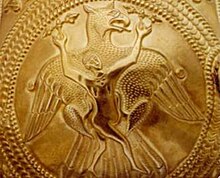
Fig. 5 – golden earrings from Crkvishte, Gorno Orizari – Kocani, XIV century


The eagle or falcon motif is present even in the secular material culture of the medieval period in Macedonia. There exists a large repertoire of depictions of these birds on media such as jewelry, especially on rings and on some luxurious specimens of earrings. All these finds are dated between the XI-XV centuries and mostly represent grave offerings. Thus, it becomes clear that they belonged to concrete individuals. Whether their depiction was result of fashion, religious or hierarch signalization, still it should be noted that scholars leave an open possibility that the medieval jewelry in general, could indicate a corporation membership.


Macedonian Emblem 1525 as Coat of Arms and a Seal of the Macedonian Zhupan - Volk Makedonski
eaglecoata.jpg


Macedonian Mijak famillies flags 18th Century:
mijackozna.jpg


d0bcd0b8d1.jpg


mijack1280186199.jpg


References and illustrations: V. Lilčić, Antiquity, in Macedonian Cultural Heritage, Skopje, 1995, 46-89, 50; Н. Sheldarov, V. Lilčić, Kings of Antique Macedonia and their monets / coins in Republic of Macedonia, Skopje 1994, 64; P. Miljković-Pepek, Medieval Decorative Sculpture in Stone and Metal, in Macedonian National Treasures, Skopje, 1989, 199-210; Н. Chausidis, Dualistick paintings, Skopje, 2003, 273-275; Heaven on Earth – Art and the Church in Byzantium, ed. By Linda Safran, Pennsylvania, 2002, 200


samoil1280187238.jpg


With his brother Aaron, Samoil went to the court of the German Emperor to congratulate him on Easter and ask for political support. As befits a guest, probably as a gift he took something, and the host also has responded. Namely, in the museum in Würzburg kept a silk curtain, which is presented eagle flight of Alexander of Macedon. The curtain depicting two eagles whom Alexander (Christian symbol) on his head a golden crown placed three crosses! We do not know whether it was a gift to the German king, but could imagine!


In progress
 
Last edited:
Falcon as a symbol of Macedonian folklore:


Море, сокол пие вода на Вардарот

Море, сокол пие вода на Вардаро.
Јане, Јане ле бело грло.
Јане, Јане ле кротко јагне.

Море, ој соколе, ти јуначко пиле
Море нели виде јунак да премине.
Јане, Јане ле бело грло.
Јане, Јане ле кротко јагне.

Јунак да премине с девет лути рани.
с девет лути рани, сите куршумлии.
Јане, Јане ле бело грло.
Јане, Јане ле кротко јагне.

А десета рана со нож е прободена.
Јане, Јане ле бело грло.
Јане, Јане ле кротко јагне.

Кога падна на Пирина

Кога падна на Пирина
ранет Јане Сандански,
долетеја три сокола
и на Јане збореја:
Ајде Јане, со нас појди,
ние лек ќе најдиме.

Мајка Македонија
за таков јунак лек ќе најде. x2

Први сокол ќе те носи
долу крај Вардара.

Втори сокол ќе те носи
дур на Белото море.

Трети сокол ќе те носи
горе в Пирин планина.


Белким ти ќе оздравиш
Македонија да ослободиш. x2

Ој те, вие три сокола,
срце луто сум ранет.
Остајте ме тук да умрам,
мене лек не лекува.
Македонија други ќе роди,
ќе ја ослободат.
Мајко Македонијо,
други да раѓаш,
да те ослободат! x2

Сокол ми лета високо

Сокол ми лета високо,
Мори девојко,
Сокол ми лета високо.

Над таја града Кукуша,
Мори девојко,
Над таја града Кукуша.

Над Делчевите дворови,
Мори девојко,
Над Делчевите дворови.

Делчево либе убаво,
Мори девојко,
Делчево либе убаво.

Рамни дворови метеше,
Мори девојко,
Рамни доворови метеше.

И дробни солзи ронеше,
Мори девојко,
И дробни солзи ронеше.

Дека е Гоце загинал,
Мори девојко,
Дека е Гоце загинал.

Во тоа село Баница,
Мори девојко.
За жална Македонија.

Назад, назад, Калино моме

Назад, назад, Калино моме,
немој да одиш по мене.
Кај нас си има висока гора,
не ќе можеш да ја поминеш.
Кај нас си има висока гора,
не ќе можеш да ја поминеш.

Ќе се сторам јас сокол пиле
и пак кај тебе ќе дојдам.
Гора ќе прелетам,
кај тебе ќе дојдам,
вечно твоја ќе бидам.
Гора ќе прелетам,
кај тебе ќе дојдам,
вечно твоја ќе бидам.

Назад, назад, Калино моме,
немој да одиш по мене.
Кај нас си има длабока река,
не ќе можеш да ја поминеш.
Кај нас си има длабока река,
не ќе можеш да ја поминеш.

Ќе се сторам јас мрена риба
и пак кај тебе ќе дојдам.
Река ќе препливам,
кај тебе ќе дојдам,
вечно твоја ќе бидам.
Река ќе препливам,
кај тебе ќе дојдам,
вечно твоја ќе бидам.

Назад, назад, Калино моме,
немој да одиш по мене.
Кај нас си имам убава жена
и две мали дечиња.
Кај нас си имам убава жена
и две мали дечиња.

Ќе се сторам јас црна чума
и пак кај тебе ќе дојдам.
Жена ќе ти сотрам,
дечиња ќе гледам,
вечно твоја ќе бидам.
Жена ќе ти сотрам,
дечиња ќе гледам,
вечно твоја ќе бидам.


http://www.scribd.com/doc/34885103/Соколот-како-симбол-во-македонското-народно-творештво
 
Sorry if i am hijacking your thread Bratot because you named it as "Macedonian history" but i wanna show a different perspective;


The predator bird, falcon is also the symbol of common Turkish/Hungarian mythology. For Turkish mythology, falcon is the second most important symbol after wolf but for the Hungarians, falcon is their primary symbol. These were most likely the representative images of these tribes. Wolf for the Turks, falcon for the Magyars.


I can only post the information in Wikipedia atm but it seems reliable with the quotes from books;

Turul


170px-Turul_badge_hu.jpg

Hungarian art: Turul bird(9th century)

tu04.jpg


tu03.jpg


The Turul is the most important mythological bird of the origin myth of the Magyars(Hungarian people). It is a messenger of god in Hungarian mythology, who sits on top of the tree of life along with the other spirits of unborn children in the form of birds.

The Turul is probably a large falcon, and the origin of the word is most likely Turkic(togril or turgul means a medium-large bird of prey in the family Accipitridae, Goshawk or Red Kite). In Hungarian the word sólyom means falcon, and there are three ancient words describing different kinds of falcons: kerecsen(saker), zongor[Turkish Sungur = Gyr Falcon](lives in the male name Zsombor) and turul.

Based upon ancient Hungarian tradition, the royal house of Hun(garian)s (the kings of Huns and the later Hungarians) bears the name of Turul clan(original Latin: genere Turul, later called by the name Arpad house also), what descents from the wise and just king Nimrod, the first king on Earth.


220px-Emesesdreemhungary.JPG

Golden tamga(the name of tribal symbols in Turks and Hungarians) of Turul from the Khazar Empire era around 7th century. Treasure of Nagyszentmiklós.


Representation
The Turul represents the god's power and will. The Turul was seen as the ancestor of Attila, and it was also the symbol of the Huns. The Hungarian Turul is often represented carrying the flaming Sword of God (sword of Attila).

The authentic representation of the Turul is always with a crown. It cannot be linked directly to the Holy Crown of Hungary, but more to the crown of Attila, as by ancient heritage, Attila is considered as first king of Hungary, as written in Chronicon Pictum and in other codexes.

http://en.wikipedia.org/wiki/Turul


Hungarian people calls this falcon symbol as "Turul" but it`s a Turkish word meaning "medium sized predatory bird, falcon". Turul, Tugrul was also the tamga(symbol) of the Hun Empire of Attila and it`s also a common male name both in Hungary and Turkey today.

BUT, things get further complicated because actually "Turul" is not a turkish originated word. It seems that we also took it from Etruscan language.

Check this out;

Turan (mythology)

Turan was the Etruscan goddess of love and vitality and patroness of the city of Velch. In art, she was usually depicted as a young winged girl. Turan appears in toilette scenes of Etruscan bronze mirrors. She is richly robed and jeweled in early and late depictions, but consistently appears nude under the influence of Hellenistic art in the third and second centuries BCE.

The Etruscan month of July was named after her, although we only know the Latin word for it, Traneus.

She was seen as the equivalent to the Roman Venus and the Greek Aphrodite. Her name is derived from the Etruscan verb turan "to rule".

Turan had a sanctuary in the Greek-influenced Gravisca, the port for Tarquinia, where votive gifts inscribed with her name have been found. One inscription calls her Turan ati, "Mother Turan" which has been interpreted as connecting her to Venus Genetrix, Venus the mother of Aeneas and progenitor of the Julio-Claudian lineage.

http://en.wikipedia.org/wiki/Turan_(goddess)


It seems that the quite similar mythology existed in the Etruscans at 1200BC with the name "Turan" and shown as a girl with wings. This word is also adopted in Latin language as expected since you know the many Etruscan words was the source of Latin language. BUT it seems that the post-Etruscan era, the ancient Hellenes adopted this symbol but they deformed it with a naked girl image while keeping the same name "Turan". I think this Hellenistic period deformation can be explained by the admiration of Hellenes to the human body form instead of animal forms of Etruscans. But Hungarians and Turks preserved the animal form because of their shamanistic belief and sacredness of the animals and nature.


Also one more interesting thing is, "Turan" means "to rule" in Etruscan.

Now check this from the Wiki page;

clipboard0111.jpg


As you can see, one of the leader of Turkish Seljuk Empire and a founder of Ottoman dynasty was named as "Tugrul". The founder of Ottoman dynasty`s name was "Er-Tugrul" but "ER" is just a prefix/suffiix for few male names in Turkish meaning "man".

Ertuğrul
Ertuğrul(1191/1198 Ahlat – 1281 Söğüt) was the father of Osman I, the founder of the Ottoman Empire. He was the leader of the Kayı clan of the Oghuz Turks.

http://en.wikipedia.org/wiki/Ertuğrul


clipboard01111.jpg


Hungarians adopted Tugrul from Turkish and as you can see here, the name of "Tugrul" later adopted by Mongols too and Mongolian Tugrul was a ruler too!!! and a protector of Genghis Khan.


You can see other uses of the word "Turan" in Hungaria, Turkey and Azerbaijan on this Wikipedia list;

clipboard022.jpg


P. S: These animal objects and symbols are most definitely related with paganism(or shamanism for Caucasus people). Since paganism symbols was strictly forbidden after conversation to christianity, so we don't know much about your pre-christianity era today. But this wasn't the case with our conversation to Islam. Shamanistic rituals was also considered as sin in Islam but it wasn't the "work of devil" as considered in christianity. So, for every new christian converts, it was required to destroy their former pagan objects but the Turks didn't erase all of it and we still know the details of pre-11th century Turkish shamanism and symbols like this Turul, Turan and tree of life myths.
 
Last edited:
Onur,

it is earliest suggested the double headed eagle to be in use by the Hittities who inhabited exactly the Minor Asia region.
http://en.wikipedia.org/wiki/Hittites

11661184_000012ff86.jpg


also the Seljuk Turks after conquering most of the former Persian empire have adopted this symbol.

But I would appreciate if we keep our focus mainly on Macedonian tradition since that was the purpose of this thread.

Thanks,
M
 
This is one of the versions of Byzantine (Roman) two-headed eagle which is located at Plaoshnik, Ohrid.

54BC929EE8671B479F821A0A3392AAA6.jpg

C540CB33A336BB4E942C32EA122D6417.jpg


Macedonian version has two swords, Byzantine Cross as a shield on his chest and a royal crown on his head.
This symbol today is almost forgotten among us, it's in use only by the Macedonian Orthodox Church.
 
122008193.jpg


KINGS of MACEDON. Perseus. 179-168 BC

Ox: Helmeted head of the hero Perseus right; harpa to right

Rx: Eagle standing left, head right, on thunderbolt : B A P E around
 
2 Enoch, or the Slavonic Apocalypse of Enoch, was written late first century C.E. in Egypt by a Jew.

WTF?

The second Dream-Vision in this section of the Book of Enoch is an allegorical account of the history of Israel, that uses animals to represent human beings and human beings to represent angels.

Sheep are the faithful; Rams are leaders; Herds are the tribes of Israel; Wild Asses are Ishmael, and his descendants including the Midianites; Wild Boars are Esau and his descendants, Edom and Amalek; Bears (Hyenas/Wolves in Ethiopic) are the Egyptians; Dogs are Philistines; Tigers are Arimathea; Hyenas are Assyrians; Ravens (Crows) are Seleucids (Syrians); Kites are Ptolemies; Eagles are possibly Macedonians; Foxes are Ammonites and Moabites;

All the (Macedonians) and vultures and (Seleucids) and (Ptolemies) were gathered together, and there came with them all the sheep of the field, yea, they all came together, and helped each other to break that horn of the ram

http://en.wikipedia.org/wiki/Book_of_Enoch
 
eagletat.jpg


thats my tat of the eagle on my back, ive always been taught the eagle is been apart of our history.
 
Ok Bratot after reviewing your evidence I have a few questions.

1) Was the Eagle a big part of the peasant (average) class in Macedonia?
2) Do you consider the predatory bird dispalyed in this topic as something that has followed into the modern Macedonians time?
3) Could it be that the predatory bird was nothing more than symbology for the elite?
4) Was the act of 'Falconry' itself widespread in Macedonia? Or was it game only for the upper, educated classes? And is this a widespread tradition in Macedonia today?
 
Полет Александра Великого.


Далее, такой же поступок приписывается в русских сказаниях царю Соломону, а в иерусалимском талмуде — Александру Великому, которые на орлах или грифах летали на троне к небу.
Сказание о полете Александра Великого отразилось во многих произведениях искусства, где описан этот эпизод. Вот как рассказано об его опыте в очерке, появившемся в III веке до Р. X. — «Александр приказал запречь в трон четырех сильных птиц, которым три дня не давали есть. Он сам сел на трон и высоко поднял два копья, на которых были привязаны куски мяса.

Птицы, стремясь к последнему, подняли на воздух трон с Александром. На большой высоте Александру встретилась птица с лицом человека и приказала ему вернуться на землю. Когда Александр взглянул вниз, он, глубоко под собой, увидел громадную, свернувшуюся в кольцо змею и в центре кольца маленький помост.

21.jpg


Рис. 21. Полет Александра Македонского на птицах к небу

Птица объяснила ему, что змея есть море, а помост — земля, окруженная морем.
По приказанию птицы Александр опустил копья, и птицы полетели вниз и благополучно спустили его на землю, но так далеко от места взлета, что ему лишь с большим трудом удалось достичь своего войска». Полет Александра Великого на небо изображен в разное время в разных произведениях искусства. На рис. 21 показана миниатюра из мюнхенской рукописи XIV века (Enikels «Weltchronik)». На рис. 22 показана еще подобная же миниатюра 1320 года. На рис. 23 изображен рельеф на римских воротах церкви в Ремачене на Рейне, на рис. 24 рельеф в базилике св. Марка в Венеции, на рис. 25 изображена вышивка на полушелковой материи исполненная в Регензбурге (южная Германия) в 13-м веке (из музея в Крефелде).


22.jpg

Рис. 22. Полет Александра Македонского на птицах к небу. (Миниатюра 1320 г.).


23.jpg


Рис. 23. Полет Александра Македонского. (Рельеф на римских воротах церкви в Ремачене на Рейне).


24.jpg


Рис. 24. Полет Александра Македонского. (Рельеф в базилике С.Марко в Венеции)

25.jpg


Рис. 25. Полет Александра Македонского. (Вышивка в музее в Крефельде).


http://epizodsspace.no-ip.org/bibl/rynin/rynin1/02.html

Please translate this Russian text via Google
 
Ok Bratot after reviewing your evidence I have a few questions.

1) Was the Eagle a big part of the peasant (average) class in Macedonia?

I have no measurable technique to provide such answer.

It is preserved mostly because of it's careful and significant usage of the higher/educated classes but also shown pretty much wide familiarity among the Christian part of the Macedonians related to the tradition, also we have found it in several families as private Coat of Arms.

2) Do you consider the predatory bird dispalyed in this topic as something that has followed into the modern Macedonians time?

Yes
MNR_logo.jpg


3) Could it be that the predatory bird was nothing more than symbology for the elite?

No, not only for the elite, since it has it's simbolical meaning in the folk songs and tales.


4) Was the act of 'Falconry' itself widespread in Macedonia? Or was it game only for the upper, educated classes? And is this a widespread tradition in Macedonia today?

We should not focus only on the 'falconry' but the general symbolic meaning of the birds in our tradition.

svastikaohridls7.jpg


It is noted that the Macedonian falconry of ancient times has influenced many other Royal houses from Roman and Western side.
 
Fair enough Bratot. Would you say that Fish could also fall into the Macedonian category of symbolism? Here's something I found that may interest many of you?

FlyFishingMacedonia55.jpg

Fly Fishing: A Life in Mid-Stream By Turhan Tirana
 
Last edited:
I am not able to answer positively on your question based only on the one page provided here.

If we look at the ancient mosaics they are surelly depicting many animal kinds, but of a significant symbolism or attachment to some we can testify the Goat, Lion, Grifin, Eagle/Hawk and the Macedonian Mastiff.
We cannot provide evidence of unbroken employment in our cultural tradition for all of them but we can testify their significance for our ancestors.
 
scene from the wooden casket from Terachina, c.IX century
(Possible Macedonian origin)
The “attacking” act also appears in one composition of the wooden casket from Terachina, Italy, dated c.IX century. Although there are several hypotheses about its origin, some scholars attribute it to the Balkan i.e. Macedonian territory. The eagle is represented standing on, or grabbing an animal which resembles a deer.

slika61.jpg


A Macedonian falcon i hard to find but i managed to find one example.
 
Back
Top