• Welcome to the new Macedonian Truth Forum. All posts, members and private messages have been moved over from the old forum.

    Passwords from the old forum could not be carried over, so please use Forgot your password? to set a new one. The reset link is emailed to the address on your account.

  • Rules and Regulations at the forum of the Macedonian Truth Organisation (MTO)

    (1) The national-ethnic and cultural-linguistic identity of the Macedonian people is historically Macedonian, and derives its character from the native, indigenous and geographic homeland of the Macedonians, which is called Macedonia. To ensure that their human rights, integrity and heritage are appropriately respected, the only nouns and adjectives acceptable when reference is made to the above character and identity markers is Macedon, Macedonia, Macedonian and Macedonians.

    (2) The nation-state of the Macedonian people is the Republic of Macedonia, and is to be referred to by this official title so long as the 'republic' prefix is consistently applied to other states. Alternative references are the Macedonian Republic, or simply, Macedonia.

    (3) The 'ethnic' prefix is only acceptable for Macedonians in cases where differentiation is specifically required - so long as it is in context and consistent where it concerns its application to other ethnic groups.

    (4) Should any other differentiation be specifically required, the names of other ethnic groups that reside with Macedonians in either the Republic of Macedonia or the occupied Macedonian regions in Greece, Bulgaria, Serbia or Albania, are to be given a prefix.

    (5) Negating the identity, language and culture of the Macedonian people by deliberate avoidance of the terms Macedonia, Macedonian and Macedonians, or by any other means, is not permitted.

    (6) Systematic anti-Macedonian propaganda and rhetoric are not permitted.

    (7) Threads irrelevant to the Macedonian Cause, the community at the Macedonian Truth Organisation or the Macedonians in general may be considered as spam or not in the spirit of the forum. In such cases they are not permitted.

    (8) Continual posting of messages in threads with the sole purpose of deviating from the initial topics with the use of unrelated and unnecessary information is not permitted.

    (9) All posts, external articles, reports, etc that are cited in languages other than Macedonian or English, must be accompanied with a translation in one or both of the said languages.

    (10) Despite the possibility of some conversations and debates becoming heated, extreme abuse and/or racism, vulgar language and/or terminology, threats, revelation of personal information about others, harassment, and other such behavior will not be permitted. If deemed necessary all relevant information including member details will be reported to the appropriate authorities for investigation which may result in legal action.

    (11) Threads that are created must have a summary of a topic or excerpt of an article found in pertinent link(s) that have been included. One line threads will be considered unaccetable spam and are therefore not permitted.

    (12) Compulsive and deliberate lies, irrespective of the topic, are not permitted.

    (13) Any symbols or avatars found to be perceived as offensive to Macedonians are not permitted.

    (13) Any explicit or extreme material is not permitted.

    Failure to adhere to the above rules and regulations will result in a ban after 3 breaches. This may be reconsidered in some cases should the circumstances be of an unorthodox nature and/or require special consideration. To assure an effective deterrent against an individual or individuals with the sole purpose of causing dissent through spamming, racism or other improper means, the above rules will be strictly enforced.

    The MTO administration will monitor all discussions as reasonably practical and reserve the right to remove any post and/or member from the forum, and update the rules and regulations as required. Members are encouraged to immediately report any post and/or member to the MTO administration if they feel that these rules have not been abided by.

    The views expressed on this forum are those of the individuals. The only official representation of the MTO is made by the "Macedonian Truth Organisation (Site Owner)" username, and no other.

  • Macedonian Cause

    The Macedonian Truth Organisation calls on God in Heaven to protect, bless and guide the endeavour it is committing to undertake, and that is to work towards:

    Securing Macedonia as a free, independent and democratic republic in which sovereignty lies with the Macedonian citizens; as the nation-state of the Macedonian people in which they can preserve their culture, language and identity; as a state in which the Macedonian language and culture form the basis of public life and act as important unifying elements of Macedonian society; as the home of all its citizens to which it guarantees and obliges their inalienable natural rights and corresponding responsibilities;

    The acknowledgment as self-evident and irrefutable the existence of the:

    1) Indigenous, ethnonational name of Macedonia;
    2) Macedonian people, language and identity;
    3) Macedonian culture, symbols and folklore;
    4) Macedonian ancestry, heritage and history in its entirety; and
    5) Macedonian Orthodox Church;

    Securing recognition by the International Community of the tragedies endured by the Macedonian people, of the division of Macedonia with the signing of the Treaty of Bucharest on August 10, 1913, and the genocide committed against the Macedonian people at the hands of the Greek, Bulgarian and Serbian states and their respective churches during the 19th and 20th centuries;

    Ensuring that the Interim Accord is declared ‘null and void’ and that all constitutional provisions, acts, commitments, agreements, legislation, regulations, policies or programs emanating from, supporting or consequential to the Interim Accord are also declared ‘null and void’, including the use of any symbols and the completion of any acts imposed by, or originating from, the Interim Accord.

    Ensuring that the Framework Agreement is abolished and that all constitutional provisions, acts, commitments, agreements, legislation, regulations, policies and programs emanating from, supporting or consequential to the Framework Agreement are also abolished and replaced by a framework of constitutional and statutory law based on inalienable natural rights and corresponding responsibilities and universally codified human rights mechanisms.

    Securing the abolishment of any existing constitutional provisions, acts, agreements, legislation, regulations, policies and programs that discriminate against the Macedonian people, in any international organisation or any of the countries of the International Community where such constitutional provisions, acts, agreements, legislation, regulations, policies and programs exist, and thereby ensuring the freedom for Macedonians to exercise their inalienable natural rights and fulfil their corresponding responsibilities, and practice their culture, language and religious faiths in all the countries of the International Community without hindrance;

    The empowerment of Macedonians to undertake a moral revolution and to instil and/or reinvigorate within themselves a deep-rooted national, cultural, linguistic and historical dignity and a commitment to the exercise of freedom based on inalienable natural rights and corresponding responsibilities;

    The recognition of the Macedonian minorities in the neighbouring states of Macedonia as well as the respect for the inalienable rights and freedoms of the Macedonian minorities, as provided for by natural law and as codified by the United Nations Charter, the Universal Declaration of Human Rights and other universally codified human rights mechanisms;

    The full and unreserved respect of, and the support for, the rights of all people of non-Macedonian descent living in Macedonia and around the world, who share a reciprocal full and unreserved respect for the Macedonian people, their homeland and their state;

    The cultural unification and solidarity of the Macedonian people living in all parts of historical Macedonia and adjacent territories, as well as Macedonians throughout the world;

    The unity of all Macedonians on the principles, objectives and achievement of the Macedonian cause as defined by this declaration.

Albanians in Greece

The figure I used (the 1890 one) does not come from Lithoxoou but from a Western traveller.
I seriously doubt if there were less than 1600 Arvanites in Euboea in 1951 though but it doesn't matter.
 
There is no ethnic continuity between the Ionians of Euboea, Pontus and Attica and the descendants of the modern Atticans, Euboeans and Pontian.

And that's a fact.
 
Doric colonies of Sicily and their roots.
https://upload.wikimedia.org/wikipe..._Graecia_ancient_colonies_and_dialects-en.svg
Syracuse -> Corinth
Casmenai -> Syracuse -> Corinth
Kamarina -> Syracuse -> Corinth
Megara Hyblaea -> Megara
Selinunte -> Megara Hyblaea -> Megara
Heraclea Minoa -> Not known.
Gela -> Rhodes and Crete
Akragas -> Gela -> Rhodes and Crete

Ionic colonies of Sicily:
Zancle -> Euboea
Himaera -> Zancle -> Euboea
Calacte -> Zancle -> Euboea
Naxos -> Euboea
Catania -> Euboea
Leoniti -> Naxos -> Euboea

Most colonies of Sicily seem to come from regions with a largely Albanian-speaking population in 18th century. (Corinthia and Euboea)
 
Varibobi is found in both, the Ottoman defter and Lixouthou map.
The Albanian language of the village survived into the early 20th century.

An ancient inscription was found in the area of ​​the village, which states that races were held in the area in honor of Hera . [2] The village is mentioned in an Ottoman tax register of 1474 under the name Varbob. According to the store, it had 26 houses. [3] According to tradition, its original name was Paleochori, while until 1954 it was known as Varybobi. [2]


https://el.wikipedia.org/wiki/Δάφνη_Αυλώνος_Εύβοιας
It was renamed as Daphne.

Albanian names in the northwestern village of Euboea.
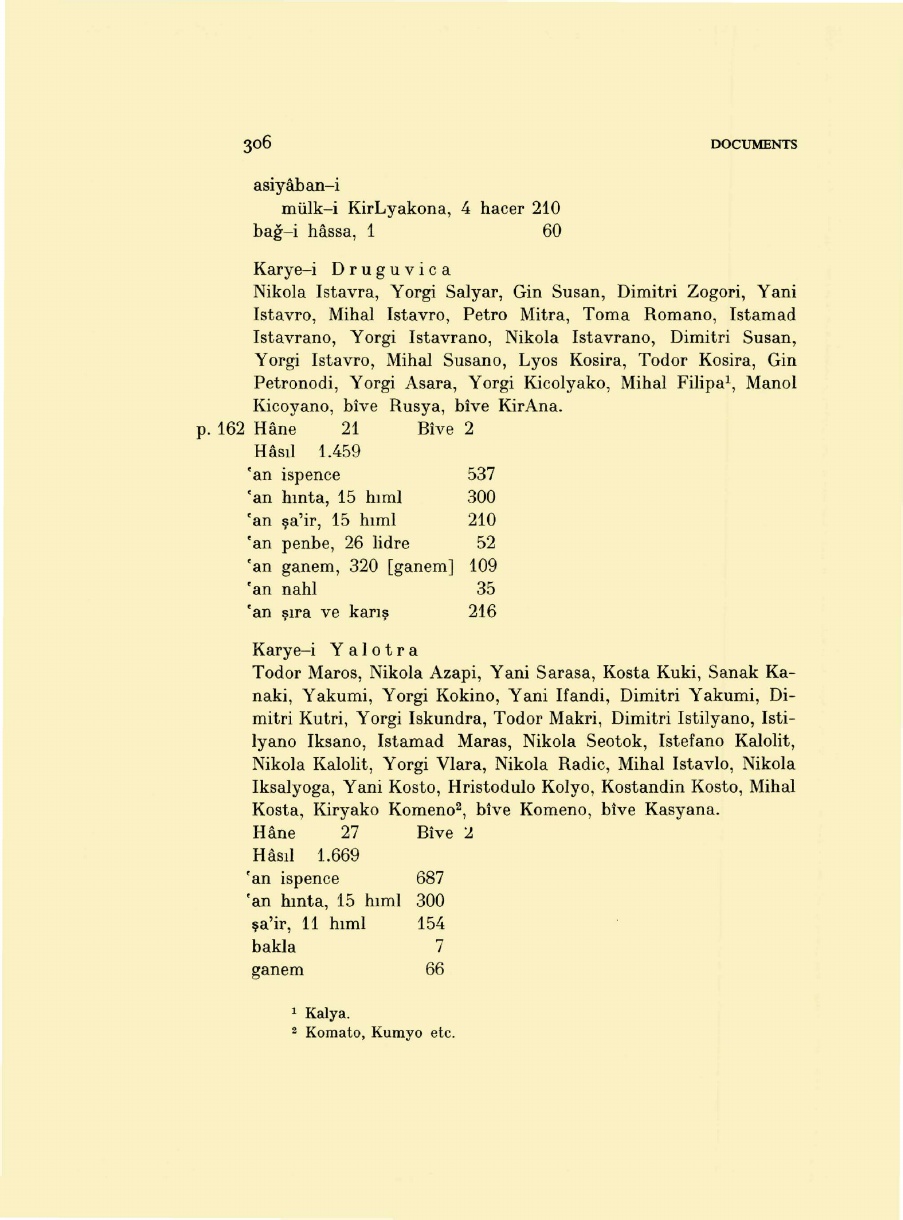
Another Gin in Druguvica/Drugunica:
5e216eb8f2987.jpg


Drugunica/Druguvica sounds as a Slavic placename, any opinion?
 
Last edited:
The Slavic presence was insigificant in the island even though existent, the biggest demographic change came with the Albanians in the 15th century.

''Unlike much of Byzantine Greece, Euboea was spared the bulk of the barbarian raids during Late Antiquity and the early medieval period, due to its relatively isolated location. The Vandals raided its shores in 466 and in 475, but the island seems to have been left alone by the Avars and Slavs, and it was not until a failed Arab attack on Chalcis in the 870s that the island again came under threat.[6] As a result, the island preserved a relative prosperity throughout the early medieval period, as attested by finds of mosaics, churches and sculpture throughout the 7th century, "even from remote areas of the island". ''

''Mit spürbarer Genugtuung bemerkte Fallmerayer noch für sich, daß der ganze Süden Euböas albanesisch sei und es auch im Norden ein Bächlein mit dem slawischen Namen Bistrica gebe''

With noticeable satisfaction, Fallmerayer remarked for himself that the entire south of Euboea was Albanian and that there was also a brook with the Slavic name Bistrica in the north.

The number of Slavic placenames are quite a few. Anyways I believe most of the Albanian speakers of the north were assimilated by around (add or take 15 years to those dates) by 1700-1800. But that's my opinion not something I can prove myself.
 
https://en.wikipedia.org/wiki/Arvanites
During the Greek War of Independence, many Arvanites played an important role on fighting on the Greek side against the Ottomans, often as national Greek heroes. With the formation of modern nations and nation-states in the Balkans, Arvanites have come to be regarded as an integral part of the Greek nation. In 1899, leading representatives of the Arvanites in Greece, among them are the descendants of the independence heroes, published a manifesto calling their fellow Albanians outside Greece to join in the creation of a common Albanian-Greek state.[15]

15. First published in Ελληνισμός, Athens 1899, 195-202. Quoted in Gkikas 1978:7-9.
Carlin, have you ever seen this document?
 
Ottoman census of the Euboean Island.

https://quod.lib.umich.edu/e/eebo2/A70955.0001.001/1:5?rgn=div1;view=fulltext

17th century
"IT Lyes to the North of Boeotia extending North West and South East about 120 miles; Its Breadth, at the broadest place not above 30. It was taken from the Venetians in the year 1471. The soil is very fertile, affording all sorts of Graine, Wine, and Oyle, as likewise Flesh and Fowl; the Sea abounding with Fish. Since the Turks have had possession of it, most of the Greeks are Fled from the Villages, and Townes; So as the inland places are mostly supplyed by Albaneses, who are the Shepherds, and serve the Turks at their Farmes. Formerly here were two Citys, and 500. Townes and Villages; Now there is but one, which can be called a City, which is the ancient Chalcis and now hath the name of the Island; by the Turks it is called Egriboz. It stands on a point of Land, having the Sea two Thirds about it."


https://pdfslide.net/documents/e-ba...cle-economie-et-population-les-registres.html
https://it.scribd.com/doc/212234588...es-registres-de-l-annee-1474-INR-Mpalta-89-01
i9HCc7f.png

6c5oQI5.png

''Boeotia, with Euboea, is largely in the hands of Toskh Albanians ; Thessaly in those of Vlachs and Anatolians, introduced from Konia about the tenth century ; and Macedonia, north of the Vistritza, in those of a blend of Slav with Bulgar mixed further -with Vlach and Anatolian elements.''

So much changes in just 150 years, most of the Euboean population was replaced and all of Hydra's and Spetse's.
SWvHIOY.png


What can we say for those islands from 1AD to 1400 AD? Or even after the death of Archimedes?
 
JOURNAL ARTICLE
Albanian Settlements in the Aegean Islands
F. W. Hasluck
The Annual of the British School at Athens
Vol. 15 (1908/1909), pp. 223-228

Samos and Psara received their share of Albanian settlers.

Authorities are fairly agreed that Samos and Psara were deserted for a hundred years. Jerome Justinian speaks of their repopulation after the fall of Chios (1566) by 'une nouvelle nation estrangere' ('a new foreign nation').

This is explained easily enough in Samos by the existence of villages such as Arvanitochori and Leka of acknowledged Albanian origin, which probably date from the settlement of Samos by Kilidj Ali and still spoke Albanian at the end of the 17th century. The Albanian inhabitants are said to have come from the Peloponnese.

In the case of Psara, Pouqueville visited the island in 1799 and as former consul at Jannina should certainly have recognized Albanians, describes the Psarians as such.
 
Last edited:
JOURNAL ARTICLE
Albanian Settlements in the Aegean Islands
F. W. Hasluck
The Annual of the British School at Athens
Vol. 15 (1908/1909), pp. 223-228

Samos and Psara received their share of Albanian settlers.

Authorities are fairly agreed that Samos and Psara were deserted for a hundred years. Jerome Justinian speaks of their repopulation after the fall of Chios (1566) by 'une nouvelle nation estrangere' ('a new foreign nation').

This is explained easily enough in Samos by the existence of villages such as Arvanitochori and Leka of acknowledged Albanian origin, which probably date from the settlement of Samos by Kilidj Ali and still spoke Albanian at the end of the 17th century. The Albanian inhabitants are said to have come from the Peloponnese.

In the case of Psara, Pouqueville visited the island in 1799 and as former consul at Jannina should certainly have recognized Albanians, describes the Psarians as such.

From the same author / journal article - page 227.

PkxD8F2.png


The french text/quote by St. Blancard (speaking in 1538) above states that the "Slavonians, Albanians, and Servians" were settled in the country round the Granicus, Asia Minor! The second half of that quote says that this is done in several/multiple regions in order to mix the languages of the populations.
 
Last edited:
''Boeotia, with Euboea, is largely in the hands of Toskh Albanians ; Thessaly in those of Vlachs and Anatolians, introduced from Konia about the tenth century ; and Macedonia, north of the Vistritza, in those of a blend of Slav with Bulgar mixed further -with Vlach and Anatolian elements.''

So much changes in just 150 years, most of the Euboean population was replaced and all of Hydra's and Spetse's.
SWvHIOY.png


What can we say for those islands from 1AD to 1400 AD? Or even after the death of Archimedes?

vzG0FVQ.png

bRNqMMf.png

rknNsei.png

1DQSP5y.png
 
Back
Top