• Welcome to the new Macedonian Truth Forum. All posts, members and private messages have been moved over from the old forum.

    Passwords from the old forum could not be carried over, so please use Forgot your password? to set a new one. The reset link is emailed to the address on your account.

  • Rules and Regulations at the forum of the Macedonian Truth Organisation (MTO)

    (1) The national-ethnic and cultural-linguistic identity of the Macedonian people is historically Macedonian, and derives its character from the native, indigenous and geographic homeland of the Macedonians, which is called Macedonia. To ensure that their human rights, integrity and heritage are appropriately respected, the only nouns and adjectives acceptable when reference is made to the above character and identity markers is Macedon, Macedonia, Macedonian and Macedonians.

    (2) The nation-state of the Macedonian people is the Republic of Macedonia, and is to be referred to by this official title so long as the 'republic' prefix is consistently applied to other states. Alternative references are the Macedonian Republic, or simply, Macedonia.

    (3) The 'ethnic' prefix is only acceptable for Macedonians in cases where differentiation is specifically required - so long as it is in context and consistent where it concerns its application to other ethnic groups.

    (4) Should any other differentiation be specifically required, the names of other ethnic groups that reside with Macedonians in either the Republic of Macedonia or the occupied Macedonian regions in Greece, Bulgaria, Serbia or Albania, are to be given a prefix.

    (5) Negating the identity, language and culture of the Macedonian people by deliberate avoidance of the terms Macedonia, Macedonian and Macedonians, or by any other means, is not permitted.

    (6) Systematic anti-Macedonian propaganda and rhetoric are not permitted.

    (7) Threads irrelevant to the Macedonian Cause, the community at the Macedonian Truth Organisation or the Macedonians in general may be considered as spam or not in the spirit of the forum. In such cases they are not permitted.

    (8) Continual posting of messages in threads with the sole purpose of deviating from the initial topics with the use of unrelated and unnecessary information is not permitted.

    (9) All posts, external articles, reports, etc that are cited in languages other than Macedonian or English, must be accompanied with a translation in one or both of the said languages.

    (10) Despite the possibility of some conversations and debates becoming heated, extreme abuse and/or racism, vulgar language and/or terminology, threats, revelation of personal information about others, harassment, and other such behavior will not be permitted. If deemed necessary all relevant information including member details will be reported to the appropriate authorities for investigation which may result in legal action.

    (11) Threads that are created must have a summary of a topic or excerpt of an article found in pertinent link(s) that have been included. One line threads will be considered unaccetable spam and are therefore not permitted.

    (12) Compulsive and deliberate lies, irrespective of the topic, are not permitted.

    (13) Any symbols or avatars found to be perceived as offensive to Macedonians are not permitted.

    (13) Any explicit or extreme material is not permitted.

    Failure to adhere to the above rules and regulations will result in a ban after 3 breaches. This may be reconsidered in some cases should the circumstances be of an unorthodox nature and/or require special consideration. To assure an effective deterrent against an individual or individuals with the sole purpose of causing dissent through spamming, racism or other improper means, the above rules will be strictly enforced.

    The MTO administration will monitor all discussions as reasonably practical and reserve the right to remove any post and/or member from the forum, and update the rules and regulations as required. Members are encouraged to immediately report any post and/or member to the MTO administration if they feel that these rules have not been abided by.

    The views expressed on this forum are those of the individuals. The only official representation of the MTO is made by the "Macedonian Truth Organisation (Site Owner)" username, and no other.

  • Macedonian Cause

    The Macedonian Truth Organisation calls on God in Heaven to protect, bless and guide the endeavour it is committing to undertake, and that is to work towards:

    Securing Macedonia as a free, independent and democratic republic in which sovereignty lies with the Macedonian citizens; as the nation-state of the Macedonian people in which they can preserve their culture, language and identity; as a state in which the Macedonian language and culture form the basis of public life and act as important unifying elements of Macedonian society; as the home of all its citizens to which it guarantees and obliges their inalienable natural rights and corresponding responsibilities;

    The acknowledgment as self-evident and irrefutable the existence of the:

    1) Indigenous, ethnonational name of Macedonia;
    2) Macedonian people, language and identity;
    3) Macedonian culture, symbols and folklore;
    4) Macedonian ancestry, heritage and history in its entirety; and
    5) Macedonian Orthodox Church;

    Securing recognition by the International Community of the tragedies endured by the Macedonian people, of the division of Macedonia with the signing of the Treaty of Bucharest on August 10, 1913, and the genocide committed against the Macedonian people at the hands of the Greek, Bulgarian and Serbian states and their respective churches during the 19th and 20th centuries;

    Ensuring that the Interim Accord is declared ‘null and void’ and that all constitutional provisions, acts, commitments, agreements, legislation, regulations, policies or programs emanating from, supporting or consequential to the Interim Accord are also declared ‘null and void’, including the use of any symbols and the completion of any acts imposed by, or originating from, the Interim Accord.

    Ensuring that the Framework Agreement is abolished and that all constitutional provisions, acts, commitments, agreements, legislation, regulations, policies and programs emanating from, supporting or consequential to the Framework Agreement are also abolished and replaced by a framework of constitutional and statutory law based on inalienable natural rights and corresponding responsibilities and universally codified human rights mechanisms.

    Securing the abolishment of any existing constitutional provisions, acts, agreements, legislation, regulations, policies and programs that discriminate against the Macedonian people, in any international organisation or any of the countries of the International Community where such constitutional provisions, acts, agreements, legislation, regulations, policies and programs exist, and thereby ensuring the freedom for Macedonians to exercise their inalienable natural rights and fulfil their corresponding responsibilities, and practice their culture, language and religious faiths in all the countries of the International Community without hindrance;

    The empowerment of Macedonians to undertake a moral revolution and to instil and/or reinvigorate within themselves a deep-rooted national, cultural, linguistic and historical dignity and a commitment to the exercise of freedom based on inalienable natural rights and corresponding responsibilities;

    The recognition of the Macedonian minorities in the neighbouring states of Macedonia as well as the respect for the inalienable rights and freedoms of the Macedonian minorities, as provided for by natural law and as codified by the United Nations Charter, the Universal Declaration of Human Rights and other universally codified human rights mechanisms;

    The full and unreserved respect of, and the support for, the rights of all people of non-Macedonian descent living in Macedonia and around the world, who share a reciprocal full and unreserved respect for the Macedonian people, their homeland and their state;

    The cultural unification and solidarity of the Macedonian people living in all parts of historical Macedonia and adjacent territories, as well as Macedonians throughout the world;

    The unity of all Macedonians on the principles, objectives and achievement of the Macedonian cause as defined by this declaration.

Another myth busted, Athanasios Stageiritis and his geography

So I was reading this and said wow that's pretty neat. And when I did a search on Athanasios Stageiritis' name I found this website -
Code:
http://74.125.113.132/search?q=cache:5aWcLVnx4BkJ:www.macedonian-heritage.gr/HellenicMacedonia/en/B3.4.1.6.html+athanasios+stageiritis&cd=3&hl=en&ct=clnk&gl=us

and this is what his name is under - Greek-Macedonian Scholars (15th-19th century)

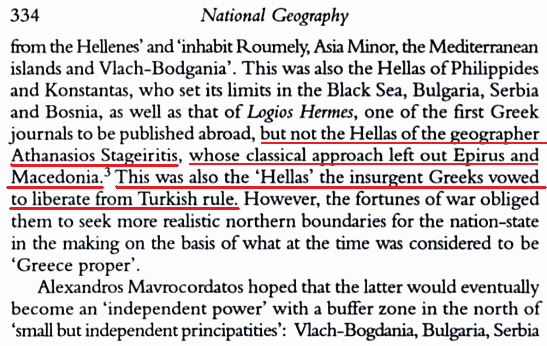
Really??? Well let's see what he considered Macedonia to be then;


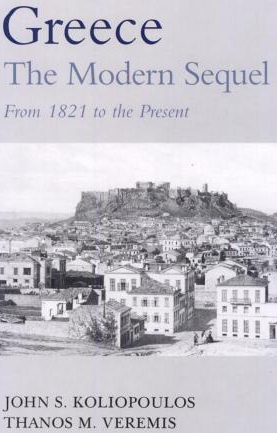
veremes.png

veremes334.png


:21:

Another myth busted :tank:
 
From the above link:

Greek-Macedonian Scholars (15th-19th century)

Andronikos Kallistos (b.Thessaloniki, 1400 - d. London, 1486). He lived and studied in Constantinople. After its fall he went to Italy where he joined Vissarion. He taught in Bologna (1464), Rome (1469), Florence, Paris and London (1476). From there he began the systematic teaching of Greek literature in France. He communicated the principles of Aristotelian thought to many of his students, whose learning won them distinction in Europe. He possessed a large collection of Greek manuscripts.
Damaskinos (Stouditis) (b. Thessaloniki - d. 1577). A student of Th. Eleavoulkos in Constantinople. Bishop of Liti and Rendini (1564). Metropolitan of Nafpaktos and Arta. Patriarchal exarch of Aitolia.

Malachias Rizos (b. Thessaloniki). Abbot of a Unitist monastery near Palermo.

Dimitrios the Deacon (b. Thessaloniki). Student of Michail Ermodoros Listarchos from Constantinople. Multilingual. A monk in Egypt. Sent to Germany by the Ecumenical Patriarch Iosaph the Magnificent, to investigate the new heresy of Protestantism. He resided in Wittemberg for six months (1559). He made a great impression on Melangthonas, to whom he presented the Confessions of Augustine as a gift for the Patriarch.

Theofilos (b. Zichni, Serres, circa 1460-1470). A monk at Iveron Monastery. Copyist of many codices and probable founder of the monastery's fine library.

Ioannis Kottounios (b. Veroia, 1572 - d. Padua, 1657). Student at the Greek college of Ayios Athanasios in Rome (1605-1613). He studied medicine, Greek literature, theology and philosophy at Italian universities. He taught at the universities of Padua, Bologna and Pisa, where he became particularly well known. A student of the renowned Italian philosopher Cesare Cremonini and his successor to the chair of philosophy at Padua. In 1653 he founded the Kottounian Hellinomouseio (a boarding school for Greek boys). He was a friend of Mart. Krousios, Leon Allatios and other personalities of his time. An eminent scholar and commentator on the works of Aristotle.

Mitrofanis Kritopoulos (b. Veroia, 1589 - d. Wallachia, 1639). A monk on Mount Athos. He was a close associate of Kyrillos Loukaris. He studied in England and Germany. He traveled to Europe and mingled with the greatest scholars and theologians of his day. He made Orthodoxy known in the West and was particularly concerned with the problem of unifying the Orthodox Church with the churches of Western Europe. He taught Greek in Vienna (1627-1630). Elected patriarch of Alexandria (1636), where he put together an important library.

Kallinikos Manios (b. Veroia, 1624 - d. 1665). Student at the Greek College of Ayios Athanasios in Rome (1642-1647) and later at the Collegio Urbano de Propaganda Fide. He returned to Veroia where he was active in the field of education (1649) and was instrumental in the founding of the town's first school.

Konstantinos Kallokratos (b. Veroia, 1589). Student at the Greek College of Ayios Athanasios in Rome (1600-1610), where he studied philosophy and theology. He taught at a school in Calabria for Greek-speaking Albanians. His bosom friend was Leon Allatios. A brilliant man and a skilled poet.

Georgios (Grigorios) Kontaris (b. Servia). A monk, he studied Latin and Italian in Venice (1665), becoming a master of philosophy. School principal in Kozani (1668-1678). Later teacher in Servia. Elected metropolitan of Servia and Kozani (1673-), metropolitan of Athens and metropolitan of Smyrna (1690). He was the first to show interest in Ancient Greek history.

Anastasios Michail (b. Naousa - d. Russia, after 1722). General studies in Ioannina with G. Sougdouris as his teacher of rhetoric and philosophy. In 1702 he met with distinguished German theologians in Constantinople. He went to Halle and was later elected a member of the Berlin Academy of Sciences. He produced enlightening work for Christians and Greeks in Moscow, where he won renown for his theological and philosophical knowledge.

Georgios Parakeimenos (b. Kozani). He studied medicine and philosophy at Padua. Director of the Kozani school (1694-1707). Physician and preacher.

Sevastos Leontiadis (b. Kastoria, 1690 - d. 1765). Student of Anthrakitis in Siatista, Kastoria and Ioannina. Studies in Italy. Director of the Kastoria school (1726-1728). He taught in Kozani (1728-1733) and Moschopolis.

Dimitrios Karakasis (b. Siatista, 1734). He studied medicine, philosophy and mathematics at Halle, Saxony. Degree in medicine (1760). Physician in Vienna, Larisa, Siatista, Kozani, Bucharest. Taught in Siatista.

Manassis Iliadis (b. Meleniko, early 18th century - d. Bucharest, 1785). Studied medicine at Padua and Bologna, physics and mathematics in Germany and Italy. Physician in Bucharest. He taught philosophy and physics at the Bucharest Academy.

Michail Papageorgiou (b. Siatista, 1727 - d. Vienna, 1796). Studied philosophy in Ioannina under Eugenios Voulgaris. Studied philosophy and medicine in Germany. Taught in his birthplace, Selitsa, Meleniko, Vienna and Budapest.

Konstantinos Michail (b. Kastoria). A philosopher-physician and linguist, he spoke Greek, Latin, French and German. Student of Michail Papageorgiou. He left all his books to the schools of Kastoria.

Ioannis Emmanouil (b. Kastoria). Studied philosophy in Pest and Vienna.

Thomas Mandakasis (b. Kastoria, early 19th century). Studied medicine and philosophy at Leipzig. Degree in medicine (1758). Physician abroad. Director of the Kastoria school (1767-1770).

Dimitrios Darvaris (b. Kleisoura, 1754 - d. Vienna, 1823). He studied Latin, Greek and Slavonic in Budapest, Zemun and Bucharest; philosophy at Halle, Saxony. He taught Greek in Zemun.

Georgios Sakellarios (b. Kozani, 1765 - d. 1838). Student of Kallinikos Barkosis and Amphilohios Paraskevas. He studied German and French as well as philosophy in Hungary. He also studied medicine in Vienna and practiced medicine in Kozani, Naousa, Tsaritsani and Kastoria. He was chief physician at the court of Ali Pasha. He was an associate of Rigas Ferraios and Perraivos.

Michail Perdikaris (b. Kozani, 1766 - d. Monastir, 1828). Physician, scholar. He studied medicine and literature at Italian universities and in Vienna. Conservative, yet a true ideologue, he was a faithful student of Amphilohios Paraskevas and Harisios Megdanis. He taught in the Danubian principalities and practiced medicine in Epirus, Kozani, Thessaloniki, Monastir and elsewhere.

Michail Doukas (b. Siatista - d. Mount Athos). He studied philosophy in Vienna, where he was also a merchant.

Harisios Megdanis (b. Kozani, 1769 - d. 1823). A student of Amphilohios Paraskevas. He studied rhetoric, philosophy and mathematics at Livadi. A private tutor in Pest. He returned to Kozani and entered the priesthood. He taught in Kozani and other Macedonian towns. He also acted as both physician and preacher.

Grigorios Zaviras (b. Siatista, 1744 - d. Shabat Shalashi, Hungary, 1804). A student of Varkosis in Siatista. A merchant in Budapest. He founded a school for the Greek community in Kalocsa, Hungary, where he also taught. His wonderful library, which he donated to the Greek Church in Pest, has been preserved. A sage of his time, with a multitude of diverse interests and enormous intellectual powers.

Vasilios Papaefthymiou (b. Kostantziko). He taught at the Greek community's school in Vienna (1802-1804).

Athanasios Christopoulos (b. Kastoria, 1772 - d. Transylvania, 1847). He studied medicine, philosophy and law in Budapest and Padua. A student and friend of professor Lambros Fotiadis. Courtier of the prince Alexandros Mourouzis and judge in Wallachia, where he was the "Spokesman for foreign cases." He helped to draft the urban law code in Wallachia, which was also the first document of its kind in Modern Greek. Emissary of the 'Philiki Etaireia'. He lived in Greece from 1828 to 1836.

Grigorios Zalykis or Zalykoglous (b. Thessaloniki, 1777 - d. Paris, 1827). He studied Greek, Latin and French philosophy in Bucharest. A student of the famous teacher Lambros Fotiadis. He enthusiastically espoused the views of Korais. Secretary to Choiseul Goffier (from 1802). Co-founder of the "Greek Language Hotel" in Paris (an organization aimed at the liberation of Greece (1809), a forerunner of the 'Philiki Etaireia'). First Secretary at the Ottoman Embassy in Paris (1816-1820). When the Greek War of Independence broke out in 1821, he took refuge in Transylvania, Bessarabia and St. Petersburg under the wing of Tsar Alexander.

Eufronios Rafail Popovits (b. Kozani, 1774 - d. Iasio, 1853). He studied rhetoric, philosophy, physics, political science and economics in Hungary. He completed his studies in Vienna. He taught at the Greek schools in Pest, Vienna and Zemun and also engaged in journalistic activity in Vienna, where he edited the newspaper "News from Eastern Places" (2 July 1811-27 December 1811). He bequeathed his library to Kozani.

Georgios Rousiadis (b. Kozani, 1783 - d. Athens, 1854). A student of Amphilohios Paraskevas. He studied in Vienna. A teacher in the Greek community in Vienna and the Greek community in Pest. A member of the 'Philiki Etaireia', he took part in the Greek War of Independence. After the liberation, he lived in Western Europe. He returned to Athens in 1848.

Minas Minoidis (d. France). A student of Athanasios Parios. He taught rhetoric and philosophy in Serres and Thessaloniki. He also taught Ancient Greek language and literature in Paris. Interpreter at the French Ministry of Foreign Affairs. Chevalier of the Legion of Honour. Militantly opposed to Korais' ideas on the Language Question, he was his most severe and unfair critic. A fervent supporter of the fight for independence. He discovered the verse myths of Vavrios in a Mount Athos manuscript.

Athanasios Stageiritis Professor of Greek language at the Royal Academy in Vienna. A bitter opponent of Korais and supporter of Kodrinas on the Language Issue. Publisher of the fortnightly literary journal "Kalliope" in Vienna from 1819 to 1821; when the War of Independence broke out, he ceased publication, refusing to submit to pressures from the Ottoman government acting through the Ecumenical Patriarchate.


I feel kinda stupid, but can someone explain me which myth we are talking about and how it is busted?
 
Cultea
You should feel kinda stupid, because you are if you can't read and understand what is written, perhaps we should send you to comprehension classes outside of Greece, maybe then you'll get an informed education which will enable you to understand the complicated matters such as the above! :confused:
 
I still can't find what the myth is.

The first underlined sentence from the book of post#1 states superficially (if not wrongly) that Athanasios Stageiritis was considering a small Greece (geographically about where the first Greek state was established). The second sentence (I don't know if that's clear), the passages before and after, and the pages before and after clearly say that Greeks revolutionaries were dreaming a much bigger area extending a little beyond the present borders of Greece and including the Danube principalities, Constantinople and Asia Minor.

I just took a look at Stageiritis' book "About Epirus". Not exactly Geography, rather a History of Epirus. Not exactly a modern or original book of its time. Rather a compilation of ancient texts on the History and Geography of Epirus. It includes much of Pausanias, thus sentences referring to "Greece and Macedonia" and maybe this is what Koliopoulos and Veremis were talking about.
Beyond that, it's a typical Greek nationalistic text of our old glorious ancestors, about how Pyrrhus wanted to become the Alexander of Epirus, about the Greekness of their names etc.
The book does have an original geographical epilogue suggesting that from Ioannina to Thessaloniki it is 54 hours on foot.
 
Last edited:
Back
Top