• Welcome to the new Macedonian Truth Forum. All posts, members and private messages have been moved over from the old forum.

    Passwords from the old forum could not be carried over, so please use Forgot your password? to set a new one. The reset link is emailed to the address on your account.

  • Rules and Regulations at the forum of the Macedonian Truth Organisation (MTO)

    (1) The national-ethnic and cultural-linguistic identity of the Macedonian people is historically Macedonian, and derives its character from the native, indigenous and geographic homeland of the Macedonians, which is called Macedonia. To ensure that their human rights, integrity and heritage are appropriately respected, the only nouns and adjectives acceptable when reference is made to the above character and identity markers is Macedon, Macedonia, Macedonian and Macedonians.

    (2) The nation-state of the Macedonian people is the Republic of Macedonia, and is to be referred to by this official title so long as the 'republic' prefix is consistently applied to other states. Alternative references are the Macedonian Republic, or simply, Macedonia.

    (3) The 'ethnic' prefix is only acceptable for Macedonians in cases where differentiation is specifically required - so long as it is in context and consistent where it concerns its application to other ethnic groups.

    (4) Should any other differentiation be specifically required, the names of other ethnic groups that reside with Macedonians in either the Republic of Macedonia or the occupied Macedonian regions in Greece, Bulgaria, Serbia or Albania, are to be given a prefix.

    (5) Negating the identity, language and culture of the Macedonian people by deliberate avoidance of the terms Macedonia, Macedonian and Macedonians, or by any other means, is not permitted.

    (6) Systematic anti-Macedonian propaganda and rhetoric are not permitted.

    (7) Threads irrelevant to the Macedonian Cause, the community at the Macedonian Truth Organisation or the Macedonians in general may be considered as spam or not in the spirit of the forum. In such cases they are not permitted.

    (8) Continual posting of messages in threads with the sole purpose of deviating from the initial topics with the use of unrelated and unnecessary information is not permitted.

    (9) All posts, external articles, reports, etc that are cited in languages other than Macedonian or English, must be accompanied with a translation in one or both of the said languages.

    (10) Despite the possibility of some conversations and debates becoming heated, extreme abuse and/or racism, vulgar language and/or terminology, threats, revelation of personal information about others, harassment, and other such behavior will not be permitted. If deemed necessary all relevant information including member details will be reported to the appropriate authorities for investigation which may result in legal action.

    (11) Threads that are created must have a summary of a topic or excerpt of an article found in pertinent link(s) that have been included. One line threads will be considered unaccetable spam and are therefore not permitted.

    (12) Compulsive and deliberate lies, irrespective of the topic, are not permitted.

    (13) Any symbols or avatars found to be perceived as offensive to Macedonians are not permitted.

    (13) Any explicit or extreme material is not permitted.

    Failure to adhere to the above rules and regulations will result in a ban after 3 breaches. This may be reconsidered in some cases should the circumstances be of an unorthodox nature and/or require special consideration. To assure an effective deterrent against an individual or individuals with the sole purpose of causing dissent through spamming, racism or other improper means, the above rules will be strictly enforced.

    The MTO administration will monitor all discussions as reasonably practical and reserve the right to remove any post and/or member from the forum, and update the rules and regulations as required. Members are encouraged to immediately report any post and/or member to the MTO administration if they feel that these rules have not been abided by.

    The views expressed on this forum are those of the individuals. The only official representation of the MTO is made by the "Macedonian Truth Organisation (Site Owner)" username, and no other.

  • Macedonian Cause

    The Macedonian Truth Organisation calls on God in Heaven to protect, bless and guide the endeavour it is committing to undertake, and that is to work towards:

    Securing Macedonia as a free, independent and democratic republic in which sovereignty lies with the Macedonian citizens; as the nation-state of the Macedonian people in which they can preserve their culture, language and identity; as a state in which the Macedonian language and culture form the basis of public life and act as important unifying elements of Macedonian society; as the home of all its citizens to which it guarantees and obliges their inalienable natural rights and corresponding responsibilities;

    The acknowledgment as self-evident and irrefutable the existence of the:

    1) Indigenous, ethnonational name of Macedonia;
    2) Macedonian people, language and identity;
    3) Macedonian culture, symbols and folklore;
    4) Macedonian ancestry, heritage and history in its entirety; and
    5) Macedonian Orthodox Church;

    Securing recognition by the International Community of the tragedies endured by the Macedonian people, of the division of Macedonia with the signing of the Treaty of Bucharest on August 10, 1913, and the genocide committed against the Macedonian people at the hands of the Greek, Bulgarian and Serbian states and their respective churches during the 19th and 20th centuries;

    Ensuring that the Interim Accord is declared ‘null and void’ and that all constitutional provisions, acts, commitments, agreements, legislation, regulations, policies or programs emanating from, supporting or consequential to the Interim Accord are also declared ‘null and void’, including the use of any symbols and the completion of any acts imposed by, or originating from, the Interim Accord.

    Ensuring that the Framework Agreement is abolished and that all constitutional provisions, acts, commitments, agreements, legislation, regulations, policies and programs emanating from, supporting or consequential to the Framework Agreement are also abolished and replaced by a framework of constitutional and statutory law based on inalienable natural rights and corresponding responsibilities and universally codified human rights mechanisms.

    Securing the abolishment of any existing constitutional provisions, acts, agreements, legislation, regulations, policies and programs that discriminate against the Macedonian people, in any international organisation or any of the countries of the International Community where such constitutional provisions, acts, agreements, legislation, regulations, policies and programs exist, and thereby ensuring the freedom for Macedonians to exercise their inalienable natural rights and fulfil their corresponding responsibilities, and practice their culture, language and religious faiths in all the countries of the International Community without hindrance;

    The empowerment of Macedonians to undertake a moral revolution and to instil and/or reinvigorate within themselves a deep-rooted national, cultural, linguistic and historical dignity and a commitment to the exercise of freedom based on inalienable natural rights and corresponding responsibilities;

    The recognition of the Macedonian minorities in the neighbouring states of Macedonia as well as the respect for the inalienable rights and freedoms of the Macedonian minorities, as provided for by natural law and as codified by the United Nations Charter, the Universal Declaration of Human Rights and other universally codified human rights mechanisms;

    The full and unreserved respect of, and the support for, the rights of all people of non-Macedonian descent living in Macedonia and around the world, who share a reciprocal full and unreserved respect for the Macedonian people, their homeland and their state;

    The cultural unification and solidarity of the Macedonian people living in all parts of historical Macedonia and adjacent territories, as well as Macedonians throughout the world;

    The unity of all Macedonians on the principles, objectives and achievement of the Macedonian cause as defined by this declaration.

Financial Crisis in Greece

Onur, makedoche
I WILL mark your words (again):
-Greece will have defaulted by September 22, 2011 X
-Greece will have returned to drachma by July 12, 2012 ?
-Papandreou will have resigned by February 28, 2012 ?
-Samaras will be the next Prime Minister by May 31, 2012 ?

Anyone else?
Any updated forecasts are welcome. Bets are still on.
 
Cultea, you can be sure that i will quote you too, very soon, maybe next month, next IMF loan release date, if it ever happens...

By the way, why you are so thrilled about that??? This table above is your only salvation. Do you want Greece to remain in that comatose state forever??? Don't you want your government take measures to save Greek people instead of implementing the measures dictated to you by the troika for one and only purpose, to save German, French banks???

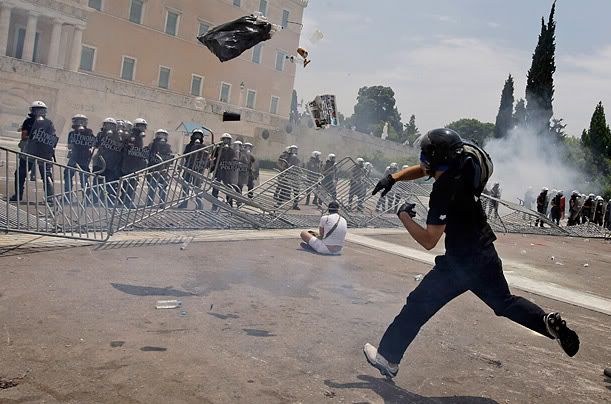
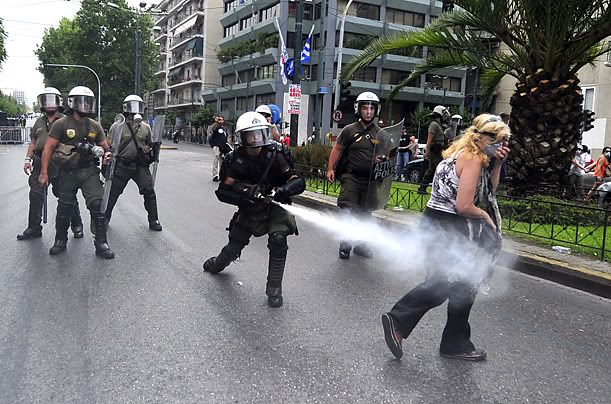
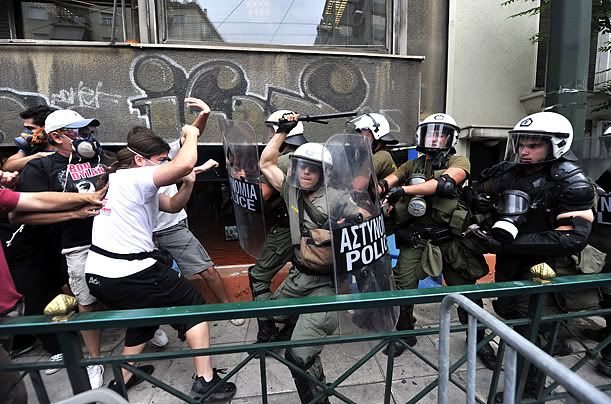
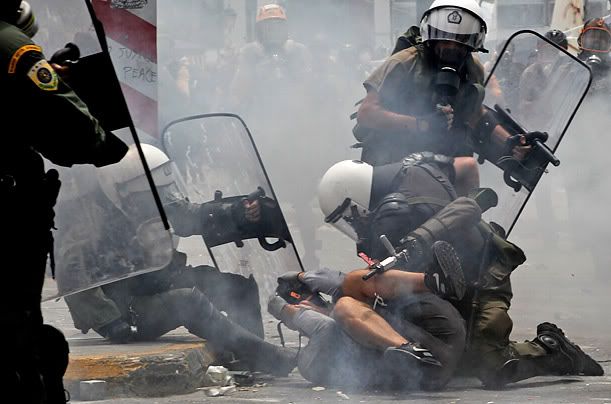
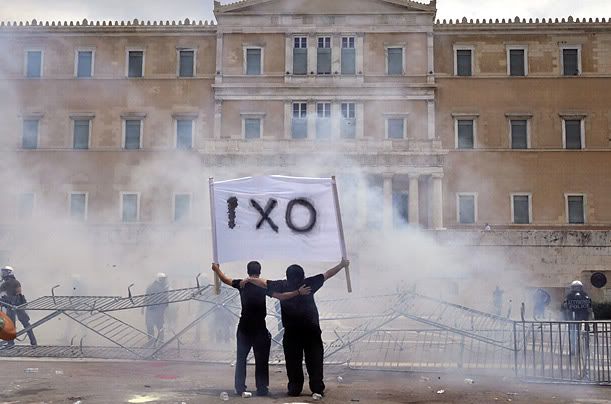
Don't you support your people at front of the parliament in Athens?
 
cultea just displayed the mindset of denial that guarantees Greece will default

1-3 years or mere months in my time frame
The fact we are putting bets on a date is enough said
 
Any updated forecasts are welcome. Bets are still on.

Cultea
My apologies, my 10 day default didn't eventuate! I am humble enough to acknowledge when I am wrong. I misjudged Greece's ability for stupidity, by dragging this out longer than they need to they are merely inflicting more pain and suffereing on their people for a greater length of time. Would you rather the country defaults and goes back to the drachma and everybody shares the burden? or would you rather mortgage your and your childrens futures to the German,French and EU banks for the next 20-50 years?
 
I rub my hands with amusement that this nation, that is based on lies, squirms and languishes as a result of their dishonesty and untruths directed towards their own people and others (us Macedonians). I personally do not wish any physical harm to the people of athens, but it is about time this nation is held accountable for, at least, some of their lies. You have made us Macedonians suffer immeasurably, so forgive us if we Macedonians are not very sincere during your hardships.
 
dejan i agree hundred % with you.Also the eu should be contemplating taking everything away from the greeks & kicking them out of the eu.
 
http://www.time.com/time/world/article/0,8599,2094562,00.html?iid=pf-main-mostpop1

Greece Debt Crisis: Have the Cuts Gone Too Deep?
By Joanna Kakissis Thursday, Sept. 22, 2011


After more than a year of wage and pension cuts, tax hikes and a deepening recession that has spread a cloud of gloom over Greece, Simos Menexis hoped the worst was over. But on Wednesday, international lenders forced the government to announce that more austerity would have to come so the country could keep getting its fix of international bailout loans to avoid default. Menexis, a 36-year-old telecommunications worker, says he wasn't surprised. Bad news has become the new normal in Greece. "We're living in constant uncertainty," he says. "If there was a program to boost the economy, we might have been able to hold out some hope. But the government hasn't had anything like that."

Instead, Prime Minister George Papandreou's center-left PASOK government has been in nearly nonstop crisis mode since being elected on a mandate of hope nearly two years ago. On Thursday many Greeks responded to the latest cuts demanded by the European Union and International Monetary Fund (IMF) by going on strike. Transport workers, taxi owners, civil servants, air-traffic controllers and teachers all walked off the job, most for 24 hours. The main private-sector union, GSEE, and the country's biggest public-sector union, ADEDY, called for further strikes next month. The civil service will shut down on Oct. 5 and a general strike will be held on Oct. 19. And on Friday, Moody's rating agency showed its faith in Greece's new batch of desperate measures by downgrading eight of the nation's banks.


The Greek government quickly accepted the E.U. and IMF's newest set of demands so that auditors can return to Athens to decide if Greece can receive the latest $11 billion slice of international bailout loans. The auditors had suspended their review in early September because they were unhappy with the slow pace of enacting reforms. Since then, markets have been fluctuating over fears of a Greek default and its potential effect on the fragile euro zone.

Greek Finance Minister Evangelos Venizelos told reporters on Thursday that the situation was "extremely critical" and "dangerous." He said the government was doing everything it could to stop Greece from falling into a Argentine-style debt crisis, referring to the financial mess that withered the South American country and forced it to declare bankruptcy in 2002.

Venizelos was sworn in as Finance Minister in June after the PASOK government nearly collapsed amid infighting over how Papandreou and former Finance Minister George Papaconstantinou were handling the crisis. Not long after the PASOK party won elections in October 2009, it was revealed that Greece was more than $400 billion in debt. In May 2010, Greece became the first E.U. nation to ask for a bailout. Since then, the E.U. and IMF have approved two packages of international bailout loans totaling nearly $270 billion in exchange for harsh austerity measures.


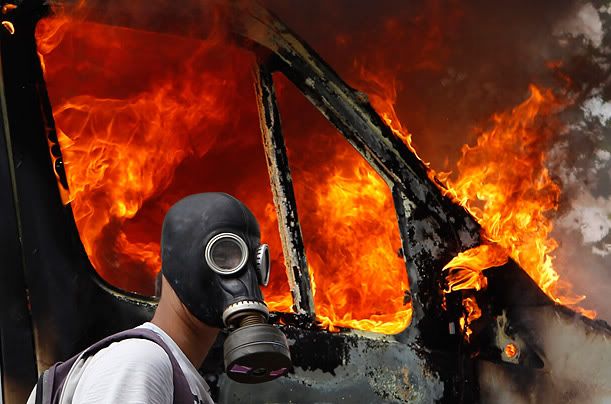
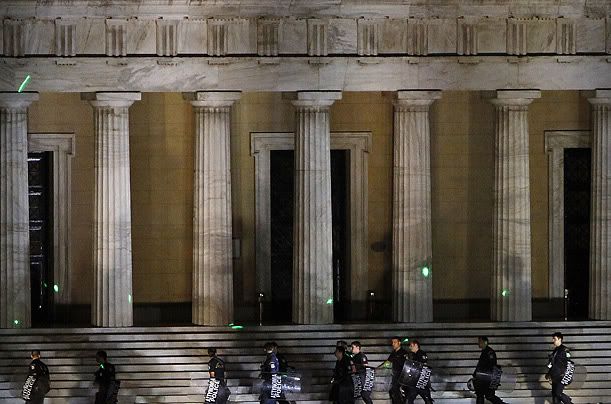
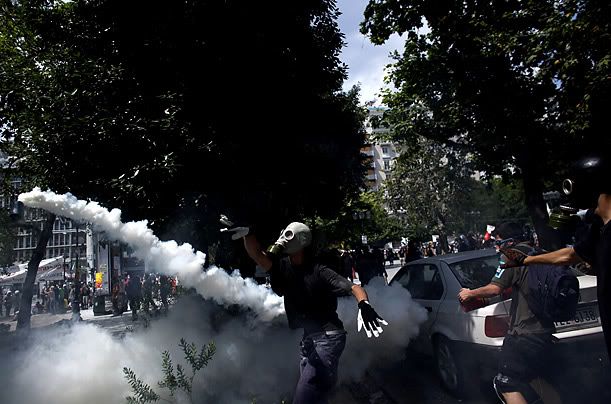
Those measures have provoked riots outside Parliament. Greeks say the middle class is paying for debts racked up by corrupt leaders running a hopelessly inefficient political system rife with cronyism. Cuts to public-sector salaries, as well as pension cuts and tax increases, have worsened a deep recession and pushed unemployment to nearly 17%. And now a new round of measures, which include taxing Greeks who make as little as €5,000 ($6,700) a year and adding a new levy on property that will be collected through electricity bills, are causing Greeks to wonder if their government has ceded control of the country to international lenders imposing ineffective fiscal policy.

George Katrougalos, a constitutional-law professor at Democritus University in Thrace, says default would be a better option at this point. "The government has said yes to everything our creditors have asked for. This has resulted in an impasse that has only deepened the crisis," says Katrougalos, a former supporter of Papandreou's government who, like many former cadres disenchanted with PASOK's handling of the nation's economic problems, has turned into a critic. "The IMF predicts that our debt in relation to GDP will nearly double next year even after current austerity measures. So we have sacrifices without any kind of return."

Katrougalos is considering a legal challenge to the new tax on low-wage earners. "That's simply immoral," he says. "People will be forced to pay a tax they can't afford and then have their electricity cut off. They won't be able to pay their bills. It's like sentencing them to a kind of death."
(See why it's make up or break up time for the euro zone.)

The government on Wednesday also announced that pensions will be cut for anyone getting more than €1,200 ($1,600) per month. That outraged Manolis Sarantopoulos, a 69-year-old retired pharmaceuticals salesman who has already seen his pension cut once under austerity measures. "They are cheats," he says. "I paid what they asked me to pay when I was working but they aren't paying me the pension I was promised. I need that money to live, to buy food, to pay my bills — not to go to the bar. They are forcing us to live like misers because they messed up."

Also controversial are the cuts to the public sector, which employs about 780,000 people in a country of 11 million. International creditors have asked Greece many times to streamline the bloated civil service, which the country's two main political parties have used for years to reward supporters with jobs for life. It was an especially difficult decision for PASOK, which built up the public sector during the reign of the party's founder and former Prime Minister, Andreas Papandreou, in the 1980s and '90s. On Wednesday, the government, now led by his son George, announced a temporary layoff for 30,000 state employees.

The party relies heavily on public-sector unions for support during elections, and the layoffs erode the little support PASOK still has. Though opposition leaders are calling for early elections, polls show that most Greeks do not want them. Papandreou says he will do whatever he can to keep from calling early elections.

Beyond surviving the immediate crisis, Greeks — especially young ones — face a grim future. About a quarter of Greeks between the ages of 25 and 35 are already unemployed, and they face such a stagnant economy in coming years that surveys show many are trying to find work abroad. That would lead to a massive brain drain, says Lois Lambrianidis, an economic geographer at the University of Macedonia, which is the last thing the country needs if it plans to get back on its feet in the future. "This economic crisis is going to deteriorate because the Greek talent is not going to return and on top of that, those who are in Greece at the moment might decide to go abroad too," he says. "That's a big problem for a country that desperately needs to find innovative ways to rebuild its economy."
 
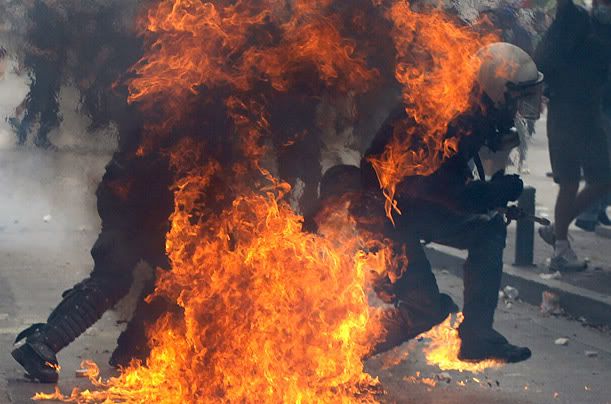
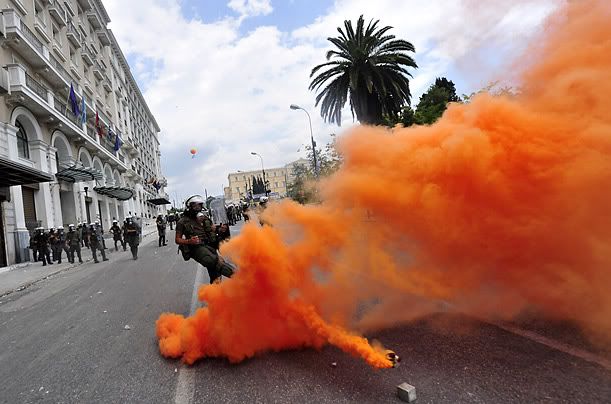
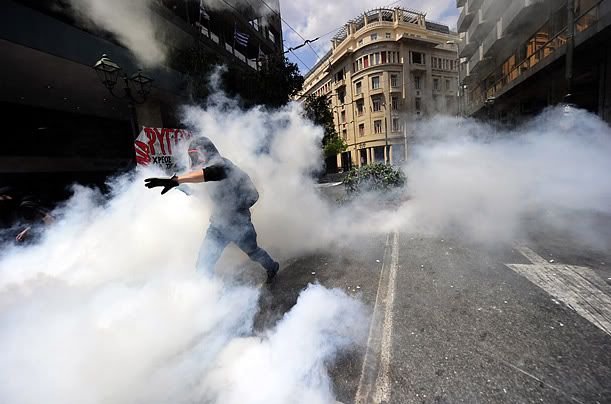
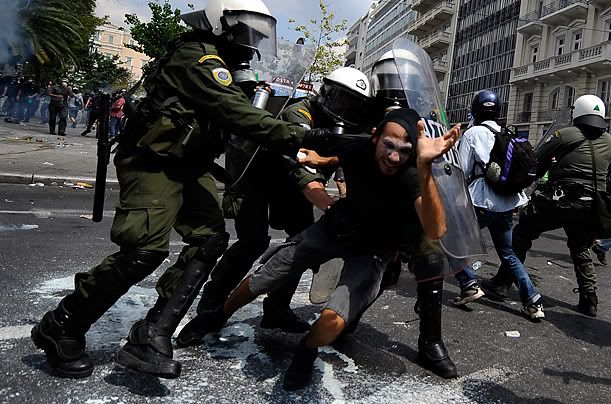
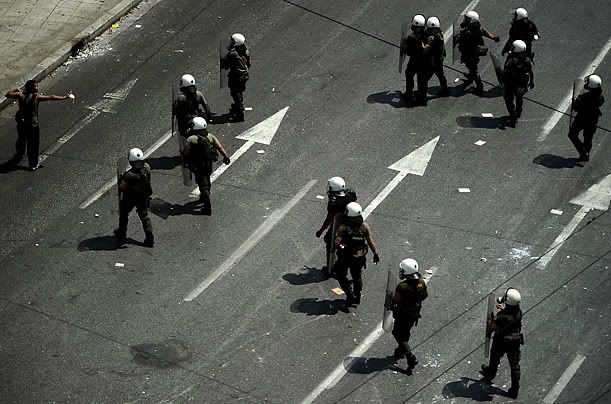
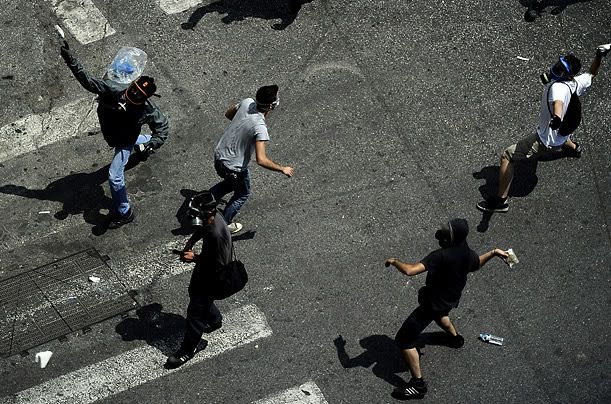
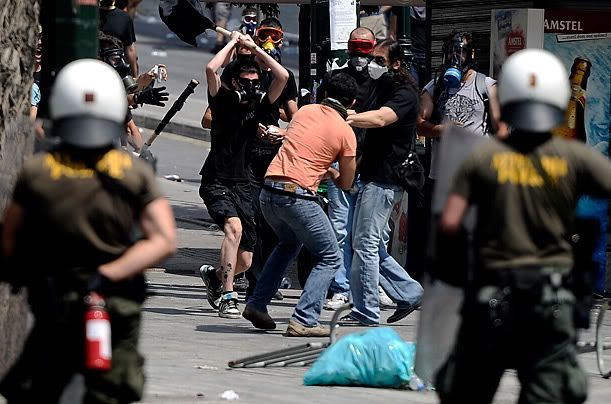
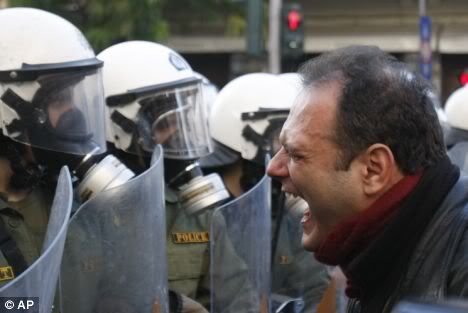
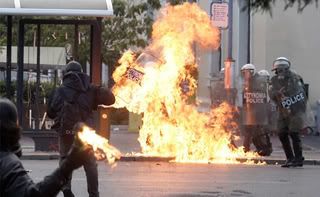
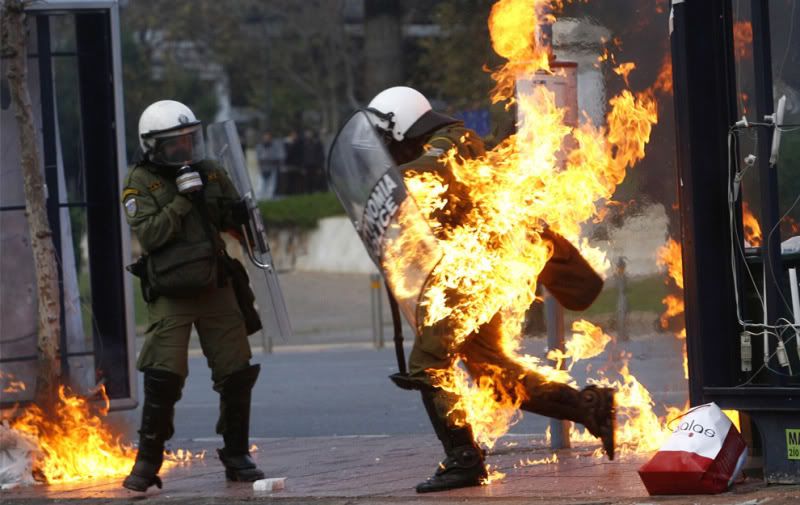
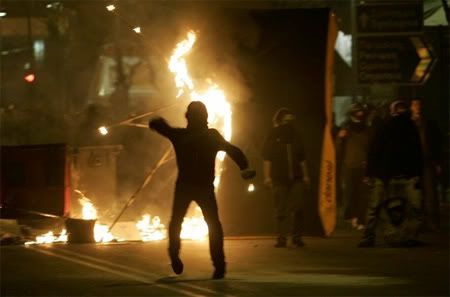
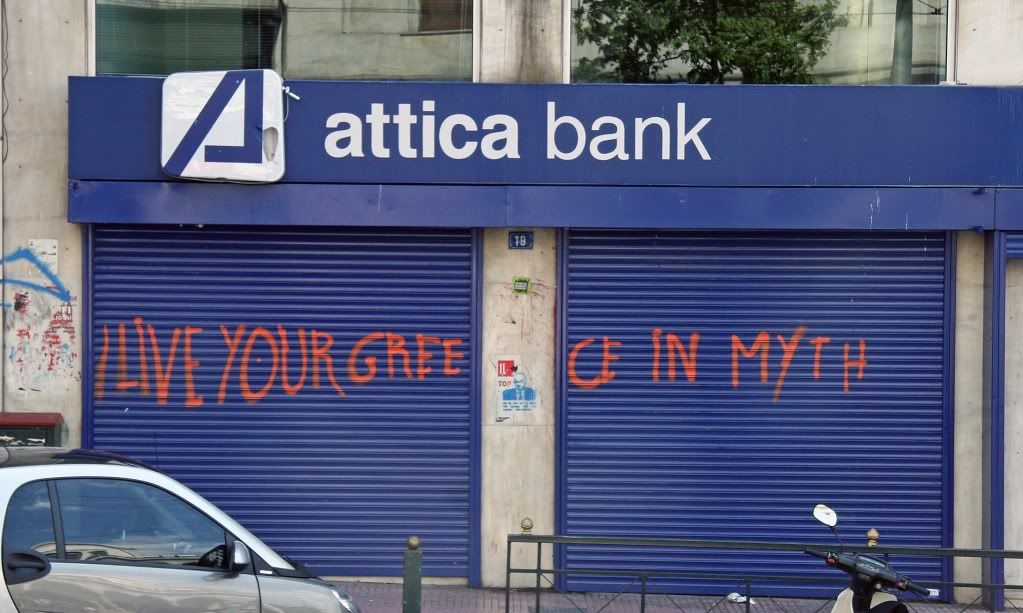
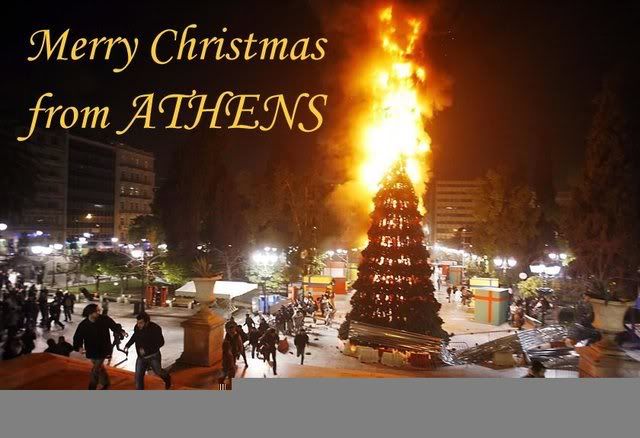
Images of riots in athenass.

greece_a_02.jpg

greece_a_03.jpg

greece_a_04.jpg

greece_a_05.jpg

greece_a_06.jpg

greece_06.jpg

greece_07.jpg
 
Greece's Ability To Secure More Aid Subject To New Doubts

Greece's Ability To Secure More Aid Subject To New Doubts

http://online.wsj.com/article/BT-CO-20110923-710078.html

Greece's Ability To Secure More Aid Subject To New Doubts

By Geoffrey T. Smith and Tom Mudd

Of DOW JONES NEWSWIRES

WASHINGTON (Dow Jones)--New doubts about Greece's ability to secure further aid and avoid default were emerging Friday, with senior European officials pressing for decisive steps.

German Finance Minister Wolfgang Schaeuble led the chorus, saying that Greece's creditors may need to revise the July 21 agreement on additional aid for the country, because conditions may have changed since the deal was reached.

His comments came at the end of a tumultuous week of plunging markets and tightening credit as concerns intensified over the euro-zone debt crisis and a faltering economic recovery. The week also saw increasing speculation that Greece may need to default or at least seek much more debt relief than was foreseen in July as a result of its repeated failures to meet targets for economic growth and deficit reduction.
"It would surprise me if the conditions for a disbursement of the next tranche of aid in September had changed, but not if the conditions for an additional program had changed," Schaeuble said at a press briefing on the sidelines of a series of international meetings in Washington. "However, I want to wait and see first."

Schaeuble noted that the so-called troika of representatives from the European Union, European Central Bank and International Monetary Fund is expected to return to Athens in the near future for further monitoring of Greece's compliance with its current deal.

Dutch central bank president Klaas Knot had said in an interview earlier Friday in the newspaper Financieele Dagblad that he couldn't rule out a Greek default. His German counterpart Jens Weidmann, attending the same briefing as Schaeuble, declined to comment on Knot's opinion.

Knot is the first member of the European Central Bank's Governing Council to acknowledge publicly the possible need for a Greek default.

Greek officials sought to play down suggestions that the July 21 agreement needs to be amended or that the country was weighing a default, even though some of the country's creditors believe the plan to write down Greek bonds by 21% isn't large enough and needs to be doubled to around 40%.

"The Greek government is aware of these arguments, they have been discussed, but it will stick to what has been agreed," an official familiar with Greece's bailout talks said.

In July, euro-zone leaders agreed to a new EUR109 billion aid program for Greece to cover its financing needs for the next several years. The International Monetary Fund and the European Central Bank also participate as creditors.

Central to the Greek plan is a distressed-debt exchange under which the country's private-sector creditors agree to accept new bonds worth 21% less than their original holdings. The program, if it succeeds in attracting enough bondholders, is expected to be completed by the end of October, once euro-zone national parliaments have granted new funding powers to Europe's temporary bailout fund.

Greece has set a 90% participation rate for proceeding with the program and an official on Thursday said the rate was around 85%.

"Greece has taken the final decision to do everything in its power in order for all the European Council decisions of July 21, vital both for the euro area and for Greece itself, to be implemented fully," Greek Finance Minister Evangelos Venizelos said in a prepared statement.

Greece's economy is expected to contract for the third straight year in 2011, by an unprecedented 5.5%. The IMF, in a staff report released on Tuesday, said the Greek economy is expected to shrink 2.5% next year. One of the officials said this bleak outlook for the Greek economy puts more pressure on the current restructuring plan. "It can work with sustained growth levels and sustained primary surpluses but it doesn't look we'll get them anytime soon," the official said.

Venizelos' statement also dismissed as "counterproductive" media reports suggesting that Greece was weighing a scenario that would involve a planned default with a 50% loss to creditors.

While he didn't deny the reports outright, Finance Minister Evangelos Venizelos reaffirmed Greece's commitment to meet its deficit targets and push ahead with its ambitious reform agenda as promised to its European partners.

"All other discussions, rumors, comments and scenarios that distract attention from this central goal and Greece's political obligations...do not service our common European cause," the statement said.

In a separate statement, Greek Prime Minister George Papandreou ruled out the government calling early elections, citing a strong parliamentary majority that can help the ruling Socialists push through necessary reforms.

Some Greek lawmakers have been been uneasy with a fresh round of austerity measures the government plans in its bid to secure further aid from the EU and the IMF, with some calling for new elections or a multi-party coalition government that will have the political clout to push through the reforms.

Back in Washington, U.K. Chancellor of the Exchequer George Osborne weighed in on the broader euro-zone situation Friday, warning that regional banks must be shored up and the euro-zone bailout mechanism may need its firepower boosted. He said euro-zone leaders have six weeks to resolve the crisis, with the November G-20 summit in Cannes "a clear deadline."

Osborne told reporters on the sidelines of the IMF meeting that Europe's leaders are aware that "time was running out for them."

"There is pressure now on the euro zone from across the international community and that was felt last night," he said of a G-20 finance officials dinner on Thursday.

Asked if he believed the euro-zone bailout mechanism, the European Financial Stability Facility, had enough firepower, Osborne said, "I'm not sure it is adequate but that ultimately has to be a decision for the euro zone themselves."

Echoing calls for the euro zone to leverage up its resources in some way, Osborne said it isn't necessarily a question of extra funds, "it's also how those sums of money that are there are deployed."

He said markets need to know that "there is enough government or central bank firepower to deal with the situation."

He also said the euro zone needed to quickly address problems at its banks.

"There is a very heightened awareness of the need to make sure that euro-zone banks are properly capitalized and that they are properly liquid. That's one of the issues that needs to be addressed in the next...few weeks," he said.

The European Union has no plans to speed up recapitalization of banks that came close to failing the stress tests published in July, a European Commission spokesman said Friday.

Eight banks failed the tests. A passing mark required a core Tier 1 ratio of at least 5% in a stressed macroeconomic scenario. Those banks will be required to raise new capital.

Earlier Friday, Moody's Investors Service downgraded the credit ratings of eight Greek banks by two notches. The ratings firm cited losses resulting from the banks' holdings of Greek government bonds as well as increasing concerns about the impact of a recession and fragile liquidity and funding positions.
-By Geoffrey T. Smith and Tom Mudd, Dow Jones Newswires;

(Laurence Norman and Costas Paris in Washington, Alkman Granitsas in Athens, Art Patnaude and Ishaq Siddiqi in London and Matthew Dalton in Brussels contributed to this article.)
 
Finally we have it. The evidence for Droysen's "Hellenism". Here it stands in front of all our faces to see:

http://www.businessweek.com/news/20...solvency-24-centuries-after-city-default.html

Greece on Edge of Insolvency 24 Centuries After City Default

By Simon Kennedy and Maria Petrakis

Sept. 23 (Bloomberg) -- History’s first sovereign default came in the 4th century BC, committed by 10 Greek municipalities. There was one creditor: the temple of Delos, Apollo’s mythical birthplace.

Twenty-four centuries later, Greece is at the edge of the biggest sovereign default and policy makers are worried about global shock waves of an insolvency by a government with 353 billion euros ($483 billion) of debt -- five times the size of Argentina’s $95 billion default in 2001.

“There is a monstrously large amount of uncertainty and a massive range of possibilities,” said David Mackie, chief European economist at JPMorgan Chase & Co. in London. “A macroeconomic disaster could be averted but only by aggressive policy action” by central banks and governments, he said.

After two international-bailout deals, three years of recession and budget-cutting votes that almost cost him his job, Greek Prime Minister George Papandreou says throwing in the towel now would be a “catastrophe.” Potential consequences of a national bankruptcy include the failure of the country’s banking system, an even deeper economic contraction and government collapse.

The fallout may echo the days following the 2008 implosion of Lehman Brothers Holdings Inc. when credit markets froze and the global economy sank into recession, this time with the prospect that the 17-nation euro zone splinters before reaching its teens. The International Monetary Fund, whose annual meetings start in Washington today, reckons the debt crisis has generated as much as 300 billion euros in credit risk for European banks.

Default Risk

Greek two-year yields surged above 70 percent today and credit-insurance prices on Greece indicate the chance of default at more than 90 percent. Investors can expect losses on Greek debt of as much as 100 percent, says Mark Schofield, head of interest-rate strategy at Citigroup Inc. in London.

“People, justifiably, think the crisis is what we’re living now: cuts in wages, pensions and incomes, fewer prospects for the young,” Greek Finance Minister Evangelos Venizelos told reporters yesterday in Athens. “Unfortunately this isn’t the crisis. This is an attempt, a difficult attempt, to protect ourselves and avert a crisis. Because the crisis is Argentina: the complete collapse of the economy, institutions, the social fabric and the productive base of the country.”

Even if Greece receives its next aid payment, due next month, default beckons in December when 5.23 billion euros of bonds mature, said Harvinder Sian, senior interest rate strategist at Royal Bank of Scotland Group Plc.

‘Too Late’

“It’s too late for Greece,” Howard Davies, a former U.K. central banker and financial regulator, told “Bloomberg Surveillance” with Tom Keene and Ken Prewitt. “The Greek situation is tumbling out of hand and I suspect Greece will not be able to avoid a substantial default.”

The introduction of the euro and global financial connections mean previous Greek defaults in the 19th and 20th century, most recently in 1932, don’t provide a decent precedent for a failure to satisfy lenders now.

“Contagion will be violent” as the price of the two-year Greek note tumbles below 30 cents per euro, predicts Sian. The European Central Bank would be the first responders through purchases of government debt, he says.

Greek Banks

The country’s banks, of which National Bank of Greece SA is the largest, would be the next dominoes. They hold most of the 137 billion euros of Greek government bonds in domestic hands, a third of the total and three times their level of capital and reserves, says JPMorgan Chase. As those bonds are written down and equity wiped out, banks would lose the collateral needed to borrow from the ECB and suffer a rush of withdrawals that likely triggers nationalizations, said Commerzbank AG economist Christoph Balz.

“No banking system in the world would survive such a bank run,” said Frankfurt-based Balz.

A hollowed-out banking sector wouldn’t be the only danger to an economy that the IMF says will contract for a fourth year in 2012. The Washington-based lender said this week that Greece will shrink 5 percent this year and 2 percent next year, reversing a forecast of a return to growth in 2012.

Unemployment is set to rise to 16.5 percent this year, and to 18.5 percent next year, the highest in the European Union after Spain and dry kindling for potential social unrest.

Even after saving 14 billion euros in debt repayments, much depends on what deal Greece could strike with its creditors.

Debt Load

To restore market confidence the debt needs to be pared to below 100 percent of gross domestic product, Stephane Deo, chief European economist at UBS AG, said in a July study that noted national default was “invented” in Greece with the Delos Temple episode. At the time, the IMF was projecting the debt to peak at 172 percent next year.

The current debt suggests to him a reduction in the face value of outstanding securities -- or haircut -- of about 50 percent, which would pare the burden to around 80 percent of GDP, the same as Germany and France. Citigroup’s Schofield estimates a writedown of 65 percent to 80 percent, potentially rising as high as 100 percent as the economy slows further.

If default is limited to Greece, the fallout may be contained, say Nomura Securities International Inc. strategists including New York-based Jens Nordvig, whose projections allow for an 80 percent haircut. They estimate euro-area banks would lose just over 63 billion euros, with German and French institutions losing 9 billion euros and 16 billion euros respectively. The ECB would face about 75 billion euros in losses on Greek debt it has bought or received as collateral, they say.

‘Large Haircuts’

Such amounts suggest “the losses from Greece-related exposures in isolation look manageable, even in a disorderly default scenario with large haircuts,” though the ECB would probably require fresh capital from euro-area governments, Nordvig and colleagues said in a Sept. 7 report.

A debt exchange that was part of the second Greek bailout approved by European leaders in July would impose losses of as little as 5 percent on bondholders, according to a Sept. 7 report by Barclays Capital analysts.

The risk is that the rot spreads beyond Greece as investors begin dumping the debt of other cash-strapped European nations, said Ted Scott, director of global strategy at F&C Asset Management in London. Portugal and Ireland have already been bailed out, while speculators have also tested Italy and Spain. Italy, the world’s eighth-largest economy, has a debt of almost 1.6 trillion euros, while Spain, the 12th biggest economy, owes 656 billion euros.

‘Grand Solution’

Those possible ripple effects explain why policy makers won’t let Greece default, said Charles Diebel, head of market strategy at Lloyds Bank Corporate Markets in London. He expects them to strike a “grand solution” in which richer euro countries such as Germany support the weak and begin issuing joint bonds.

Policy makers “would only allow a Greek default if they think they can contain the fallout, which is a dangerous presumption,” said Diebel.

If Greece, Ireland, Portugal and Spain all impose haircuts, European banks could lose as much as $543 billion with those in Germany and France suffering the most, according to a May report by strategists at Bank of America Merrill Lynch.

Even those figures don’t tell the full story because they omit indirect exposure via derivatives such as credit-default swaps. Economists at Fathom Financial Consulting in London calculated in June that U.K. and U.S. banks hold such insurance on Greek debt totaling 25 billion euros and 3.7 billion euros respectively. Extend that metric to the whole European periphery and U.S. banks have a 193 billion euro exposure.

‘Even Worse’

Such linkages threaten an “even worse crisis” than the folding of Lehman Brothers, said Scott. “The amount of outstanding debt is more than with Lehman and we don’t know the amount of derivative exposure.”

To support the financial system and stave off an economic slump, Carl Weinberg, founder of High Frequency Economics Ltd. in Valhalla, New York, says governments must create a fund to inject capital into banks as the U.S. did with its $700 billion Troubled Asset Relief Program.

“If banks fail, or if they fear big losses, they will stop lending,” said Weinberg. “As things stand today, a credit crunch will corset euroland and a depression will ensue when Greece fails and takes out euroland’s banking system.”

G-20 Signals

Signaling efforts to contain the crisis, European officials including French Finance Minister Francois Baroin yesterday said they may be willing to use leverage to boost the firepower of their 440 billion-euro bailout fund. Group of 20 finance chiefs said after talks in Washington late yesterday that European authorities are willing to “maximize” the fund’s impact by the time the group next meets Oct. 14-15.

The ECB may also intensify its own attempts to support growth and ease financial market tensions as early as next month, Governing Council members Ewald Nowotny and Luc Coene said. Potential measures include the reintroduction of 12-month loans to banks, while JPMorgan Chase’s Mackie said today he expects the central bank to cut its benchmark interest rate of 1.5 percent next month.

BofA-Merrill Lynch economist Laurence Boone calculates a disorderly Greek default with spillover into Spain and Italy could mean the euro-area contracts 1.3 percent in 2012, using the Lehman Brothers episode as a benchmark.

Waiting for Surplus

Her “high probability” scenario of a Greek restructuring in 2013 when Europe’s permanent crisis resolution mechanism is operational and Greece is closer to having its primary budget in balance suggests growth of 1 percent next year. The “increasingly likely” option of an orderly restructuring at the end of this year would mean expansion of 0.1 percent, she projects.

Hanging over the debate is also whether Greece could default and remain a member of the euro area. Nouriel Roubini, co-founder of Roubini Global Economics LLC in New York, proposes that default -- and an end to debt repayments and required austerity measures -- be twinned with an exit from the euro --an approach rejected by European and Greek policy makers -- to restore competitiveness and debt sustainability.

Rebounds

After shrinking 10.9 percent in 2002 following its decision to default and devalue, Argentina’s economy grew eight years straight, exceeding 8 percent in every year aside from 2008 and 2009. Russia was growing in double digit just two years after defaulting on $40 billion of local debt in 1998.

In contrast, facing only hard choices, EU officials have taken half-measures in the hope that the situation would somehow turn around, said Rodrigo Olivares-Caminal, senior lecturer in financial law at the University of London.

“What they have done so far is a patchwork approach,” he said. “Now things are much worse. It’s becoming more expensive not only in economic terms but also in social terms for Greek citizens because now there will be redundancies, now there will be more taxes there will be less jobs and things will get worse.”
 
tm i think those graphic images say it all .Greece so f..ed up that nobody can save it i think a big revolt should be coming.THat is the normal people have had enough of the bs lied to them.the greeks are the only ones that can put a stop to the way they are being led by the noose.
 
Last edited:
Don't you support your people at front of the parliament in Athens?
The so called Indignants did not resurface, I believe, after the summer break. The answer is no. I don't believe we should... burn the Parliament with the MPs in it. These people should just stop voting for them if they don't like them. (I’ve never voted for any of the parliamentary parties).
 
Back
Top