• Welcome to the new Macedonian Truth Forum. All posts, members and private messages have been moved over from the old forum.

    Passwords from the old forum could not be carried over, so please use Forgot your password? to set a new one. The reset link is emailed to the address on your account.

  • Rules and Regulations at the forum of the Macedonian Truth Organisation (MTO)

    (1) The national-ethnic and cultural-linguistic identity of the Macedonian people is historically Macedonian, and derives its character from the native, indigenous and geographic homeland of the Macedonians, which is called Macedonia. To ensure that their human rights, integrity and heritage are appropriately respected, the only nouns and adjectives acceptable when reference is made to the above character and identity markers is Macedon, Macedonia, Macedonian and Macedonians.

    (2) The nation-state of the Macedonian people is the Republic of Macedonia, and is to be referred to by this official title so long as the 'republic' prefix is consistently applied to other states. Alternative references are the Macedonian Republic, or simply, Macedonia.

    (3) The 'ethnic' prefix is only acceptable for Macedonians in cases where differentiation is specifically required - so long as it is in context and consistent where it concerns its application to other ethnic groups.

    (4) Should any other differentiation be specifically required, the names of other ethnic groups that reside with Macedonians in either the Republic of Macedonia or the occupied Macedonian regions in Greece, Bulgaria, Serbia or Albania, are to be given a prefix.

    (5) Negating the identity, language and culture of the Macedonian people by deliberate avoidance of the terms Macedonia, Macedonian and Macedonians, or by any other means, is not permitted.

    (6) Systematic anti-Macedonian propaganda and rhetoric are not permitted.

    (7) Threads irrelevant to the Macedonian Cause, the community at the Macedonian Truth Organisation or the Macedonians in general may be considered as spam or not in the spirit of the forum. In such cases they are not permitted.

    (8) Continual posting of messages in threads with the sole purpose of deviating from the initial topics with the use of unrelated and unnecessary information is not permitted.

    (9) All posts, external articles, reports, etc that are cited in languages other than Macedonian or English, must be accompanied with a translation in one or both of the said languages.

    (10) Despite the possibility of some conversations and debates becoming heated, extreme abuse and/or racism, vulgar language and/or terminology, threats, revelation of personal information about others, harassment, and other such behavior will not be permitted. If deemed necessary all relevant information including member details will be reported to the appropriate authorities for investigation which may result in legal action.

    (11) Threads that are created must have a summary of a topic or excerpt of an article found in pertinent link(s) that have been included. One line threads will be considered unaccetable spam and are therefore not permitted.

    (12) Compulsive and deliberate lies, irrespective of the topic, are not permitted.

    (13) Any symbols or avatars found to be perceived as offensive to Macedonians are not permitted.

    (13) Any explicit or extreme material is not permitted.

    Failure to adhere to the above rules and regulations will result in a ban after 3 breaches. This may be reconsidered in some cases should the circumstances be of an unorthodox nature and/or require special consideration. To assure an effective deterrent against an individual or individuals with the sole purpose of causing dissent through spamming, racism or other improper means, the above rules will be strictly enforced.

    The MTO administration will monitor all discussions as reasonably practical and reserve the right to remove any post and/or member from the forum, and update the rules and regulations as required. Members are encouraged to immediately report any post and/or member to the MTO administration if they feel that these rules have not been abided by.

    The views expressed on this forum are those of the individuals. The only official representation of the MTO is made by the "Macedonian Truth Organisation (Site Owner)" username, and no other.

  • Macedonian Cause

    The Macedonian Truth Organisation calls on God in Heaven to protect, bless and guide the endeavour it is committing to undertake, and that is to work towards:

    Securing Macedonia as a free, independent and democratic republic in which sovereignty lies with the Macedonian citizens; as the nation-state of the Macedonian people in which they can preserve their culture, language and identity; as a state in which the Macedonian language and culture form the basis of public life and act as important unifying elements of Macedonian society; as the home of all its citizens to which it guarantees and obliges their inalienable natural rights and corresponding responsibilities;

    The acknowledgment as self-evident and irrefutable the existence of the:

    1) Indigenous, ethnonational name of Macedonia;
    2) Macedonian people, language and identity;
    3) Macedonian culture, symbols and folklore;
    4) Macedonian ancestry, heritage and history in its entirety; and
    5) Macedonian Orthodox Church;

    Securing recognition by the International Community of the tragedies endured by the Macedonian people, of the division of Macedonia with the signing of the Treaty of Bucharest on August 10, 1913, and the genocide committed against the Macedonian people at the hands of the Greek, Bulgarian and Serbian states and their respective churches during the 19th and 20th centuries;

    Ensuring that the Interim Accord is declared ‘null and void’ and that all constitutional provisions, acts, commitments, agreements, legislation, regulations, policies or programs emanating from, supporting or consequential to the Interim Accord are also declared ‘null and void’, including the use of any symbols and the completion of any acts imposed by, or originating from, the Interim Accord.

    Ensuring that the Framework Agreement is abolished and that all constitutional provisions, acts, commitments, agreements, legislation, regulations, policies and programs emanating from, supporting or consequential to the Framework Agreement are also abolished and replaced by a framework of constitutional and statutory law based on inalienable natural rights and corresponding responsibilities and universally codified human rights mechanisms.

    Securing the abolishment of any existing constitutional provisions, acts, agreements, legislation, regulations, policies and programs that discriminate against the Macedonian people, in any international organisation or any of the countries of the International Community where such constitutional provisions, acts, agreements, legislation, regulations, policies and programs exist, and thereby ensuring the freedom for Macedonians to exercise their inalienable natural rights and fulfil their corresponding responsibilities, and practice their culture, language and religious faiths in all the countries of the International Community without hindrance;

    The empowerment of Macedonians to undertake a moral revolution and to instil and/or reinvigorate within themselves a deep-rooted national, cultural, linguistic and historical dignity and a commitment to the exercise of freedom based on inalienable natural rights and corresponding responsibilities;

    The recognition of the Macedonian minorities in the neighbouring states of Macedonia as well as the respect for the inalienable rights and freedoms of the Macedonian minorities, as provided for by natural law and as codified by the United Nations Charter, the Universal Declaration of Human Rights and other universally codified human rights mechanisms;

    The full and unreserved respect of, and the support for, the rights of all people of non-Macedonian descent living in Macedonia and around the world, who share a reciprocal full and unreserved respect for the Macedonian people, their homeland and their state;

    The cultural unification and solidarity of the Macedonian people living in all parts of historical Macedonia and adjacent territories, as well as Macedonians throughout the world;

    The unity of all Macedonians on the principles, objectives and achievement of the Macedonian cause as defined by this declaration.

Greece, History, Truth

TrueMacedonian writes: "The name Macedonia followed the Macedonians to Romania. Are we going to be moving the goal posts when certain facts don't enjoy our fancy? There is a rather nice list Soldier of Macedon put together. I recommend you search it out. This particular topic involves the validity of modern Greek claims to "hellenism" and any cultural connections to antiquity."


I asked you to show some connection between the slavic-speaking Macedonians and the ancient world, the ancient kingdom of Macedonia.

As an answer you attacked the Greeks.

The Romania of the middle ages is not the ancient world nor the ancient kingdom of Macedonia. One has nothing to do with the other.

Excuse me but the name Macedonia followed the Macedonians to Temes. There has been a Macedonian presence ever since. I find your shifty ways quite loathsome. However since you are trying to evade this topic which is about the validity of your supposed claims to anything to do with antiquity here is some more evidence for you.

http://www.historyofmacedonia.org/Macedoniansymbols/MacedonianLion.html

http://www.macedoniantruth.org/forum/showthread.php?t=2151

You have found no connection, neither linguistic nor cultural nor geographic between the people or the nation of the Republic of Macedonia and the ancient kingdom because there is none.

Sure I have. You just choose to ignore the rather obviousness of the evidence I provided. The name Macedonia has been a continuos entity and it is rather clear that even in the middle ages the people knew where they came from when they settled in Romania.

You have verified Borza's statement that "modern Slavs both Macedonian and Bulgarian cannot establish a link with antiquity because the Slavs entered the Balkan peninsula centuries after the demise of the macedonian kingdom."

You said that you had no problem with Borza's quote. Neither do I. We both accept it as true, then. We agree.

It is good to end a friendly discussion with mutual agreement.

Wait a second. Your earlier post on Borza's quote was this here:

If the claim is based on ethnicity, it is an issue of a different order. Modern Slavs, both Bulgarians and Macedonians, cannot establish a link with antiquity as the Slavs entered the Balkans centuries after the demise of the ancient Macedonian kingdom. Only the most radical Slavic factions - mostly emigres from the United States, Canada and Australia - even attempt to establish a link to antiquity.

Yes. I agree with Borza. Anyone in the BALKANS, including todays greeks, cannot establish an link to antiquity based on Ethnicity! Yes I agree with that statement. I like how you slithering eels make these little changes. You really are the apple of your forefathers eyes who changed names of villages, cities, and towns in Macedonia :whistling:
However the Macedonians of today certainly have had traditions passed down from antiquity. Easter egg decorating, for example, began in Macedonia. This tradition is very much applied in Macedonia and by Macedonians all over the world.

PS. The word "Macedonian" is first found in the Greek-language poems of Homer. The consensus is that it is the Greek word meaning "Highlander."

And let's just say for sh!ts and giggles that this is even true. What does it have to do with you and your like? You certainly have no connection to anything in antiquity least of all Macedonia. I like how you tend to move thousands of years back in time and avoid everything in between. Do you realize this or is this how you were taught in grk school to avoid any insinuations of non-greekness in your culture?
 
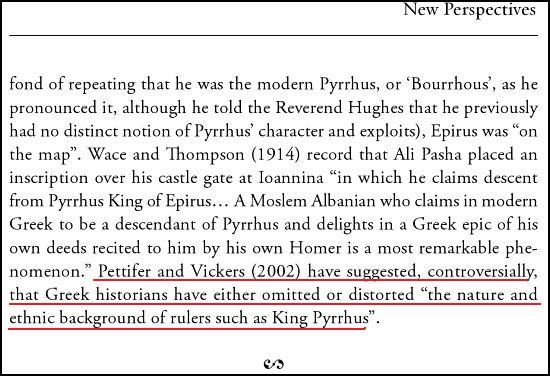
Milti I would like your opinion on this:

Scrambleforthebalkans.jpg

Scrambleforthebalkans645.jpg

Scrambleforthebalkans645a.jpg

Scrambleforthebalkans646.jpg
 
Whatever you say whatever you think greek people live there you live know since 10000 years ago. Turks wanted Izmir they took it,also the half Cyprus. Albanians want the half Epirus.You want the half Macedonia. Now? All these years of greek culture and you telling us now that you are Macedonians? From the ancient years? And for what Macedonian language you speak? The letter isn't greek.You must know that Alexander was born in Greece. He was talking greek and his mother was from Epirus (a greek ancient nation) also a greek was his father. He never spoke your slavish language. All these things you say all the time, is a propaganda from your politicians who have Americans behind them (and they want to make war with us to buy guns, and also they don't know about the greek history) and 1991 was the first time you wrote that our macedonian is yours. You try to proove that you are people, who no one cares about you and you are so unhappy and want your piece of your "land" back. Read some ancient books (greek books not your fake books). So come and get it if you want. ΜΟΛΩΝ ΛΑΒΕ.

hahaha brainwashed fool...that was never part of greece...greeks were the travelling salesman of the balkans they had no land of their own
 
TrueMacedonian writes: "The name Macedonia followed the Macedonians to Romania. Are we going to be moving the goal posts when certain facts don't enjoy our fancy? There is a rather nice list Soldier of Macedon put together. I recommend you search it out. This particular topic involves the validity of modern Greek claims to "hellenism" and any cultural connections to antiquity."


I asked you to show some connection between the slavic-speaking Macedonians and the ancient world, the ancient kingdom of Macedonia.

As an answer you attacked the Greeks.

The Romania of the middle ages is not the ancient world nor the ancient kingdom of Macedonia. One has nothing to do with the other.

You have found no connection, neither linguistic nor cultural nor geographic between the people or the nation of the Republic of Macedonia and the ancient kingdom because there is none.

You have verified Borza's statement that "modern Slavs both Macedonian and Bulgarian cannot establish a link with antiquity because the Slavs entered the Balkan peninsula centuries after the demise of the macedonian kingdom."

You said that you had no problem with Borza's quote. Neither do I. We both accept it as true, then. We agree.

It is good to end a friendly discussion with mutual agreement.

PS. The word "Macedonian" is first found in the Greek-language poems of Homer. The consensus is that it is the Greek word meaning "Highlander."

Do you know what language Homer spoke since he wrote nothing? What do you think of the phenomenon of the bard and similar customs found among "slavs"?
 
"If the claim is based on ethnicity, it is an issue of a different order. Modern Slavs, both Bulgarians and Macedonians, cannot establish a link with antiquity as the Slavs entered the Balkans centuries after the demise of the ancient Macedonian kingdom. Only the most radical Slavic factions - mostly emigres from the United States, Canada and Australia - even attempt to establish a link to antiquity".

About the "slav" things, i recommend everybody to look at the Florin Curta works, who have done a real search about the question, and has a very interesting approach of this. I recommend you one of his books, "The making of the Slavs". Here are interesting reads :

http://www.macedoniantruth.org/forum/showpost.php?p=4530&postcount=1

http://www.macedoniantruth.org/forum/showpost.php?p=4899&postcount=4

http://www.macedoniantruth.org/forum/showpost.php?p=4122&postcount=1

http://www.macedoniantruth.org/forum/showpost.php?p=30685&postcount=1

http://www.macedoniantruth.org/forum/showpost.php?p=30974&postcount=3

http://www.macedoniantruth.org/forum/showpost.php?p=9883&postcount=3

There are very fascinating stuffs in the Forum, when you can, take a look. For examples the previous posts of the member "I of Macedon", wich are very rewarding. And if someone has the PDF of the book previously mentionned, please share :).

For those who try to use the "slav" thing for proving that macedonians do no belong to Macedonia, try something more solid.
 
Last edited:
Curta's book is a minority opinion weighed against substantial archeological and textual evidence. He does, however, agree with accepted opinion on several points. He is right in saying the geographic origins of the slavic people have not been determine irrevocably and without doubt. He is wrong in saying that Roman and "Byzantine" sources are all secondary. The "Byzantines" in particular had direct contact with the slavic people from the 6th century through the many following centuries, well into the middle ages.

I cannot take the time to peruse all the links, but I did not immediately grasp Curta's point.

I am puzzled as to why the term "Slav" or "Slavic" or "Slavic language" is met with such hostility in posts from Macedonian bloggers.

The Bulgarians, Poles, Russians and others do not have such objections.

The slavic people (and their national divisions) are one of the great European races and civilisations with extraordinary achievements to their credit. They are also a people of the future.

"Slav" in Slavic means "glory." When General Potemkin was building cities in and "slavicising" the caucasus, he had planned to build a magnificent city in honour of his empress (and lover) Catherine, the Empress of Russia. Though it was never completed, Potemkin had laid out the plans for the great city. He named it "Katerinaslava," which means "the Glory of Catherine."

I wonder if the word "Slav" has taken a pejorative meaning in the experience of immigrants to the new world countries. If that's the case, there's no need. In America, not only was "Slav," pejorative, but so was "Wop", "Spick", "Greaseball", "Kike", "chink," "Kraut" "Pollack". "Yid," "nigger" and a hundred others. It's part of the fun of being a majority.
 
I am puzzled as to why the term "Slav" or "Slavic" or "Slavic language" is met with such hostility in posts from Macedonian bloggers.

To call the macedonian language a "slavic language" is not a problem, because it's true, our language belongs to the family of languages called "Balto-Slavic".

"Slav", "slavic", on the other hand, is met with a lot of hostility, because it is used to reduce the macedonian people as just a "slav" people. Thoses "sub-human slavs" with "no history", who "do no belong to theirs lands" like our lovely neighbors say. I don't like the "slav" term because it reminds me of theses statements and we don't reduce people as their language. The irish people is not just a "english" people, the macedonian people is not just a "slav" people. Also it's reminds me how the westerners used to call us during the 2001 conflict. A conflict between the ethnic albanians and the "slavs", just to write this sentence it irritates me.

"Slav" also is an incorrect term to describe peoples and ethnicities, i thank again the 19th century scholars, especially the russian ones, for spreading their personal views, ideas, also their confusions to the world.

For me it's obvious that there is no "slavic race", the today's so called "slavic nations" do not share a common ancestry, culture, "blood" and homeland. Apart for the alphabet, religion (Thanks to Macedonia ...) and languages who belong to the same family, what we share? Nothing.
 
Last edited:
Hi Nexus:

You have clearly explained your objection to the word Slav. I am not one of those who have ever thought of the word "Slav" being a pejorative term, nor do I immediately recall hearing it being used in a particularly negative way. My use of the word is to denote a multi-national and widely-difused European people.

Personally, what I think of first when I hear the word "Slav" is the monumental and almost incredible heroism of the Russian people against the Nazis in (the then) Stalingrad and (the then) Leningrad.

I have no agenda in this matter. However, I want to be a polite guest, and now that I am aware of your sensibilities I will try to refrain from using it. We agree that it is acceptable in reference to the language and there might be historical references that might make it unavoidable no matter how hard I try. I hope that you will accept that I have never used it here in a condescending or pejorative way.

Do the Serbs, the Bulgarians, the Montenegrins and others also feel the same way about the word?
 
mistracona i presume you are greek??If so then the slavs went in to greece as well .So why don't you call yourselves slavs.The problem is given that the slavs went to serbia,albania,macedonia,bulgaria,greece,turkey.Greece likes to think the slavs killed off the macedonians.The macedonians only spoke greek according to the greeks.Well that is a lie
because the same thing happened in greece do we apply the same analogy???
The slavs had some sort of linguistic influence on the macedonians.Contrary to greek claims that macedonians of old only spoke greek and nothing else is totally wrong.The macedonians had their own ancient macedonian.Completely different from the greeks it was said the greeks did not understand it.So language && speech is not one thing that binds greeks & macedonians together.So the use of slva is a smear campaign to rob macedonians of their true legacy & that is they are macedonian.So macedonians being greek is only to legitimise the greek claim to macedonia that the macedonians were greek & only spoke greek.This is pure propaganda as mentioned that the slav label is only used to discredit the real macedonians & forward to greeks the macedonian legacy.
look at the way the serbs presented to the macedonians telling them they are slavs Where is a slav from ??where is a country from?where is the language from.No body really knows the more one pushes it the more one concludes it's a means to trick people to beleive that they are not macedonian.
So in essence the real macedonians sdidn't seem to dissappear & in their place slavs appear.That is wrong,the real macedonians stayed & absorbed the slav influence but not to their detriment.So macedonians are still linked to the ancients & are still macedonians.
 
Last edited:
@George S.

Thank you for posting your passionately-held opinions and your personal observations. You made it quite clear where your feelings lie.
 
If the Macedonians managed to survive from ancient times despite all foreign influence, why did the far more numerous Greeks(more than 11 million during the times of Ptolemaic Egypt) suddenly dissappear from the face of the earth, as many of you guys claim here?

No genocide against the Greeks took place, since they were the most civilized of the populations living in the Roman Empire, and actually continued it later on, even after Rome itself fell.

About that bs that the ancient greeks were extinct during Constantine's time, consider this:

146 b.c.: Greek peninsula conquered(greeks existed at that time)
88 b.c.: Athens and other city states revolt (greeks still existed)
66-67 a.d.: Nero participated in Olympic games, proclaiming all Greeks free(typical Nero bs, but proves point-greeks still existed)

After these dates, Christianity was beginning to take deep roots, as Paul had preached to many greek territories. Greece later on became one of the most religious areas of the Empire.

So, if the Greeks existed till lets say 100 A.D., what happened after that and they were wiped off the face of earth? Alien invasion? Meteorites?:confused1:

And ofc greek remained lingua franga for centuries to become in the Eastern provinces, becoming the official language of the Roman Empire in 620, WITH ALL GREEKS EXTINCT 500 YEARS BEFORE???

Be serious people, oke Greeks denied Macedonia's identity, but no need to make yourselves believe that Greeks dissapeared after roman conquest... it's just stupid if you think about it.

Greeks existing during (former eastern) roman empire-proven by reality(and no whacko pseudo-historians can succesfully deny that, since they will be embarassed by real scientists)

Now, lets consider what happened during the Ottoman invasion:after 1100 something the Empire was reduced to the greek core of mainland greece and asia minor coast, thus the majority of its population were Greeks. Gradually even these areas were lost, cultivating in the sacking of Constantinople in 1453. At that point, even the Emperor himself clearly stated that he was Greek(Roman influence was diminishing after all these ages). Ofc the majority of the population still spoke greek.

Did all these people dissapear from the face of the earth after 1453? Keep in mind that the Greeks at that point were even more numerous, since historical greek territories(excluding Sicily and Magna Graecia, which were the last western territories to fall in the hands of Arabs and Lombards respectively) were controlled by the Empire until almost the very end. And generally there were more people everywhere by 1450 than there were at 146 B.C..

Lets assume the Macedonians numbered around 2-3 million-and they survived almost intact during the entire Roman, Byzantine and Ottoman period(without Macedonian being spoken outside Macedonia). How did the 14-15 millions of Greeks, whose language was still like english today in east mediterrenean, disappear? Keep in mind that the Ottomans granted administration of all Christians in their Empire to the GREEK ecumenical patriarch, who created GREEK schools in Greece, sent GREEK priests to churches etc. Logic dictates that Greeks had far more chances to survive as an ethnic group than Macedonians had. Yet amazingly the outnumbered latter survived ,and all the Greeks became Albanians, Vlachs etc......

:no:

Many of you also claim that the greek language itself disappeared during Ottoman times, and it was ressurected by the Germans. BUT, during these times the Church was also the provider for the education of Christians-and Greeks had juridistiction of every Church in the Ottoman Empire. Schools did exist during Ottoman period, and they were administered by the church for Christian populations.What language did the GREEK priests send from the GREEK patriarch teach? Mantarin???? Ofc they taught them Greeks. Even Macedonians were beign taught Greek. And this system remained in effect from after the fall of Constantinople till the 19th century. Greek priests taught the greek populance greek for all these years, so Greek national consience was the first to awaken, and rebellions began, succeeding finally in 1821.

And btw, during these times, the Austrians and the Germans OPPOSED the greek revolution-there was a consencus among the Great Powers that the Ottoman Empire had to remain intact-Austria in particular was fearful, since it encompassed many foreign populations in her territories. Only Russia supported the revolution, but under pressure by the others, they handed the leaders of the first greek revolution in Moravia to the Austrians, without aiding them. The British wanted to keep Russia away from Bosporus, so they supported the integrity of the Ottoman Empire, while the French were 2 busy dealing with the aftermath of Napoleon's defeat and the brief restoration of monarchy. The Germans were still not unified, so they didnt have much to say in affairs far away from Prussia.

My point? The Great Powers did not support the revolution at the beginning, so ofc they werent the ones who told the supposed Arvanites, Albanians etc to act like Greeks and revolt-they didnt even want to hear about another revolution, memories of the French one were 2 recent. So, it was the GREEK people who began their fight for indepedence. The Great Powers intervened later, becausese they were pressed by public opinion on one hand(oppressed Christians vs Muslim rulers) and Russia was ready to intervene by itself, thus securing a monopoly of influence upon the new state, something which the British would not tolerate, since the Mediterrenean was their turf. Hence, the sea battle of Navarino, to ensure that no Great Power would have a monopoly of influence on greece.

If you search about all these stuff indepedently, you will find almost all of the sources confirm what I wrotte. Dont focus on a certain German joke of a historian who was the first to deny the modern greek as greeks(he wasnt even a historian), see what other certified researchers state.

By all means, if Greeks really did dissappear, even with all the influence they had and theur numbers, how did the far less Macedonians survive? Yet again, there is no recorded use of the Macedonian language en masse until 100 years ago(i dont deny its existence, but I really dont know any period until today that Macedonian was actually spoken by bast populaces-unlike Greek).

This game of ethnicity denial has to end, both by Greeks and Macedonians. Lastly, let the long dead stay in their graves, for we will never learn with absolute certainity if Alexander was Macedonian, Greek, Roman, Phoenician, Thracian or whatever else. Lets just say that today you are Macedonians and we are Greeks.

Great. So end your administration of Macedonia then. No one wanted it. The Ottoman occupation really showed what areas are really grecophone as the greeks lost their political control over other territories. Those areas have been outlined in the forum in some detail. Really greece occupation of Macedonia was something of a fluke. Macedonia easily could have become an independant federation. Solun could easily have become an international city. greece claims in Macedonia were dubious as evens of her politician admitted.

so if Macedonia was greek by your logic where did all the greeks in Macedonia go(since you claim there were no genocide against them) since they were always a small minority of grecophones mostly clustered around old cultural-economic settlements..?

It may be that grecophones reverted to their pregreek heritage once ancient greece lost its political power.
 
Last edited:
If the Macedonians managed to survive from ancient times despite all foreign influence, why did the far more numerous Greeks(more than 11 million during the times of Ptolemaic Egypt) suddenly dissappear from the face of the earth, as many of you guys claim here?

No genocide against the Greeks took place, since they were the most civilized of the populations living in the Roman Empire, and actually continued it later on, even after Rome itself fell.

About that bs that the ancient greeks were extinct during Constantine's time, consider this:

146 b.c.: Greek peninsula conquered(greeks existed at that time)
88 b.c.: Athens and other city states revolt (greeks still existed)
66-67 a.d.: Nero participated in Olympic games, proclaiming all Greeks free(typical Nero bs, but proves point-greeks still existed)

After these dates, Christianity was beginning to take deep roots, as Paul had preached to many greek territories. Greece later on became one of the most religious areas of the Empire.

So, if the Greeks existed till lets say 100 A.D., what happened after that and they were wiped off the face of earth? Alien invasion? Meteorites?:confused1:

And ofc greek remained lingua franga for centuries to become in the Eastern provinces, becoming the official language of the Roman Empire in 620, WITH ALL GREEKS EXTINCT 500 YEARS BEFORE???

1) Professor Thanos Veremis, President of Greece's National Council of Education and founding member of the influential think-tank Hellenic Foundation for Defence and Foreign Policy (better known by its Greek acronym, ELIAMEP) made the following statement:

"Unfortunately, we (Greeks) are deeply conservative as a society. This (ethnic) homogeneity has been harmful (to us). The situation during the 19th century was different. It was rather fortunate that at that time Koraes and others had the inspiration to connect us with Ancient Hellas (an undertaking) which became the main (pre)occupation of the newly born State. In those days, there were Arvanites, Vlachs and Slavs. All of them had to become (part of) one (national body). And so they became. But this is not to say that in this day and age (we/they) should be under the illusion that (we/they) are descendants of Pericles. This (assimilating process of ethnic/national homogenization) might have been helpful before -even though we could not avoid a civil war- but it does not help us nowadays. Today we are not alone. We are surrounded by many neighbors. The (Greek) society must adapt (to new realities) instead of remaining insular and introvert."

2) We learn from Tacitus that even in his time the race of Athenians was extinct:

Now Cneius Piso, hurrying to the execution of his purposes, terrified the city of Athens by a tempestuous entry, and reproached them in a severe speech, with oblique censure of Germanicus, that, debasing the dignity of the Roman name, he had paid excessive court, not to the Athenians, by so many slaughters long since extinct, but to the then mixed scum of nations there

3)
- Strabonis geographicorum epitome:

Unknown author, known simply as Epitomiser of Strabo. Lived during the 10th century AD. According to him, at the end of the 10th century AD, Slavs formed almost the entire population of Macedonia, Epirus, continental Greece, and the Peloponnese.

"Και νυν δε πάσαν Ηπειρων και Ελλάδα σχεδόν και Πελοποννησο και Μακεδονίαν Σκύθαι Σκλάβοι νέμονται" (p. 574):

"...Scythi-Slavs inhabit all Epirus, almost entire Greece, Peloponnese and Macedonia."

- Menander asserts in 581 AD that Slavs, in great numbers (100,000), devastated Greece.

- In 588/9 AD, according to the statement of Evagrius, all Greece was laid waste with fire and sword.

- A letter of Patriarch Nicolaus, addressed to Alexius the First, mentions that in the year 807 AD Slavs (and Avars) had held possession of the Peloponnese since 589 AD. Apparently, they had made themselves so independent that no Roman/"Byzantine" connected with Imperial administration then dared to enter the country/Peloponnese.

- According to Roman/"Byzantine" traveler Cananus, writing in 1418 AD, the Slavonic tongue was spoken in Zygos (Exo Mani), i.e. the area roughly between Itylo and Kalamata. Many scholars believe that Maniots of this area were descended from the Slavonic Melingians.

- Goths devastate and depopulate Greece in 3rd Century AD.

4) Recommended additional links:

http://www.macedoniantruth.org/forum/showthread.php?p=130692
http://news.kathimerini.gr/4dcgi/_w_articles_politics_2_10/08/2008_280821

"..the Peloponnese consisted mostly, if not entirely, of Vlachs and Albanians.."

http://www.macedoniantruth.org/forum/showthread.php?t=6633

Interesting. I think those later "invasions" were probably not new things and these people were following routes they had always followed but which became blocked during the ancient greece period. Probably what later became known as "greece" was a surplus population centre for Northern cultures("dorians", "slavs" etc).
 
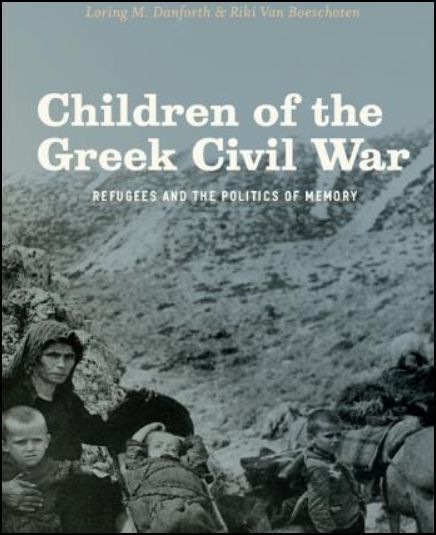
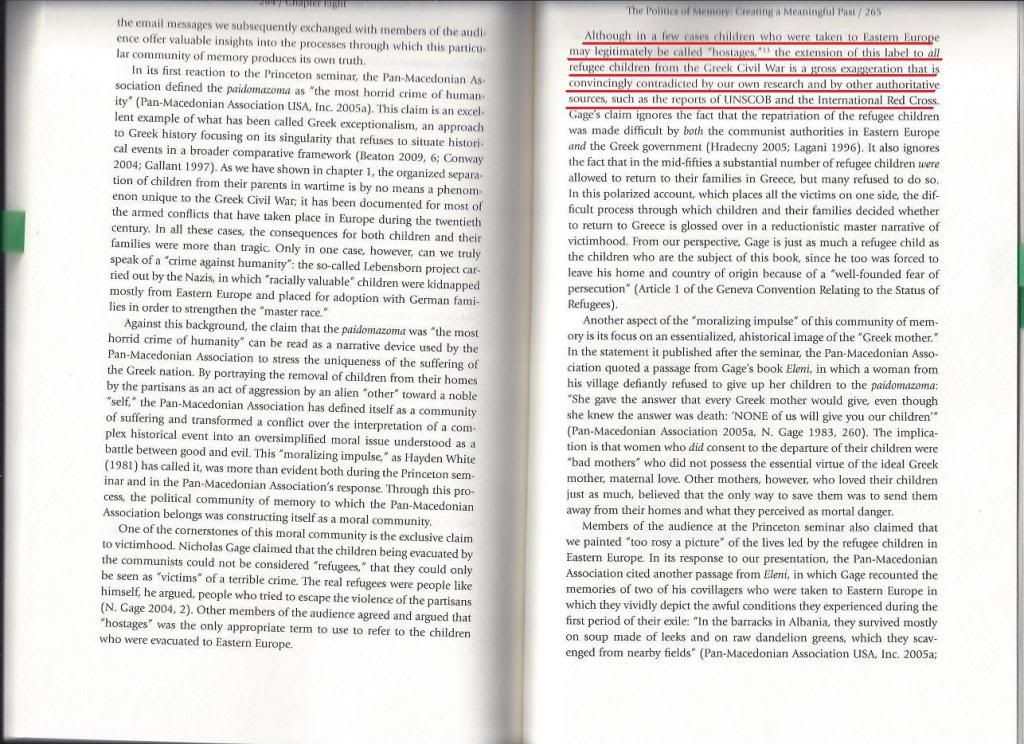
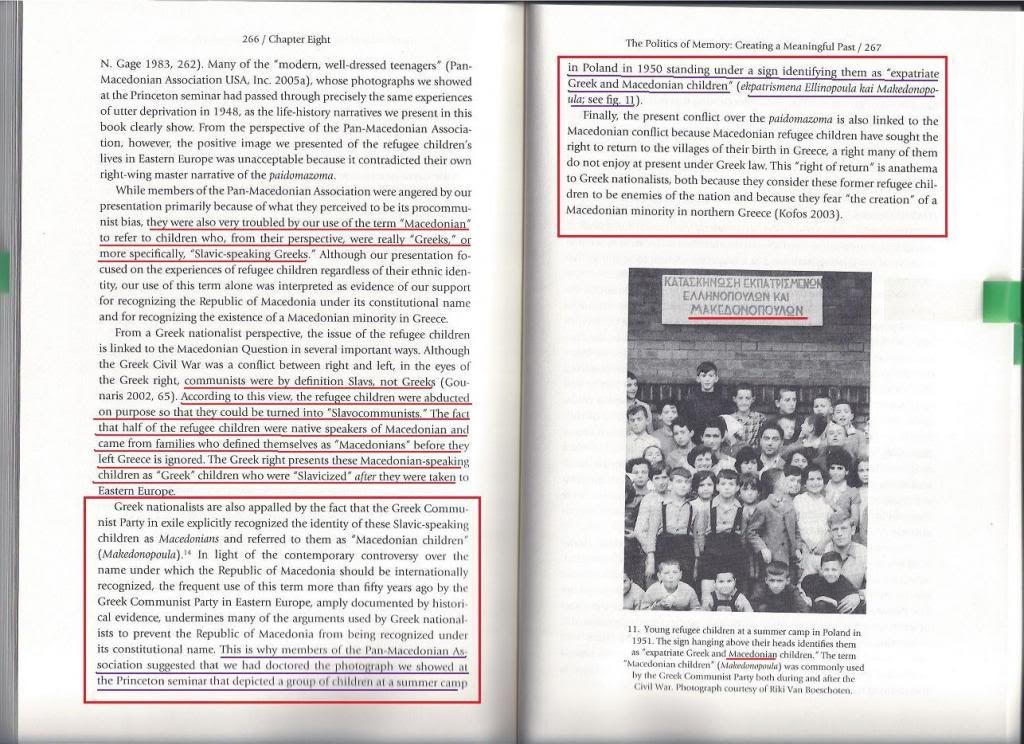
I guess this is going to go in here. Typically modern grk propaganda asserts that there is no "Macedonian" nationality and that children in the civil war were "abducted by force". Loring Danforth and Riki Van Boeschoten wrote a superb book which examines all the facts from official United Nations documents to oral testimonies. I will be posted much from this book where it concerns lies and propaganda from todays grk.

Childrenofthegreekcivilwar.jpg

ChildrenoftheGreekcivilwar264.jpg

ChildrenoftheGreekcivilwar266.jpg


The picture above is more grk evidence of a seperate Macedonian nationality.
 
http://greece.greekreporter.com/2013/03/24/tragic-end-of-1821s-greek-heroes/

Tragic End of 1821′s Greek Heroes
By Stella Tsolakidou on March 24, 2013 in Featured, History, News

The Greek War of Independence commenced in 1821 and waged until 1832when the Greek free state was finally established under the blessings and the needs of the then powerful allies of the Greek revolutionaries, the British, the French and the Russian. The national day celebrated on March 25th pays tribute to all men, women and children who lost their lives for the dream of a sovereign free country, and especially to the heroes of the Greek Revolution that risked their lives for freedom from the Ottoman Empire. But as always, there are black pages in every history book of the world, and Greece’s were not an exception. Although it goes mostly unnoticed, the fact is that many Greek captains of the Revolution were sent to jail during and after the war against the Ottomans. Others were pushed aside by the newly formed state as too dangerous for the common good or too unpredictable for the reigning forces.

Here follow some of the most exemplary and tragic stories of the Greek captains of 1821, who ended up underprivileged, captured, begging on the streets and even dead.

Nikitas Stamatelopoulos or Nikitaras or the Turk-eater died in September 25, 1849, totally forgotten and poor.The brave and honorable man who stood out in the battle of Dervenakia and was told to have broken three swords with his fury in the battlefield, was groundlessly accused of conspiracy against King Otto and was sent to prison first in Palamidi (along with his uncle and Revolution captain Theodoros Kolokotronis) and then on the island of Aegina.

When the then Greek Prime Minister Ioannis Kolettis asked him to kill a rival and former captain of the Greek Independence war, Odysseas Androutsos, in exchange for a government position, Nikitaras refused the offer and became angry with Kolettis. He also refused to take booty after the victorious battle of Tripolis, a normal practice of Balkan irregulars at the time.

Nikitaras was released from prison in 1841, but the period in jail broke his health and he was almost blind due to diabetes problems. The Greek state refused to grant him and his family any descent pension to make a living, but instead allowed him to beg before a Virgin Mary church every Friday. In 1843, when King Otto was forced to sign the Constitution, Nikitaras was given the title of major general and an insignificant pension. He died in 1849 in Piraeus.

A major hero of the Greek War of Independence, Odysseas Androutsos earned the title of Commander in Chief of the Greek forces in Roumeli, but his glory did not last long. His intense personality and constant conflicts with the “kalamarades” as he called the politicians and the clergy resulted in making him suspicious of the politics followed at the time. In spring 1822 Ioannis Kolettis accused him of betrayal and cooperation with the Ottomans, so that Androutsos gave up his title as Commander in Chief but never gave up his fighting against them. Seieng through the scheming of politics, Androutsos retired in a cave, the Black Hole, totally disappointed with the newly emerged state of the Greeks after the independence war.

There, in his cave north of Parnassus Mountain, Androutsos’ isolation made Kolettis and his enemies even more suspicious of his intentions and soon he was accused of making agreements with the enemy against the interests of the Greeks. Androutsos, however, is said to have called for the cooperation of the Ottomans in order to take them by surprise and fight them from the inside. The arrest of Kolokotronis made Andoutsos even more hostile towards politicians. Then the government in 1825 assigned to Yiannis Gouras, a close lieutenant of Androutsos, with the mission to take care of Androutsos. Androutsos finally surrendered to the government forces and was led to an Athens prison. Karaiskakis, another major figure of the Greek Independence war, was outraged by his imprisonment and even attempted to rescue his fellow fighter. The attempt failed and to cool things down Gouras asked for the government’s help.

The trial date for Androutsos was pending now, but on June 5 at midnight Gouras gave the order and five men including an unknown priest entered Androutsos’ cage and killed him after hours of torture. The lifeless body of Androutsos was then pushed off the prison tower of Goula down to the Temple of Athena Nike of the Acropolis. Androutsos’ death was declared as a failed escape attempt.

Laskarina Bouboulina was a Greek naval commander and heroine of the Greek Revolution. Being married twice to prosperous husbands, Bouboulina bought arms and ammunition at her own expense and brought them secretly to the island of Spetses on her ships, to fight for the sake of her nation. Construction of her ship Agamemnon was finished in 1820. She bribed Turkish officials to ignore the ship’s size and it was later one of the largest warships in the hands of Greek rebels. She also organized her own armed troops, composed of men from Spetses. She used most of her fortune to provide food and ammunition for the sailors and soldiers under her command.

The people of Spetses revolted on 3 April, and later joined forces with ships from other Greek islands. Bouboulina sailed with eight ships to Nafplion and began a naval blockade. Later she took part in the naval blockade and capture of Monemvasia and Pylos.

When the opposing factions erupted into the second civil war in 1824, the Greek government arrested Bouboulina for her family connection with now-imprisoned Kolokotronis; the government also killed her son-in-law Panos Kolokotronis. With the order to be arrested, she was exiled back to Spetses poor and disappointed by the new Greek reality. In 1825, while Ibrahim Pasha of Egypt disembarked in Pylos in a final attempt to smother the revolution, Bouboulina began preparing for new battles despite her animosity towards the politicians. However, on May 22 of the same year, Bouboulina would die a tragic death. Her younger son from her first marriage fell in love with the daughter of the powerful Koutsaios family of Spetses and the couple fled to the house of Bouboulina’s first husband. Bouboulina and the Koutsaios soon arrives at the house and after a long and furious dispute, Ioannis Koutsis shot her in the head fatally. The case was closed and no-one ever put the perpetratorson on trial.

Manto Mavrogenous was a Greek heroine of the Greek War of Independence. A rich woman, who spent all her fortune on the Hellenic cause. Under her encouragement, her European friends contributed money and guns to the revolution. When the struggle began, she went to Mykonos, the island of her origin, and invited the leaders there to join the revolution.

She equipped, manned and “privatized” at her own expense, two ships with which she pursued the pirates who attacked Mykonos and other islands of the Cyclades. She also equipped 150 men to campaign in the Peloponnese and sent forces and financial support to Samos, when the island was threatened by the Turks. Later, Mavrogenous sent another corps of fifty men to Peloponnese, who took part in the Siege of Tripolitsa and the fall of the town to the Greek rebels. She spent money on the relief of the soldiers and their families, the preparation of a campaign to Northern Greece and the support of several philhellenes. She also sent a group of fifty men to reinforce Nikitaras in the Battle of Dervenakia.

She moved to Nafplio in 1823, in order to be in the core of the struggle, leaving her family as she was despised even by her mother because of her choices. After her unfortunate love story with Dimitrios Ypsilantis, Mavrogenous lived depressed for a while in Nafplion. After Ypsilanti’s death and her political conflicts with Ioannis Kolettis, she was exiled from Nafplio and returned to Mykonos to live in extreme poverty. When the war ended, Greek Prime Minister Ioannis Kapodistrias awarded her the rank of the Lieutenant General and granted her a dwelling in Nafplio, where she moved. She left for the island of Paros in 1840, where she died in July 1848, in oblivion and poverty.

 
Back
Top