• Welcome to the new Macedonian Truth Forum. All posts, members and private messages have been moved over from the old forum.

    Passwords from the old forum could not be carried over, so please use Forgot your password? to set a new one. The reset link is emailed to the address on your account.

  • Rules and Regulations at the forum of the Macedonian Truth Organisation (MTO)

    (1) The national-ethnic and cultural-linguistic identity of the Macedonian people is historically Macedonian, and derives its character from the native, indigenous and geographic homeland of the Macedonians, which is called Macedonia. To ensure that their human rights, integrity and heritage are appropriately respected, the only nouns and adjectives acceptable when reference is made to the above character and identity markers is Macedon, Macedonia, Macedonian and Macedonians.

    (2) The nation-state of the Macedonian people is the Republic of Macedonia, and is to be referred to by this official title so long as the 'republic' prefix is consistently applied to other states. Alternative references are the Macedonian Republic, or simply, Macedonia.

    (3) The 'ethnic' prefix is only acceptable for Macedonians in cases where differentiation is specifically required - so long as it is in context and consistent where it concerns its application to other ethnic groups.

    (4) Should any other differentiation be specifically required, the names of other ethnic groups that reside with Macedonians in either the Republic of Macedonia or the occupied Macedonian regions in Greece, Bulgaria, Serbia or Albania, are to be given a prefix.

    (5) Negating the identity, language and culture of the Macedonian people by deliberate avoidance of the terms Macedonia, Macedonian and Macedonians, or by any other means, is not permitted.

    (6) Systematic anti-Macedonian propaganda and rhetoric are not permitted.

    (7) Threads irrelevant to the Macedonian Cause, the community at the Macedonian Truth Organisation or the Macedonians in general may be considered as spam or not in the spirit of the forum. In such cases they are not permitted.

    (8) Continual posting of messages in threads with the sole purpose of deviating from the initial topics with the use of unrelated and unnecessary information is not permitted.

    (9) All posts, external articles, reports, etc that are cited in languages other than Macedonian or English, must be accompanied with a translation in one or both of the said languages.

    (10) Despite the possibility of some conversations and debates becoming heated, extreme abuse and/or racism, vulgar language and/or terminology, threats, revelation of personal information about others, harassment, and other such behavior will not be permitted. If deemed necessary all relevant information including member details will be reported to the appropriate authorities for investigation which may result in legal action.

    (11) Threads that are created must have a summary of a topic or excerpt of an article found in pertinent link(s) that have been included. One line threads will be considered unaccetable spam and are therefore not permitted.

    (12) Compulsive and deliberate lies, irrespective of the topic, are not permitted.

    (13) Any symbols or avatars found to be perceived as offensive to Macedonians are not permitted.

    (13) Any explicit or extreme material is not permitted.

    Failure to adhere to the above rules and regulations will result in a ban after 3 breaches. This may be reconsidered in some cases should the circumstances be of an unorthodox nature and/or require special consideration. To assure an effective deterrent against an individual or individuals with the sole purpose of causing dissent through spamming, racism or other improper means, the above rules will be strictly enforced.

    The MTO administration will monitor all discussions as reasonably practical and reserve the right to remove any post and/or member from the forum, and update the rules and regulations as required. Members are encouraged to immediately report any post and/or member to the MTO administration if they feel that these rules have not been abided by.

    The views expressed on this forum are those of the individuals. The only official representation of the MTO is made by the "Macedonian Truth Organisation (Site Owner)" username, and no other.

  • Macedonian Cause

    The Macedonian Truth Organisation calls on God in Heaven to protect, bless and guide the endeavour it is committing to undertake, and that is to work towards:

    Securing Macedonia as a free, independent and democratic republic in which sovereignty lies with the Macedonian citizens; as the nation-state of the Macedonian people in which they can preserve their culture, language and identity; as a state in which the Macedonian language and culture form the basis of public life and act as important unifying elements of Macedonian society; as the home of all its citizens to which it guarantees and obliges their inalienable natural rights and corresponding responsibilities;

    The acknowledgment as self-evident and irrefutable the existence of the:

    1) Indigenous, ethnonational name of Macedonia;
    2) Macedonian people, language and identity;
    3) Macedonian culture, symbols and folklore;
    4) Macedonian ancestry, heritage and history in its entirety; and
    5) Macedonian Orthodox Church;

    Securing recognition by the International Community of the tragedies endured by the Macedonian people, of the division of Macedonia with the signing of the Treaty of Bucharest on August 10, 1913, and the genocide committed against the Macedonian people at the hands of the Greek, Bulgarian and Serbian states and their respective churches during the 19th and 20th centuries;

    Ensuring that the Interim Accord is declared ‘null and void’ and that all constitutional provisions, acts, commitments, agreements, legislation, regulations, policies or programs emanating from, supporting or consequential to the Interim Accord are also declared ‘null and void’, including the use of any symbols and the completion of any acts imposed by, or originating from, the Interim Accord.

    Ensuring that the Framework Agreement is abolished and that all constitutional provisions, acts, commitments, agreements, legislation, regulations, policies and programs emanating from, supporting or consequential to the Framework Agreement are also abolished and replaced by a framework of constitutional and statutory law based on inalienable natural rights and corresponding responsibilities and universally codified human rights mechanisms.

    Securing the abolishment of any existing constitutional provisions, acts, agreements, legislation, regulations, policies and programs that discriminate against the Macedonian people, in any international organisation or any of the countries of the International Community where such constitutional provisions, acts, agreements, legislation, regulations, policies and programs exist, and thereby ensuring the freedom for Macedonians to exercise their inalienable natural rights and fulfil their corresponding responsibilities, and practice their culture, language and religious faiths in all the countries of the International Community without hindrance;

    The empowerment of Macedonians to undertake a moral revolution and to instil and/or reinvigorate within themselves a deep-rooted national, cultural, linguistic and historical dignity and a commitment to the exercise of freedom based on inalienable natural rights and corresponding responsibilities;

    The recognition of the Macedonian minorities in the neighbouring states of Macedonia as well as the respect for the inalienable rights and freedoms of the Macedonian minorities, as provided for by natural law and as codified by the United Nations Charter, the Universal Declaration of Human Rights and other universally codified human rights mechanisms;

    The full and unreserved respect of, and the support for, the rights of all people of non-Macedonian descent living in Macedonia and around the world, who share a reciprocal full and unreserved respect for the Macedonian people, their homeland and their state;

    The cultural unification and solidarity of the Macedonian people living in all parts of historical Macedonia and adjacent territories, as well as Macedonians throughout the world;

    The unity of all Macedonians on the principles, objectives and achievement of the Macedonian cause as defined by this declaration.

Inscriptions and symbolism on Macedonian coins

Starling

New member
I found a couple pictures of the same design on a Macedonian tetradrachm with different date ranges.

167-149 BC:
rome_macedonia_tetradrachm.jpg


167-148 BC:
Image-03-Triton-XV-Lot-1148.jpg


158-149 BC:
macedonian-tet-cg2136.jpg


macedon-tetradrachm-bezel-cg2133.jpg


macedon-tetradrachm-bezel-cg2128.jpg


macedon-tet-bezel-cg2389.jpg


i56023o.jpg
i56023r.jpg


148-146 BC:
9258410_1.jpg


P. 306 of this book:

percussisse, ex inscriptione patet: cujus in adversa Clypeus Macedonius cum Diana Gazoria cernitur, & belli venationisque studium connotat: In aversa corona quercea cum fulmine & clava ad Jovem & Herculem pertinent, à quibus Reges Macedoniae natales suos descendere ja?tabant.

Rough translation:

The inscription pressed into the coin is clear: in relief is the Macedonian shield with Diana Gazoria discernible, and the study of the Venetian war connotes: on the other side the crown of oak leaves with the lightning and club of Jupiter and Hercules, of whom Macedonian kings claim descent.

IDK about the Venetian war bit but the rest came up looking for the images I posted above. That book mentions some other coins worth digging up too.

Of interest is the top inscription, which include old italic
EtruscanB-01.png
that became berkanan (ᛒ) and what seems to be a variation of Jati (Ⱑ).

ᛒⰡρ
ΜΑΚΕΔΟΝΩΝ
ΠΡΩΤΗΣ
...ΟΜΕ/...ΟΤνΕ

Biatr
Makedonon
Protis
...ome/...otne

I'm not sure about the bottom inscription because it doesn't seem to be consistent. The latter part in the last image where it's present seems to be tne rather than me as you'd assume from the top one. The first part kinda looks like it could be 𐍂Ο or ΚΟ and Rome would make sense given the time period but some of those definitely don't have an m. One of them has
monogram-hrho.png
ΣΡ as the bottom inscription. I don't know where that character is from but the image file seems to name it as hrho. Might be some variation of ursr. If that K looking bit is supposed to be a p then the bottom word in most of them would be potne. If this is all correct then we'd have the epithets Biatr potne and Ar ursr.

Another point of interest is that the oak leaves look like the Linear A character
MTaaeWh.png
, which is unlikely to be a coincidence.

The fulmen to the left represents Zeus' lightning, which may have been stylized into another character. The club represents Hercules but may also have been a broader symbol of divine authority given the symbolism of pillar altars, sceptres and their prominence in Macedonian pillar altars and possible relation to tree worship. There was something about Saxon religious customs I'll have to look into.

More coins

Perseus, 178-168 BC:
fig147.jpg


k4EVyQP.jpg


ΗΩΙΔΟΥ

ΒΑΣΙΛΕΩΣ
ΠΕΡΣΕΩΣ
Σ?

image29050.jpg


Again you can see a wreath of oak leaves, a fulmen and a Macedonian sun. Hades seems to sport headbands.

The last image has and accented E between the eagle's legs and what appears to be the characters ΜΕ and a small ᚾ at the base of the wreath not present in the others. The line next to it might be another character since it isn't actually part of the wreath.

Didrachm of Philip V:
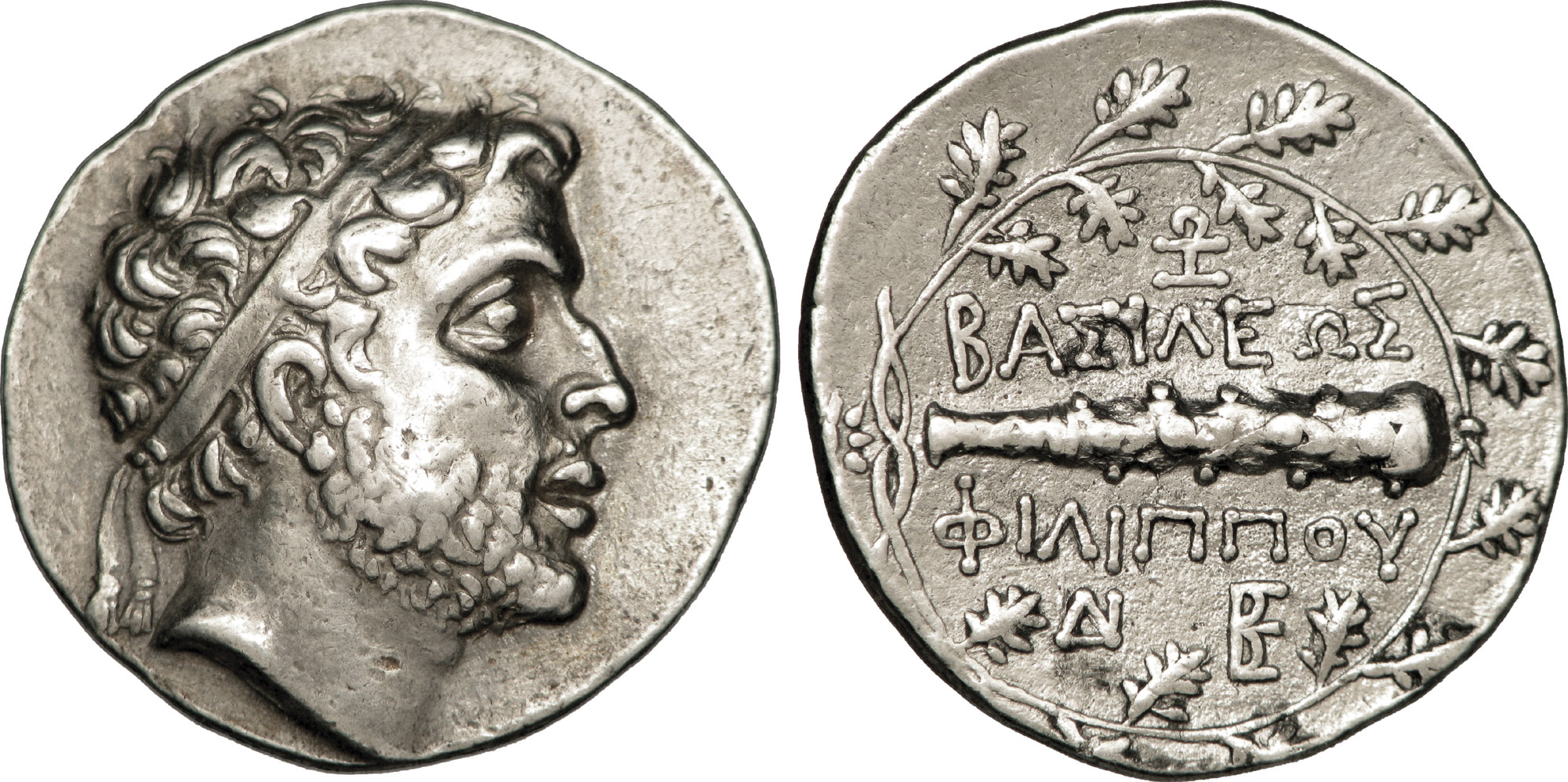
Didrachme_Philippe_V.jpg


?
ΒΑΣΙΛΕΩΣ
ΦΙΛΙΠΠΟΥ
ΔΙ ?

A few more symbols I don't know and the face looks like Hades from the previous coins. My best guess is that the first one is a variation of the other symbol above while the latter might be an archaic form of Onsь (Ⱘ).

The pattern in the coin inscriptions so far seems to be a central inscription denoting the reigning king or something pertaining to Macedonia, with upper and lower inscriptions referring to the deity featured on the coin unless present on the other side.
 
Adding details on the symbolism so far and some clarification on a few things.

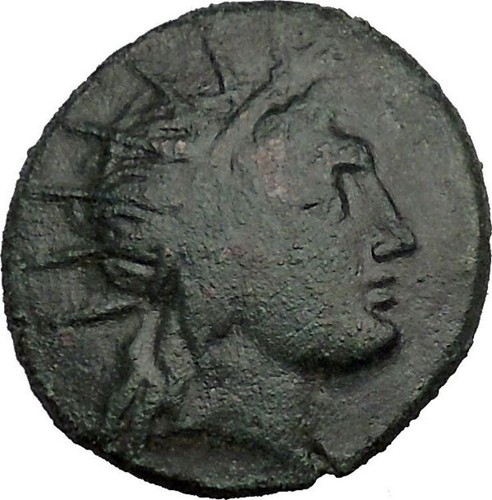
What appears to be a bow and quiver can be seen over Artemis' shoulder. She also seems to be wearing a diadem. While on her image the design is little more than a band, the presence of an oak wreath on the other side implies it could be what her diadem would've looked like if more detail was feasible. Or maybe it's just one of those simple metal bands. Oak wreaths seem to be a symbol of wisdom and apparently associated with Zeus, who has a myth somewhere about resting in an oak grove when making decisions. If anyone knows where that's from let me know.

This diadem was apparently among the finds in the Kutlesh tombs:

CjisyJqWEAQ8a7G.jpg


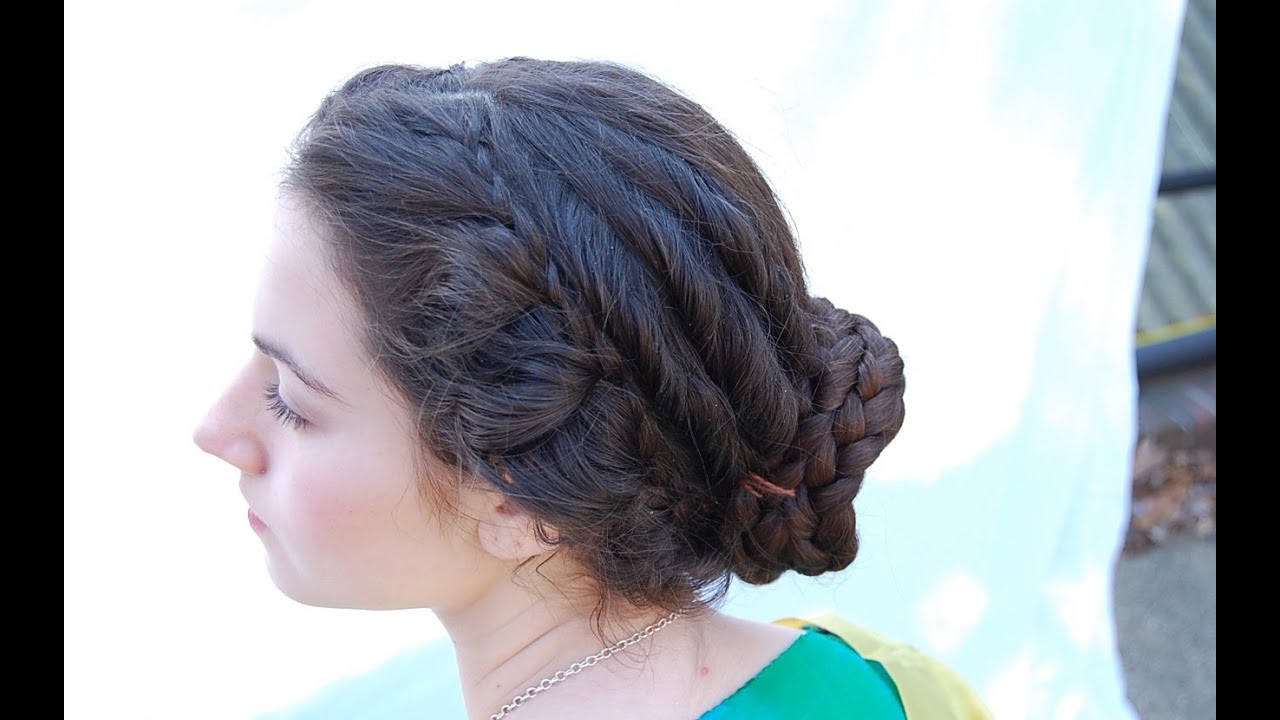
Here's a modern recreation of a hairstyle similar to what Artemis is sporting:
maxresdefault.jpg

hqdefault.jpg

37919d41c9c9b74d24c3e3cc476a4bdd.jpg


Sewing techniques are involved to keep the hair in place.

Given that composite letters are a thing, I’d like to clarify that
monogram-hrho.png
seems to be a composite of ΗΡ. The inscription on the Artemis coin would still mean bear but transliterated as irsr rather than ursr. The implication seems to be that there was an evolution of irsr > irsur > ursu > ursa > urs > ours/ors, while biatr implies biatr > biar > ber and an etymological link between atr and ber. There might be a connection with latin hirsutae, which means shaggy. It’s still in use in french as hirsute.

Applying it to the letters on the Hades coins you get ΟΙ or ΙΟ and ΒΕ. I still think the latter character could be Ⱘ so here’s a comparison:

ΟΙ ΔΙ ΒΕ Oidibe
ΟΙ ΔΙ Ⱘ Oidion

ΙΟ ΔΙ ΒΕ Iodibe
ΙΟ ΔΙ Ⱘ Iodion

ΗΩΙΔΟΥ Eoidou

Potne is a known epithet used in linear B to refer to various goddesses, where it's written po-ti-ni-ja.

So far the only script I've confirmed a meaning for is ᚾ (n) in the runic scripts (elder futhark, futhorc, younger futhark) used by proto-Norse, Saxon and Old Norse. Old italic scripts have 𐌍. The accent on the Ε seems to be ˇ, which is called Caron. There's also that other letter, which on closer inspection looks like ב, though I'm only using that character for the shape. I think it shows up on other coins too.

ΟΙ ΜΕ ˇΕ בᚾ
ΙΟ ΜΕ ˇΕ בᚾ
or
ΟΙ 𐌍Ε ˇΕ בᚾ
ΙΟ 𐌍Ε ˇΕ בᚾ

If ᚾ is still n then it's one of the first two: Oimeě?n, Iomeě?n

The other coin with Σ and the other character that might be a variation of what we determined to be ΟΙ/ΙΟ might be something else. It's a lot boxier, similar to heth (𐤇) and the italic variant 𐌇. If it's another composite letter but with one more the added character would likely be Π. Here are all the possible arrangements with and without Π:

ΣΟΙ soi
ΣΙΟ sio

ΣΠΟΙ spoi
ΣΠΙΟ spio

ΣΟΠΙ sopi
ΣΙΠΟ sipo

ΣΟΙΠ soip
ΣΙΟΠ siop

sopì seems to be past tense of sopire (he slept) while the Macedonian word for sleep seems to be spienje. I can't find any other possible words but others are free to suggest some.

It seems like we might have sleep and omen as epithets for Hades. The only relation between Hypnos and Hades I've found so far is that Hypnos and Thanatos are twin sons of Nyx and live in Hades, the underworld. Given that sleep and death are paired in this, they could've started out as aspects of Hades. It's worth noting that Turkic languages like Uzbek and Turkish seem to have uku in their words for sleep, which might be related to that thing about nuku being used to relate to sleep or other nightly things.

Uzbeck: uyqu (sleep), uxlash (sleeping)
Turkish: uyku (sleep), uyuyor (sleeping)

We'd have to look into the development of those words to confirm a relation but it's at least plausible. It'd also help explain the relation between him and Dionysus I'm seeing traces of.

Now, here’s the quote about the pillar/sceptre = symbol of authority thing and relation to tree worship I brought up.

P. 205:

There followed a feast in which the limbs of a bull were consecrated to Poseidon, after which the ten kings sat in judgement at the foot of the pillar; a practice that reminds us of the Aesir, who sat in judgement at the foot of Yggdrasil.

Now, in the Greek text Koryphe means the volute at the top of the pillar of sacrifice, and so presents us with yet another example of the correlation of Atlantean and Hyperborean religious symbols and practices. In Old Norse both the volute and the center post supporting the roof of a dwelling is called às; and às, it will be recalled, was the hieroglyph of Isis, às-ar that of Osiris. From às also comes the name Asgard for the holy island in the Eddas on which the Aesir foregathered for their royal ceremonies. From this widespread association of the cult pillar with royal judgement as well as sacrifice stems the volute’s original meaning of a throne, of kingship, of supreme authority both spiritual and temporal, which it has retained from neolithic times. The kings and leaders of Western nations have carried the volute up to the present day as a scepter or sacred emblem, and the royal lily emblem of France, evolved from the Irminsul, is prefigured without change in Hittite, Assyrian and Scythian examples and, as we now note, in the Atlantean example as well.

I also found an entire book about Mycenaean tree pillar cults with some stuff pertaining to Crete, though I haven’t had time to read it yet. Here's the link.

This is what an Irminsul looks like when it's not a literal tree:
irminsul-l_arbre-du-monde-des-saxons.jpg


Volute, architecture:
d8e77381-ed89-4b7b-94dc-2579da7111ad


You see that kind of design for pedestals, which is what I figure is usually meant by pillar altar. It's most strongly associated with Saxons, who have a unique runic character shaped like it. Ēar ᛠ (ea)

The imagery for the fulmine was nagging me because it seemed familiar. I think it became the cyrillic letter Zhe Ж ж. According to wikipedia there's no Latin or Greek equivalent and its origin is a mystery. Misc. runic characters: ᛯ, ᛤ, ᛡ

220px-Cyrillic_ZH.png


caricature-livejournal.jpg


Budhist Vajra/Dorje, symbol of lightning:
dorje2_500.jpg


image-of-a-vajra.jpg


It's described as a club and used in much the same way as a scepter.

Ancient Indian coin:
9c063331f7f615623316bbfc2750b378--ancient-symbols-a-symbol.jpg


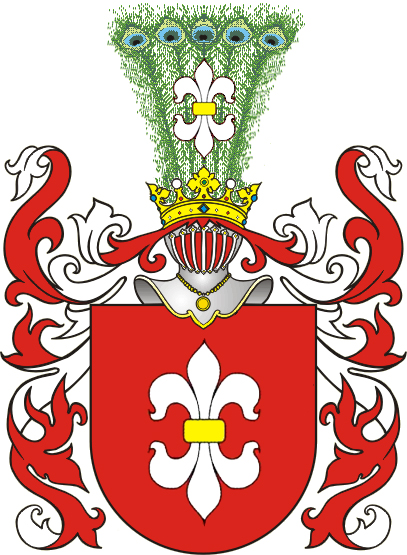
Pilzno and Gozdawa coat of arms:
POL_Pilzno_COA.svg

Herb_Gozdawa.jpg


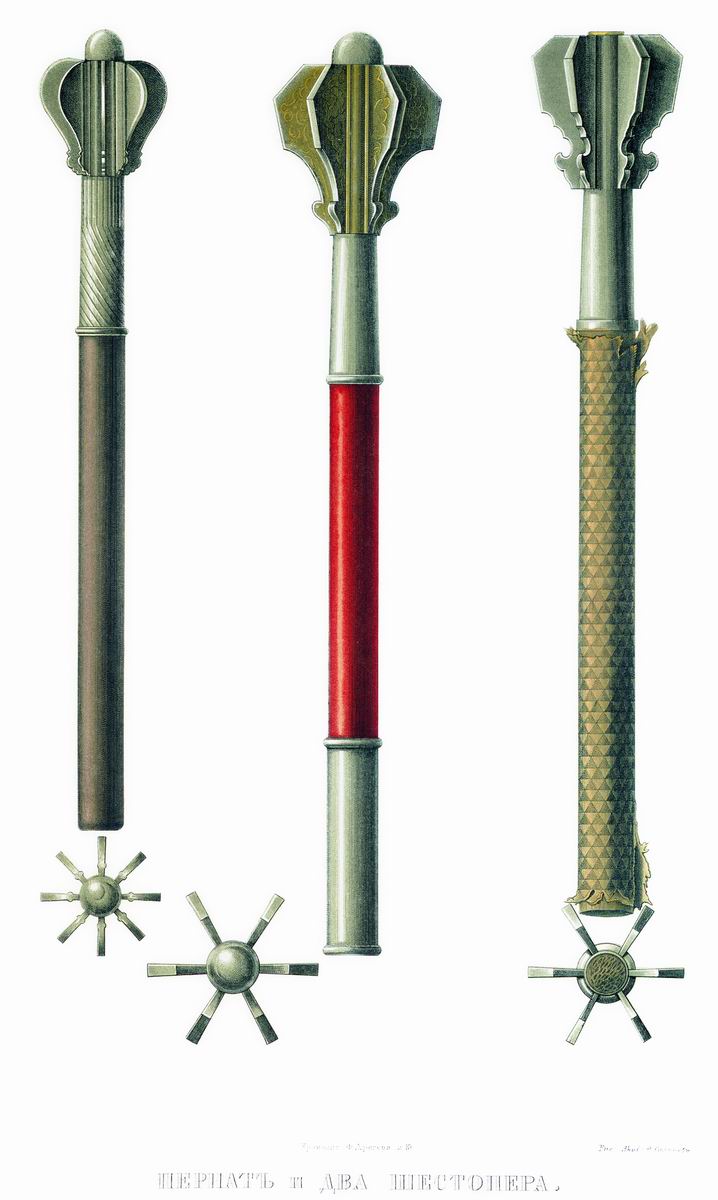
Dorje-Pernach, Polish flanged mace:
Drevnosti_RG_v3_ill082_-_Pernath_and_Shestopiors.jpg


That type of mace seems to be primarily associated with Poles and Indians, as well as Parjanya-Perun. The double-sided axe is tied into this too but I'll get to it later.

To recap:

1. Hercules' club, Zeus' lightning, tree-pillars and scepter are all interconnected as symbols of authority and divine power
2. Ж = Zeus
3. another version of Hades' name plus possible epithets
4. some interesting etymological information on words for bear
5. evidence of uniquely slavic letters in old Macedonian coins
6. oak wreaths and a linear A letter that means oak
7. a general idea of just how widespread some older symbols are across various cultures

My next post will probably add more coins.
 
Last edited:
Just a generic comment. These bizarre symbols are called monograms and they are a signature combination of (Greek) letters. All these coins seem to be common ones (anyone of us can buy one) so I'm pretty sure they are published and explained.

This is an example of a similar (yet rare) coin with a monogram that looks like ME.
http://helios-eie.ekt.gr/EIE/bitstream/10442/8426/1/IGRA_Kremydi_07_01.pdf

This is Hephaestion's monogram that was found in Amphipolis Tomb and was much discussed recently. As you can see it is a very impressive one and manages to colide ALL letters of the name in a mixture of two letters ΗΝ. The inscription says ΠΑΡΕΛΑΒΟΝ ΗΝ (received Hephaestion)

ifisign04.jpg


%25CE%259B%25CE%2595%25CE%25A68.jpg
 
Last edited:
ΠΑΡΕΛΑΒΟΝ transcribes as parelabon. There doesn't seem to be Π in the images you posted. That ΗΝ digraph is definitely impressive though. You wouldn't happen to have a link to the article about would you? Saying it means Hephaestion isn't very helpful without outlining exactly what characters were interpreted in what order. Seems like they're getting ΗΦΑΙΣΤΙΩΝ out of that letter jumble. I see Θ and Ⱑ in there. The letters tied to the Η are ΦΑΙ while the ones tied to the Ν are ΘΩΣ on top and Ⱑ below. Is it supposed to be read as ΗΦΑΙΣΘⰡΩΝ? I recall Ⱑ can be read as yat or ya, so it'd be Ephaisthiaon/Hephaestion.

I can't seem to be able to find any online information about composite letters and the only sites that displayed the Artemis coins only mentioned the ΜΑΚΕΔΟΝΩΝ ΠΡΩΤΗΣ inscription, saying it means Macedonia first.

The other coins with Hades focused on ΒΑΣΙΛΕΩΣ ΦΙΛΙΠΠΟΥ and ΒΑΣΙΛΕΩΣ ΠΕΡΣΕΩΣ without really mentioning the other letters so I had to note them and refer to charts of various scripts to transcribe them myself because no one else seems to have bothered. And I mean why would they when pretty much every site I've come across so far refers to Macedonians as Greek.

Because of the general lack of fully reliable sources, I'm trying my best to cover all the possibilities. Even then I'm only one person with limited knowledge and searching ability so I'm gonna need some feedback to make this all as accurate as possible. For one thing Hades was noted on a coin sporting Perseus' face so it's not guaranteed that some of the words I noted on the coins without Hades next to the head are referring to him, though it does seem that coin seems to be common. Additionally since Alexander is frequently depicted as Heracles you'd expect that sort of thing to happen with other Macedonian kings as well.

In your link the study refers to coins with the following inscriptions:
ΜΑΚΕΔΟΝΩΝ ΠΡΩΤΗΣ ΜΕΡΙΔΟΣ
ΜΑΚΕΔΟΝΩΝ ΠΡΩΤΗΣ
ΜΑΚΕΔΟΝΩΝ ΔΕΥΤΕΡΑΣ
ΜΑΚΕΔΟΝΩΝ ΤΕΤΑΡΤΗΣ

It says that they weren't for production long and that the district divisions are likely to have predated the Roman partition, where rather than creating new districts they just banned marriage and travel between existing ones. I'm still a bit skeptical about it but it's plausible. For some reason it refers to ΜΕΡΙΔΟΣ as meris rather than meridos or merid.

ΠΡΩΤΗΣ (protes), ΔΕΥΤΕΡΑΣ (deuteras), ΤΕΤΑΡΤΗΣ (tetares) are first, second and third and seem to exist in some form across most european languages.

If those coins really do predate Roman occupation then that seems to rule out Rome as a potential reading of the inscription on the Artemis coin.

Apparently that A looking letter that isn't AR is supposed to be an AY monograph and some kind of mint mark. Having some kind of reference for mint marks would be great but I keep getting present day euro coins in my search results. Also the ב looking thing is apparently a plough, as seen on this Italian coin:

mPCs2vX6_Yb1UMCD2ED2j6g.jpg


Here're some more coins with it:

Made in Amphipolis, 178-168 BC:
aLc63oRCE7zS2sPGxMq49rHtY5MjnD.jpg


ΒΑΣΙΛΕΩΣ
ΠΕΡΣΕΩΣ

ΑΥ ΗΡ ΑΝ

ΑΥΗΡΑΝ Aueran
or
ΗΡΑΝ Eran

Apparently the middle Persian version of Iran was Ērān, which is supposed to be related to Aryan. No further explanation on the meaning. Other variations of the name include airya. Heron comes to mind as well but it's apparently of Germanic origin and neither its linguistic development of the context seem to support it. Hran means food and there's a plough on the coin so there's that too.

made in Amphiplis or Pella, 174-173 BC:
8syGXFb2d7AZMR9e5tpZynQ47H3mDa.jpg


Just barely visible due to wear.

ΒΑΣΙΛΕΩΣ
ΠΕΡΣΕΩΣ
ΟΙ ΜΙ Φ

I don't know what word ΟΙΜΙΦ would be.

Another one with Hades written on it:
659e796e2b09a871c2b61b76a0597bc1.jpg


Another of the previous but without the plough:
Perseus_of_Macedonia_Tetradrachm_90060057.jpg


I tried to find the coins in the article and ended up with a bunch of ebay images of rare Macedonian coins. Some of them are going for 1000+ $ while others are more around 700$, 150$ or 30-60$.

Phillip V, 221BC:
s-l300.jpg
s-l500.jpg


Goats, lightning bolt, ΒΑΦ

Hercules wearing a lion pelt.

s-l500.jpg
s-l500.jpg


Same as above but with a sun.

Alexander III, 325BC:
$_1.JPG


Macedonian shield with crescents instead of suns and 5 dots between sections instead of 3. The central design probably represents a lightning bolt.

Helmet on the other side and what seems to be ΒΑΔ

Philip V and Perseus:
s-l500.jpg
s-l500.jpg

Winged lightning bolt, ΜΑΚΕΔΟΝΩΝ a sun and what I can't quite make out.

Zeus's head on the other side

Philip V, 200 BC:
s-l500.jpg
s-l500.jpg


Helios with a sun crown. Either long hair or a band tying it in place.

Lightning bolt stylized a bit differently than usual. You can clearly see a central ᛡ shape with 5 prongs on each side and 2 circles on the side. Wreath of oak leaves

ΔΙ
ΒΑΣΙΛΕΩΣ
ΦΙΛΙΠΠΟΥ

ΜΕ...Τ
or
ΝΕ...Τ

221 BC:
s-l500.jpg
s-l500.jpg

ΔΙ
ΒΑΣΙΛΕΩΣ (?)
ΦΙΛΙΠΠΟΥ
Ν...

Alexander III, 325 BC:
s-l500.jpg
s-l500.jpg


Macedonian shield with crescents in circles around, 5 dots in between and a lightning bolt in the center.

Δ (upper left of the helmet), Β, helmet, something else (winged helmet?), lightning bolt

Macedonian Denar, 1997:

321021966713_1.JPG


I don't know why it popped up when looking for rare coins but it's the Šarplaninec and Macedonian currency so I figured I'd put it here too.
 
Neat. Thanks. I think I'm going to take a break from posting coins for a bit and look for some more studies of that type.

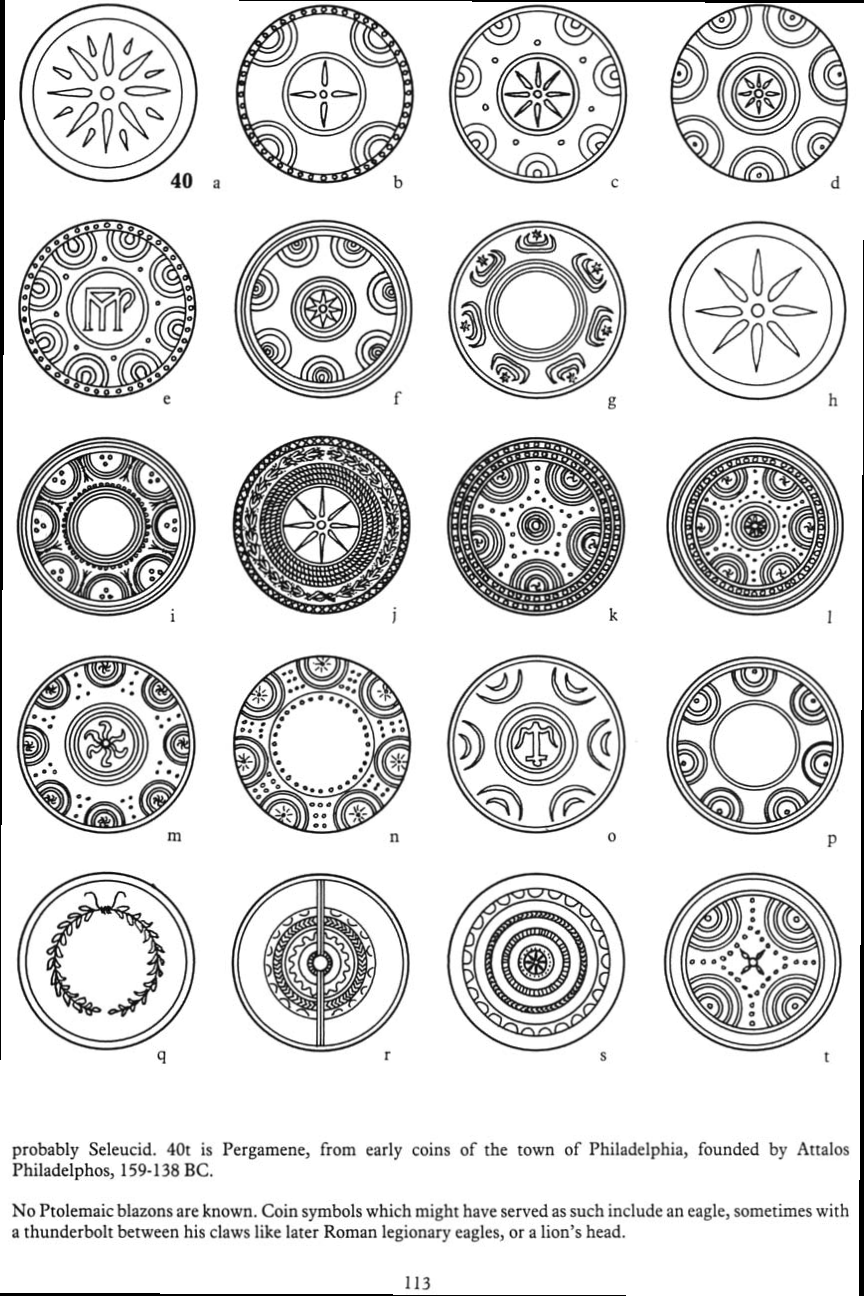
So, I found an image of a bunch of Macedonian shield patterns that seem to be based on ones depicted on various coins.

shield_designs.png

The shield labelled m has the symbol of eternity, called kolovrat. The Macedonian version seems to be rounded while other versions seem to be sharp and angular. As expected, the most common pattern is the sun but there's also what looks like a laurel wreath, though it could be a simplified version of an oak wreath. The one labelled o seems to have crescents while the one labelled g has crescents and suns.

The overall pattern arrangement on some of them is reminiscent of the symbol for Perun, though not identical. Like with the kolovrat, the main difference seems to be that the Perun symbol has sharp and angular edges while Macedonian shield iconography is more rounded. Given the frequency of symbolism tied to Zeus the shield patterns may hold a similar meaning.
Thundermarks.svg


Apparently it was engraved on houses to protect them from lightning. Both Perun and Zeus are associated with oaks, eagles and lightning but Perun is also associated with the Iris:
1200px-Iris_germanica_%28Purple_bearded_Iris%29%2C_Wakehurst_Place%2C_UK_-_Diliff.jpg
361611-svetik.jpg


Obviously that's because it more closely resembles the fleur de lys, which as I covered before is derived from a lightning symbol. Fleur de lys originally meant flower of light. Danish has lys, old Norse and Icelandic have ljós, which resemble it the most.

Latin has iris/irid for rainbow, which became iris and iridescent. The sun was apparently occasionally referred to as the eye of Zeus. Rainbows are also a form of light and were seen as a bridge between heaven and earth. Hopefully that sheds some light on how a symbol for lightning became associated with a flower.

This seems to be the type of helmet on the coins in my previous post:
screen-shot-2015-04-09-at-1-09-53-pm.png
 
Back
Top