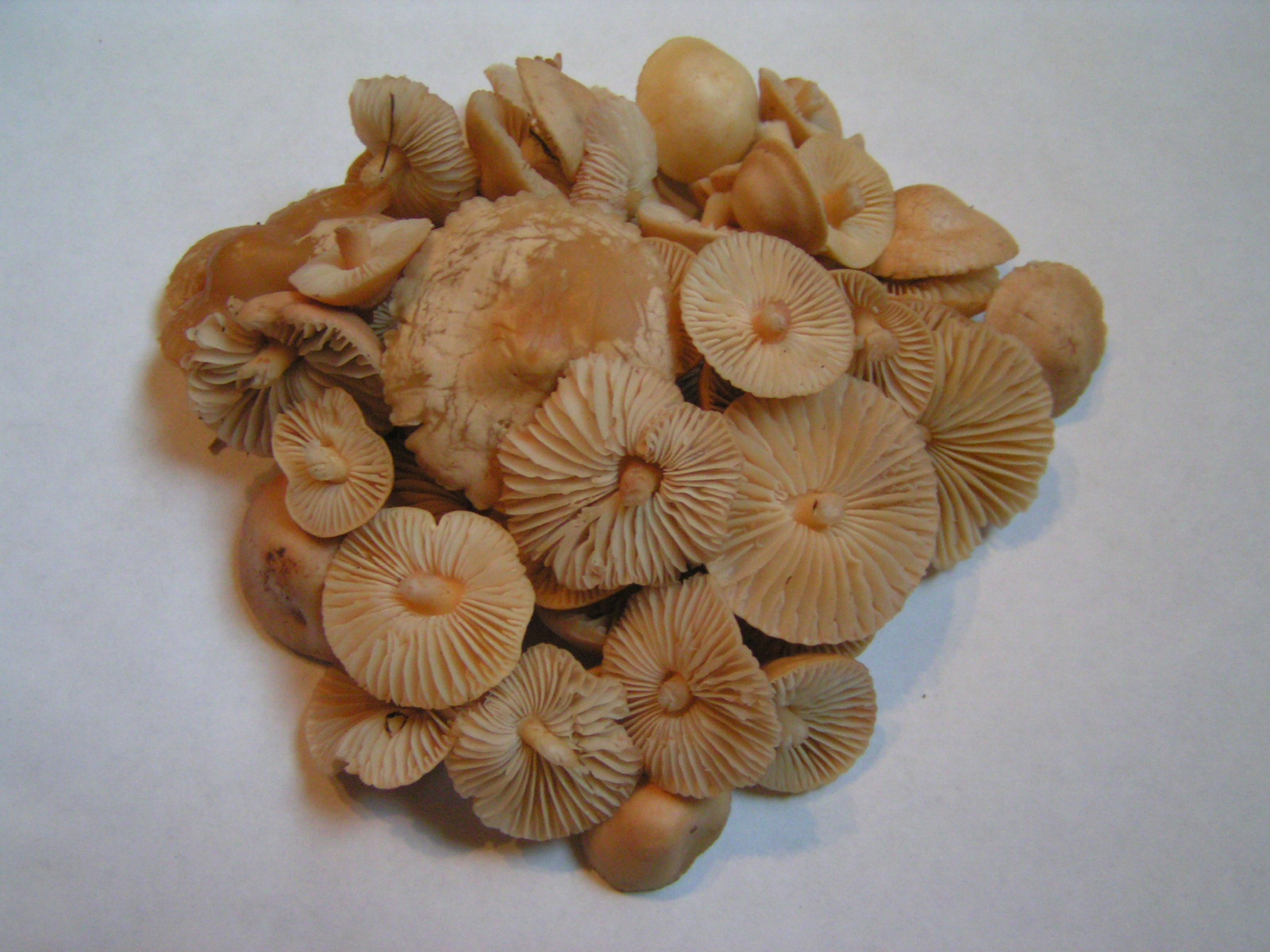
• Welcome to the new Macedonian Truth Forum. All posts, members and private messages have been moved over from the old forum.

    Passwords from the old forum could not be carried over, so please use Forgot your password? to set a new one. The reset link is emailed to the address on your account.

  • Rules and Regulations at the forum of the Macedonian Truth Organisation (MTO)

    (1) The national-ethnic and cultural-linguistic identity of the Macedonian people is historically Macedonian, and derives its character from the native, indigenous and geographic homeland of the Macedonians, which is called Macedonia. To ensure that their human rights, integrity and heritage are appropriately respected, the only nouns and adjectives acceptable when reference is made to the above character and identity markers is Macedon, Macedonia, Macedonian and Macedonians.

    (2) The nation-state of the Macedonian people is the Republic of Macedonia, and is to be referred to by this official title so long as the 'republic' prefix is consistently applied to other states. Alternative references are the Macedonian Republic, or simply, Macedonia.

    (3) The 'ethnic' prefix is only acceptable for Macedonians in cases where differentiation is specifically required - so long as it is in context and consistent where it concerns its application to other ethnic groups.

    (4) Should any other differentiation be specifically required, the names of other ethnic groups that reside with Macedonians in either the Republic of Macedonia or the occupied Macedonian regions in Greece, Bulgaria, Serbia or Albania, are to be given a prefix.

    (5) Negating the identity, language and culture of the Macedonian people by deliberate avoidance of the terms Macedonia, Macedonian and Macedonians, or by any other means, is not permitted.

    (6) Systematic anti-Macedonian propaganda and rhetoric are not permitted.

    (7) Threads irrelevant to the Macedonian Cause, the community at the Macedonian Truth Organisation or the Macedonians in general may be considered as spam or not in the spirit of the forum. In such cases they are not permitted.

    (8) Continual posting of messages in threads with the sole purpose of deviating from the initial topics with the use of unrelated and unnecessary information is not permitted.

    (9) All posts, external articles, reports, etc that are cited in languages other than Macedonian or English, must be accompanied with a translation in one or both of the said languages.

    (10) Despite the possibility of some conversations and debates becoming heated, extreme abuse and/or racism, vulgar language and/or terminology, threats, revelation of personal information about others, harassment, and other such behavior will not be permitted. If deemed necessary all relevant information including member details will be reported to the appropriate authorities for investigation which may result in legal action.

    (11) Threads that are created must have a summary of a topic or excerpt of an article found in pertinent link(s) that have been included. One line threads will be considered unaccetable spam and are therefore not permitted.

    (12) Compulsive and deliberate lies, irrespective of the topic, are not permitted.

    (13) Any symbols or avatars found to be perceived as offensive to Macedonians are not permitted.

    (13) Any explicit or extreme material is not permitted.

    Failure to adhere to the above rules and regulations will result in a ban after 3 breaches. This may be reconsidered in some cases should the circumstances be of an unorthodox nature and/or require special consideration. To assure an effective deterrent against an individual or individuals with the sole purpose of causing dissent through spamming, racism or other improper means, the above rules will be strictly enforced.

    The MTO administration will monitor all discussions as reasonably practical and reserve the right to remove any post and/or member from the forum, and update the rules and regulations as required. Members are encouraged to immediately report any post and/or member to the MTO administration if they feel that these rules have not been abided by.

    The views expressed on this forum are those of the individuals. The only official representation of the MTO is made by the "Macedonian Truth Organisation (Site Owner)" username, and no other.

  • Macedonian Cause

    The Macedonian Truth Organisation calls on God in Heaven to protect, bless and guide the endeavour it is committing to undertake, and that is to work towards:

    Securing Macedonia as a free, independent and democratic republic in which sovereignty lies with the Macedonian citizens; as the nation-state of the Macedonian people in which they can preserve their culture, language and identity; as a state in which the Macedonian language and culture form the basis of public life and act as important unifying elements of Macedonian society; as the home of all its citizens to which it guarantees and obliges their inalienable natural rights and corresponding responsibilities;

    The acknowledgment as self-evident and irrefutable the existence of the:

    1) Indigenous, ethnonational name of Macedonia;
    2) Macedonian people, language and identity;
    3) Macedonian culture, symbols and folklore;
    4) Macedonian ancestry, heritage and history in its entirety; and
    5) Macedonian Orthodox Church;

    Securing recognition by the International Community of the tragedies endured by the Macedonian people, of the division of Macedonia with the signing of the Treaty of Bucharest on August 10, 1913, and the genocide committed against the Macedonian people at the hands of the Greek, Bulgarian and Serbian states and their respective churches during the 19th and 20th centuries;

    Ensuring that the Interim Accord is declared ‘null and void’ and that all constitutional provisions, acts, commitments, agreements, legislation, regulations, policies or programs emanating from, supporting or consequential to the Interim Accord are also declared ‘null and void’, including the use of any symbols and the completion of any acts imposed by, or originating from, the Interim Accord.

    Ensuring that the Framework Agreement is abolished and that all constitutional provisions, acts, commitments, agreements, legislation, regulations, policies and programs emanating from, supporting or consequential to the Framework Agreement are also abolished and replaced by a framework of constitutional and statutory law based on inalienable natural rights and corresponding responsibilities and universally codified human rights mechanisms.

    Securing the abolishment of any existing constitutional provisions, acts, agreements, legislation, regulations, policies and programs that discriminate against the Macedonian people, in any international organisation or any of the countries of the International Community where such constitutional provisions, acts, agreements, legislation, regulations, policies and programs exist, and thereby ensuring the freedom for Macedonians to exercise their inalienable natural rights and fulfil their corresponding responsibilities, and practice their culture, language and religious faiths in all the countries of the International Community without hindrance;

    The empowerment of Macedonians to undertake a moral revolution and to instil and/or reinvigorate within themselves a deep-rooted national, cultural, linguistic and historical dignity and a commitment to the exercise of freedom based on inalienable natural rights and corresponding responsibilities;

    The recognition of the Macedonian minorities in the neighbouring states of Macedonia as well as the respect for the inalienable rights and freedoms of the Macedonian minorities, as provided for by natural law and as codified by the United Nations Charter, the Universal Declaration of Human Rights and other universally codified human rights mechanisms;

    The full and unreserved respect of, and the support for, the rights of all people of non-Macedonian descent living in Macedonia and around the world, who share a reciprocal full and unreserved respect for the Macedonian people, their homeland and their state;

    The cultural unification and solidarity of the Macedonian people living in all parts of historical Macedonia and adjacent territories, as well as Macedonians throughout the world;

    The unity of all Macedonians on the principles, objectives and achievement of the Macedonian cause as defined by this declaration.

Mushrooms in Macedonia

DraganOfStip

New member
Some of you here know I'm a big cooking fan (I've posted recipes and meals on another thread here) but an even bigger passion of mine are mushrooms.
Yes, I've been drawn to the "meat of the forest" since i was a kid.
I remember the days when me,my dad,my uncle and my granddad would go to mt.Plackovica and forage some great and delicious species,while at the same time my granddad picked some wild thyme for a great tea.
We would sometimes visit my aunt & uncle in Delcevo and visit mt.Golak too, some great mushrooms there as well.
Due to circumstances I haven't been to Plackovica or Golak for many years now, but I still forage some mushrooms in the nearby pine forest even though selection is limited.
I would like to share some info,images and perhaps recipes for those of you interested or simply curious about mushrooms in Macedonia.

The two most cultivated mushrooms in Macedonia are the Champignons or Button Mushroom (Agaricus bisporus,in Macedonia simply known as Шампињон) and the Oyster Mushroom (Pleurotus ostreatus, here known as Буковка).Both are very delicious and healthy.Another,but less cultivated than these two is the Japanese mushroom called Shitake (Шитаке).It is even more beneficial but very rare here (I personally haven't seen nor tried this kind yet here in MK), maybe one of the reasons is the higher production costs and therefore higher market price than the previous two.

Agaricus bisporus:
20091251022453563s.jpg


Pleurotus ostreatus:
6929494_orig.jpg


Shitake mushrooms:
156691_CSB010814B004F01.jpg


However,many mushrooms can't be cultivated and can only be found in forests,fields,hills,mountains,meadows etc.,one has to simply go out and look for them.
A great meal can be literally steps away from you.I will guide you step by step through varieties of mushrooms in Macedonia with each post.
Posts of fellow mushroom lovers are welcomed.
 
Last edited:
Thanks for posting this Dragan. I love mushrooms, and I was actually talking with my wife a while ago about if there were any traditional Mak recipes that call for a lot of mushrooms, but couldn't think of any. It was surprising because many of our relatives in the villages are always foraging for mushrooms in the mountains. Do you know of any traditional Mak recipes that focus on mushrooms, or where mushrooms are a significant element?
 
Thanks for posting this Dragan. I love mushrooms, and I was actually talking with my wife a while ago about if there were any traditional Mak recipes that call for a lot of mushrooms, but couldn't think of any. It was surprising because many of our relatives in the villages are always foraging for mushrooms in the mountains. Do you know of any traditional Mak recipes that focus on mushrooms, or where mushrooms are a significant element?

Well,I know many recipes where mushrooms are involved, but at the moment I think only селско месо is actually a traditional macedonian dish with mushrooms.There may be more,but I can't think of any right now.It is a meat casserole usually made in clay pots that contains meat (usually pork,but sometimes veal/beef is used too,in rare occasions chicken or a combination),mushrooms, onions, paprika,ground pepper, red wine,parsley,bay leaves etc.
Here's a random recipe:http://daily.mk/vesti/recept-za-nedelen-ruchek-selsko-meso-so-pechurki
And here is another recipe that I found containing one of the all-time best mushrooms in the world -Boletus edulis (Вргањ):http://moirecepti.mk/post/%D0%BC%D0%B5%D1%81%D0%BD%D0%B8-%D1%82%D0%B0%D0%B2%D0%B8%D1%87%D0%BA%D0%B8-%D1%81%D0%BE-%D0%B2%D1%80%D0%B3%D0%B0%D1%9A
 
Last edited:
Thanks, Dragan. I've had selsko meso before, but it looks like the version I had was essentially just meso. I will make sure to have my father-in-law make it with mushrooms next time.
 
Boletus (Вргањ)

Boletus (Вргањ)

Possibly one of the best and most praised forest mushrooms in the world is the Boletus family.
Characteristic by having pores instead of gills,this is by many people considered as the king of the mushrooms.
They're known as Penny Bun in England, Porcini in Italy, but in Macedonia we call them Вргањ.
In Macedonia, it is found mostly in oak forests (deciduous forests in general,although on rare occasions some species of this family can also be found in coniferous forests) throughout the mountains during summer.
I personally didn't appreciate this mushroom as a child because it is known to contain more "fat" that makes you feel full after eating half or less of what you normally would by eating a different mushroom (remember how you used to cut out the fat part of the smoked pork as a kid?) but in time I had a change of heart and is now one of my favorites.
I remember my dad and granddad cutting them thin and placing them on big rolls of paper,letting them dry out on the sun.
They would later sell them (price of a dried bolete could go as far as 10 eur/kg in today's worth,which was a great price) or store them for later use in soups,stews or meat dishes.
Here are some images of the most common species of boletes that can be found in Macedonia:

Boletus edulis:
Boletus_edulis_mgw-07.jpg


Boletus aereus:
boletus_aereus_15.jpg


Boletus pinophilus
boletus_cf_pinophilus_01.jpg


Boletus reticulatus
images


Boletes sliced and prepared for drying:
dsc_8155_01.jpg


Good thing about this family is that there are not many poisonous members.
The only known poisonous bolete in Macedonia (as far as I know) is Boletus satanas, or Satan's bolete, but it is easily distinguishable:

Boletus-satanas1.jpg


Random boletus recipe: https://www.youtube.com/watch?v=dBNc3YW04b8
 
Last edited:
Amanita caesarea (Јајчарка)

Amanita caesarea (Јајчарка)

One of the rare mushrooms in the Amanita genus that are edible is the Caesar's mushroom,Amanita caesarea.
This mushroom is easily distinguishable by it's "boiled egg"-like appearance in young specimens and can be found in Macedonian forests less and less as I hear from fellow mushroom foragers.
I don't know if it's a matter of over-foraging,climate change or something else,but it would be a shame if it was to disappear.
In my youth I can't remember finding more than 20-25 of these in a single foraging day.
Human consumption of this beauty dates back ages ago,it was very popular with the Romans (hence it's name), and today it is also most popular in Italy,and in Mexico too.
It grows in deciduous forests in the summer period, I myself have foraged them on mount Plackovica.
Here are some images:

Oronges.jpg

Amanita-caesarea-31.jpg

8b6e33345ac8d5ffd9cf0d107a7d9e9d_XL.jpg

amanita_caesarea2.jpg

images


Beginners in foraging may confuse it with the poisonous Fly agaric (Amanita muscaria, Муварка,Мухарица).
Several differences are noted,perhaps the standout difference is that the caesarea has distinct yellow stem and gills while the agaric has white stem and gills:

images


Overall as i stated earlier,the Amanita genus is notorious for having the deadliest mushrooms in the world and are therefore recommended not to be picked by begginers in mushroom foraging because of high risks of confusing them with poisonous species.
After all, around 90% of all fatalities by mushroom poisoning in Macedonia come from Amanita phalloides (the Death cap,Зелена пупавка).
Here is a random Amanita caesarea recipe: https://www.youtube.com/watch?v=VkvbYpbP41E
 
Last edited:
Macrolepiota procera (Сончарка, Срндак)

Macrolepiota procera (Сончарка, Срндак)

A common treat during the summer and early autumn period in the pastures and woodlands of Macedonia is the Parasol mushroom (Macrolepiota procera).
This is among the first kinds of edible wild mushrooms i was introduced to, this beauty is best served sauteed or deep fried with the whole cap (unsliced), but you should leave it on a paper towel or napkins in order to soak the excess oil.
I usually don't use the stem because it has too many fibers in it and it's hard to chew,I just throw it away.
I've been foraging these about 500-600 meters from my home at the entrance of a nearby pine forest up until recently, but their number was going down every year and they completely disappeared from there some 3-4 years ago.
it's common name in English comes from the cap's similarity to an open parasol, while it's Macedonian name comes from the cap spots being very similar to a venison's (срна) back.
It can be found alone or in bigger groups and it is one of the easiest mushrooms to recognize,considering the fact that the only possible lookalike in Macedonia is also edible (I don't know about Australia,but in North America there is a poisonous lookalike called Chlorophyllum molybdites,the Green-spored Parasol).
It makes it one of the safest mushrooms to identify and use here.
Another positive side of this mushroom is that the caps can grow to a substantial size,there are reports of many individual mushrooms with caps around 30 cm across.
Which would mean 3-4 of these would be sufficient for a family meal.
Some images of this beauty:

M_procera02.jpg

1380403265_IMG_0673_1.jpg

21809824-Detail-of-Mushroom-parasolpilz-parasol-parasol-mushroom-common-mushroom-macrolepiota-procera-mushroo-Stock-Photo.jpg


parasol-mushroom.jpg

macrolepiota-procera6.jpg

Parasol-mushroom-(4)BC.jpg

images

dsc_0241.jpg

giant-parasol-mushroom-umbrella-27285752.jpg


And several recipes:
https://www.youtube.com/watch?v=hG4INCSYRsk
https://www.youtube.com/watch?v=MUQlBBPD3TI
https://www.youtube.com/watch?v=r56p7RaI4-Q
 
Last edited:
In addition to my previous post, this was sent to me just yesterday by a Peace Corps volunteer that used to be housed in my neighborhood at a friend's house during his training.
He now teaches in a village near Jablanica,he was very into mushrooms himself and we developed a friendship through the subject,I even took him mushroom foraging with me last year.
Isn't this Parasol specimen a real beauty?
These images were taken on mount Jablanica in the western part of the Republic.
Just look at the size of the cap, his hand as scale...
14391017_10100718596853379_8672155310214789394_n.jpg

14370086_10100718623460059_105105144840846495_n.jpg
 
Last edited:
Chanterelle (Лисичарка)

Chanterelle (Лисичарка)

If I had to pick,this would be among my top 3 mushrooms, or definitely a top 5.
The Cantherellus genus,or commonly known as Chanterelle are excellent edible mushrooms high in antioxidants,beta-carotene and vitamin D.
They can be found in oak / beech forests (on rare occasions even in coniferous forests) from late July and through the autumn,and they're almost never found individually but in large scattered groups.
I've picked these on mt.Plackovica in large numbers,one time after some good rains we foraged almost 3 full baskets and it was a real feast.
The most specific thing about the Chanterelles is that unlike other mushrooms ,they have this wonderful and distinctive smell of a ripe apricot fruit.Really,they smell like fruit!
They're very popular in Europe,from the Mediterranean all the way to Scandinavia.
Usually they're prepared in omelets with scrambled eggs or as pizza toppings,they're also used in wild game dishes.
The most common member of the Chanterellus family in Macedonia is the Chanterellus cibarius a.k.a. the golden chanterelle:

liskaherb3.jpg

chanterelles-cantharellus-cibarius-growing-in-moss-agjt8r.jpg

chanterelle-collecting-mushrooms-germany-cantharellus-cibarius-g69jw4.jpg

cantharellus_cibarius_bk7070.jpg

cantharellus-cibarius_NG3.jpg

horoz-mantari.png

2007-07-14_Cantharellus_cibarius.jpg

56b8bfebfc2d6ec4fd5aed98fc684036.jpg

chanterelle+pizza+mise+en+place.jpg


Several other members can also be found but in small numbers and not as frequent.
Beginner foragers can confuse it with the toxic Jack-O-Lantern (Omphalotus olearius), the main difference is located in the gills.
Namely,unlike other mushrooms the Chanterelles have so-called "fake gills".The gills on the Chanterelles are more like ridges coming out of the fruit body that form these canyon-style humps unlike normal mushroom leaflet-like gills.
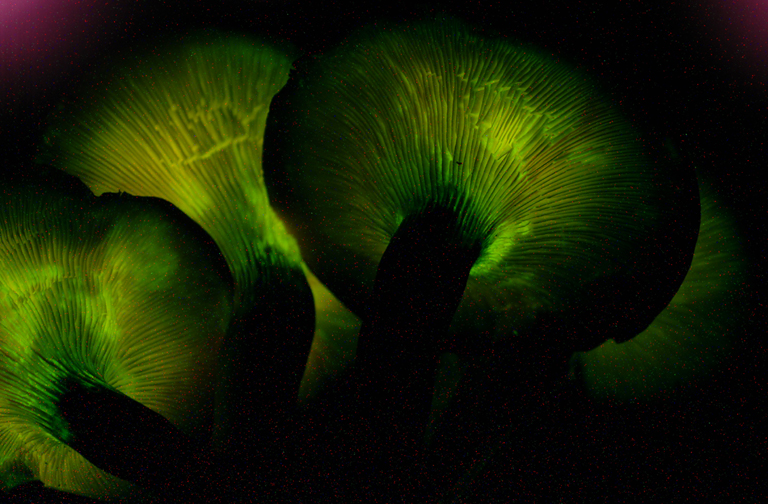
Another difference is that the Jack-o-Lantern contains certain chemicals that make it "glow" in the dark.

Jack-O-Lantern (Omphalotus olearius)
Omphalotus%20olearius%204.JPG

Omphalotus_olearius_33857.jpg


It is not deadly,but can cause illness so it's good to know the differences to avoid unwanted health problems.
Random Chanterelle recipes:
https://www.youtube.com/watch?v=eU9ulLaKnrE
https://www.youtube.com/watch?v=v8B6JqqweEk
https://www.youtube.com/watch?
v=f_oezjHwDH0

https://www.youtube.com/watch?v=jHKzKee3SxY
https://www.youtube.com/watch?v=gcbLwIfWTSU
 
Last edited:
Morchella (Смрчак, Смрчка)

Morchella (Смрчак, Смрчка)

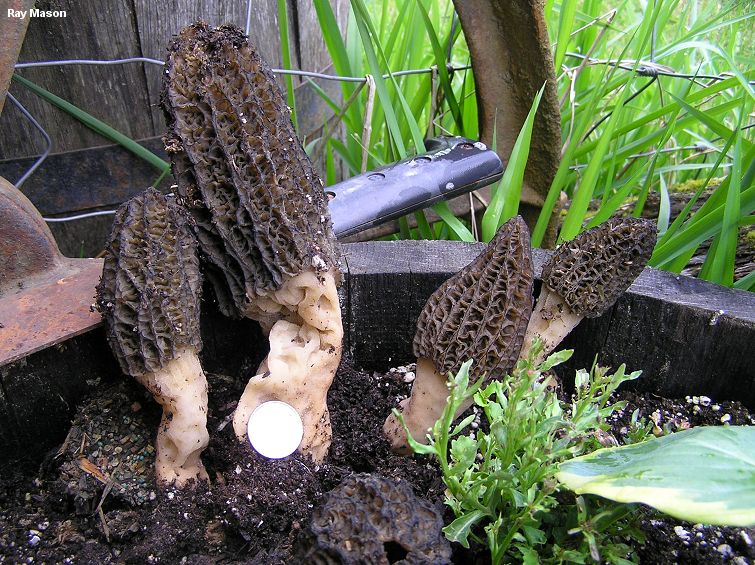
A highly prized genus of edible wild mushrooms is the Morchella genus, known in English as Morel mushrooms.
These mushrooms are distinguished from other because they don't have the usual mushroom looks,but their cap looks like a honeycomb or as we say in Macedonia - a potbelly turned inside out.
It's probably the only mushroom on this list aside from the Shitake that I still haven't tasted.
They're not that common in Macedonia as far as I know, I've only encountered these once so far and that was when i was just a kid.
My dad and I found them on a slope in a nearby ravine,someone had disposed of a big quantity of compost and fertilizer including hay and there they were.
We picked them and my dad sold them at the market because they were very expensive as he told me back then.
I was probably around 12-13 years old at the time and had I known it will be the only time I'll find some,I'd persuade my dad to keep some of them so we can cook and eat.
But from what I've heard of other fellow foragers they're very tasty and no wonder they're considered a delicacy in many countries,or to quote Wikipedia:
Morels are sought by thousands of enthusiasts every spring for their supreme taste and the thrill of the hunt, and are highly prized by gourmet cooks, particularly in French cuisine. Due to difficulties in cultivation, commercial harvesting of wild morels has become a multi-million-dollar industry in the temperate Northern Hemisphere, in particular North America, Turkey, China, India, and Pakistan, where these highly prized fungi are found in abundance
Due to my lack of experience with morels I'm not familiar with where they can be found,but from available info online it seems they grow in almost every kind of forest mostly during springtime, with some subspecies growing in other seasons too.
Known subspecies of morels include Morchella esculenta,Morchella rufobrunnea,Morchella angusticeps,Morchella conica,Morchella elata etc.

morchella.jpg

4005-2.jpg

smrz_kuzelovity2.jpg

morchella_esculentoides_01.jpg

Morchella_elata_83503.jpg

Morchella_esculenta_-_DE_-_TH_-_2013-05-01_-_02.JPG

Morchella-Conica.jpg

mason_morchella_importuna_01.jpg

56801412-mushroom-morchella-esculenta-closeup-in-forest.jpg

Morchella_snyderi_mgw-02.jpg

morchella-elata1.jpg

Early-May-2010-038.jpg


Because they're considered a delicacy and reach high prices on the market,morels are usually prepared in a way that will emphasize their flavor instead of just blending in with the dish.
They're mostly sauteed on butter with salt and pepper, used in sauces or pasta fillings, or poultry dishes.
Beginner foragers may confuse it with the false morel ( Gyromitra esculenta) which is poisonous and can cause severe gastrointestinal upset, loss of muscular coordination (including cardiac muscle), or even death when eaten in large quantities and over a longer period.
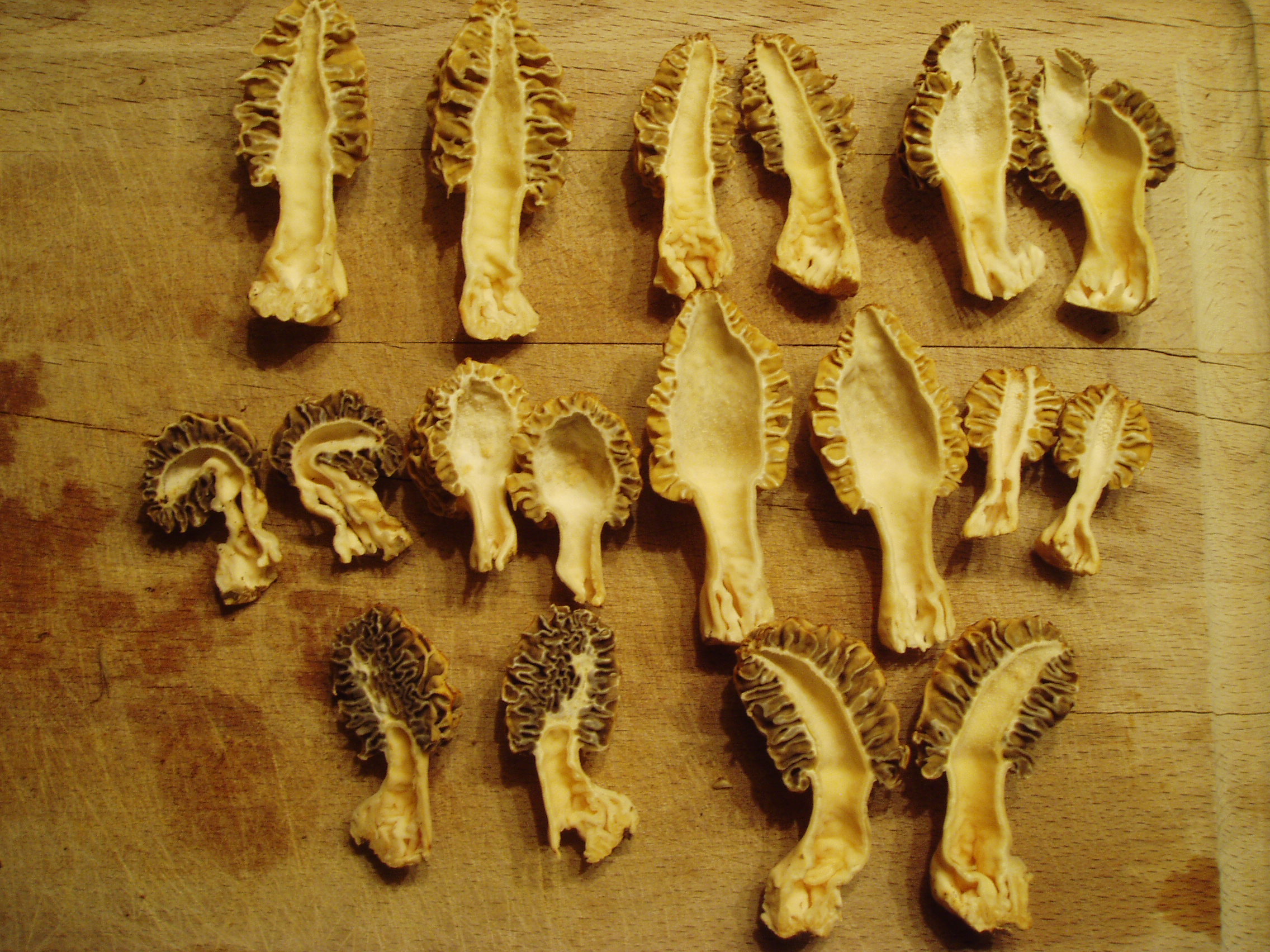
The main difference is that Gyromitra species often have a "wrinkled" or "cerebral" (brain-like) appearance to the cap due to multiple wrinkles and folds, rather than the honeycomb appearance of true morels due to ridges and pits.Also,morels are hollow inside,while the false morels are "full".
Gyromitra esculenta :
13247218fs.jpg

Several morel recipes:
https://www.youtube.com/watch?v=T_OK6yCw2Sc
https://www.youtube.com/watch?v=iyBezDxut70
https://www.youtube.com/watch?v=TlW6IdwWGEI
https://www.youtube.com/watch?v=56BK1nCc67A
https://www.youtube.com/watch?v=tkCI5KweAvk
https://www.youtube.com/watch?v=l1LEydAtA3s
 
Last edited:
Shitake mushrooms are quite good, and in fact make for excellent Vitamin D supplements. When exposed to sunlight, mushrooms (and Shitake especially) produce Vitamin D. The key is to do this in the summer, and place them in the sunlight for about two days or so, and then eat them in the winter.

Reshi and Maitake mushrooms are also fantastic, as are Cordyceps. And then there are Lion Mane mushrooms...
 
Reshi and Maitake mushrooms are also fantastic, as are Cordyceps. And then there are Lion Mane mushrooms...

I've heard about the Maitake, it's the one they also call Ram's Head and Hen Of The Woods,but I haven't encountered it in Macedonia so far.
Haven't heard of Reishi nor Cordyceps but from what i could find they're medicinal fungi.
And Lion's Mane is very similar to the Coral mushrooms,i will be covering them too later.
 
Suillus Granulatus (зрнеста масленка, волчјо лепче)

Suillus Granulatus (зрнеста масленка, волчјо лепче)

IMO the Weeping bolete (a.k.a. Granulated bolete,Suillus Granulatus) is a very underrated edible mushroom that can be found in large quantities throughout conifers in the mid October through late November period.
This mushroom is similar to the Boletus genus because it also has tubes/pores instead of gills at the bottom of the cap.
Generally speaking, in the mushroom community it is regarded as a "2nd class" mushroom,mainly because older specimens tend to get very greasy (hence the name масленка in Macedonian),and also because prior consuming the top of the cap (a brown membrane that gets slimy when wet) needs to be pealed off because it can cause stomach upsets so it's preparation is more time consuming.
However i find these remarks ridiculous since first of all, the greasy part in older specimens is mostly in the tubes,so by removing them you only get the flesh/meat of the mushroom which tastes and smell great.
Second,the time needed to peal off the cap of every single specimen may be a pain in the ass,but the end product is a wonderful tasty mushroom that can be used in all kinds of dishes - from stir-fried appetizer, through meat casserole dishes, to soups and stews when you dry them out,so I think it's really worth the effort.
This mushroom is low in fat, high in fiber and carbohydrates, and a source of nutraceutical compounds.
However,special attention needs to be paid in pinewoods that have trash or rubble in the proximity,since it is known that these mushrooms can soak a large amount of heavy metals from the polluted soil that are harmful for the human organism.
Just last weekend I went foraging in the nearby pinewoods since we had a decent amount of rain the previous days,but the maggots got the better of me.
I could have easily filleed 3-4 baskets but ended up with nothing more than a handful of specimens because all the rest were infested with maggots :(.
But it was enough for a creamy mushroom sauce as a dip for the chicken fingers and fries during Sunday's lunch ;).
Providing weather conditions continue to suit them in order to have a good season, I plan to pickle some for the winter and also dry some for stews in the cold winter days.
A quick hint for foraging them after heavy rain - once you peal the cap, let them dry out in the sun for a couple of hrs or use a towel or napkin to soak the excess water from them.
Because if you don't do that and immediately cook them,they will release a lot of water when you put them in the frying pan and you'll end up with something that looks like boiled instead of fried mushrooms.
They're literally like spunges and tend to soak a lot of water when it rains.
Here are some images:

Septembre%202006%201129.jpg_2006914175330_Septembre%202006%201129.jpg

Suillus_granulatus.jpg

weeping-bolete-granulated-bolete-suillus-granulatus-suillus-lactifluus-ebne3k.jpg

Suillus%20granulatus%204.jpg

Suillus%20granulatus%203.JPG

SuillusGranulatus5.jpg

1.jpg

Suillus_granulatus_2.jpg

suillus_granulatus_1.JPG

S_granulatus_2.jpg

Suillus%20granulatus%200.jpg

jpg_Il_cappello_del_Suillus_granulatus_puo_raggiungere_i_15_cm_la_cuticola_e_vischiosa_c_Giuseppe_Mazza.jpg


There are no poisonous lookalikes in Macedonia that I know of,the only similar mushroom is another edible from the Suillus genus - Suillus Luteus (a.k.a. Slippery Jack or Sticky Bun).
Here's how you remove the membrane from the cap:
https://www.youtube.com/watch?v=wDmOyFJ0HA8
 
Last edited:
Coprinus comatus (Мастиларка,Мастилавка)

Coprinus comatus (Мастиларка,Мастилавка)

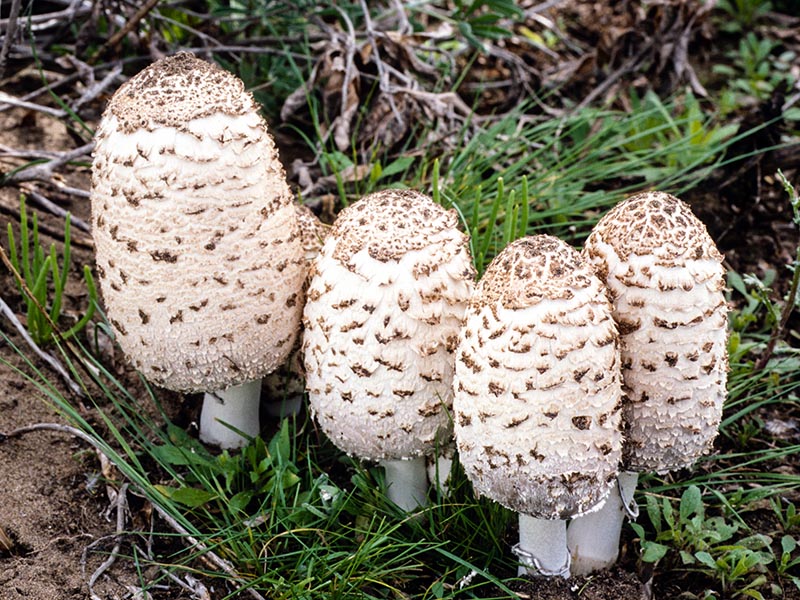
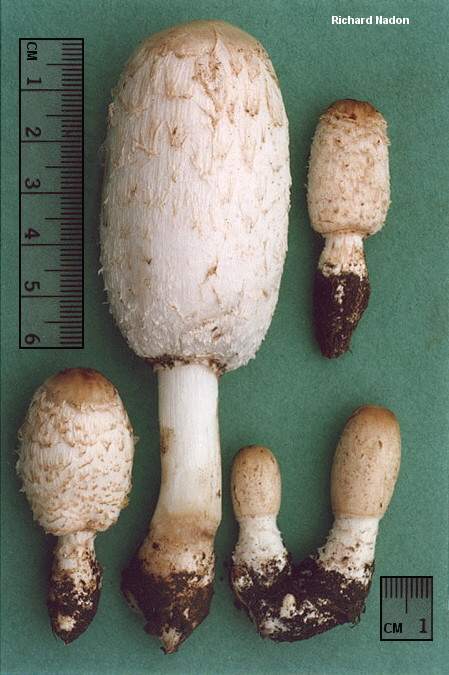
The Shaggy Mane or Shaggy Ink Cap is another delicious mushroom that can be found in Macedonia in the autumn period.
It's natural habitat aren't forests and mountains like most mushrooms, but on lawns,gravel roads,grasslands,meadows or near waste areas.
It is called "Ink Cap" because as it gets older it starts to decompose and turns into ink (мастило),hence it's Macedonian name also.
This process also begins a couple of hours after foraging,so it is very important to cook and consume it quickly after picking it before it decays into ink.
Decomposition can be prolonged by icing the mushroom or by boiling it and freezing it immediately.
Just a couple of weeks ago my dad found some nearby and they were just the right size and quality,I cooked them in a thick and creamy sauce that goes well with meat ;).
He said there were another bunch in the proximity but they already started turning into ink and weren't good for consuming,had he been there the previous day they could have been used too.
The Shaggy Mane is easily recognizable from its almost cylindrical cap which initially covers most of its stem. The cap is mostly white with shaggy scales, which are more pale brown at the apex. The free gills change rapidly from white to pink, then to black just before turning into ink.
It releases a great amount of water during cooking,so it's not the best mushroom for sauteeing or a crispy snack,but more for stews and sauces.
Here are some images:

Coprinus_comatus_fs-07.jpg

Coprinus-comatus%255B1%255D.jpg

IMG_4320.jpg

jmIB1nbYlFz8yi-QbfNeI-3ujooF1TwN36pgximsQ2ZJcVvrX8zkeGJQ_Lq1ke9B821gUMAVK1ICtRDlOZKS=s580

284583035_b713109577_z.jpg

220px-Shaggy_Ink_Caps_busting_through_asphalt.jpg

nadon_coprinus_comatus.jpg

coprinus_comatus_01.jpg

shaggy-mane-october.jpg

dirty+and+cleaned+shaggy+manes.jpg

shaggy+mane+mushrooms

Shaggy-Mane-buttons-mushroom-large-2.jpg

shaggymanescooked.jpg


It can be confused with the Common Ink Cap (Coprinopsis atramentaria),which is also an edible mushroom when not consumed with alcohol.
This is because it contains coprine which is by itself harmless,but it reacts with alcohol within 48 hrs after consumption and turns into poison:
Coprinopsis atramentaria:
nadon_coprinus_atramentarius_01.jpg


It's poisonous lookalike is the Magpie fungus (Coprinopsis picacea) shown in the image below:
Coprinopsis picacea:
1__DSC3581%20Coprinus%20picaceus.jpg


Finally,some Shaggy Mane recipes:
https://www.youtube.com/watch?v=Ii9W45u5nsg
https://www.youtube.com/watch?v=NlJiXk3joQE
https://www.youtube.com/watch?v=efW8YjB5_x4
https://www.youtube.com/watch?v=fblwYB8hoLM
 
Last edited:
Lactarius deliciosus (Рујница, a.k.a. Бриковка,Боровка)

Lactarius deliciosus (Рујница, a.k.a. Бриковка,Боровка)

The Saffron Milk Cap (Lactarius deliciosus) is one of the strangest mushrooms I've encountered and is a typical example of how certain myths about how edible/poisonous mushrooms can be distinguished are wrong.
Common folks have these beliefs about how one differs edibles from poisonous that can lead up to 1) missing out on an excellent edible (best case scenario),or 2) confusing a poisonous mushroom and a slow,painful death (worst case scenario).
To name a few, people say if maggots don't infest a mushroom or slugs don't nibble it then it is poisonous (needless to say humans and maggots/slugs don't have the same digestive system), bright colored mushrooms are poisonous (again,not true),if you bite a raw mushroom and it's bitter or burns it's poisonous and if not it's good to eat (WRONG!!!), mushrooms that change to darker color when cut are poisonous (Lactarius deliciosus is a perfect example of how wrong that is), or if animals eat it than so can we (the poisonous Amanita Muscaria is eaten regularly by foxes,wolves etc in the woods and yet it is highly toxic to humans).
These are all folk tales that have nothing to do with reality.
To be honest,if I saw a mushroom that has dark green/dark blue "bruises" on it i'd be skeptical of it too.
So i was very surprised when one time,some 15 or so years ago, in Delcevo at my uncle's house he treated us with the Saffron Milk Caps fried in a simple covering of flour and salt.
My dad and I hesitated at first, because as you can see from the images below, this is not a very appealing mushroom and those big green spots on an orange body did make us raise our eyebrows,not to mention the suspicious odor of the mushroom's liquid when frying.
But my uncle said he's been eating these mushrooms since he was a kid so eventually we were persuaded to give it a try.
And boy,was it good.
One thing this mushroom differs from the rest is that it doesn't "melt" when fried,and it doesn't get much softer when fried either.
Like it's color,it's texture is like a carrot and it keeps it's size and hardness even after it's fried.
This makes it ideal for a crispy snack that goes well with beer,for dipping in dips or just as a replacement for nachos and chips.
When cut,this mushroom releases a saffron/orange color "milk" which turns green/dark blue after some time exposed to air (hence the green stains).
The milk also colors the cooking oil in saffron/orange color as well, so after cooking them don't be surprised when seeing this,perfectly normal.
It is found in large quantities in coniferous forests throughout November and early December,making it one of the last mushrooms of the year.
My dad pickles them for a "meze" with some "rakija", while i serve them deep fried in flour and salt as a beer snack.
I've foraged around 9 kg so far from the nearby pinewoods (this weekend I'll go foraging again with a friend of mine that discovered these beauties just last week at my house,he's now a believer) because time runs out and within a couple of weeks they'll be completely gone.
These are one of the oldest recorded edible mushrooms in history (a fresco in the Roman town of Herculaneum depicts Lactarius deliciosus and is one of the earliest pieces of art to illustrate a fungus) and is regarded as a delicacy in Catalan cuisine.
It is often used there in potato and meat stews, baked in an oven with some garlic,olive oil and parsley,or meat dishes.

Lactarius deliciosus has a carrot orange cap which is convex to vase shaped, inrolled when young,often with darker orange lines in the form of concentric circles.
The cap is sticky and viscid when wet, but is often dry.
It has crowded decurrent gills and a squat orange stipe which is often hollow.
Again,it's worth to mention that foraging these mushrooms from polluted soil like waste areas is not recommended because the mushroom will contain big amount of heavy metals.

lactariusdeliciosus15.jpg

saffron-milk-cap-mushroom-turkish-cintar.jpg

Lactarius_deliciosusmgw-06.jpg

me10.jpg

24b36c786eefef9f463b3c8490757f68.jpg

nc3adscalos-una-fuente-de-nutrientes-500x329.jpg

18757675.jpg

milky-caps-staining-blue.jpg

lactariusdeliciosus16.jpg

b71e1d46c9c8179fa6ec6e088fe8443d.jpg

3.jpg

lactarius_deliciosus_cooking.jpg


The only lookalikes in Macedonia that are often found growing next to each other are Lactarius deterrimus and Lactarius sanguifluus,which are also good edibles, so no danger of poisoning:

Lactarius deterrimus:
Lactarius_deterrimus_46.jpg


Lactarius sanguifluus:
8decba7fe3836b8c9de142b78fd9d92b.jpg


Close comparison between L.deliciosus and L.sanguifluus:
comparativa-himenios-lactarius-deliciosus-puerto-de-paniza-zaragoza.jpg


And of course, a couple of recipes to wrap it up:
https://www.youtube.com/watch?v=kjcuG3Lc_tI
https://www.youtube.com/watch?v=ei5kHw21jFI
https://www.youtube.com/watch?v=MR8AfWm5gWY
https://www.youtube.com/watch?v=DtfIopmfpic
 
Last edited:
Marasmius oreades (ливадарка, самовилско каранфилче)

Marasmius oreades (ливадарка, самовилско каранфилче)

This is a mushroom that i simply couldn't identify with 100% certainty up until several years ago.
It's shape,size and color is so common that whenever I bumped into it or a similar mushroom,I had to bring the sample to my father who knows this mushroom since he was a little boy for positive identification.
The Fairy Ring mushroom (Marasmius oreades) is an excellent edible that can be found on pastures,lawns,meadows (hence it's Macedonian name) and green areas from summer to autumn.
It's only setback is it's somewhat small size, so in order to get a decent meal you'd have to pick like a full bag of them.
It grows gregariously in troops, arcs, or rings (hence the name).
The cap is 1-5 cm across, bell-shaped with a somewhat inrolled margin at first, becoming broadly convex with an even or uplifted margin (but usually retaining a slight central bump- an "umbo"), dry, smooth, pale tan or buff, occasionally white, or reddish tan ( usually changing color markedly as it dries out), the margin sometimes faintly lined.
The bare, pallid stem grows up to about 7cm by 5mm in diameter.
The gills are attached to the stem or free from it, fairly distant (rather a distinctive character), and white or pale tan.
Many mushroom connoisseurs are fond of M. oreades and its sweet taste lends it to baked goods such as cookies.
It is also used in foods such as soups, stews, etc.
I often make a soup with them or just use them in casseroles uncut because the cap is small.
Traditionally, the stems (which tend to be fibrous and unappetizing) are cut off and the caps are threaded and dried in strings.
A possible reason why this mushroom is so sweet-tasting is due to the presence of trehalose, a type of sugar that allows M. oreades to resist death by desiccation.
When exposed to water after being completely dried out, the trehalose is digested as the cells completely revive, causing cellular processes, including the creation of new spores, to begin again.

marasmius_oreades_bajita.jpg

fairy3.jpg

Marasmius_oreades(fs-02).jpg

2010-10-16_Marasmius_oreades_(Bolton)_Fr_112385.jpg

Marasmius%20oreades%201%20Steve%20Trudell.jpg

oreades.jpg_2006724132338_oreades.jpg

20071026084244_pict0223.jpg

Marasmius_oreades_10.jpg

8084301618_19cf61070d_b.jpg


There ara a lot of small,thin and brown mushrooms so I really wouldn't recommend foraging this mushroom without an expert by your side, since it took me many years to learn to distinguish it.Even today I sometimes ask my father's opinion before cooking some specimens.

A random recipe:
https://www.youtube.com/watch?v=_d_21GWTg48
 
Last edited:
Back
Top