The creation narrative is told in two different books, Genesis 1 and Genesis 2. Genesis 1 is thought by critical scholarship to be written by a author that is labeled as (P), while Genesis 2 is thought to be written by another author that is rendered as (J) .
Genesis 1 gives a very rigid time line concerning a course of six days on the creation of the earths content. Genesis 2:4 begins with more relaxed tone and is thought traditionally to be the collaborated version of the sixth day.
According to the P version, God produced the animals before the creation of humans (Genesis 1-25-27). However the J source has a slightly different flow.
This account God first created the man (Adam traditionally) and than produced the animals.
This flat contradiction in both accounts have led many Christians to look for way to reconcile them.
The most common rationalization will be examined and shown that it does not stands in the face of the evidence.
To examine this in-errancy defense, three basic steps will be undertaken:
- Understand the argument of the defense.
- Original source grammatical examination.
- Contextual examination of the text. (periscope)
Understanding the argument of the defense
First it is useful to look at the argument to be examined.
Genesis 1:24-25 records God creating animal life on the sixth day, before He created man.
Genesis 2:19, in some translations, seems to record God creating the animals after He had created man. However, a good and plausible translation of
Genesis 2:19-20 reads,
Now the LORD God had formed out of the ground all the beasts of the field and all the birds of the air. He brought them to the man to see what he would name them, and whatever the man called each living creature, that was its name. So the man gave names to all the livestock, the birds of the air and all the beasts of the field.
The text does not say that God created man, then created the animals, and then brought the animals to the man.
Rather, the text says, “
Now the LORD God had [already] created all the animals.” There is no contradiction. On the sixth day, God created the animals, then created man, and then brought the animals to the man, allowing the man to name the animals.
By considering the two creation accounts individually and then reconciling them, we see that God describes the sequence of creation in Genesis 1, then clarifies its most important details, especially of the sixth day, in Genesis 2. There is no contradiction here, merely a common literary device describing an event from the general to the specific.
The defense argument relies heavily on the alleged misinterpretation of the text. It is claimed that the text tells us that God
already created the animals, before he created man because it moves from the general to the specific. The defense relies on a translation of the text that uses the past perfect tense '
had created' when the animals are created. This places the animal creation event before that of the man. In this way it can be claimed that there is no contradiction between the both creation narratives.
Grammatical examination
The in-errancy defense employs past perfect tense as translation for the creation of the animals. To see weather this position of the given argument is justified, it is necessarily to put the original text under grammatical examination. Other early sources will be also examined and modern sources and their translations as well.
Subject of the examination is
Genesis 2:19a passage.
The original Hebrew text under examination looks as follows:

The word concerned is
וַיִּצֶר֩ that is the transliterated as '
vai·yi·tzer' (
Genesis 2:19). This word stems from the Hebrew word
יָצַר which is translated as '
to form' or '
fashion', and is rendered in simple past tense in it's plural form. This word is found in some modern Bible translations, translated as '
created' and is rendered by the above in-errancy defense in it's past perfect tense as '
had created'.
Another example of the same tense rendering of this Hebrew word is given in '
A Mechanical Translation of the Book of Genesis: The Hebrew Text Literally ...' by By Jeff A. Benner.
He translates the base form
יָצַר as 'Mold' and
וַיִּצֶר֩ in it's simple past tense as '
molded'.

Weather the Hebrew word is translated as '
formed' or '
molded', it basically has the same meaning, '
created' out of the dust.
What is really important for the examination here is the tense rendering used in the original text. Both translations render the original Hebrew word in it's simple past tense, which is in odds with the in-errancy defense translation of the concerning word, which it uses it's past perfect tense.
There still can be room for doubt that both translation offered here are wrong.
To justify the tense rendering of the above sources, another passage that uses the same word will be consulted.
Few passages earlier in
Genesis 2:7, the creation of man was described by the Bible. In the original text we find the same wording
וַיִּיצֶר֩ whose tense is than appropriately rendered either as '
formed' or '
molded'. This word is also is derived from the basic word
יָצַר in it's masculine singular form and in past simple tense.
The transliteration of
Genesis 2:7 of the first given source looks like this:

In the book '
A Mechanical Translation of the Book of Genesis: The Hebrew Text Literally ...' by By Jeff A. Benner the transliteration is given as follow:

Since the same Hebrew word is rendered the same time in both sources offered here, it is safely to conclude that they are consistent in their tense rendering and translation.
To confirm that the inconsistency of tense rendering of Hebrew and it's translation is found on the part of the in-errancy defense, two other translations will be offered.
The English Standard Version used previously by the in-errancy defense renders and translates the word in the episode of mans creation as follow:
then the Lord God
formed the man of dust from the ground and breathed into his nostrils the breath of life, and the man became a living creature.
Genesis 2:7
while in the same translation offers the following translation of the animal creation episode:
Now the LORD God
had formed out of the ground all the beasts of the field and all the birds of the air. He brought them to the man to see what he would name them, and whatever the man called each living creature, that was its name. So the man gave names to all the livestock, the birds of the air and all the beasts of the field.
Genesis 2:19
Another modern Biblical translation is the New International Version, which uses exactly the same tense rendering and translation of the Hebrew word as the English Standard Version in the mans creation episode:
Then the LORD God
formed a man from the dust of the ground and breathed into his nostrils the breath of life, and the man became a living being.
Genesis 2:7
and makes the same tense rendering in the animal creation episode:
Now the LORD God
had formed out of the ground all the wild animals and all the birds in the sky. He brought them to the man to see what he would name them; and whatever the man called each living creature, that was its name.
Genesis 2:19
It safe to conclude with high degree of certainty that these translations of the Bible offer a inconsistent translations of the original Hebrew text.
The tense rendering of the concerned word in past simple tense can be supported with older Biblical translations in other languages.
Good example would be the Septuagint, the Greek translation of the Old Testament, which renders the concerned Hebrew word as
έπλασεν in both Genesis (
2:7,
2:19) passages:


The word
έπλασεν is derived from the basic word
πλάσσω (
1) with it's basic meaning '
to form,
mold,
shape' and it's tense rendering in both passages is simple past tense translated as '
shaped'.
Here is a list of English Biblical translations that use the different tense renderings:
- Past perfect tense: NIV, ESV (ctfn), GW, DARBY, NIRV, NIVUK, TNIV, NIV1984.
- Simple past tense: NASB, MSG, AMP, NLT, KJV, CEV, NKJV, NCV, GNT, KJ21, ASV, YLT, HCSB.
- Present perfect tense: DRA
The above list shows interesting outcome, when comparing the English translations. The Bible translations that use past perfect tense are eight in number, out of which, the English Standard Bible gives the correct tense rendering in a foot note (ctfn). From the eight translations, four versions are based on the New International Bible.
Contextual examination (periscope)
Now having examined the grammatical part of the problem, it is necessary to examine the context as well. It was shown that the tense rendering was inconsistently employed to avoid the obvious contradiction between Genesis books and can't be sustained grammatically. In order to make this somewhat sustainable, the in-errancy defense takes the whole event out of the context as well to distort the obvious chronology. In context, it becomes obvious that there is a time frame that inevitably places the animal creation event after the human creation event.
For this purpose, the Amplified Bible Version will be used, which renders the concerned passages in correct tense and still gives somewhat comprehensive translation.
Now the Lord God said,
It is not good (sufficient, satisfactory) that the man should be alone;
I will make him a helper meet (suitable, adapted, complementary) for him.
And
out of the ground the Lord God formed every [wild] beast and living creature of the field and every bird of the air and brought them to Adam to see what he would call them; and whatever Adam called every living creature, that was its name.
And Adam gave names to all the livestock and to the birds of the air and to every [wild] beast of the field;
but for Adam there was not found a helper meet (suitable, adapted, complementary) for him.
And
the Lord God caused a deep sleep to fall upon Adam; and while he slept, He took one of his ribs or a part of his side and closed up the [place with] flesh.
And
the rib or part of his side which the Lord God had taken from the man He built up and made into a woman,
and He brought her to the man.
Then Adam said,
This [creature] is now bone of my bones and flesh of my flesh; she shall be called Woman, because she was taken out of a man.
Therefore a man shall leave his father and his mother and shall become united and cleave to his wife, and they shall become one flesh.
Genesis 18-24
The following observations can be made:
- The time frame begins with the negative conclusion that 'It is not good (sufficient, satisfactory) that the man should be alone '
- Therefore God declares a goal that 'will make him a helper meet (suitable, adapted, complementary) for him.'
- Chronologically this ultimately induces the animal creation event, which results in failure which is stated with the conclusion that 'for Adam there was not found a helper meet (suitable, adapted, complementary) for him.'
- Because this was so, Adam is put to sleep and a rib is taken out of his chest. Out of this raw material the woman was made and ultimately 'brought her to the man'.
- Finally the initial goal was reached and 'for Adam there was found a helper meet (suitable, adapted, complementary) for him.' for whom 'a man ... shall become united and cleave to his wife, and they shall become one flesh'.
- The finalization of the time frame is good conveyed when understanding the original Hebrew text. Young's literal Translation gives rigid translation of 'This [creature] is' in the above example as 'This [is] the [proper] step!' but the 'The Hebrew term הַפַּעַם (happa’am) means “the [this] time, this place,” or “now, finally, at last.” The expression conveys the futility of the man while naming the animals and finding no one who corresponded to him.' (Genesis 2:23 NetNotes 67)
- Peculiar argument can be made against creating the animals before man with pointing out that God would not send the man to look for companion among the animals. If he created them before, he would know that there is no companion or counterpart for the man among them, thus he would directly created the woman as his counterpart. However this argument is turned, it renders God ignorant about the fact that the man can't have his counterpart among animals.
The context of the story reveals that the original Hebrew word in
Genesis 2:19a can be rendered only in simple past tense and not in past perfect tense.Therefore the majority English translations are correct using this tense rendering.
John Sailhamer gives small summary of the above:
“The NIV has offered an untenable solution in its rendering the waw consecutive in wayyiser by a pluperfect: ‘Now the LORD God had formed.’ Not only is such a translation for the waw consecutive hardly possible, . . .
but it misses the very point of the narrative, namely, that the animals were created in response to God’s declaration that it was not good that man should be alone(2:18).”
John Sailhamer, “Genesis,”
The Expositor’s Bible Commentary (Grand Rapids: Zondervan, 1990), p. 48 (
1)
Another summary describing the reason for this is offered in the on-line Biblical study tool Net Bible:
58tn Or “fashioned.”
To harmonize the order of events with the chronology of chapter one, some translate the prefixed verb form with vav (ו) consecutive as a past perfect (“had formed,” cf. NIV) here. (In chapter one the creation of the animals preceded the creation of man; here the animals are created after the man.)
However, it is unlikely that the Hebrew construction can be translated in this way in the middle of this pericope (context), for the criteria for unmarked temporal overlay are not present here. See S. R. Driver,
A Treatise on the Use of the Tenses in Hebrew, 84-88, and especially R. Buth, “Methodological Collision between Source Criticism and Discourse Analysis,”
Biblical Hebrew and Discourse Linguistics, 138-54. For a contrary viewpoint see
IBHS 552-53 §33.2.3 and C. J. Collins, “The
Wayyiqtol as ‘Pluperfect’: When and Why,”
TynBul 46 (1995): 117-40.
Genesis 2:19, 58 Net notes
There is a 'vav' consecutive controversy between different camps. The argument revolves around weather in some certain cases this consecutive can be translated in past perfect tense.
It is highly unlikely that this debate will be over so long there are those who have their interest in harmonizing Biblical passages because of their presupposition that it is infallible.
Conclusion
Like it was shown, the most Biblical translations that are using the past perfect tense to render Genesis 2:19a and therefore avoid the obvious contradiction between Genesis one and two are based on the New International Version. Interestingly enough, the NIV was a Evangelical project:
From the beginning of its existence the NIV has been touted as a version made by evangelicals who had the greatest respect for Scripture, and on this ground it was supposed to be worthy of acceptation in conservative evangelical churches. The original NIV preface (1973) declared that "
certain convictions and aims have guided the translators. They are all committed to the full authority and complete trustworthiness of the Scriptures, which they believe to be God's Word in written form." In the
1978 preface this statement was strengthened to read, "the translators were united in their commitment to the authority and infallibility of the Bible as God's Word in written form." (
Inerrancy and the NIV).
In the 1978 Preface, the authors of the NIV declared:
In working toward these goals, the translators were
united in their commitment to the authority and infallibility of the Bible as God’s Word in written form. They believe that it contains the divine answer to the deepest needs of humanity, that it sheds unique light on our path in a dark world, and that it sets forth the way to our eternal well-being.
(
1)(
2)
It is evident that the order of creation in Genesis 1 and 2 is different and cannot be easily reconciled. The text of Genesis 1 and 2 points to two different stories of creation and no harmonizing of the text will solve the problem. To my view, the NIV’s translation violates the rules of Hebrew grammar in order to present an ideological interpretation of the text.
Claude Mariottini, Professor of Old Testament
It becomes obvious that passages were harmonized to fit the conviction of infallibility of the Bible as God’s Word as stated above.
This weights the evidence of this scrutiny in favor that the second creation narrative describes the human creation preceding the animal creation.
Language is powerful tool. Who manipulates language, can manipulate reality. In this instance harmonization of the concerned passages is done with simple tense manipulation to avoid the obvious contradiction.
The reason is simple. In-errancy is considered as internal evidence that the Bible is Gods word. God have figuratively synchronized all those different writers to write consistent message in one book. Small errors in it, just like the one examined here, however reveal the absence of divine guidance and inspiration or render God as forgetful creature who can't remember the flow of the events, that is if we presuppose that the Bible
is his literal word.
The most probable explanation for this discrepancy is that both narratives offer different stories with different theological teachings, as
Claude Mariottini had already concluded.
Therefore the examined contradiction here will pose a problem only for fundamentalist and creationists.




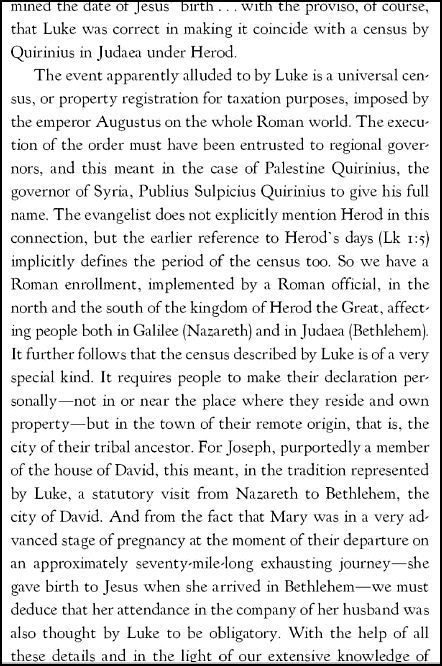
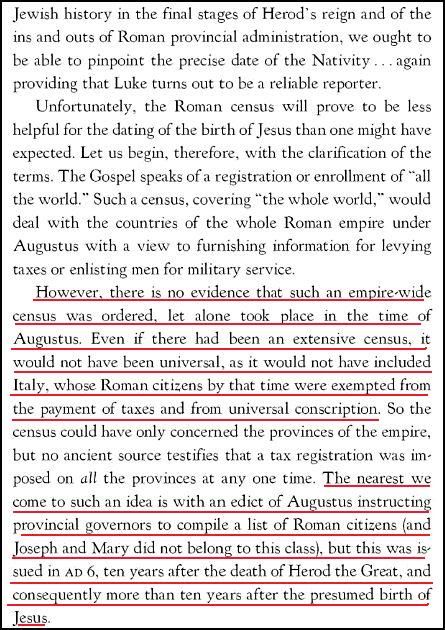
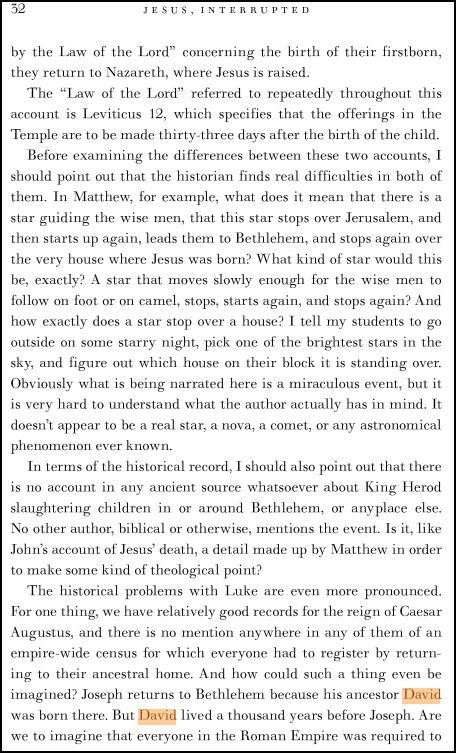
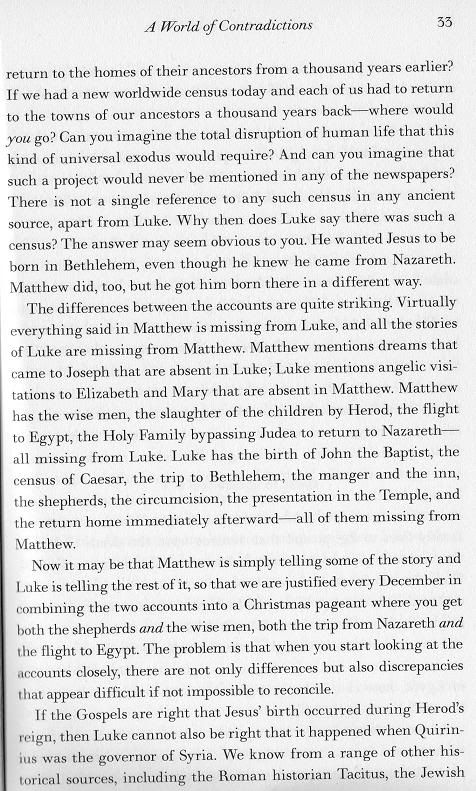

 To be taxed with Mary his espoused wife, being great with child.

 , begins his investigative reporting one century late on the birth of John the Baptist (interestingly this account of John the baptist birth is missing in Matthew's gospel) and not Jesus. Eventually we find Mary visited by an angel telling her that she is to conceive god's child.


