• Welcome to the new Macedonian Truth Forum. All posts, members and private messages have been moved over from the old forum.

    Passwords from the old forum could not be carried over, so please use Forgot your password? to set a new one. The reset link is emailed to the address on your account.

  • Rules and Regulations at the forum of the Macedonian Truth Organisation (MTO)

    (1) The national-ethnic and cultural-linguistic identity of the Macedonian people is historically Macedonian, and derives its character from the native, indigenous and geographic homeland of the Macedonians, which is called Macedonia. To ensure that their human rights, integrity and heritage are appropriately respected, the only nouns and adjectives acceptable when reference is made to the above character and identity markers is Macedon, Macedonia, Macedonian and Macedonians.

    (2) The nation-state of the Macedonian people is the Republic of Macedonia, and is to be referred to by this official title so long as the 'republic' prefix is consistently applied to other states. Alternative references are the Macedonian Republic, or simply, Macedonia.

    (3) The 'ethnic' prefix is only acceptable for Macedonians in cases where differentiation is specifically required - so long as it is in context and consistent where it concerns its application to other ethnic groups.

    (4) Should any other differentiation be specifically required, the names of other ethnic groups that reside with Macedonians in either the Republic of Macedonia or the occupied Macedonian regions in Greece, Bulgaria, Serbia or Albania, are to be given a prefix.

    (5) Negating the identity, language and culture of the Macedonian people by deliberate avoidance of the terms Macedonia, Macedonian and Macedonians, or by any other means, is not permitted.

    (6) Systematic anti-Macedonian propaganda and rhetoric are not permitted.

    (7) Threads irrelevant to the Macedonian Cause, the community at the Macedonian Truth Organisation or the Macedonians in general may be considered as spam or not in the spirit of the forum. In such cases they are not permitted.

    (8) Continual posting of messages in threads with the sole purpose of deviating from the initial topics with the use of unrelated and unnecessary information is not permitted.

    (9) All posts, external articles, reports, etc that are cited in languages other than Macedonian or English, must be accompanied with a translation in one or both of the said languages.

    (10) Despite the possibility of some conversations and debates becoming heated, extreme abuse and/or racism, vulgar language and/or terminology, threats, revelation of personal information about others, harassment, and other such behavior will not be permitted. If deemed necessary all relevant information including member details will be reported to the appropriate authorities for investigation which may result in legal action.

    (11) Threads that are created must have a summary of a topic or excerpt of an article found in pertinent link(s) that have been included. One line threads will be considered unaccetable spam and are therefore not permitted.

    (12) Compulsive and deliberate lies, irrespective of the topic, are not permitted.

    (13) Any symbols or avatars found to be perceived as offensive to Macedonians are not permitted.

    (13) Any explicit or extreme material is not permitted.

    Failure to adhere to the above rules and regulations will result in a ban after 3 breaches. This may be reconsidered in some cases should the circumstances be of an unorthodox nature and/or require special consideration. To assure an effective deterrent against an individual or individuals with the sole purpose of causing dissent through spamming, racism or other improper means, the above rules will be strictly enforced.

    The MTO administration will monitor all discussions as reasonably practical and reserve the right to remove any post and/or member from the forum, and update the rules and regulations as required. Members are encouraged to immediately report any post and/or member to the MTO administration if they feel that these rules have not been abided by.

    The views expressed on this forum are those of the individuals. The only official representation of the MTO is made by the "Macedonian Truth Organisation (Site Owner)" username, and no other.

  • Macedonian Cause

    The Macedonian Truth Organisation calls on God in Heaven to protect, bless and guide the endeavour it is committing to undertake, and that is to work towards:

    Securing Macedonia as a free, independent and democratic republic in which sovereignty lies with the Macedonian citizens; as the nation-state of the Macedonian people in which they can preserve their culture, language and identity; as a state in which the Macedonian language and culture form the basis of public life and act as important unifying elements of Macedonian society; as the home of all its citizens to which it guarantees and obliges their inalienable natural rights and corresponding responsibilities;

    The acknowledgment as self-evident and irrefutable the existence of the:

    1) Indigenous, ethnonational name of Macedonia;
    2) Macedonian people, language and identity;
    3) Macedonian culture, symbols and folklore;
    4) Macedonian ancestry, heritage and history in its entirety; and
    5) Macedonian Orthodox Church;

    Securing recognition by the International Community of the tragedies endured by the Macedonian people, of the division of Macedonia with the signing of the Treaty of Bucharest on August 10, 1913, and the genocide committed against the Macedonian people at the hands of the Greek, Bulgarian and Serbian states and their respective churches during the 19th and 20th centuries;

    Ensuring that the Interim Accord is declared ‘null and void’ and that all constitutional provisions, acts, commitments, agreements, legislation, regulations, policies or programs emanating from, supporting or consequential to the Interim Accord are also declared ‘null and void’, including the use of any symbols and the completion of any acts imposed by, or originating from, the Interim Accord.

    Ensuring that the Framework Agreement is abolished and that all constitutional provisions, acts, commitments, agreements, legislation, regulations, policies and programs emanating from, supporting or consequential to the Framework Agreement are also abolished and replaced by a framework of constitutional and statutory law based on inalienable natural rights and corresponding responsibilities and universally codified human rights mechanisms.

    Securing the abolishment of any existing constitutional provisions, acts, agreements, legislation, regulations, policies and programs that discriminate against the Macedonian people, in any international organisation or any of the countries of the International Community where such constitutional provisions, acts, agreements, legislation, regulations, policies and programs exist, and thereby ensuring the freedom for Macedonians to exercise their inalienable natural rights and fulfil their corresponding responsibilities, and practice their culture, language and religious faiths in all the countries of the International Community without hindrance;

    The empowerment of Macedonians to undertake a moral revolution and to instil and/or reinvigorate within themselves a deep-rooted national, cultural, linguistic and historical dignity and a commitment to the exercise of freedom based on inalienable natural rights and corresponding responsibilities;

    The recognition of the Macedonian minorities in the neighbouring states of Macedonia as well as the respect for the inalienable rights and freedoms of the Macedonian minorities, as provided for by natural law and as codified by the United Nations Charter, the Universal Declaration of Human Rights and other universally codified human rights mechanisms;

    The full and unreserved respect of, and the support for, the rights of all people of non-Macedonian descent living in Macedonia and around the world, who share a reciprocal full and unreserved respect for the Macedonian people, their homeland and their state;

    The cultural unification and solidarity of the Macedonian people living in all parts of historical Macedonia and adjacent territories, as well as Macedonians throughout the world;

    The unity of all Macedonians on the principles, objectives and achievement of the Macedonian cause as defined by this declaration.

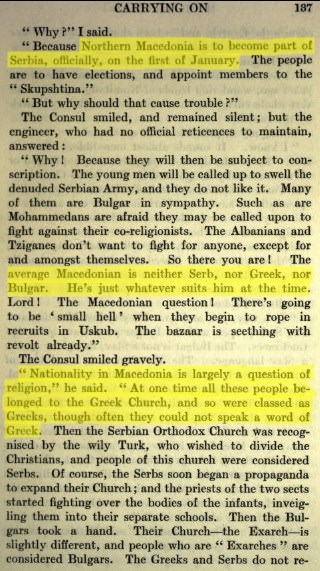
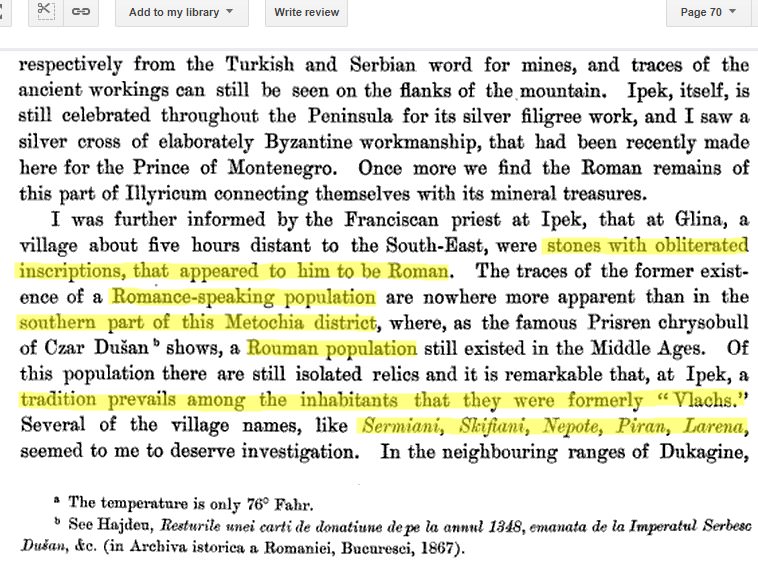
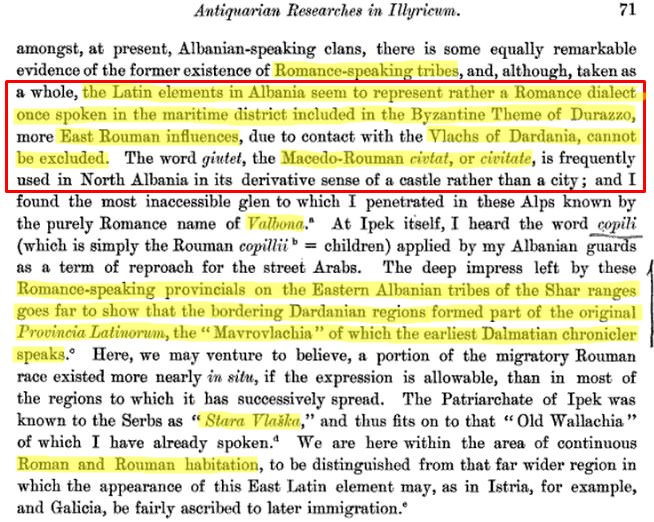
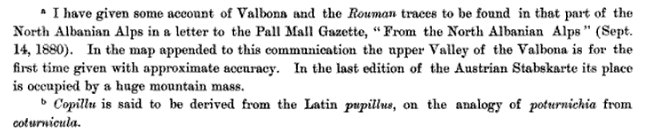
Population of Macedonia and Adjacent Areas

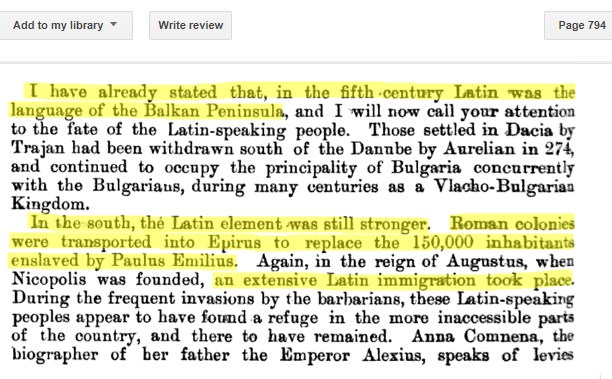
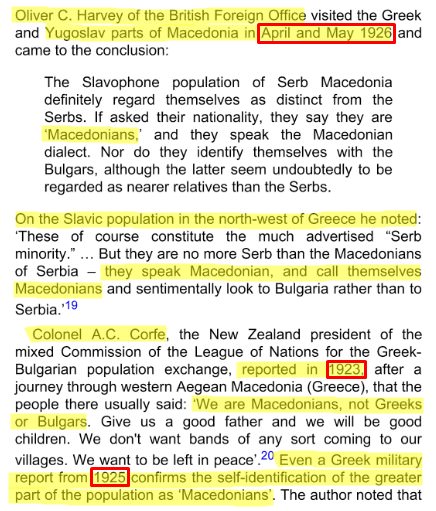
EYttPda.png

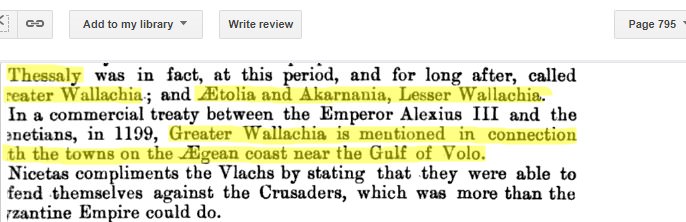
tElN840.jpg

fZD5930.jpg


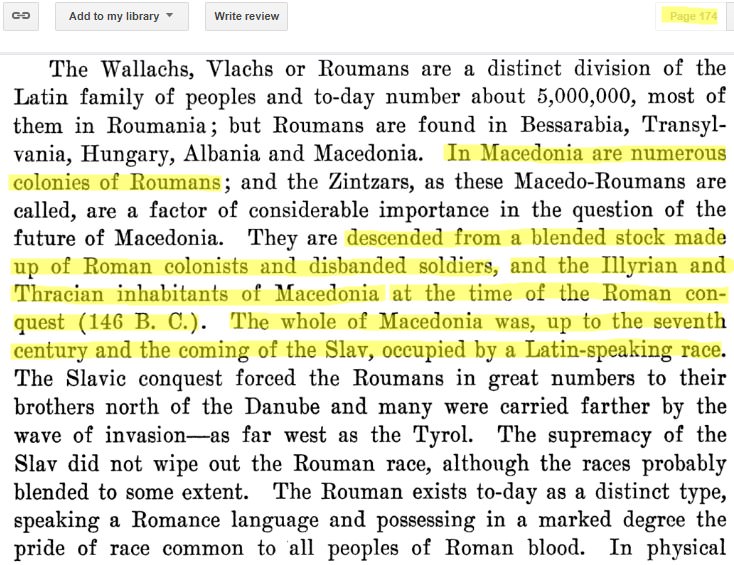
uFmhSfo.png


Strabo:
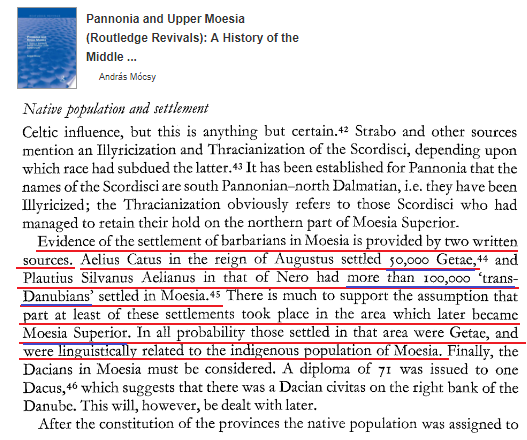
"Now if he takes the poet to mean those in Asia, he will misinterpret him, as I have said before, but if he calls them an invention, meaning that there were no Mysians in Thrace, he will contradict the facts; for at any rate, even in our own times, Aelius Catus transplanted from the country on the far side of the Ister into Thrace fifty thousand persons from among the Getae, a tribe with the same tongue as the Thracians. And they live there in Thrace now and are called "Moesi" — whether it be that their people of earlier times were so called and that in Asia the name was changed to "Mysi," or (what is more apposite to history and the declaration of the poet) that in earlier times their people in Thrace were called "Mysi." Enough, however, on this subject. I shall now go back to the next topic in the general description."

http://penelope.uchicago.edu/Thayer/E/Roman/Texts/Strabo/7C*.html


Moesia
https://en.wikipedia.org/wiki/Moesia

"It included most of the territory of modern-day Central Serbia, Kosovo and the northern parts of the modern Republic of Macedonia (Moesia Superior), Northern Bulgaria and Romanian Dobrudja (Moesia Inferior)."
 
Last edited:
I wonder if the name of Bitola means what is sometimes asserted to mean? It is said that the name Bitola is derived from the Old Church Slavonic word ѡ҆би́тѣл҄ь (obitěĺь, meaning "monastery, cloister") as the city was formerly noted for its monastery. When the meaning of the name was no longer understood, it lost its prefix "o-".

The name Bitola is mentioned for the first time in an inscription only in 1015. What are the linguistic or phonetic rules that explain the "dropping" of the prefix "o-", as well as the "change" of the middle "ě" to "o" (and why would people drop the prefix when they somehow, allegedly, forgot the meaning of the name)?

Anyway, I happened to find a comune in Italy with a very similar name: Bettola or Bétula. Of course, this could all be a remarkable coincidence. Bettola is a comune (municipality) in the Province of Piacenza in the Italian region Emilia-Romagna.

One explanation appears to be that the term bettola derives from the Latin “bevettola,” which means “place where you can drink.” In Italian when a place is referred to as a bettola it’s basically a hole in the wall and it’s been around forever. You go there for a glass of wine, a bite to eat and everything — and everyone — is familiar.

https://en.wikipedia.org/wiki/Bettola
http://www.terroni.com/the-marriage-of-osteria-la-bettola/
https://en.wikipedia.org/wiki/Bitola
 
1) From the Austrian Empire to Communist East Central Europe edited by Arnold Suppan, Maximilian Graf

URL:
https://books.google.ca/books?id=RP...AC#v=onepage&q=Vlachs medieval Serbia&f=false

Pg. 52:
"The Ottoman incursion into Middle Europe led to significant demographic changes, which also affected the Vlachs. The Ottomans colonized the desolated medieval Serbia - from Kosovo to Smederevo - with a large Vlach population."

2) The Sanjak of Smederevo was formed after the fall of the Serbian Despotate in 1459, and its administrative seat was Smederevo. Ottoman sources note a migration of "Vlachs" (pastoralists) to the Sanjak of Smederevo and parts of the Sanjak of Kruševac and Sanjak of Vidin; in 1476 there were 7,600 Vlach households and 15,000 peasant households.

Balkan Studies. The Institute. 1986. p. 10. Retrieved 10 March 2013. "Turkish sources declare that a wave of Vlah herdsmen flowed into Smederevo sandzak and a large part of Krusevac and Vidin sandzak."

URL:
https://en.wikipedia.org/wiki/Sanjak_of_Smederevo

3) Some people from the neighbouring Romanian territory began migrating to the Sanjak of Vidin, especially after the Long War (1591–1606) and the hunger crisis which struck after the war (Collected papers. Institut. 1973. p. 25. Retrieved 6 September 2013).

URL:
https://en.wikipedia.org/wiki/Sanjak_of_Vidin
 
Some of those figures given by ancient historians are hyperbolic, like the one about Jews extreminating 240,000 Cypriots.

Cyprus had a population of 200,000 in early 1900s. I highly doubt if it had a population of 240,000 back in the ancient times.
 
Last edited:
Various excerpts from Early Byzantine churches in Macedonia and southern Serbia

A Study of the Origins and the Initial Development of East Christian Art, by Ralph F. Hoddinott [Palgrave Macmillan, London 1963]

PART II. MACEDONIA BETWEEN ROME AND CONSTANTINOPLE

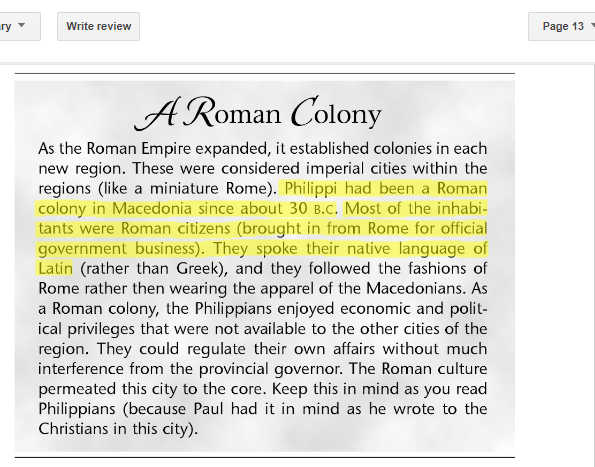
IV. Roman Macedonia and the Mission of St Paul


1) The Parthian revival of the Persian Empire occurred in the third century b.c. In the course of the next century Rome began its expansion into the lands bordering the eastern Mediterranean. Attempts by the Macedonian kingdom to resist Roman domination were finally liquidated following Roman victories in 168 and 148 b.c. The Romans neither regarded, nor treated, their Macedonian rival lightly and set out systematically to eradicate every trace of its power and independence. Perseus, the last Macedonian king, was seized in 168 while claiming political sanctuary on Samothrace and, after the failure of the final bid to regain independence in 148, the whole of the surviving aristocracy and the chief military and civil officials were deported to Italy. The most important industries were forbidden; the country was divided into four parts, and Macedonians forbidden to cross from one to another. Thus trade, as well as political control, fell largely into Roman hands. Quickly and brutally, the proud motherland of the empire which had reached to India was converted into a stagnant backwater of the Roman Empire.

2) Reliable veterans from the victorious Roman army were given their discharge and awarded land on which to settle. ... Octavius brought over a still larger group of colonists from Italy. These newcomers quickly became, on both a large and small scale, the principal landowners in the region.

3) The indigenous Thracians also continued as an important element of the population in the city of Philippi and, probably to a greater degree, in the countryside.

4) Farther inland, among the mountainous ranges of the north and west, a different situation developed. In these wilder regions, even in the towns, Hellénisation had never been complete. Greek influence, while paramount and a strong civilising force, had had to contend with constantly shifting tribal populations and with cultural allegiances from beyond the Macedonian frontiers. These were principally Illyrian on the west and north and Thracian on the east. The lack of Illyrian or Thracian literature makes any estimate of their cultural contributions extremely difficult, but it was certainly far from negative.

5) Throughout eastern Macedonia, as well as in Thrace itself, the religion of the native Thracians retained an undiminished vitality. Three iconographical aspects of this religion have survived in sufficient number and consistency of representation to leave us some indication of its essential features.

6) In Thessalonica and Verria a particular welcome was given to Paul’s gospel by the Greek population, ‘devout Greeks’ as they are called on one occasion. The race of those who received him with such warmth in Philippi is not specified; and nowhere are the indigenous Thracians or Illyrians mentioned. It seems a possibility that, particularly in Philippi, Paul made no distinction between the Greeks and the urban, Hellenised Thracians. Both were eligible for Roman citizenship. Both would speak Greek. Both, too, practised a synthesis of Thracian and Hellenic cults, which would have prepared them for Christian ideas. The status of women in Illyrian society may, too, have been the reason for the interest shown in Thessalonica and Verria by ‘chief’ and ‘honourable women which were Greeks’. Educated, urban Illyrians, too, would have spoken Greek.
 
Last edited:
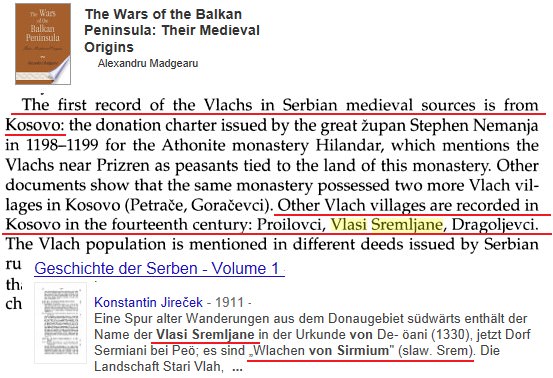
Kosovo 1321–31

The Dečani chrysobulls (1321–31) of Serbian king Stefan Dečanski contains a detailed list of households and villages in Metohija and northwestern Albania. The first charter concludes that this region was ethnically Serbian. 89 settlements with 2,666 households were recorded, out of which 86 were Serbian (96,6%), and 3 were Albanian (3,3%); there were 2,166 livestock households of 2,666 agricultural households, out of which 2,122 were Serbian (98%), and 44 were Albanian (2%).

In the 14th century in two chrysobulls or decrees by Serbian rulers, villages in the Kosovo area of Albanians alongside Vlachs are cited in the first as being between the White Drin and Lim rivers (1330), and in the second (1348) a total of nine Albanian villages are cited within the vicinity of Prizren.

https://en.wikipedia.org/wiki/Demographic_history_of_Kosovo

Malcolm, Noel (1998). Kosovo: A short history. Macmillan. p. 54. ISBN 9780810874831. "From the details of the monastic estates given in the chrysobulls, further information can be gleaned about these Vlachs and Albanians. The earliest reference is in one of Nemanja’s charters giving property to Hilandar, the Serbian monastery on Mount Athos: 170 Vlachs are mentioned, probably located in villages round Prizren. When Dečanski founded his monastery of Decani in 1330, he referred to ‘villages and katuns of Vlachs and Albanians’ in the area of the white Drin: a katun (alb.:katund) was a shepherding settlement. And Dusan’s chrysobull of 1348 for the Monastery of the Holy Archangels in Prizren mentions a total of nine Albanian katuns."

Wilkinson, Henry Robert (1955). "Jugoslav Kosmet: The evolution of a frontier province and its landscape". Transactions and Papers (Institute of British Geographers). 21: 183. JSTOR 621279. "The monastery at Dečani stands on a terrace commanding passes into High Albania. When Stefan Uros III founded it in 1330, he gave it many villages in the plain and catuns of Vlachs and Albanians between the Lim and the Beli Drim. Vlachs and Albanians had to carry salt for the monastery and provide it with serf labour."

3Jm9Zgq.jpg
 
Last edited:
Post#388, youtube file.

I don't know what these people are saying, but if I lived in such a house, I wouldn't let the cameras in.
 
Some of those figures given by ancient historians are hyperbolic, like the one about Jews extreminating 240,000 Cypriots.

Cyprus had a population of 200,000 in early 1900s. I highly doubt if it had a total population of 240,000 back in the ancient times. But the idea of them being the descendants of ancient Greeks stinks.
 
I posted this roughly 5 years ago. Worth repeating:

1) Unknown number of "barbarians" settled south of the river Danube in 62 A.D. In the sources, their number is mentioned to be around 100,000 (most likely a 'number' that was conjured up, but nonetheless..). No details about ethnic origin of this population.
2) In 268-270 A.D. a great number of Goths settled south of the river Danube. Many ended up being included in the Roman army.

3) Around 273 A.D., Carpi settled in Scythia Minor province. Scholars have linked the Carpi to a variety of ethnic groups, including Sarmatians, Thracians, Germans, and Celts.

4) In 275 A.D., a great number of Dacians settled south of the Danube.

5) A few years later, 100,000 Bastarnae settled south of Danube. They were followed by Vandals, Gepids, and others.

6) In 282 A.D., 20,000 Sarmatians settled south of Danube.

7) 290 A.D., unknown number of Arabs settled in Thrace.

8) Towards the end of the 290's A.D., additional groups of Carpi and Bastarnae settled south of Danube.

9) 303 A.D., unknown tribe settled in Thrace.

10) 334 A.D., 300,000 Sarmatians, Goths, Iazyges settled throughout Macedonia, Thrace, and Scythia Minor.

11) New transplantation of Goths in 348 A.D.
 
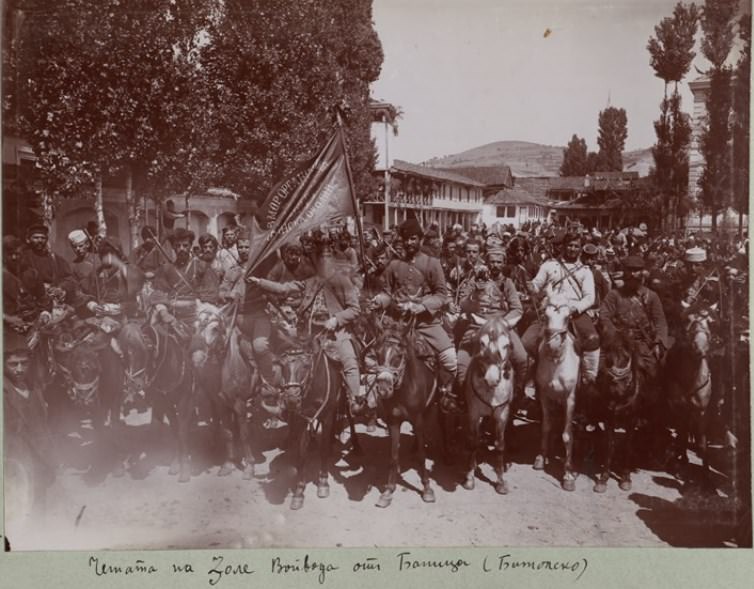
The regiment of Dzole Stojchev from Banica (Lerin) - from the Manaki brothers photo album taken in Bitola and Bitola region, period 1908-1910.

FXItFaB.jpg


На 11 март 1905 година здружените чети на Тане Стојчев и Sоле Стојчев имале судир со османлиските сили кај селото Жерви, при што Турците имале големи загуби. По Младотурската револуција станал легален и се вработил во локалната полиција. Потоа, најпрво учествувал во Сојуз на бугарски уставни клубови, а потоа во Народната федеративна партија. Ha еден митинг во Лерин, на 31 декември 1909 год. Ѕоле рекол:

„Б р а ќ а, Треба да работиме за конституционализам, во тоа со Турците ние на дело да се побратимиме, за да ја завардиме територијалната целина на Македонија. Тој е нашиот спас. Инаку ние стануваме објект за освојување од надворешни грабачи, кои што бараат богатство во нашата богата земја — Македонија“`

https://mk.wikipedia.org/wiki/Ѕоле_Стојчев
https://en.wikipedia.org/wiki/Dzole_Stojchev
 
Last edited:
That is an amazing photo Carlin. I get goosebumps just looking at it. What a sight it must have been to have been lucky enough to have witnessed these heroic Macedonians ride into town like absolute legends.

Sadly, this famous Macedonian spirit of old is hard to find these days.
 

FYI - Dzole Stojchev, better known as Dzole Gergev, is the one on the horse wearing white. The peson on the left is Krste Malikov from Asanovo, who died in Australia in 1952. The person on the right is Krste Londev from Neokazi, who became vojvoda of the Lerin district after Dzole was killed in 1909.
 
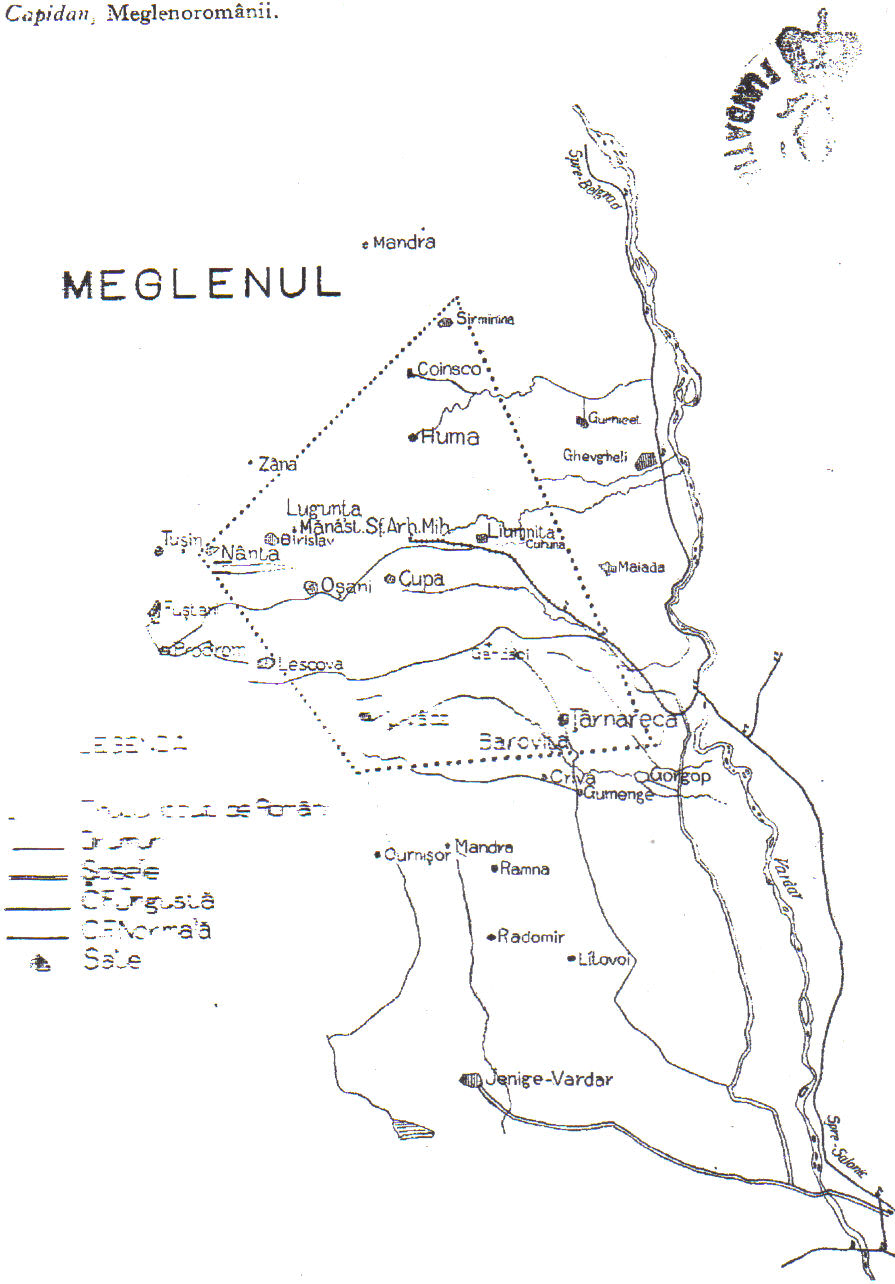
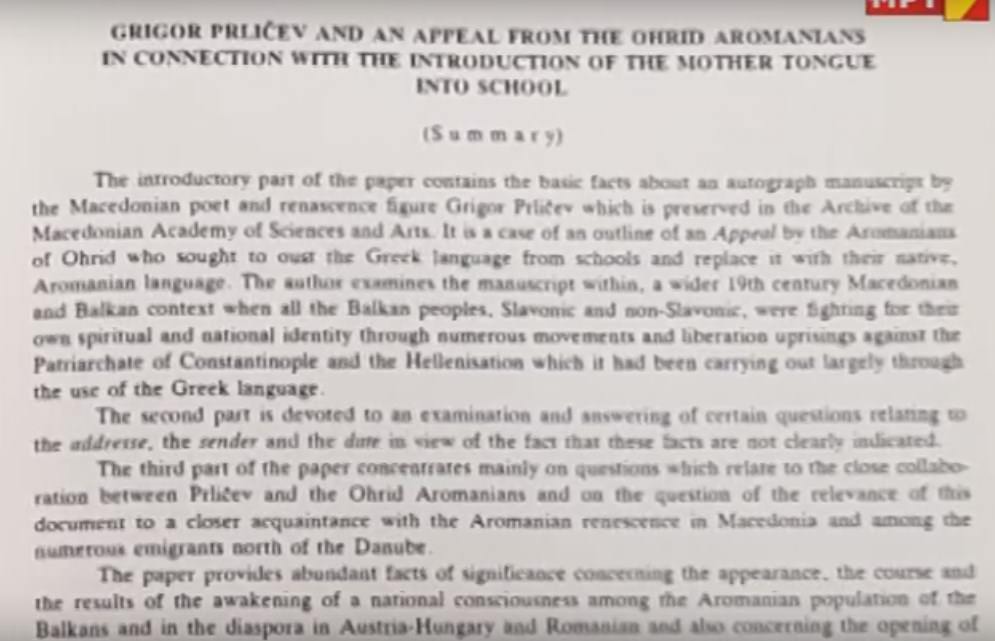
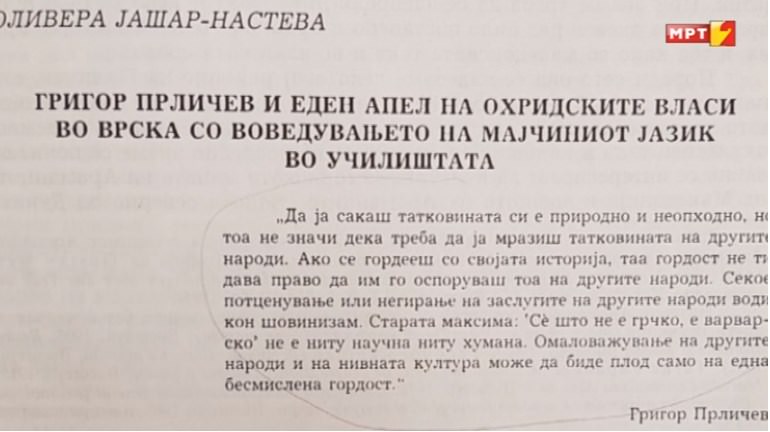
Grigor Prlichev and an appeal from the Ohrid Vlachs in connection with the introduction of the mother tongue into school

vu36FWU.jpg

xHl3WGo.jpg
 
Back
Top