• Welcome to the new Macedonian Truth Forum. All posts, members and private messages have been moved over from the old forum.

    Passwords from the old forum could not be carried over, so please use Forgot your password? to set a new one. The reset link is emailed to the address on your account.

  • Rules and Regulations at the forum of the Macedonian Truth Organisation (MTO)

    (1) The national-ethnic and cultural-linguistic identity of the Macedonian people is historically Macedonian, and derives its character from the native, indigenous and geographic homeland of the Macedonians, which is called Macedonia. To ensure that their human rights, integrity and heritage are appropriately respected, the only nouns and adjectives acceptable when reference is made to the above character and identity markers is Macedon, Macedonia, Macedonian and Macedonians.

    (2) The nation-state of the Macedonian people is the Republic of Macedonia, and is to be referred to by this official title so long as the 'republic' prefix is consistently applied to other states. Alternative references are the Macedonian Republic, or simply, Macedonia.

    (3) The 'ethnic' prefix is only acceptable for Macedonians in cases where differentiation is specifically required - so long as it is in context and consistent where it concerns its application to other ethnic groups.

    (4) Should any other differentiation be specifically required, the names of other ethnic groups that reside with Macedonians in either the Republic of Macedonia or the occupied Macedonian regions in Greece, Bulgaria, Serbia or Albania, are to be given a prefix.

    (5) Negating the identity, language and culture of the Macedonian people by deliberate avoidance of the terms Macedonia, Macedonian and Macedonians, or by any other means, is not permitted.

    (6) Systematic anti-Macedonian propaganda and rhetoric are not permitted.

    (7) Threads irrelevant to the Macedonian Cause, the community at the Macedonian Truth Organisation or the Macedonians in general may be considered as spam or not in the spirit of the forum. In such cases they are not permitted.

    (8) Continual posting of messages in threads with the sole purpose of deviating from the initial topics with the use of unrelated and unnecessary information is not permitted.

    (9) All posts, external articles, reports, etc that are cited in languages other than Macedonian or English, must be accompanied with a translation in one or both of the said languages.

    (10) Despite the possibility of some conversations and debates becoming heated, extreme abuse and/or racism, vulgar language and/or terminology, threats, revelation of personal information about others, harassment, and other such behavior will not be permitted. If deemed necessary all relevant information including member details will be reported to the appropriate authorities for investigation which may result in legal action.

    (11) Threads that are created must have a summary of a topic or excerpt of an article found in pertinent link(s) that have been included. One line threads will be considered unaccetable spam and are therefore not permitted.

    (12) Compulsive and deliberate lies, irrespective of the topic, are not permitted.

    (13) Any symbols or avatars found to be perceived as offensive to Macedonians are not permitted.

    (13) Any explicit or extreme material is not permitted.

    Failure to adhere to the above rules and regulations will result in a ban after 3 breaches. This may be reconsidered in some cases should the circumstances be of an unorthodox nature and/or require special consideration. To assure an effective deterrent against an individual or individuals with the sole purpose of causing dissent through spamming, racism or other improper means, the above rules will be strictly enforced.

    The MTO administration will monitor all discussions as reasonably practical and reserve the right to remove any post and/or member from the forum, and update the rules and regulations as required. Members are encouraged to immediately report any post and/or member to the MTO administration if they feel that these rules have not been abided by.

    The views expressed on this forum are those of the individuals. The only official representation of the MTO is made by the "Macedonian Truth Organisation (Site Owner)" username, and no other.

  • Macedonian Cause

    The Macedonian Truth Organisation calls on God in Heaven to protect, bless and guide the endeavour it is committing to undertake, and that is to work towards:

    Securing Macedonia as a free, independent and democratic republic in which sovereignty lies with the Macedonian citizens; as the nation-state of the Macedonian people in which they can preserve their culture, language and identity; as a state in which the Macedonian language and culture form the basis of public life and act as important unifying elements of Macedonian society; as the home of all its citizens to which it guarantees and obliges their inalienable natural rights and corresponding responsibilities;

    The acknowledgment as self-evident and irrefutable the existence of the:

    1) Indigenous, ethnonational name of Macedonia;
    2) Macedonian people, language and identity;
    3) Macedonian culture, symbols and folklore;
    4) Macedonian ancestry, heritage and history in its entirety; and
    5) Macedonian Orthodox Church;

    Securing recognition by the International Community of the tragedies endured by the Macedonian people, of the division of Macedonia with the signing of the Treaty of Bucharest on August 10, 1913, and the genocide committed against the Macedonian people at the hands of the Greek, Bulgarian and Serbian states and their respective churches during the 19th and 20th centuries;

    Ensuring that the Interim Accord is declared ‘null and void’ and that all constitutional provisions, acts, commitments, agreements, legislation, regulations, policies or programs emanating from, supporting or consequential to the Interim Accord are also declared ‘null and void’, including the use of any symbols and the completion of any acts imposed by, or originating from, the Interim Accord.

    Ensuring that the Framework Agreement is abolished and that all constitutional provisions, acts, commitments, agreements, legislation, regulations, policies and programs emanating from, supporting or consequential to the Framework Agreement are also abolished and replaced by a framework of constitutional and statutory law based on inalienable natural rights and corresponding responsibilities and universally codified human rights mechanisms.

    Securing the abolishment of any existing constitutional provisions, acts, agreements, legislation, regulations, policies and programs that discriminate against the Macedonian people, in any international organisation or any of the countries of the International Community where such constitutional provisions, acts, agreements, legislation, regulations, policies and programs exist, and thereby ensuring the freedom for Macedonians to exercise their inalienable natural rights and fulfil their corresponding responsibilities, and practice their culture, language and religious faiths in all the countries of the International Community without hindrance;

    The empowerment of Macedonians to undertake a moral revolution and to instil and/or reinvigorate within themselves a deep-rooted national, cultural, linguistic and historical dignity and a commitment to the exercise of freedom based on inalienable natural rights and corresponding responsibilities;

    The recognition of the Macedonian minorities in the neighbouring states of Macedonia as well as the respect for the inalienable rights and freedoms of the Macedonian minorities, as provided for by natural law and as codified by the United Nations Charter, the Universal Declaration of Human Rights and other universally codified human rights mechanisms;

    The full and unreserved respect of, and the support for, the rights of all people of non-Macedonian descent living in Macedonia and around the world, who share a reciprocal full and unreserved respect for the Macedonian people, their homeland and their state;

    The cultural unification and solidarity of the Macedonian people living in all parts of historical Macedonia and adjacent territories, as well as Macedonians throughout the world;

    The unity of all Macedonians on the principles, objectives and achievement of the Macedonian cause as defined by this declaration.

Population of Macedonia and Adjacent Areas

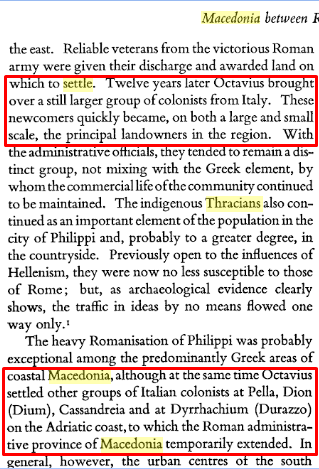
The city reappears in the sources during the Roman civil war that followed the assassination of Julius Caesar. His heirs Mark Antony and Octavian confronted the assassins of Caesar, Marcus Junius Brutus and Gaius Cassius Longinus, at the Battle of Philippi on the plain to the west of the city during October in 42 BC. Antony and Octavian were victorious in this final battle against the partisans of the Republic. They released some of their veteran soldiers, probably from Legion XXVIII and colonized them in the city, which was refounded as Colonia Victrix Philippensium. In 30 BC, Octavian became Roman emperor, reorganized the colony, and established more settlers there, veterans possibly from the Praetorian Guard and other Italians. The city was renamed Colonia Iulia Philippensis, and then Colonia Augusta Iulia Philippensis after January, 27 BC, when Octavian received the title Augustus from the Roman Senate.

Following this second renaming, and perhaps after the first, the territory of Philippi was centuriated (divided into squares of land) and distributed to the colonists. The city kept its Macedonian walls, and its general plan was modified only partially by the construction of a forum, a little to the east of the site of Greek agora. It was a "miniature Rome," under the municipal law of Rome and governed by two military officers, the duumviri, who were appointed directly from Rome.

The colony recognized its dependence on the mines that brought it its privileged position on the Via Egnatia. This wealth was shown by the many monuments that were particularly imposing considering the relatively small size of the urban area: the forum, laid out in two terraces on both sides of the main road, was constructed in several phases between the reigns of Claudius and Antoninus Pius, and the theatre was enlarged and expanded in order to hold Roman games. There is an abundance of Latin inscriptions testifying to the prosperity of the city

https://en.m.wikipedia.org/wiki/Philippi
 
Last edited:
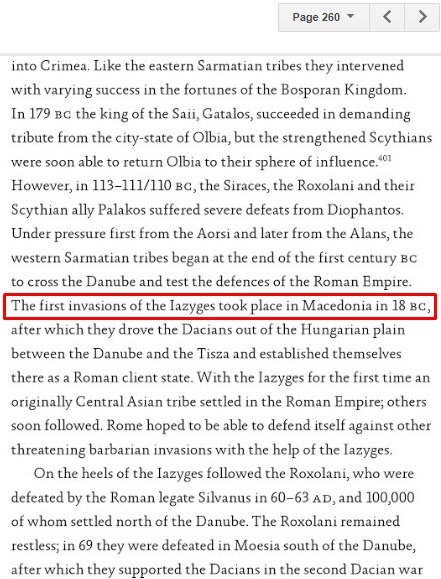
The Iazyges were an ancient Sarmatian tribe that traveled westward in c. 200 BC from Central Asia to the steppes of what is now Ukraine.

In c. 44 BC, they moved into modern-day Hungary and Serbia near the Dacian steppe between the Danube and Tisza rivers, where they adopted a semi-sedentary lifestyle.

URL:
https://en.wikipedia.org/wiki/Iazyges

NI2NlDl.jpg

hXtXpeT.jpg


-----------------------------------------------------------------------------------------------------------------------------------------------------------------

IOBa8MS.jpg

NgkPkSA.jpg
 
Last edited:
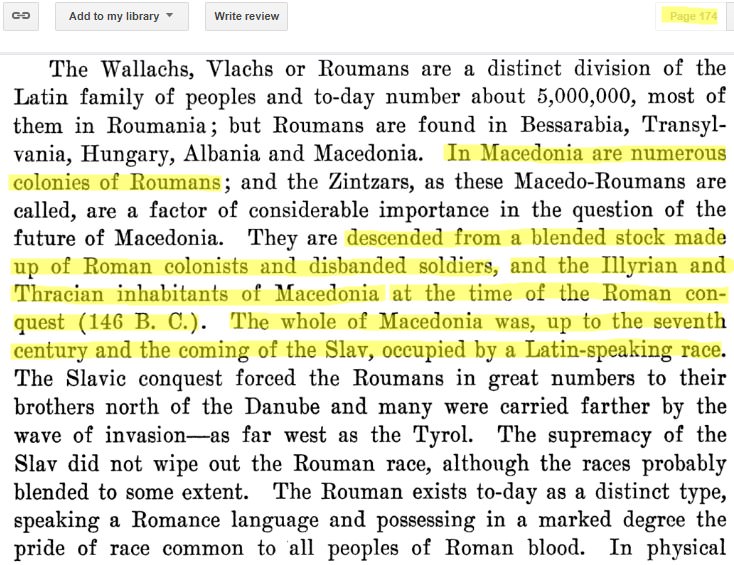
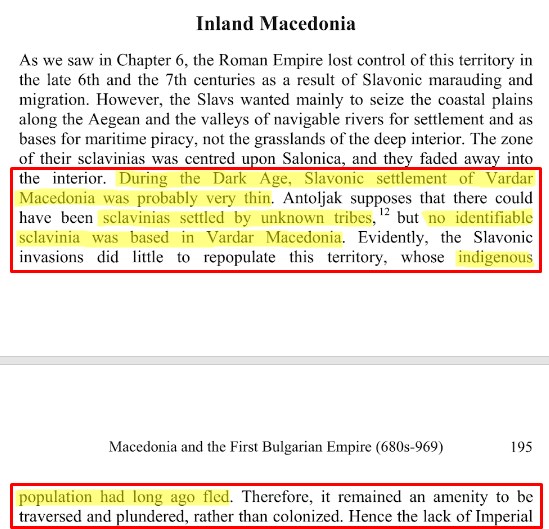
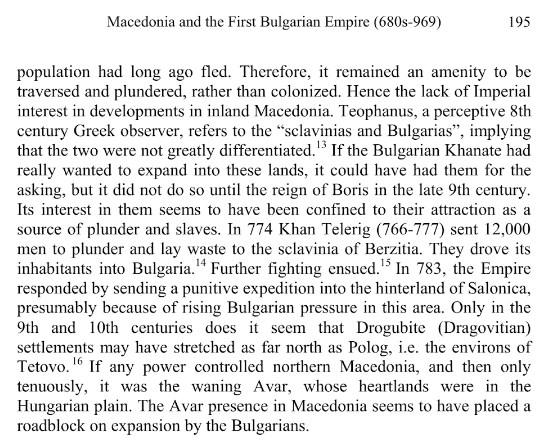
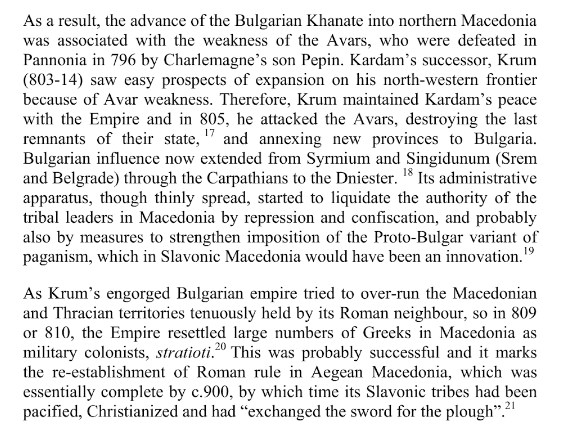
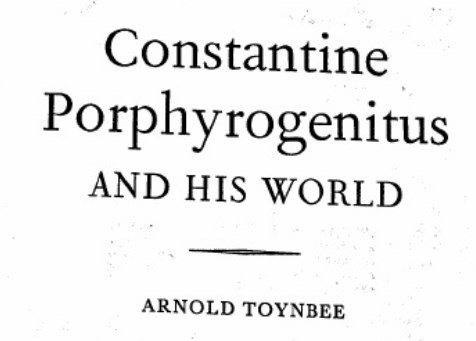
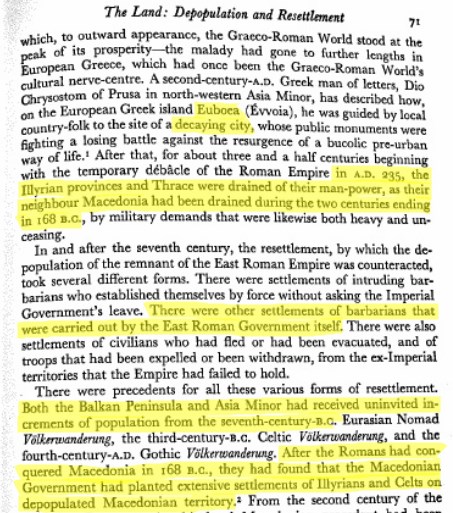
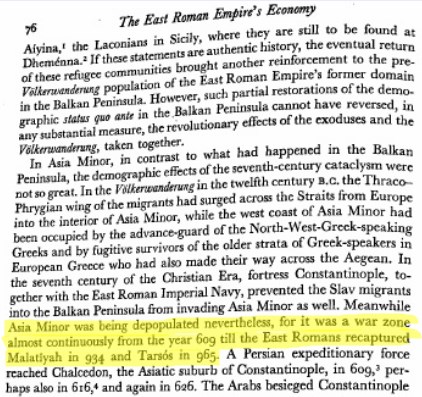
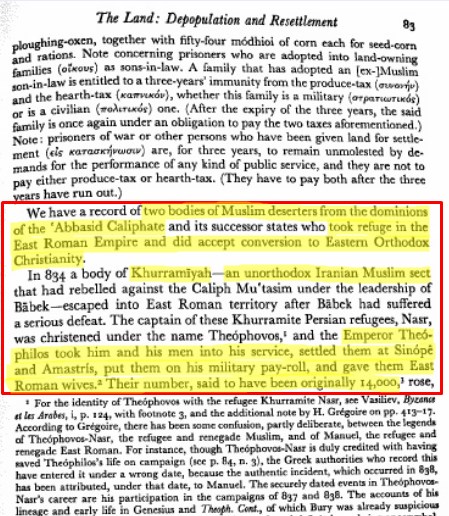
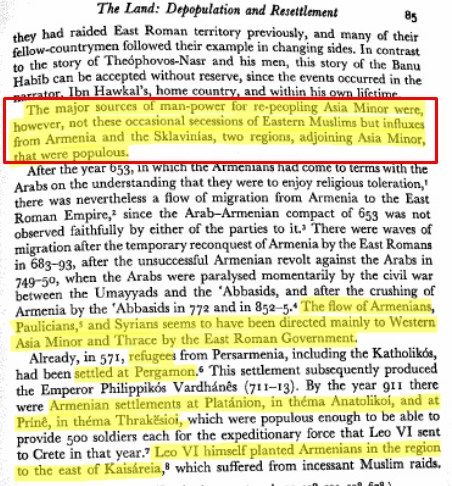
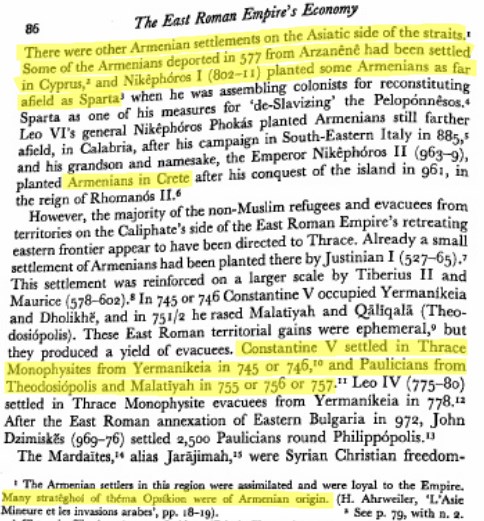
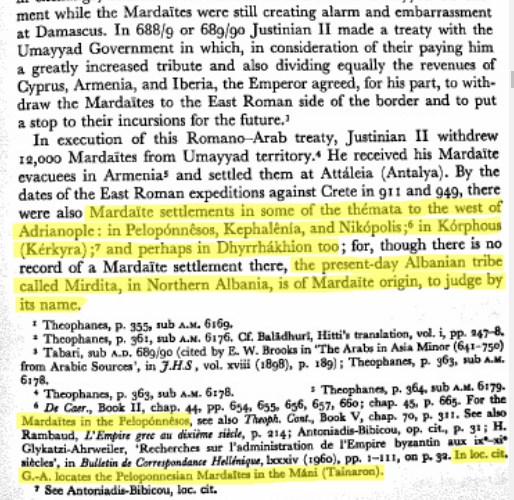
Weird, why would the Byzantine Empire resettle Slavs from around the Varder river to Gordoservon in Anatolia in the 7th century? Do you have the rest of page 195?
 
The following quote comes from the Serbian book "O Cincarima" ("About Aromans"), by Dušan J. Popović. The book was first published in Belgrade in 1937.

Pages 276/277 (footnotes):

"Dr. Sv. Stevanović, assistant to the Ministry of Education, on one occasion when he was inspecting a gymnasium in Bitola he wanted to find out if and how our (= Serbian) national idea (ideology) is progressing. On his way to the gymnasium he was encountering students who were on their way to the school. Dr. Stevanović started asking them what is their nationality. The first he met, when he asked what he is, the student replied that he is Macedonian.

The second, third, and fourth all replied in the same manner (that they are Macedonians). Upon further examination, asking who were the students' parents he saw that their parents were all Slavs.

The fifth student replied that he is Serbian. When Dr. Stevanović asked him, what (nationality) is your father, the student replied - Cincarin (= Arman in Serbian).
"
 
Last edited:
Slavic songs were sang in most of the Meglen Vlach villages. In the villages Konsko (Vlach. Coinsko), Karpi (Vlach. Tsarna Reka) and Sermenin (Vlach. Sirminina), the youth regularly used the Macedonian language. In the village Kastaneri the kids hardly ever talked in Meglen Vlach and communicated in Macedonian.

- Nikola Minov

Any more on this? Original source and further detail?
 
Any more on this? Original source and further detail?

Page 184, or fifth page of pdf file, Footnote 15:
https://banatulsarbesc1.files.wordpress.com/2018/02/the-aromanians-and-imro-nikola-minov.pdf

-------------------------------------------------------------------------------

1) According the references of Prof. Keith Brown, “Turk” implied official persona – functionary, “Grecian” meant – merchant, “Bulgarian” – villager, farmer and “Vlach” – shepherd, rancher.

“When the Macedonian peasants use the term Bulgar, they mean by it: 1) people of a simple and hard-working life, 2) the bulk of simple labourers who speak Slavic, in contrast to the non-Slavs, the Greeks and the Turks, who are above this majority and consider them inferior. The first meaning is the main one: the word “Bulgar” denotes in the first case a simple mode of life, work and thought.”

- (Keith Brown, „The Past in Question, modern Macedonia and the Uncertainties of Nation“, p. 59)

2) “All peasants were Macedonians; shepherds were Vlachs; merchants and bureaucrats were Greeks; and the high administrators were Muslims.” - (“Minorities and mother country imagery” By Gerald L. Gold, Memorial University of Newfoundland. Institute of Social and Economic Research, p. 60.)

3) "During the Ottoman period, therefore, terms like 'Greek' or 'Bulgarian' were not used to designate different ethnic or national groups, but rather broad socio-cultural categories" (Danforth 1995:59)
- (Mirca Madianou , “Mediating the Nation“, p. 30, is Lecturer and Director of Studies in Social and Political Sciences, Lucy Cavendish College, University of Cambridge)

4) Trajan Stojanovic in his book "Balkan Worlds: The First and Last Europe", p.143 again underlines that the term "Bulgarians" were called the farmers and "Vlachs" the shepherds.

5) The Bulgarian member of the Bulgarian Academy of Sciences Vasil Drumev wrote: "And we've began to learn Greek, to speak in Greek, to call ourselves Greeks. And there is still among us respected Bulgarians, who are grecizing, who speak .. in Greek, who hate the Bulgarians.”

6) The Traveler Sir John Mandeville, in 1357 travelling through the Balkans wrote that Serbia is a land of Bougiers, while Belgrade in that time was known by the name “Alba Graeca” and “Alba Bulgarica”.

7) Simeon Lehaci in his journey memories wrote that all the people in Bosnia speak in "Bulgarian", and they were "Greeks" - in religion.

Great stuff, thanks
 
No prob.

"The Macedonians insist. They tighten their teeth, speak their Macedonian tongue with stubbornness, they dress their Macedonian with pride, they believe & hope, & they are silently fighting for their own Macedonia, for free Macedonia" -- 24/10/1933.

Detailed reportage from the "Rizospastis".

«Στη Μακεδονία», διαβάζουμε εκεί, «παίζεται ένα άγριο δράμα σε βάρος μιας εθνότητας που δεν εννοεί να υποταχθεί σκλάβα στον ελληνικό, γιουγκοσλαυικό ή βουλγαρικό ιμπεριαλισμό» (19/10/1933). «Εχουν τόσοι αιώνες περάσει από τότε που εγκαταστάθηκε το σλαυικό στοιχείο στη Μακεδονία, που κανένας τους σήμερα δεν ξέρει τίποτα άλλο, παρά μονάχα πως στον τόπο αυτό γεννήθηκε και σ’ αυτόν θα πεθάνει. Και πως ούτε Ελληνας, ούτε Βούλγαρος, ούτε Σέρβος είνε» (24/11/1932). «Οι Μακεδόνες επιμένουν. Σφίγγουν τα δόντια τους, μιλάνε τη γλώσσα τους τη μακεδονική με πείσμα, φοράνε τη στολή τους τη μακεδονική με περηφάνεια και πιστεύουν κι ελπίζουν και καρτερικά μα σιωπηλά αγωνίζονται για μια Μακεδονία δική τους, για μια Μακεδονία ελεύθερη» (24/10/1933).

"In Macedonia," we read there, "there is a wild drama against a nation that does not mean to be slave to Greek, Yugoslav or Bulgarian imperialism" (19/10/1933). "It has been so many centuries since the Slavic element settled in Macedonia, and no one knows them today except that it was born in this place and will die in it. And they're neither a Greek, nor a Bulgarian, nor a Serb" (24/11/1932). "The Macedonians insist. They tighten their teeth, speak their Macedonian tongue with stubbornness, they dress their Macedonian with pride, they believe & hope, & they are silently fighting for their own Macedonia, for free Macedonia" 24/10/1933.

URL:
http://www.efsyn.gr/arthro/koinovoy...85CAgVURRRw5fEfB1MUyIYxX8El_aJ_vyRIeZUaH_4GlI
 
From URL - Greece: Chauvinist Frenzy over Macedonia - Part Two:
https://www.icl-fi.org/english/wv/1143/greece.html

The first Greek supporters of Leon Trotsky’s Left Opposition—the Archeiomarxists—were opposed to independence for the Macedonian minority. In discussions with the Archeiomarxists in 1932, Trotsky castigated his supporters for this chauvinist line. Responding to their argument that Aegean Macedonia was “90 percent Greeks,” Trotsky replied: “Our first task is to take an attitude of total skepticism toward these [government] figures.” On the question of independence, Trotsky said:

“I’m not certain whether it is correct to reject this slogan. We cannot say we are opposed to it because the population will be against it. The population must be asked for its opinion on this. The ‘Bulgarians’ represent an oppressed layer....

“It’s not our task to organize nationalist uprisings. We merely say that if the Macedonians want it, we will then side with them, that they should be allowed to decide, and we will also support their decision.”

— “A Discussion on Greece” (Spring 1932)

He went on to point to the crux of the matter for Marxists in Greece:

“What disturbs me is not so much the question of the Macedonian peasants, but rather whether there isn’t a touch of chauvinist poison in Greek workers. That is very dangerous. For us, who are for a Balkan federation of soviet states, it is all the same if Macedonia belongs to this federation as an autonomous whole or part of another state.”


The following is an excerpt from Greece: Chauvinist Frenzy over Macedonia - Part One:
https://www.icl-fi.org/english/wv/1142/macedonia.html

In the same article, parroting the worst Greek chauvinists, the KKE declares baldly that: “A historically formed ‘Macedonian’ nation, ‘Macedonian’ ethnicity, ‘Macedonian’ language, which form the basis of irredentism and raise questions of the existence of a minority, claims and defense of its rights etc., do not exist.” The Macedonian people, however, have fought long and hard to exist as a nation with their own language and culture, regardless of the opinions of chauvinist Greek Stalinists. The KKE would never question the pedigree of the Greek nation. One could observe that for centuries under the Byzantines and the Ottomans, Greeks mainly referred to themselves as “Romans” and the development of a national consciousness in Greece, as elsewhere in the Balkans, began only in the late 18th century amid the decay of the Ottoman empire.

The borders of capitalist Greece, which the KKE regards as sacrosanct and inviolable, largely reflect the amount of land that the Greek bourgeoisie was able to grab in the Second Balkan War in 1913 as Greece and Serbia fought Bulgaria to divide up the strategic province of Macedonia. At that time, the peasant population of the territories seized by Greece was mainly Macedonian-speaking, while in Thessaloniki, the largest ethnic group was the Ladino-speaking Jewish population. The founding cadre of what was to become Greek Communism emerged from this rich, cosmopolitan environment.

Today’s KKE upholds imperialist treaties such as that of Bucharest in 1913, which ended the Second Balkan War and put the seal on Greece’s annexations in Epirus and Macedonia (including Thessaloniki). But especially in the Balkans, with its patchwork of nationalities, state boundaries do not at all correspond to the geographical extent of the various nations. The annexations by the bourgeois powers are inevitably followed by mass expulsions (“ethnic cleansing”) and/or forcible assimilation of national minorities. The KKE’s defense of the status quo in the Balkans is a flat denial of the right of self-determination.
 
Last edited:
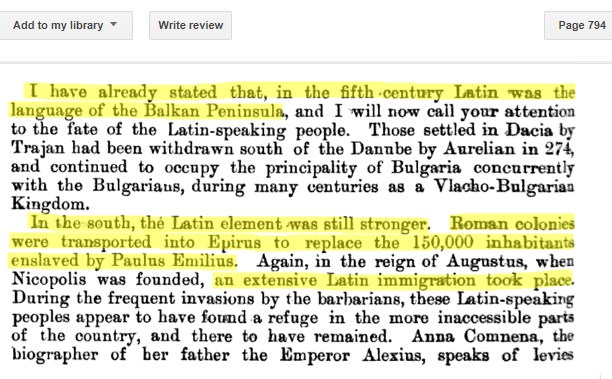
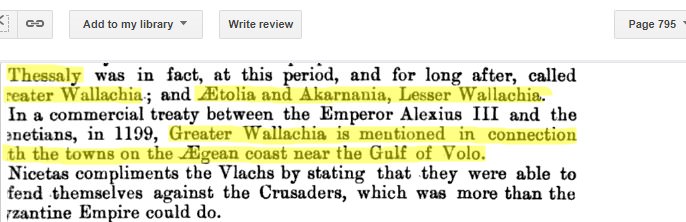
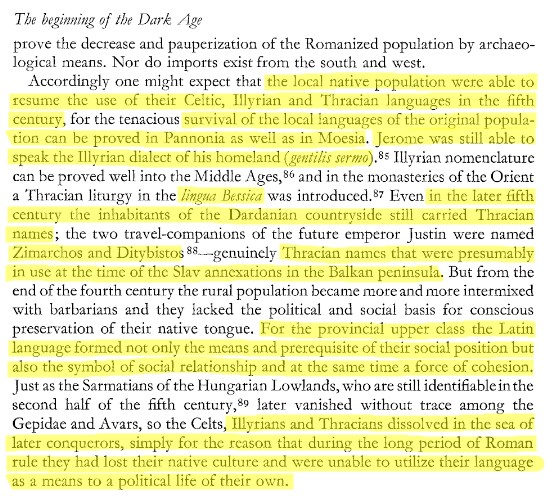
"The preaching of the sermon in Latin by Nicetas of Remesiana in Moesia in the late sixth century also implies the presence of a dense Roman and Romanized population in the province."

URL:
https://books.google.ca/books?id=cf...ved=0ahUKEwik2vb1sc3gAhUJ54MKHUxPDXoQ6AEINDAC

zADLNc6.jpg

16IZJ4A.jpg

0rIAZxT.jpg


-----------------------------------------------------------------------------------------------------------------------------------------------------

Towards the end of the 2nd century BC relentless attacks from the north by the Celtic Scordisci and the Free Thracian tribes, notably the Maidi (the tribe of Spartacus) and Denteletes, threatened to overrun the Roman province of Macedonia. By 115 BC the situation had become so chronic that Quintus Fabius Maximus Eburnus, who had been consul in 116 BC, was sent to Macedonia. Eburnus was renowned as a strict authoritarian figure who had sentenced his own son to death for ‘immorality’, and it appears that it was he who drew up the plans for the eradication of the ‘barbarian’ threat and the Roman conquest of Thrace (Valerius Maximus 6.1.5–6; Pseudo-Quintilian, Decl. 3.17; Orosius 5.16.8).
 
Last edited:
In this article by Margarita Peshevska titled "The status of the Macedonian minority in Albania", there are a couple of interesting sentences:

- "In Korcha in 1888 there was one school with 40 students who studied in Macedonian language. However, this school was later banned by the Patriarchate Bishop of Korcha."

- "Italian journalist Demetri Delifer believes that several thousand Macedonians live in the city of Gjirokaster."

URL (the article is in Serbian, and it's from 1990):
https://www.rastko.rs/rastko-al/zbornik1990/mpesevska-makedonci.php
 
Back
Top