• Welcome to the new Macedonian Truth Forum. All posts, members and private messages have been moved over from the old forum.

    Passwords from the old forum could not be carried over, so please use Forgot your password? to set a new one. The reset link is emailed to the address on your account.

  • Rules and Regulations at the forum of the Macedonian Truth Organisation (MTO)

    (1) The national-ethnic and cultural-linguistic identity of the Macedonian people is historically Macedonian, and derives its character from the native, indigenous and geographic homeland of the Macedonians, which is called Macedonia. To ensure that their human rights, integrity and heritage are appropriately respected, the only nouns and adjectives acceptable when reference is made to the above character and identity markers is Macedon, Macedonia, Macedonian and Macedonians.

    (2) The nation-state of the Macedonian people is the Republic of Macedonia, and is to be referred to by this official title so long as the 'republic' prefix is consistently applied to other states. Alternative references are the Macedonian Republic, or simply, Macedonia.

    (3) The 'ethnic' prefix is only acceptable for Macedonians in cases where differentiation is specifically required - so long as it is in context and consistent where it concerns its application to other ethnic groups.

    (4) Should any other differentiation be specifically required, the names of other ethnic groups that reside with Macedonians in either the Republic of Macedonia or the occupied Macedonian regions in Greece, Bulgaria, Serbia or Albania, are to be given a prefix.

    (5) Negating the identity, language and culture of the Macedonian people by deliberate avoidance of the terms Macedonia, Macedonian and Macedonians, or by any other means, is not permitted.

    (6) Systematic anti-Macedonian propaganda and rhetoric are not permitted.

    (7) Threads irrelevant to the Macedonian Cause, the community at the Macedonian Truth Organisation or the Macedonians in general may be considered as spam or not in the spirit of the forum. In such cases they are not permitted.

    (8) Continual posting of messages in threads with the sole purpose of deviating from the initial topics with the use of unrelated and unnecessary information is not permitted.

    (9) All posts, external articles, reports, etc that are cited in languages other than Macedonian or English, must be accompanied with a translation in one or both of the said languages.

    (10) Despite the possibility of some conversations and debates becoming heated, extreme abuse and/or racism, vulgar language and/or terminology, threats, revelation of personal information about others, harassment, and other such behavior will not be permitted. If deemed necessary all relevant information including member details will be reported to the appropriate authorities for investigation which may result in legal action.

    (11) Threads that are created must have a summary of a topic or excerpt of an article found in pertinent link(s) that have been included. One line threads will be considered unaccetable spam and are therefore not permitted.

    (12) Compulsive and deliberate lies, irrespective of the topic, are not permitted.

    (13) Any symbols or avatars found to be perceived as offensive to Macedonians are not permitted.

    (13) Any explicit or extreme material is not permitted.

    Failure to adhere to the above rules and regulations will result in a ban after 3 breaches. This may be reconsidered in some cases should the circumstances be of an unorthodox nature and/or require special consideration. To assure an effective deterrent against an individual or individuals with the sole purpose of causing dissent through spamming, racism or other improper means, the above rules will be strictly enforced.

    The MTO administration will monitor all discussions as reasonably practical and reserve the right to remove any post and/or member from the forum, and update the rules and regulations as required. Members are encouraged to immediately report any post and/or member to the MTO administration if they feel that these rules have not been abided by.

    The views expressed on this forum are those of the individuals. The only official representation of the MTO is made by the "Macedonian Truth Organisation (Site Owner)" username, and no other.

  • Macedonian Cause

    The Macedonian Truth Organisation calls on God in Heaven to protect, bless and guide the endeavour it is committing to undertake, and that is to work towards:

    Securing Macedonia as a free, independent and democratic republic in which sovereignty lies with the Macedonian citizens; as the nation-state of the Macedonian people in which they can preserve their culture, language and identity; as a state in which the Macedonian language and culture form the basis of public life and act as important unifying elements of Macedonian society; as the home of all its citizens to which it guarantees and obliges their inalienable natural rights and corresponding responsibilities;

    The acknowledgment as self-evident and irrefutable the existence of the:

    1) Indigenous, ethnonational name of Macedonia;
    2) Macedonian people, language and identity;
    3) Macedonian culture, symbols and folklore;
    4) Macedonian ancestry, heritage and history in its entirety; and
    5) Macedonian Orthodox Church;

    Securing recognition by the International Community of the tragedies endured by the Macedonian people, of the division of Macedonia with the signing of the Treaty of Bucharest on August 10, 1913, and the genocide committed against the Macedonian people at the hands of the Greek, Bulgarian and Serbian states and their respective churches during the 19th and 20th centuries;

    Ensuring that the Interim Accord is declared ‘null and void’ and that all constitutional provisions, acts, commitments, agreements, legislation, regulations, policies or programs emanating from, supporting or consequential to the Interim Accord are also declared ‘null and void’, including the use of any symbols and the completion of any acts imposed by, or originating from, the Interim Accord.

    Ensuring that the Framework Agreement is abolished and that all constitutional provisions, acts, commitments, agreements, legislation, regulations, policies and programs emanating from, supporting or consequential to the Framework Agreement are also abolished and replaced by a framework of constitutional and statutory law based on inalienable natural rights and corresponding responsibilities and universally codified human rights mechanisms.

    Securing the abolishment of any existing constitutional provisions, acts, agreements, legislation, regulations, policies and programs that discriminate against the Macedonian people, in any international organisation or any of the countries of the International Community where such constitutional provisions, acts, agreements, legislation, regulations, policies and programs exist, and thereby ensuring the freedom for Macedonians to exercise their inalienable natural rights and fulfil their corresponding responsibilities, and practice their culture, language and religious faiths in all the countries of the International Community without hindrance;

    The empowerment of Macedonians to undertake a moral revolution and to instil and/or reinvigorate within themselves a deep-rooted national, cultural, linguistic and historical dignity and a commitment to the exercise of freedom based on inalienable natural rights and corresponding responsibilities;

    The recognition of the Macedonian minorities in the neighbouring states of Macedonia as well as the respect for the inalienable rights and freedoms of the Macedonian minorities, as provided for by natural law and as codified by the United Nations Charter, the Universal Declaration of Human Rights and other universally codified human rights mechanisms;

    The full and unreserved respect of, and the support for, the rights of all people of non-Macedonian descent living in Macedonia and around the world, who share a reciprocal full and unreserved respect for the Macedonian people, their homeland and their state;

    The cultural unification and solidarity of the Macedonian people living in all parts of historical Macedonia and adjacent territories, as well as Macedonians throughout the world;

    The unity of all Macedonians on the principles, objectives and achievement of the Macedonian cause as defined by this declaration.

Population of Macedonia and Adjacent Areas

In the book by Dragan Taskovski, "The birth of the Macedonian nation" (in Serbian), Bogatsko is explicitly called a Vlach village. Ultimately it appears to be a source from 1839, Ami Boue. The 500 Vlach households of Bogatsko have declared themselves as Greeks for many many decades.

Carlin, as you mentioned earlier, the Greek-speaking (bilingual) Vlachs in Bogatsko settled there from Epirus sometime in late 18th century. I don't have a problem with that but would you agree that, originally, the village was founded by ethnic Macedonians? I think it has been established that during the 1500's, the Bogatsko natives pretty much spoke, what is now Standard Modern Macedonian which is based on the central Macedonian dialects of Bitola, Lerin and Prilep.
 
According to 19th-century Belgian testimonies that refer to the villages of Korca (Gorica) and Devol, inhabited by ethnic Macedonians, but under Albanian pressure accepted the Albanian language, that is, they Albanized or Islamized in order to receive Ottoman protection.

It is noted that massively, the Macedonian peasants from Korca and Devol, who spoke Macedonian as their mother tongue, adopted the Albanian language around 1870. The leaders of the villages in these areas pledged not to speak their mother tongue and to not speak it to their children.

- Magazine "Albania" Bruxelles, 15–30 June 1898, p. 32.

https://mk.wikipedia.org/wiki/Шкрети

That's actually quite upsetting. A whole section of Macedonian society wiped away of their own accord. We are truly our own worst enemies. Can you just imagine the leverage these Macedonians would have had in the context of today's Macedonian/Albanian demographic power struggles in Macedonia. What an absolute shame and disgrace.

Now, 150 years later, history is repeating itself. The whole country has renounced its identity, history and culture in the hope of gaining some kind of advantage with the powers that be.
 
Carlin, as you mentioned earlier, the Greek-speaking (bilingual) Vlachs in Bogatsko settled there from Epirus sometime in late 18th century. I don't have a problem with that but would you agree that, originally, the village was founded by ethnic Macedonians? I think it has been established that during the 1500's, the Bogatsko natives pretty much spoke, what is now Standard Modern Macedonian which is based on the central Macedonian dialects of Bitola, Lerin and Prilep.

Karposh, all of what you said is correct.
 
URL:
http://www.rastko.rs/rastko-al/zbornik1990/pvlahovic-sloveni.php

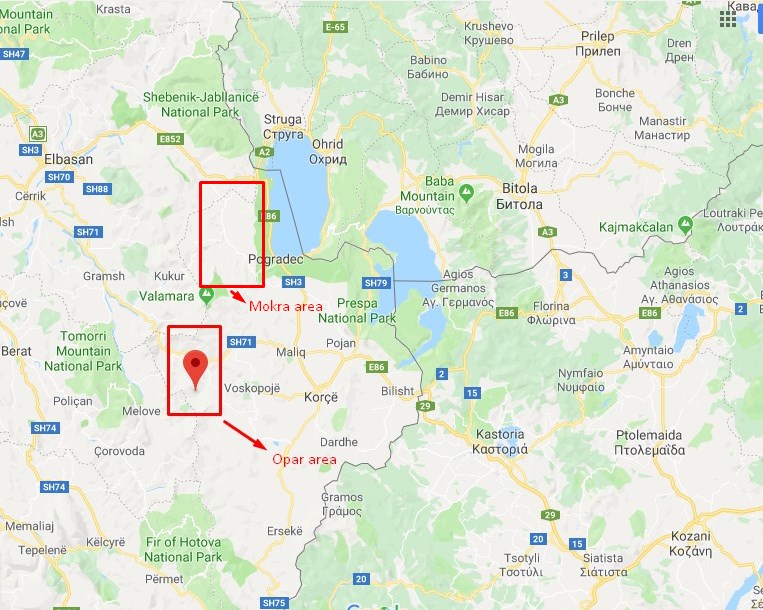
"The process of Albanization of Slavs was long. Slavic groups (villages, parts of villages), however, maintained themselves for a very long time. Such groups were in the east, closer to Macedonia, and in the northwest, closer to the Serbian regions. In the 16th century, the Opar area, for example, was completely Slavic. In the 17th century, the episcopes of Gora and Mokra are mentioned southwest of the Ohrid Lake. Today, this is completely an Albanian-Muslim region..."

rAmtcom.jpg
 
Last edited:
Not only did French travel writer Olivier (end of 18th century) consider the entire population of Macedonia to be "Greek" but many other European nations, including Russians, did not know the ethnic composition of Macedonia.

Before the Russian-Turkish war of 1828-1829, according to Milan Prelog, a Russian journalist was amazed that in European Turkey there exist people of Orthodox faith, who still speak a language that's close to Church Slavonic (Milan Prelog, Slovenska renesansa 1780-1848, Zagreb 1924, 159).

Even Victor Grigorovich, as related to us by D. Miladinov, during his visit to Ohrid in 1844 wondered how in these distant parts of the Balkans, where previously it was believed only Greeks lived, there is a Slavic-speaking population.

-- Page 74 of Dragan Taskovski's book "The birth of the Macedonian nation"

From the same book ^^ page 106.

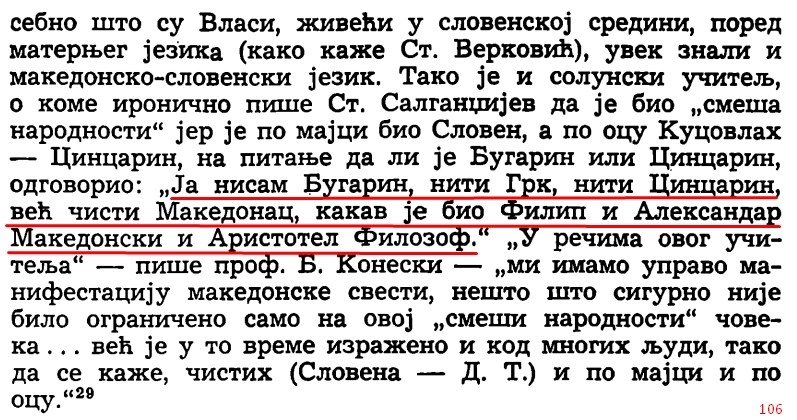
The Bulgarian writer St. Salgandzhiev writes ironically about a Salonica teacher as being a "mixture of nationalities", because the teacher's father was a Vlach and his mother Macedonian.

When asked whether he was "Bulgarian" or Vlach the teacher replied: "I am neither Bulgarian, nor Greek, nor Vlach, but a pure Macedonian - same as Philip and Alexander and Aristotle the philosopher."

HdGfeqe.jpg


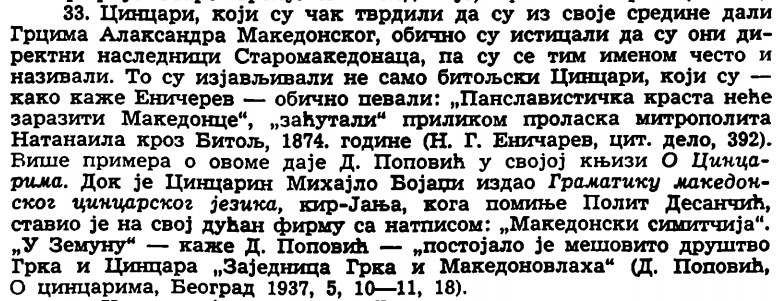
Elsewhere in the same book, 1871 source relates how there are such people in Macedonia who think and talk about how they are not Bulgarians, but Macedonians and these are mostly Graeco-Vlachs (= 'Greeks') and Graecophile "Bulgarians" (List Pravo, Tsarigrad, March 1871).

dlj9FBE.jpg


According to Enicherev, year 1874, the Bitola Vlachs used to sing: "The Pan-Slavist scab will not infect the Macedonians."

GFtqSay.jpg
 
Last edited:
From the same book ^^ page 106.

The Bulgarian writer St. Salgandzhiev writes ironically about a Salonica teacher as being a "mixture of nationalities", because the teacher's father was a Vlach and his mother Macedonian.

When asked whether he was "Bulgarian" or Vlach the teacher replied: "I am neither Bulgarian, nor Greek, nor Vlach, but a pure Macedonian - same as Philip and Alexander and Aristotle the philosopher."

HdGfeqe.jpg
]

I read this in a different book, I think the conversation took place in the 1840s?
 
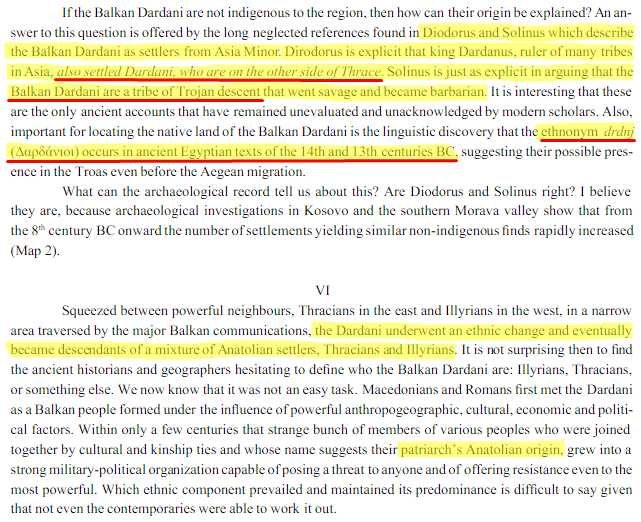
The Peresadyes were a tribe that lived in the ancient region of Illyria and ruled over, or with the Enchelii, or the Sesarethi, and were part of the Taulantii group of tribes. About their classification they had been identified as Illyrian tribe, however, recent research has strengthened the possibility that they were Thracians. The name itself is very close to Thracian Berisades, suggesting a possible Thracian origin.

- The Cambridge ancient history: The fourth century B.C. p. 427:
"The name suggests that they were Thracians, and the placing of gold foil on the face of a corps to form either a mask or just a mouthpiece is known to have been practiced in Thrace. This suggestion has been recently strengthened by the discovery of such death-masks..."

- A History of Macedonia: 550-336 B.C by Nicholas Geoffrey Lemprière Hammond, Guy Thompson Griffith, 1978, ISBN 0198148143, page 93:
"The Peresadyes, then, were the rulers of Trebenishte, and Hecataeus wrote of them when they were at the height of their power."

URL:
https://en.wikipedia.org/wiki/Peresadyes
 
Last edited:
Се отвори апетитот и на северниот сосед

URL:
https://www.novamakedonija.com.mk/pecateno-izdanie/се-отвори-апетитот-и-на-северниот-сосе/

IIHq4Om.jpg


Додека државните институции се посветени на градење на добрососедските односи, а релациите меѓу Бугарија и Македонија како и оние помеѓу Грција и Македонија сега веќе процедурално се минираат од страна на двете соседни земји при примена на Преспанскиот договор и договорот за добрососедство, деновиве „темпирана бомба“ е фрлена од северниот сосед.

Имено, националната српска телевизија РТС, во својата емисија „Квадратура на кругот“, неделава објави видеоприлог во кој се тврди дека „Мијаците се старо српско племе, кое денес живее во западниот дел од Македонија“.

Во прилогот на српската национална телевизија, кој трагикомично ја разбуди јавноста, е и лиферуваната информација, во врска со дебарско-реканска етнографска целина, во која се наведува дека „денешните наследници на Мијаците ги зачувале обичаите на српската династија Немањиќ“.
Според тврдењата на етнографот Бранко Станковиќ дадени за РТС, Мијаците денес не постојат (!?). Според српскиот етнограф, денес во Македонија има нивни наследници, кои се идентификуваат со мијачките традиции и верувања, кои, пак, според него, се и со српска националност.

Ваквите јавно изнесени ставови на српскиот етнограф Станковиќ за домашната експертска јавност се пропагандистички, фактографски и историски неиздржани, со елементи на националшовинистички провокации.

Според домашните познавачи на проблематиката со кои се консултиравме, ваквите тврдења од српската страна, кои се пласираат периодов за Мијаците не се никаква новина. Експертите дополнуваат и низа други вакви примери, кои во одреден чувствителен момент за Македонија и македонскиот народ се лансираат во функција на негирање на македонскиот посебен етнички супстрат. Тие појаснуваат дека српската, бугарската, но и албанската пропаганда на оваа тема низ годините секогаш биле актуелни и ќе бидат. Тоа е така бидејќи територијата на Македонија и Македонците низ историјата биле окупирани и управувани од разни сили, кои потоа од свои интереси „креирале своја историја“.

Познавачот на историјата на Мијаците Мелетије Брковски, за „Нова Македонија“ вели дека Мијаците единствен спој со Србите би можеле да имаат преку печалбарскиот живот што го воделе заминувајќи на работа во Белград и во Србија. Секакво друго тврдење дека Мијаците и денешните нивни наследници, кои живеат во западниот дел на Македонија, се српски племиња е целосна измислица и невистина.

– Мијаците може да се каже дека се онаа племенска група во македонскиот род, кои себеси се сметаат за потомци на најстарите жители на Балканот, односно на Пелазгите и Мионите (Минејците), но истовремено може слободно да се коментира дека тие всушност се и легитимни претставници наАнтичките Македонци. Сепак, низ времето оваа посебна етногена група меѓу македонските Словени, која се одликува со силно изразена стара словенска (старомакедонска) основа, во зависност од владетелите во земјава и во регионот, била асимилирана од цивилизациите и од властите што владееле тука. Оттука единствено можам да го сфатам и протолкувам некаквото поврзување и идентификување на Србите со Мијаците – вели Брковски.

Според него, ниедно друго население од централниот тип немало и нема поголем стремеж за самостојност и независност на Македонија одошто Мијаците. Во таа насока, како што објаснува Брковски, денешните наследници на Мијаците се гордеат токму со своето име и со своите благородни генетски особености, кои го карактеризираат Македонецот на овие простори. Слично размислува и Мојсо Поповски, дипломиран професор по историја и креатор и администратор на блогот „Лазарополе“. Според Поповски, српските тврдења дека Мијаците се српско племе што живее во дебарско-реканската етнографска целина е фраза веќе слушната на овие простори. Како што објаснува професорот, ваквите тврдења, кои сега се повторно актуелни од, за него, непознати причини, доаѓаат од српска страна уште во 19 век, а пред тоа и од бугарска, но и од албанска. Проблемот, како што објаснува професорот по историја, е поради наша грешка, бидејќи политичарите во земјава досега не обрнувале внимание на културната и на локалната историја туку единствено на политичката.

– На почетокот сакам да истакнам дека денес постојат луѓе што се гордеат со своите предци и со културното наследство на Мијаците. Да си Мијак треба да си таму и да живееш во тој регион. Сепак, денес сите тие населби што се идентификуваат со Мијаците се викенд-населби и немаат реална допирна точка со мијаштвото единствено во наследувањето на некои од обичаите и традициите – вели Поповски.
Професорот, коментирајќи ги последните случувања на српската национална телевизија РТС во кои се тврдеше дека Мијаците се старо српско племе што живее во денешна западна Македонија, вели дека на тоа не треба да му се придава голема важност.

– Пред да се зборува на оваа тема треба да се има познавање за пропагандите низ годините во Лазарополе, Галичник и целиот тој крај. Според моите истражувања, во минатото имало различни струи, кои во зависност од тоа кој бил на власт во територијата на денешна Македонија, така се влечеле струите односно наклонетоста кон одредените владетели. Конкретно за српската пропаганда за Мијаците, таа започнува некаде на почетокот на 20 век кога всушност Македонија била под српска власт. Истото тоа се тврди и за времето кога Бугарите ја окупирале Македонија и ги присвојувале Мијаците како нивен народ. Оттука сакам да истакнам дека не треба сериозно да се сфаќаат овие тврдења што сега доаѓаат од Белград, бидејќи тие отсекогаш биле присутни. Важно е да се напомене дека дебарско-реканската етнографска целина и Поречијата се места каде што сонцето свети на поинаков начин и воздухот има посебен мирис и со децении се одржуваат традициите на племињата што живееле таму од кои денес се идентификуваат со карактерот на денешниот Македонец – завршува Поповски.
 
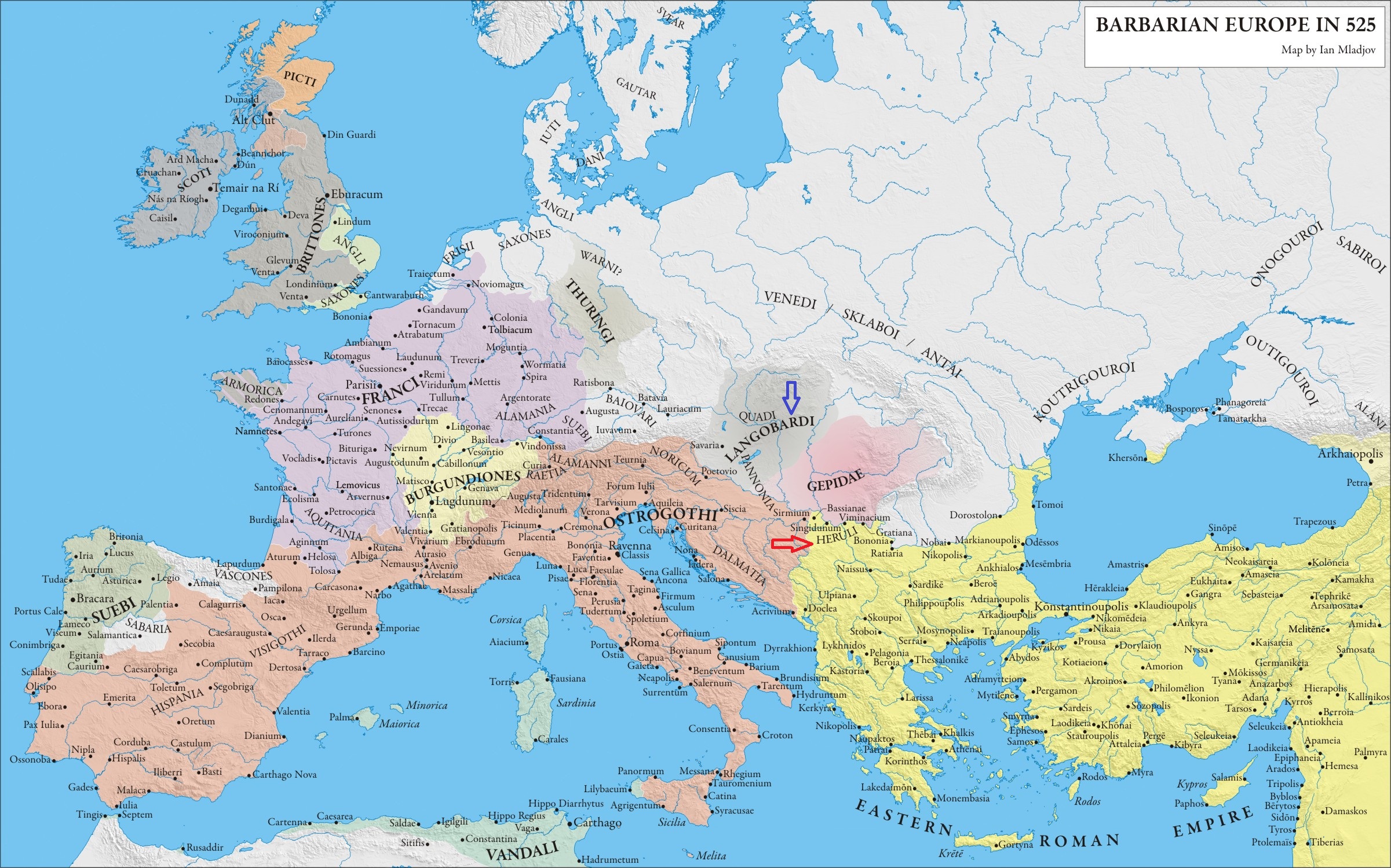
Empires and Barbarians: The Fall of Rome and the Birth of Europe, by Peter Heather

Pg. 106: By c. 200 AD, for instance, the Roman army was able to recruit into its ranks Goths - one of the old Wielbark groups - from the fringes of Dacia. A hundred years before, Gothic territories had been too remote from the frontier for this to happen.

Pg. 135: Gothic troops were serving with Roman armies against Persia even before the attack on Histria in 238.

Pages 127-8: In 238, after their assault on Histria, the Romans granted the attacking Goths an annual subsidy on condition that they withdrew from the city and returned prisoners. This provided a howl of protest from the local Carpi, who claimed to be ‘more powerful’ than the Goths. The Carpi, as we have seen, were a group of so-called free Dacians established in the Moldavian hinterland of the Carpathians, semi-subdued clients who had not been brought under formal imperial rule. The expansion into the frontier zone of Goths and other Germanic-speakers brought the migrants into competition with these Dacian troops. And, over time, Gothic power in the region grew directly at the Carpi’s expense. In the end, the Carpi lost out completely. Their political independence was totally dismantled, with large numbers -hundreds of thousands of them, according to the Roman sources- being resettled inside the Empire either side of the year 300. Again, precise figures can be doubted, but not the overall picture. The Carpi disappear as an independent political force from the early fourth century, and we have explicit evidence that they were resettled south of the Danube. Likewise, there is not the slightest doubt that the Germanic-speaking Goths replaced native Dacian-speakers as the dominant force around the Carpathian system.

P. 132: As to the total number of migrants involved, it is impossible to say. […] But it is precisely when faced with this kind of evidential impasse that the qualitative definition of mass migration used in comparative studies becomes helpful. The ‘shock to the political systems’ at the receiving end of each of the migration flows could hardly be clearer. Especially in the third century, the Roman Empire abandoned Transylvanian Dacia, many of the Carpi were pushed out of long-established homes into the Empire […] The domination of this region by Germanic-speakers, so evident from c. 300 AD, was the result of an armed migration flow certainly to be numbered in the thousands, and very probably tens of thousands. Using a qualitative rather than a numerical type of definition now commonly adopted in migration studies, this was straightforwardly a ‘mass’ migration.
 
Titus Livius (Livy) - URL:
http://www.perseus.tufts.edu/hopper/text?doc=Perseus:text:1999.02.0210:book=40:chapter=57

The demise of Philip happened very seasonably for the purpose of gaining time and collecting strength for the support of a war: for, in a few days after, the nation of the Bastarnians, in consequence of long solicitation, set out from their own abodes, with a large force of infantry and cavalry, and crossed the Danube. [3] Antigonus and Cotto (the latter was a Bastarnian of distinction, and Antigonus had been sent, much against his will, with this same Cotto, as ambassador, to persuade his countrymen to take arms) went forward, to carry intelligence of this to the king; but at a small distance from Amphipolis a rumour, and then authentic information, acquainted them with the king’s death; which event disconcerted the whole arrangement of their plan. [4] It had been arranged in this manner; — Philip was to procure for the Bastarnians a safe passage through Thrace, and supplies of provisions. In order to be able to effect this, he had courted the chieftains in that country by presents, having pledged his faith that the Bastarnians should march through it in a peaceable body. [5] It was proposed to exterminate the nation of the Dardanians, and to establish settlements for the Bastarnians in their country: [6] [p. 1913] from which measure a double advantage would accrue, if both the Dardanians, a nation ever hostile to Macedonia, and anxiously looking to the unfortunate periods of its kings, would be removed out of the way; and the Bastarnians, having left their wives and children in Dardania, might be sent to ravage Italy. [7] That the road to the Adriatic Sea and Italy was through the country of the Scordiscians, and that the army could not be led by any other way; that the Scordiscians would readily grant a passage to the Bastarnians, for they would have no dislike to people resembling themselves in language and manners, and would probably join them in an expedition, when they saw that they were on their way to the plunder of a most opulent nation. [8] The remaining plans were accommodated to every kind of event that might take place; for if the Bastarnians would be cut off by the Romans, still the removal of the Dardanians, and the booty to be gained from the remains of the former, and the full possession of Dardania, would prove a consolation; [9] or if they should be successful, then, while the Romans would be employed in the Bastarnian war, he might recover what he had lost in Greece. Such had been the designs of Philip.
 
Travels in Epirus, Albania, Macedonia, and Thessaly
by F.C.H.L. Pouqueville (London: Printed for Sir Richard Phillips and Co, 1820)

1) "The population of Castoria is computed to amount to fifteen hundred families, Christian, Mahometan, and Jew. A mile from Mavrovo, on the east border of the lake, is Crepeni, now a hamlet of only eight families, but once a large village of one thousand inhabitants, near which are the Pelasgic remains of a very ancient city, the Argos Oresticum of Strabo, which, like its founder Orestes, seems to have been persecuted by the furies. By war, pestilence, and famine, this colony from Argos has been effaced from the earth, and even of its successor Crepeni, all that now remains is that, in all public acts of the district of Castoria, it is still entitled the capital of Orestis.

It was my intention to make Castoria my central position, from which to make radial excursions to different points of the environs. All those it was not, however, in my power to accomplish, for various reasons, one of which was, that the surrounding inhabitants in general understood only their own tongue, that of the modern Bulgarians, the Triballi of antiquity."

2) "Chatista (Siatista as it is writren in Greek,) was founded in the twelfth century, by a body of Valachian shepherds, attracted by the excellence and the extent of the pastures of Mount Bermius."

Се смета дека Сачишта е основано уште пред Шишани — во XVI век. Од името е очигледно дека првично било македонска населба, која подоцна станала влашка. На крајот на XVII век митрополитот Зосим II на Охридската архиепископија тука го преместил седиштето на епархијата, кое дотогаш било во Шишани. Во 1677 г. во Геранија е изградена црквата „Св. Петка“ — најстариот зачуван христијански храм во градот. Грчката пропаганда проработела многу рано, бидејќи веќе во 1710 г. во селото било отворено грчко училиште. Според Спиридон Гопчевиќ гратчето традиционално било чисто влашко, но во 1889 г. е утврдено дека од 10–12.000 лица одвај една четвртина разбирале влашки, а сите по дома зборувале грчки. Густав Вајганд тврди дека влашкото село Сачишта е погрчено од дојденци од Шишани. Кога Вајганд ја посетил паланката (крај на XIX век) само старците занеле влашки.

Macedonian Wikipedia URL:
https://mk.wikipedia.org/wiki/Сачишта
 
Last edited:
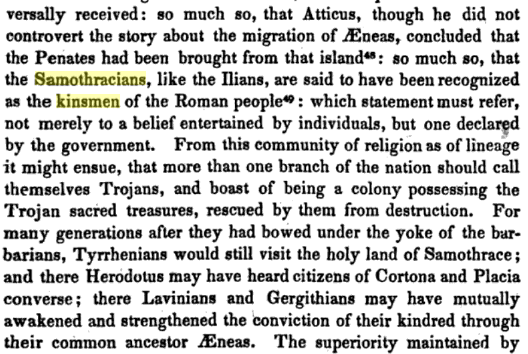
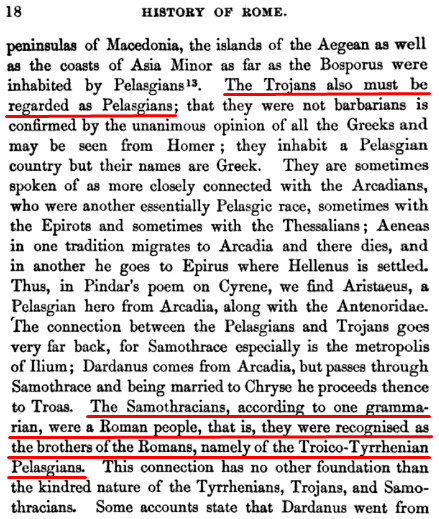
"... the Samothracians, like the Ilians, are said to have been recognized as the kinsmen of the Roman people"

qUr6FS6.png

PlPGXlb.png


V4unj90.png

1agVj4T.png
 
Last edited:
Areas settled by Circassians

Balkans

In 1861–1862 alone, in the Danube Vilayet, there were 41,000 Circassian refugee families. By the end of the process, there were around 250,000 Circassians in the Balkans, accounting for 5 to 7 percent of the total Balkan population, on top of the earlier arrival of 100,000 Crimean Tatars that Balkan populations had just recently had to absorb.

Kadir Natho notes that "a net of Circassian settlements enveloped practically all the European part of the Ottoman Empire". Very large numbers of Circassians were settled in Bulgaria. Istoria Bulgarii reports that "about 6,000 families were transferred through Burgas and settled in Thrace; 13,000 families-- through Varna and Shumen -- to Silistra and Vidin; 12,000 families to Sofia and Nish. The remainder 10,000 families were distributed in Svishtovsk, Nikipolsk, Oriskhovsk, and other outskirts." There was a chain of Circassian settlements stretching from Dobrudja to the Serbian border, with an additional cluster of 23 settlements in the Kosovo field. Circassians also settled in a few mostly Greek areas, particularly in the southern part of Epirus, Cyprus and one colony at Panderma in the Sea of Marmara.

URL:
https://en.wikipedia.org/wiki/Circassian_genocide
 
The so-called "Culture of Koman" (that existed in northern Albania during the 7th and 8th century AD) is classified by scholars like Popovic and Bowden as likely to be post-Roman: so it would be connected, and perhaps integrated to the Romance-speaking people who lived in the neo-Latin Nis-Skopje area of southern Serbia and northern Macedonia:
https://books.google.it/books?id=HA...epage&q=william bowden komani culture&f=false

One of the most interesting books about the "neo-Latin" presence in Serbia and Macedonia was written at the end of the nineteenth century by Sir Arthur Evans:
https://archive.org/stream/antiquarianresea00evan#page/n5/mode/2up

In this book (Sir Arthur Evans was not linked to any Vlach or Romanian "nationalism") it is clearly declared that in the Middle Ages (and until some centuries after 1000 AD) there was a pretty large population of Vlach/Romance-speakers who survived the invasions of the Dinaric Alps, from Croatia and Bosnia, to Serbia and Macedonia.

It is stated on page 31:

"Politically the country outside the limits of the still Roman coast-towns was by Constantine (Porphyrogenitus)'s time in the hands of Slavonic Zupans, but side by side with the dominant race the older inhabitants of the land continued to inhabit the Dinaric glens and Alpine pastures.

The relics of the Roman provincials who survived the Slavonic conquest of Illyricum were divided, in Dalmatia at all events, into two distinct classes, the citizens of the coast-towns, who retained their municipal and ecclesiastical institutions and something of Roman civilization under the aegis of Byzantium, and the Alpine population of the interior, the descendants for the most part of Romanized Illyrian clansmen recruited by the expropriated coloni of the municipia, or at least that part of them who had been forced to give up fixed agricultural pursuits for a semi-nomad pastoral life.

Both classes spoke the Latin language, approaching, in various stages of degradation, the Romance variety still spoken by the Rouman population of parts of Macedonia and the Danubian provinces; and both were indiscriminately spoken of by their Slavonic neighbours as Vlachs, or Mavrovlachs: Romans, or Black Romans (Morlachs)."
 
Last edited:
Back
Top