• Welcome to the new Macedonian Truth Forum. All posts, members and private messages have been moved over from the old forum.

    Passwords from the old forum could not be carried over, so please use Forgot your password? to set a new one. The reset link is emailed to the address on your account.

  • Rules and Regulations at the forum of the Macedonian Truth Organisation (MTO)

    (1) The national-ethnic and cultural-linguistic identity of the Macedonian people is historically Macedonian, and derives its character from the native, indigenous and geographic homeland of the Macedonians, which is called Macedonia. To ensure that their human rights, integrity and heritage are appropriately respected, the only nouns and adjectives acceptable when reference is made to the above character and identity markers is Macedon, Macedonia, Macedonian and Macedonians.

    (2) The nation-state of the Macedonian people is the Republic of Macedonia, and is to be referred to by this official title so long as the 'republic' prefix is consistently applied to other states. Alternative references are the Macedonian Republic, or simply, Macedonia.

    (3) The 'ethnic' prefix is only acceptable for Macedonians in cases where differentiation is specifically required - so long as it is in context and consistent where it concerns its application to other ethnic groups.

    (4) Should any other differentiation be specifically required, the names of other ethnic groups that reside with Macedonians in either the Republic of Macedonia or the occupied Macedonian regions in Greece, Bulgaria, Serbia or Albania, are to be given a prefix.

    (5) Negating the identity, language and culture of the Macedonian people by deliberate avoidance of the terms Macedonia, Macedonian and Macedonians, or by any other means, is not permitted.

    (6) Systematic anti-Macedonian propaganda and rhetoric are not permitted.

    (7) Threads irrelevant to the Macedonian Cause, the community at the Macedonian Truth Organisation or the Macedonians in general may be considered as spam or not in the spirit of the forum. In such cases they are not permitted.

    (8) Continual posting of messages in threads with the sole purpose of deviating from the initial topics with the use of unrelated and unnecessary information is not permitted.

    (9) All posts, external articles, reports, etc that are cited in languages other than Macedonian or English, must be accompanied with a translation in one or both of the said languages.

    (10) Despite the possibility of some conversations and debates becoming heated, extreme abuse and/or racism, vulgar language and/or terminology, threats, revelation of personal information about others, harassment, and other such behavior will not be permitted. If deemed necessary all relevant information including member details will be reported to the appropriate authorities for investigation which may result in legal action.

    (11) Threads that are created must have a summary of a topic or excerpt of an article found in pertinent link(s) that have been included. One line threads will be considered unaccetable spam and are therefore not permitted.

    (12) Compulsive and deliberate lies, irrespective of the topic, are not permitted.

    (13) Any symbols or avatars found to be perceived as offensive to Macedonians are not permitted.

    (13) Any explicit or extreme material is not permitted.

    Failure to adhere to the above rules and regulations will result in a ban after 3 breaches. This may be reconsidered in some cases should the circumstances be of an unorthodox nature and/or require special consideration. To assure an effective deterrent against an individual or individuals with the sole purpose of causing dissent through spamming, racism or other improper means, the above rules will be strictly enforced.

    The MTO administration will monitor all discussions as reasonably practical and reserve the right to remove any post and/or member from the forum, and update the rules and regulations as required. Members are encouraged to immediately report any post and/or member to the MTO administration if they feel that these rules have not been abided by.

    The views expressed on this forum are those of the individuals. The only official representation of the MTO is made by the "Macedonian Truth Organisation (Site Owner)" username, and no other.

  • Macedonian Cause

    The Macedonian Truth Organisation calls on God in Heaven to protect, bless and guide the endeavour it is committing to undertake, and that is to work towards:

    Securing Macedonia as a free, independent and democratic republic in which sovereignty lies with the Macedonian citizens; as the nation-state of the Macedonian people in which they can preserve their culture, language and identity; as a state in which the Macedonian language and culture form the basis of public life and act as important unifying elements of Macedonian society; as the home of all its citizens to which it guarantees and obliges their inalienable natural rights and corresponding responsibilities;

    The acknowledgment as self-evident and irrefutable the existence of the:

    1) Indigenous, ethnonational name of Macedonia;
    2) Macedonian people, language and identity;
    3) Macedonian culture, symbols and folklore;
    4) Macedonian ancestry, heritage and history in its entirety; and
    5) Macedonian Orthodox Church;

    Securing recognition by the International Community of the tragedies endured by the Macedonian people, of the division of Macedonia with the signing of the Treaty of Bucharest on August 10, 1913, and the genocide committed against the Macedonian people at the hands of the Greek, Bulgarian and Serbian states and their respective churches during the 19th and 20th centuries;

    Ensuring that the Interim Accord is declared ‘null and void’ and that all constitutional provisions, acts, commitments, agreements, legislation, regulations, policies or programs emanating from, supporting or consequential to the Interim Accord are also declared ‘null and void’, including the use of any symbols and the completion of any acts imposed by, or originating from, the Interim Accord.

    Ensuring that the Framework Agreement is abolished and that all constitutional provisions, acts, commitments, agreements, legislation, regulations, policies and programs emanating from, supporting or consequential to the Framework Agreement are also abolished and replaced by a framework of constitutional and statutory law based on inalienable natural rights and corresponding responsibilities and universally codified human rights mechanisms.

    Securing the abolishment of any existing constitutional provisions, acts, agreements, legislation, regulations, policies and programs that discriminate against the Macedonian people, in any international organisation or any of the countries of the International Community where such constitutional provisions, acts, agreements, legislation, regulations, policies and programs exist, and thereby ensuring the freedom for Macedonians to exercise their inalienable natural rights and fulfil their corresponding responsibilities, and practice their culture, language and religious faiths in all the countries of the International Community without hindrance;

    The empowerment of Macedonians to undertake a moral revolution and to instil and/or reinvigorate within themselves a deep-rooted national, cultural, linguistic and historical dignity and a commitment to the exercise of freedom based on inalienable natural rights and corresponding responsibilities;

    The recognition of the Macedonian minorities in the neighbouring states of Macedonia as well as the respect for the inalienable rights and freedoms of the Macedonian minorities, as provided for by natural law and as codified by the United Nations Charter, the Universal Declaration of Human Rights and other universally codified human rights mechanisms;

    The full and unreserved respect of, and the support for, the rights of all people of non-Macedonian descent living in Macedonia and around the world, who share a reciprocal full and unreserved respect for the Macedonian people, their homeland and their state;

    The cultural unification and solidarity of the Macedonian people living in all parts of historical Macedonia and adjacent territories, as well as Macedonians throughout the world;

    The unity of all Macedonians on the principles, objectives and achievement of the Macedonian cause as defined by this declaration.

Przino agreement

DedoAleko

New member
Seems like both of the political parties claim this to be win-win agreement, but won't take long to see the outcome of this whole charade.

Przino Agreement

The Przino agreement or agreement from 2 june - 15 july is a political agreement between the main political parties in the Republic of Macedonia with the mediation of the European Union. The agreement ended the Macedonian political and institutional crisis in the first half of 2015. It foresees: the participation of the opposition party SDSM in the ministries; the early resignation of prime minister Nikola Gruevski in January and a caretaker government to bring the country to general elections in April 2016, as well as a Special prosecutor to lead the investigations about the eventual crimes highlighted by the wiretapping scandal.[1]

Background

Main article: 2015 Macedonian protests

In May 2015, protests occurred in Skopje, Republic of Macedonia, against the incumbent Prime Minister Nikola Gruevski and his government. Protests began following charges being brought up against Zoran Zaev, the opposition leader, who responded by alleging that Gruevski had 20,000 Macedonian officials and other figures wiretapped, and covered up the murder of a young man by a police officer in 2011. A major protest occurred on May 5, seeing violent clashes between activists and police, with injuries on both sides. In the days afterward, the opposition claimed that more anti-government actions will occur, which they did later that month. Several ministers, including the interior minister, resigned during the protests.[2]
Implementation

The implementation of the Przino Deal proved troublesome, with opposition SDSM party accusing majority VMRO of dragging feets. The nomination of Katica Janeva as Special Prosecutor was hailed as a breakthrough, but the appointment of her team (considered too close to the VMRO) raised eyebrows. On 14 October 2015, the SDSM leader Zoran Zaev announced that the deal "is no longer active", after failure by the Council of Public Prosecutors to appoint half of the candidates proposed by Janeva.[3] On 4 November the others candidates are elected and the team of Katica Janeva was completed.[4] On 4 November was achived deal about ministers and vice-ministers in transitional (tehnical) goverment. Next point of the agreement is resignation from current prime-minister Nikola Gruevski in december 2015 and afther that Assembly of Republic of Macedonia should elected new prime-minister and tehnical govermen whose will lead Republic to the early general elections in April 2016.

izvor: https://en.wikipedia.org/wiki/Przino_Agreement
 
Last edited:
President Ivanov welcomes the political agreement,says focus must now be on Euro-atlantic integrations

Skopje, 6 November 2015 (MIA) - Macedonian President Gjorge Ivanov welcomed the outcome of the talks between the four largest parties, to implement the political agreement reached over the summer. President Ivanov, in his written statement, points out that the agreement opens the door to continue Macedonia's Euro-Atlantic integrations.

"The outcome of the talks is another proff that dialogue is the only way to overcome all challenges and open issues. We all must learn from this episode that future challenges will need to be resolved with political dialogue, in the institutions of the system, and with full and unconditional respect for the instituions", President Ivanov writes in his statement.

President Ivanov adds that the full implementation of the agreement, as it was agreed, will allow that all political efforts are focused on completing the Euro-Atlantic program for Macedonia as soon as possible.

izvor: http://www.mia.mk/en/Inside/RenderSingleNews/323/132881785
 
Political Parties Moved Further With Przino Agreement, Oliver Spasovski New Minister of Interior

One and half hour after midnight in Skopje, president of the Democratic Union of Integration Ali Ahmeti announced that four party leaders and others representatives reached an agreement for the remaining open questions of the Przino Agreement, as Plusinfo reported. According to Ahmeti, who was first to leave the marathon meeting, the party leaders agreed on the personal solutions for the ministers of the opposition, deputy ministers, and their responsibilities.

Oliver Spasovski, a General Secretary of the Social-Democratic Union of Macedonia will be a new Minister of Interior, while Frosina Remenski will be a Minister for Labor and Social Policy. Kire Naumov, an economist and a former director of the Intelligence Agency will be new deputy minister in the Ministry of Finance. Mr.Spasovski (39) is of Kumanovo and graduated from the Faculty of Law Iustinianus Primus in Skopje and he was a Member of the Parliament at the Assembly of Republic of Macedonia in the period of 2011-2014.

The party presidents agreed in the early hours of Friday on the Law on Government and the changes that Parliamentarians would need to vote to regulate the rights and scope of work of the deputy ministers in the government.

All those personal and legislation statements follow July 15 Agreement in Przino, agreed among European Union Enlargement Commissioner Johannes Hahn, the United States Ambassador Jess Beily and party presidents, Nikola Gruevski (VMRO-DPMNE), Zoran Zaev (SDSM), Ali Ahmeti (DUI), and Menduh Taci (DPA).

State-ran news agency MIA on Friday published that current Prime Minister and leader of VMRO-DPMNE, Nikola Gruevski said it was important the parties reached an agreement and that the elections will be on April 24, 2016.

“Our strategic goal was to cement the date for election, which SDSM wanted to postpone. The date for elections, together with the laws we would submit to the Parliament will be on April 24,“ Gruevski stated after the meeting. Gruevski also commented the personal solutions of SDSM for the Ministries and explained “those are party solutions and that they wanted, “SDSM to take political responsibility.”

According to Gruevski, the parties agreed on the law on “whistleblowers, which will arrive in the Assembly together with the Law on Government changes.” But, for the Law on the intercepted materials, Gruevski said, it will arrive after sixth months and after a possibility to require an opinion from a Venice Commission.

SDSM president Zoran Zaev, according to MIA, said that they reached an agreement that will be drafted in the legislation that will define the rights of the deputy ministers.

“This agreement is fundamental principle for the implementation of the Agreement. The Agreement itself does not have enough words or the articles in the laws drafted in the Parliament to be sufficient guarantee. It will depend of all of us, participants on the elections and guarantees for the regularities of the elections,” Zaev stated after the end of the meeting.

Zaev did not specifically commented the security situation in Kumanovo, where police conducted special operation in May, but said that as a political party that propose the Minister for Interior, he would probably have more information on the security situation next week.

With yesterday’s talks the presidents reached at the early stage of the implementation of the Przino Agreement, about 17 days after the scheduled date in the agreement for appointing new ministers and deputy ministers. The tense negotiations resulted with an agreement, which would enable further euro-integration of Macedonia in the European Union. Moreover, the full implementation of Przino agreement will be a requirement in the upcoming European Commission Progress report for Macedonia. Meanwhile, the Assembly should work to establish Parliamentarian Commission for the reported intercepted conversations, disclosed by the opposition in early January.

izvor: https://adukovska.wordpress.com/201...nt-oliver-spasovski-new-minister-of-interior/
 
Despite the absolute absurdity of the situation, as much as the idea of political "collaboration" and "fairness" should be viewed in the positive, I seriously can't see this ending well :death:

No doubt like all previous agreements, this will likely turn out worse for the people in the republic. I hope for our peoples sake, I am proven wrong.
 
Parties reach deal on further implementation of the political agreement

132657327


Skopje, 6 November 2015 (MIA) - The four largest Macedonian parties reached a compromise early Friday morning on how to continue implementing the agreement to normalize the political situation that they signed over the summer. The parties agreed on the names and the mandate of the two new ministers and three deputy ministers, that are nominated by the opposition SDSM party, and will remain in office until the early elections on 24 April 2016.

The agreement also covers the future handling of the illegally wiretapped material that SDSM was publishing after it was given to them by their insiders in the UBK security service, as well as a law for treatment of whistleblowers. Earlier on Wednesday, the Council of Public Prosecutors approved the team requested by Special prosecutor Katica Janeva. This all opens the door for Parliament to vote on the new Government line-up and on the electoral code that will be used for the early elections.

Political leaders emerged after another marathon session at about 3 in the morning, to speak to the press. Prime Minister Nikola Gruevski, who leads the Conservative VMRO-DPMNE party, said that the most important achievement of the talks is that SDSM have been overruled in their attempts to postpone the elections beyond the date agreed in April 2016. VMRO maintains an overwhelming lead over SDSM in election polls, and during the negotiations its representatives would accuse the opposition party of trying to move the goal-posts agreed in the summer, in order to delay having the elections as much as possible.

"I'm pleased with the agreement. Our strategic goal was to set the election date in stone. We believe in the people, we know they will make the right decision, and that is the reason why we wanted to let them have their say as soon as possible. What is most important, and has been set in stone tonight, is that there will be no delays to the elections. SDSM tried, but they will not be allowed to escape the verdict of the people. In this country, it's the people that will decide and no-one else. We expect another convincing win in the elections, at the bare minimum, with the same landslide we achieved in 2014, if not even more", Gruevski told the press. The Prime Minister, in his ninth year, was re-elected Prime Minister in 2014 with VMRO winning 62 seats in Parliament to SDSM's 34.

SDSM leader Zoran Zaev emerged with his negotiators to declare that this is a new start for Macedonia. "All this that was agreed will need to be overlooked once more in the working groups, that will examine the technical issues, and once it is finished, the agreed bills will be sent to Parliament, so the representatives can discus them and vote on them. I also fulfilled my obligation according to the agreement to nominate my candidates for ministers in the Interior Ministry and Labour and Welfare, and the other deputy officials. All the names are tentative, and will need to be approved in the SDSM institutions", Zaev said. Zaev, a businessman who is the Mayor of the City of Strumica, has led SDSM on and off since 2009.

Despite expectations that the newly appointed ministers will be chosen as experts in their fields, Zaev nominated party officials to the posts. He said that SDSM Secretary General Oliver Spasovski will be proposed as the next Interior Minister. Spasovski comes from the SDSM branch in Kumanovo, where he was secretary to the Mayor Zoran Damjanovski - Cic. Security expert Frosina Remenski, who was mentioned as possible Interior Minister, will be nominated to lead the Labour and Welfare Ministry instead. SDSM's youth wing activist Aleksandar Kiracovski will be nominated as Deputy Minister in the Information Technology and Public Administration Ministry. In a nod to the party wing loyal to former President and Prime Minister Branko Crvenkovski, former Intelligence Agency chief and failed challenger to Zaev for the party leadership, Kire Naumov, will be nominated as Deputy Finance Minister. Ljupco Nikolovski, who is Zaev's chief of staff, will be nominated as the next Deputy Agriculture Minister.

Much of the negotiations were over the mandate of the new ministers and deputy ministers. The agreement, brokered by European Commissioner Johannes Hahn, called for their role to be tied by a veto power from their deputy ministers, effectively putting some of the most important departments in a state of stasis, where they won't be abused by any single party in the run up to the elections. SDSM wanted the new ministers to have wider powers, including appointing and dismissing their subordinates. Eventually, the parties agreed that if a minister makes a move that his deputy vetoes, the State Electoral Commission would have the final say. Also, in case there are any newly appointed officials by the minister, the deputy minister will be allowed to nominate a deputy to that official, who would also have veto powers. The veto powers of the Deputy Ministers will be applicable to all personnel, legal and financial decisions made by the Minister.

As for the law on the handling of wiretapped material and the amnesty of whistleblowers, the parties agreed that it will come into effect in six months, pending its review by the Venice Commission. Macedonia already has laws that ban illegal wiretapping and sharing the information obtained in this way, but they were largely side-stepped during the SDSM media campaign to publish the audio files given to them by a group led by former intelligence chief Zoran Verusevski. Verusevski and SDSM leader Zaev are charged over the wiretapping and their attempt to blackmail the Government with the tapes. Media who publish material that is illegally wiretapped will face fines, but not if publishing the material serves the public interest.

Over the past weeks talks were mainly held between the VMRO-DPMNE and SDSM parties, with the other two parties, DUI and DPA, which represent ethnic Albanians, contributing little to the debate. The agreement, brokered by the European Commissioner Johannes Hahn, was witnessed by the European Union and United States ambassadors to Macedonia, who urged the four parties to have it implemented in time for the European Commission progress reports on candidate countries that will be published on 10 November. Macedonia expects that the Commission will repeat the recommendation to open accession talks it has given in the past six years. The recommendation was never actually implemented, given that Greece would always block it at the level of the European Council. But, a list of rule of law and media freedom reforms, as well as steps to curb the actions of the UBK intelligence service, are part of the agreement and are included in the High level accession dialogue that Macedonia recently resumed with the European Union.

izvor: http://www.mia.mk/en/Inside/RenderSingleNews/92/132881061
 
They seem to agree with some not sure that they are agreeing sounds confusing ??Then again that's Macedonia.Euro atlantic integration comes at a price.What gruevski to resign?? too good to be true.In that light has vmro dpmne got a chance of coming back or will sdsm to come back and really seal the final fate of Macedonia to oblivion.All too good for words,
 
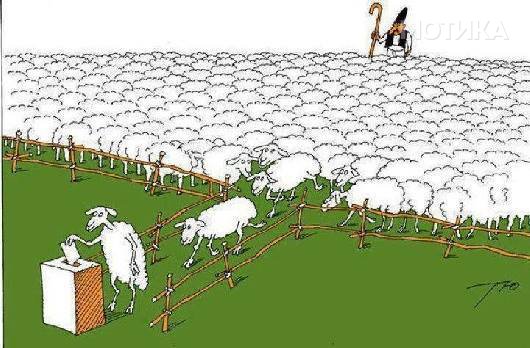
Hey dragan I hear the Macedonian voting public turnout is pretty low is this correct?No wonder they have what is called a minority government.What do you think?
 
Hey dragan I hear the Macedonian voting public turnout is pretty low is this correct?No wonder they have what is called a minority government.What do you think?

Well,according to official data the last turnout (during the 2014 elections) was around 63%.Now,I don't know the turnout in other countries so I'm not sure whether that is low or just normal, but it does exceed the limit of 51% in order for the elections to be valid.
 
Well,according to official data the last turnout (during the 2014 elections) was around 63%.Now,I don't know the turnout in other countries so I'm not sure whether that is low or just normal, but it does exceed the limit of 51% in order for the elections to be valid.
That's not bad, comparatively speaking. Australia has compulsory voting, but even here turnout minus invalid votes is at about 80 per cent.
 
80% ! Wow that is really good. The US presidential elections were in the mid 50's for 2008 and 2012. Senate Elections are in the high 30's to low 40's, while the house elections are from the mid 20's to mid 30's.
Quantity does not necessarily mean quality. Its hard to judge, but at least 10 per cent openly defy compulsory voting, another 10 per cent provide invalid votes (but you can't distinguish between those that just mucked it up or those that refused to vote and either left it blank or wrote something on their ballot paper) and there's others (that you can't really quantify) that just donkey vote or something similar.

So how many actually voted properly is very hard to determine but I would put it at lower than 80 per cent. And that's with compulsory voting where you pay a fine if you don't vote.
 
I didn't know Australia had compulsory voting, I thought that was mainly a South American thing. What exactly is the logic behind it, and in your opinion would you say it has improved or damaged democracy in Australia?

Logically I would expect that the intention is to increase voter turnout and get more people involved in the political process to make sure that radical candidates dont get into office by taking advantage of a very low voter turnout. At the same time I'm sure an argument can be made that forcing people to vote diminishes its value and potentially makes people care even less about the actual issues and candidates. I can also imagine that if people are forced to vote, then usually the candidate with the most populist stance and most visible campaign wins, because people who dont follow politics too closely are more likely to vote for who ever is most well known.

For example in the USA you have the democratic party that tries to bring out as many people as possible to vote, because demographically they outnumber the Republican party by more than 60% to 40%. At the same time Republican voters are much more involved in politics and have a much firmer grasp of the issues, why the democratic party has a large percentage of shallow uninformed voters, who vote more on popularity than substance. Democrats try to loosen hurdles to voting (which in theory is noble) but in this case it is also self serving. While the Republicans try and make voting more difficult so that those who are not that interested dont go through the trouble of actually voting. I tend to think the former is much worse, that it directly undermines democracy. I am curious what is your opinion on this tug of war between two self serving interests. What is worse, consolidating the vote in a fewer yet more dedicated and informed hands, or trying to get as many involved as possible, all be it in a much more shallow way? Also of the two what do you think is better for Macedonia in these troubling times?
I think the logic behind compulsory voting in Australia was to get as many people to vote as possible and therefore ensure more legitimacy to elections. Whether that was achieved or not is hard to say.

Its hard to say whether forcing people to vote improves democracy or damages it. I don't think there should be any constraints to voting and whoever wants to vote should be able to vote. In Australia, we don't even provide any ID on election day. We simply turn up and when given a ballot paper, the official asks whether its the first time we've voted in that election and as long as you say yes, all's good. You get your name crossed off a list and I assume this is then compared to all the other thousands of lists to make sure you didn't vote more than once and that you did in fact vote.

My biggest gripe with compulsory voting is that I've never had a candidate that I actually want to vote for. So I'm forced to either vote for someone I don't want to vote for (which to me is no better than a rigged election) or hand in an invalid vote which won't be counted.

Personally, I'm against compulsory voting and I'm not convinced that it provides a more legitimate or accurate reflection of the electorate. I think that people who want to vote will vote and those who don't will either defy the law (and pay the fine) or just turn up and hand in an invalid vote.

I've noticed that in Australia (haven't looked at the figures for a while) the proportion of people who don't vote and invalid votes has been rising in every federal election (and most state elections) for at least the past 6 or 7 elections. I think its mostly due to the fact that there is a growing number of people that are fed up with the two major parties and this is seen in the Senate voting where minor party voting (not including the major parties smaller coalition buddies - nationals and greens) has been increasing for at least the last 15 years.
 
And that's with compulsory voting where you pay a fine if you don't vote.

What happens when the voter is abroad and is too far from an Australian embassy/consulate in order to vote?Do these people get fined?
Or the elderly people which are immobilized/too sick to go and vote?
Another thing,in Macedonia people can only vote in the nearest ballot place to the place of living (they designate your ballot place according to your living address,so that if you go and vote in a different place you won't be on the list and therefore won't be able to vote).Is it the same in Australia too?
if it is,it would mean Australians would have to cancel all plans for that day and be home so that they can avoid the fine...
 
How about the stalemate of a minority govt.Also the independents /greens get their way.The elected priminister gets shafted so far 5.6 times.
 
What happens when the voter is abroad and is too far from an Australian embassy/consulate in order to vote?Do these people get fined?
Or the elderly people which are immobilized/too sick to go and vote?
Another thing,in Macedonia people can only vote in the nearest ballot place to the place of living (they designate your ballot place according to your living address,so that if you go and vote in a different place you won't be on the list and therefore won't be able to vote).Is it the same in Australia too?
if it is,it would mean Australians would have to cancel all plans for that day and be home so that they can avoid the fine...
You have to vote in your "seat" or district, but you can vote out of town, before the election, by postal vote or at embassies/consulates overseas. There's some exceptions that you can use if you don't vote that are acceptable and you won't get fined. But generally everyone has to vote.
 
Whilst that may be the case there have been instances in last vote in Macedonian diaspora where people have gone to Canberra and they wanted to vote.Some were told they weren't registered which wasn't true they had documents to prove that they were.Also another group had showed up husband and wife they were registered and wait for it they already voted in munich the people never went there let alone vote.Thats Macedonian voting in the diaspora.
Will our friend miki dodeski be running next year seeing he supported gruevski.??
 
Last edited:
google translation:


CHAOS IN MI: Spasovski paralyzed the ministry

Chaos in the Ministry of Interior. Tonight reached a telegram to all employees of the Ministry in which the new technical Minister Oliver Spasovski, contrary to the government harmonized the club of deputies revoke all powers. By Spasovski tonight practically completely paralyzed ministry, media reports say.

Such a step, sources from the Interior Ministry said it is committed in the past 20 years. This means that even the administrative services are withdrawn powers. Practically questioned the overall functioning of the Ministry.

327186-haos-vo-mvr-spasovski-vecherva-go-paralizirashe-ministerstvoto.jpg


With this decision Spasovski brought this afternoon, he practically trampled all statements given by SDSM as control role until the elections. Just two days ago Zoran Zaev deceived the overall domestic and international public.

izvor: http://vecer.mk/makedonija/haos-vo-mvr-spasovski-vecherva-go-paralizirashe-ministerstvoto
 
dpmne says no Przino agreement if elections scheduled for Apr. 24 are postponed

Przino Agreement and Electoral Code State It Clearly: Elections Date Is Well Cemented

The Electoral Code and the Przino Agreement, which was signed by the 4 largest political parties, clearly stipulate that the date for the general elections is April 24, 2016, Telegraf.mk reads.

Therefore, the chances for SDSM to avoid a face-off with the nation are slim, which was the advice voiced by several media close to the opposition. The Przino Agreement, also known as the July 15 Agreement, which a part from the leaders of VMRO-DPMNE, SDSM, DUI and DPA, was also signed by EU Enlargement Commissioner Johannes Hahn, clearly says that the date for the early elections has been set at April 24, and that all concerned sides are obliged to respect it.

"The current Government will submit its resignation at the Assembly, and by January 15, 2016, the new ministers need to be appointed, 100 days prior to the parliamentary elections that are scheduled to be held on April 24, 2016," the Przino deal reads.

The new government will be led by a prime minister assigned on the proposal of VMRO-DPMNE. His program should be limited to the conditions related to the organization of early parliamentary elections," the Agreement adds.

April 24, as the set date when the early general elections should take place, is mentioned in several articles of the changes to the Electoral Code. Besides the date, the legal changes also entail the manner on which the electoral code will be revised, the voting mode of the Macedonian diaspora and the rights and obligations of the media during the electoral campaigns, and other issues.

izvor: http://www.independent.mk/articles/...te+It+Clearly+Elections+Date+Is+Well+Cemented
 
Last edited:
Back
Top