• Welcome to the new Macedonian Truth Forum. All posts, members and private messages have been moved over from the old forum.

    Passwords from the old forum could not be carried over, so please use Forgot your password? to set a new one. The reset link is emailed to the address on your account.

  • Rules and Regulations at the forum of the Macedonian Truth Organisation (MTO)

    (1) The national-ethnic and cultural-linguistic identity of the Macedonian people is historically Macedonian, and derives its character from the native, indigenous and geographic homeland of the Macedonians, which is called Macedonia. To ensure that their human rights, integrity and heritage are appropriately respected, the only nouns and adjectives acceptable when reference is made to the above character and identity markers is Macedon, Macedonia, Macedonian and Macedonians.

    (2) The nation-state of the Macedonian people is the Republic of Macedonia, and is to be referred to by this official title so long as the 'republic' prefix is consistently applied to other states. Alternative references are the Macedonian Republic, or simply, Macedonia.

    (3) The 'ethnic' prefix is only acceptable for Macedonians in cases where differentiation is specifically required - so long as it is in context and consistent where it concerns its application to other ethnic groups.

    (4) Should any other differentiation be specifically required, the names of other ethnic groups that reside with Macedonians in either the Republic of Macedonia or the occupied Macedonian regions in Greece, Bulgaria, Serbia or Albania, are to be given a prefix.

    (5) Negating the identity, language and culture of the Macedonian people by deliberate avoidance of the terms Macedonia, Macedonian and Macedonians, or by any other means, is not permitted.

    (6) Systematic anti-Macedonian propaganda and rhetoric are not permitted.

    (7) Threads irrelevant to the Macedonian Cause, the community at the Macedonian Truth Organisation or the Macedonians in general may be considered as spam or not in the spirit of the forum. In such cases they are not permitted.

    (8) Continual posting of messages in threads with the sole purpose of deviating from the initial topics with the use of unrelated and unnecessary information is not permitted.

    (9) All posts, external articles, reports, etc that are cited in languages other than Macedonian or English, must be accompanied with a translation in one or both of the said languages.

    (10) Despite the possibility of some conversations and debates becoming heated, extreme abuse and/or racism, vulgar language and/or terminology, threats, revelation of personal information about others, harassment, and other such behavior will not be permitted. If deemed necessary all relevant information including member details will be reported to the appropriate authorities for investigation which may result in legal action.

    (11) Threads that are created must have a summary of a topic or excerpt of an article found in pertinent link(s) that have been included. One line threads will be considered unaccetable spam and are therefore not permitted.

    (12) Compulsive and deliberate lies, irrespective of the topic, are not permitted.

    (13) Any symbols or avatars found to be perceived as offensive to Macedonians are not permitted.

    (13) Any explicit or extreme material is not permitted.

    Failure to adhere to the above rules and regulations will result in a ban after 3 breaches. This may be reconsidered in some cases should the circumstances be of an unorthodox nature and/or require special consideration. To assure an effective deterrent against an individual or individuals with the sole purpose of causing dissent through spamming, racism or other improper means, the above rules will be strictly enforced.

    The MTO administration will monitor all discussions as reasonably practical and reserve the right to remove any post and/or member from the forum, and update the rules and regulations as required. Members are encouraged to immediately report any post and/or member to the MTO administration if they feel that these rules have not been abided by.

    The views expressed on this forum are those of the individuals. The only official representation of the MTO is made by the "Macedonian Truth Organisation (Site Owner)" username, and no other.

  • Macedonian Cause

    The Macedonian Truth Organisation calls on God in Heaven to protect, bless and guide the endeavour it is committing to undertake, and that is to work towards:

    Securing Macedonia as a free, independent and democratic republic in which sovereignty lies with the Macedonian citizens; as the nation-state of the Macedonian people in which they can preserve their culture, language and identity; as a state in which the Macedonian language and culture form the basis of public life and act as important unifying elements of Macedonian society; as the home of all its citizens to which it guarantees and obliges their inalienable natural rights and corresponding responsibilities;

    The acknowledgment as self-evident and irrefutable the existence of the:

    1) Indigenous, ethnonational name of Macedonia;
    2) Macedonian people, language and identity;
    3) Macedonian culture, symbols and folklore;
    4) Macedonian ancestry, heritage and history in its entirety; and
    5) Macedonian Orthodox Church;

    Securing recognition by the International Community of the tragedies endured by the Macedonian people, of the division of Macedonia with the signing of the Treaty of Bucharest on August 10, 1913, and the genocide committed against the Macedonian people at the hands of the Greek, Bulgarian and Serbian states and their respective churches during the 19th and 20th centuries;

    Ensuring that the Interim Accord is declared ‘null and void’ and that all constitutional provisions, acts, commitments, agreements, legislation, regulations, policies or programs emanating from, supporting or consequential to the Interim Accord are also declared ‘null and void’, including the use of any symbols and the completion of any acts imposed by, or originating from, the Interim Accord.

    Ensuring that the Framework Agreement is abolished and that all constitutional provisions, acts, commitments, agreements, legislation, regulations, policies and programs emanating from, supporting or consequential to the Framework Agreement are also abolished and replaced by a framework of constitutional and statutory law based on inalienable natural rights and corresponding responsibilities and universally codified human rights mechanisms.

    Securing the abolishment of any existing constitutional provisions, acts, agreements, legislation, regulations, policies and programs that discriminate against the Macedonian people, in any international organisation or any of the countries of the International Community where such constitutional provisions, acts, agreements, legislation, regulations, policies and programs exist, and thereby ensuring the freedom for Macedonians to exercise their inalienable natural rights and fulfil their corresponding responsibilities, and practice their culture, language and religious faiths in all the countries of the International Community without hindrance;

    The empowerment of Macedonians to undertake a moral revolution and to instil and/or reinvigorate within themselves a deep-rooted national, cultural, linguistic and historical dignity and a commitment to the exercise of freedom based on inalienable natural rights and corresponding responsibilities;

    The recognition of the Macedonian minorities in the neighbouring states of Macedonia as well as the respect for the inalienable rights and freedoms of the Macedonian minorities, as provided for by natural law and as codified by the United Nations Charter, the Universal Declaration of Human Rights and other universally codified human rights mechanisms;

    The full and unreserved respect of, and the support for, the rights of all people of non-Macedonian descent living in Macedonia and around the world, who share a reciprocal full and unreserved respect for the Macedonian people, their homeland and their state;

    The cultural unification and solidarity of the Macedonian people living in all parts of historical Macedonia and adjacent territories, as well as Macedonians throughout the world;

    The unity of all Macedonians on the principles, objectives and achievement of the Macedonian cause as defined by this declaration.

The National Imagination in Greece

Bratot

New member
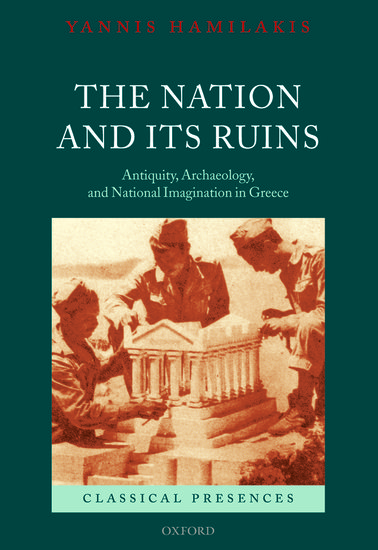
The Nation and its Ruins Antiquity, Archaeology, and National Imagination in Greece
by Yannis Hamilakis

http://www.amazon.com/Nation-its-Ruins-Archaeology-Imagination/dp/0199230382#_

9780199230389_450.jpg


Yannis Hamilakis, Senior Lecturer in Archaeology, University of Southampton

http://www.southampton.ac.uk/archaeology/index.html?Staff=yannis

About this book:
  • Winner of the 2009 Edmund Keeley Book Prize
  • The first investigation of the production and use in Greece of the material, as opposed to the simply literary, classical past
  • Explores a number of currently contested issues on the nature of national imagination, and the properties, agency, and power of materiality

This innovative, extensively illustrated study examines how classical antiquities and archaeology contributed significantly to the production of the modern Greek nation and its national imagination.

It also shows how, in return, national imagination has created and shaped classical antiquities and archaeological practice from the nineteenth century to the present. Yannis Hamilakis covers a diverse range of topics, including the role of antiquities in the foundation of the Greek state in the nineteenth century, the Elgin marbles controversy, the role of archaeology under dictatorial regimes, the use of antiquities in the detention camps of the Greek civil war, and the discovery of the so-called tomb of Philip of Macedonia.

DOWNLOAD


"While all of the topics touched upon under the broad heading of “Antiquity, Archaeology, and the Invention of Modern Greece” are important and deserve the attention paid to them in the text, one issue in particular resonates with me as an American Classical archaeologist working in Greece.
That is the role that the major world powers played in the development of the concept of Hellenism, the archaeological repercussions of that role, and the legacy that has been left behind. In comparison to the discussion of indigenous Hellenism (112-119), which focuses primarily on the role of Christianity, the European and Western ideology of Hellenism is more resonant from my point-of-view. The examples are brief, and Hamilakis himself recognizes that this topic requires more attention. However, as a foreign archaeologist working in Greece today, bound by the restrictive permit regulations of the Greek government, this discussion provides insight into how and why the situation with foreign schools and permits developed. For example, when and how the French School received the Delphi permit, and how the Americans obtained the right to excavated the Athenian Agora (110).
This historical underpinning helps to frame the current situation that is frustrating for Greek and foreigner archaeologists alike."
 
This reminds me of an article i read in a macedonian newspaper a few years ago.In the rom was found a helmet of a macedonian soldier over 2000 years old.When greece heard that it was found on macedonian (rom) territory it offered 1 million euros for it.Greece wanted to posses the helmet so that it could say it was found in greece.Greece puts a lot of weight on archaelogical findings especially when it comes to putting a greek slant on it.
 
Last edited:
Bratot, mabe we should send a copy to the "Onion" crew to show them that their joke wasn't a joke.
 
THE NATION AND IT"S RUINS-Yannis Hamilakis

http://books.google.com.au/books?id...esult&ct=result&resnum=1#v=onepage&q=&f=false

"...the story of one of the hundreds of thousands of immigrants who left
Asia Minor at that time to move to Greece: a 3-year-old boy who
grew up to become Manolis Andronikos, a figure who can be considered
as the quintessential national archaeologist in today’s Greece.

The chapter opens with his 1992 funeral, and then traces his life and
work which culminated in his moment of destiny, the discovery of an
unrobbed ancient Macedonian tomb at the northern Greek village of
Vergina: a tomb that Andronikos would declare as belonging to
Philip II of Macedonia, father of Alexander the Great. It is suggested
that Andronikos was a historical constructionist who dreamed a
reconfigured national story and materialized it: a story that redefines
the Hellenic homeland by rehabilitating conclusively and with the
help of some of the most impressive archaeological finds ever to have
been unearthed in Greece, both the ancient Macedonian past (Philip,
once the arch-enemy of Greece in the national narrative) and northern
Greece overall. Moreover, in Andronikos’s life and work, all the
basic elements of the national myth, from classical antiquity to
Byzantium, to the rise and fall of the dream of the ‘Great Idea’
(Megali Idea), and to modern battles for national survival, converge
and become condensed.

Given these qualities and properties, and as the historical contingencies directly implicated his finds with the diplomatic and political clash between Greece and the Yugoslav Republic of Macedonia, Andronikos was elevated to the status of the great ‘shaman’ of the nation: the person who could communicate with other worlds and mediate between the past ancestors and their present descendants."

"Apart from recovering material proof of the Hellenicity of an area, archaeologists were also often called upon to cleanse and purify a recently conquered area from any linguistic and material traces of ‘barbarity’. For example, following the conquest of parts of Macedonia and Epirus during the Balkan Wars, the council of the Athens Archaeological Society formed a committee with the participation of archaeologists
from the State Archaeological Service, to ‘cleanse the country from the barbarous names’, to find out the ancient Greek names for the specific places and to Hellenize Turkish, Slavic, and Albanian names
in the cases where ancient Greek ones could not be found (Anon.1914: 73).

This purification exercise continues up to the present day,especially in areas such as Macedonia and Thrace (J. Papadopoulos,pers. comm.). This last example testifies perhaps to the combined
roles of archaeologists, not only as soldiers of the nation but also ritual specialists who could cleanse and purify the recent additions to the national territory."


"Paparrigopoulos also rehabilitated the Macedonia of Philip and Alexander by coining the term ‘Macedonian Hellenism’, defined as a different version of classical Hellenism; in the long parade of Hellenism, Macedonian Hellenism took over from the declining ancient Hellenism (Liakos 1993: 26)."


"The extraordinary reactions after his death, however, were as much to do with its timing as with Andronikos’s persona and work: the early 1990s in Greece witnessed the climax of the dispute between Greece and the Former Yugoslav Republic of Macedonia (FYROM) over the name of the latter, after it became an independent state following the break-up of Yugoslavia. The Greek state was, since the post-war years, quite nervous about the small country on its northern borders calling itself the Republic of Macedonia (an echo of the long-standing ‘Macedonian issue’, involving several south-east European countries; cf. Danforth (1995), Mackridge and Yannakakis (1997), Roudometof (1998b), and Cowan (2000) for recent discussions)). The Macedonian Republic was not seen as an immediate threat before the break-up of Yugoslavia, especially since, in the international arena, it was the Federation rather than the Republic that was represented. After the break-up of Yugoslavia, however, the Greek state felt that the international recognition of a bordering state bearing the name of Macedonia constituted a serious threat, especially to its Greek province with the same name. The presence of an, as yet unrecognized by Greece, ethnic minority which identiWed itself as Macedonian within its borders, was seen as potential trigger for an expansionist campaign by FYROM. So the dispute revolved around the name of Macedonia, and by implication, the ethnic national character of the area, its history, and identity (cf. Silberman 1989: 12–29). The Greek national narrative would insist that Macedonia had always been Greek, and thus the naming of the Yugoslav state after it constitutes a theft of national ‘property’, heritage, and identity."


"The national narrative, therefore, has come a long way since the rejection
of Philip and of the Macedonian heritage by national intellectuals such as Rangavis, who saw Philip as the conqueror of Greece and one of its worst enemies (the first in the long list of invaders), whose greatest crime was to father Alexander the Great (see Chapter 3). Now, both Philip and Alexander are at the centre of the national imagination."


"In 1913 northern Greece became part of the national territory, and its
Macedonian classical heritage part of the heritage of the area (as a
signifier of local identity) and of the country as a whole."


"Andronikos had realized his dream, he had fleshed out the dry bones of ancient past, as known from the classical authors; finally, he had offered to the people of northern Greece and to Greeks as a whole, their own dream, a dream that, as was to become obvious a few years later, they badly needed. Finding the richest tomb ever found in Greece was not enough. Finding the bones of an historical figure was not enough. Naming the dead was crucial. In Greece names matter. In Macedonia names matter even more. To name is to know. To name is to recognize as familiar. To name is to accept the named person in the national family. That is what Andronikos was
doing. Despite his reservations and worries, despite his scholarly instincts which made him emphasize that it is the dating of the tomb that is more important than the identiWcation of the dead, he always maintained that the dead was identified, the dead was named, the dead was Philip II. Naming is resurrecting."

"At the same time, in international journals several specialists expressed serious reservations about the dating of the tombs and the identification of the dead (cf. Faklaris 1994 for references). Andronikos responded to some of these objections (1980a,b, 1984), but the problem has not been settled. That early debate remained largely an academic one, as Andronikos himself, the majority of the Greek archaeological community, many other archaeologists worldwide, the Greek state, and most of the Greek public, seemed to have been convinced. A final detailed publication of the finds of ‘Megali Toumba’ is still lacking. More recently, however, the debate has been ignited again, and this time it is Greek archaeologists who are raising objections and doubts. A detailed and final publication of finds from a similar tomb (Themelis and Touratsoglou 1997) dated them later than Andronikos had dated his, and by implication the tomb cannot be that of ‘Philip’, but of a successor.

Furthermore, a study of the wall painting from the facade of that tomb by an Athens University professor (Palagia 2000) reached similar conclusions: the author suggested that the theme of the painting (the hunt scene) is an
eastern influence introduced to Macedonia after the Alexandrian invasions, and thus after the death of Philip. She further raises the issue that the iconography in the tomb was more likely to have operated as political propaganda, by portraying and thus evoking the glory of ancestors such as Philip and Alexander."

"More serious than the location of the capital or the identification of the dead, of course, is the ethnic identity of the people who lived in Macedonia in classical times (broadly defined),that is their own self-perception of identity, vis-a`-vis the people in the south. This issue, much less debated than the identity of the dead following the discovery, became more crucial in the following years, and especially in the late 1980s and early 1990s as the dispute with Yugoslav Macedonia intensified and reached its peak. During that dispute, Andronikos and Vergina played a key role.He, along with the
vast majority of archaeologists, took it for granted that Macedonians
were Greek, based on inscriptions at Vergina that mentioned Greek
names. For them, therefore, shared writing and (by implication)
language meant shared self-identification and ethnic identity, despite
the plentiful literary evidence that points to the opposite."


"Andronikos was ‘uprooted’ but in his new homeland in Greek Macedonia, the homeland that he shared with many of the ‘uprooted’ from Asia Minor, he was determined to plant new roots, not only for him but for all his fellow Asia Minor immigrants too. That was what he was doing: he went down that tomb not to find roots, but to plant them. ‘The village had no history’, he said of Vergina (1997: 21), erasing thus with these five words the presence
(and past) of people who inhabited the hamlets of Koutles and Barbes, and who, judging from the names of these hamlets, may have spoken their own non-Greek language;34 these toponyms had already been erased from the map by the local bishop, who renamed them Vergina in 1922, when the immigrants from Anatolia, Andronikos among them, arrived. He had to produce history not only for the village but also for the region of northern Greece as a whole, annexed to the state of Greece only in 1913. And he did."


"Thanks to him, and to the historical contingencies that were to follow, Macedonia was transformed from otherness to national self-hood, from a peripheral role it came to occupy centrality.Thanks to him, northern Greece will enjoy, for years to come, an unprecedented archaeological renaissance
(Kotsakis 1998).37 Andronikos was a historical constructionist (cf. Faubion 1993). He dreamed of a new past for the region and for the country, and he materialized it. He single-handedly wrote the script, produced, stage-managed, and played a protagonistic role in the drama that would re-enact the symbolic, material incorporation of Macedonia and northern Greece into the national imagination and psyche. At the same time he rewrote the script of the national
narrative; national imagination through him was not simply reproduced,
but was produced anew."


"As for the ironies, these were largely unnoticed and undiscussed, at least in the broader public arena: the radical transformation of ancient Macedonians from the enemies of Hellenism to heroes and grand icons; the veneration of kings and royals in a heritage that prides itself in having invented democracy; the appreciation and conspicuous display of hugely ostentatious artefacts and material culture by an ideology which prioritizes the spiritual and the ideal;
the possibility that this wealth could be (if the scholars who date the main tomb after the Alexandrian conquests are correct) the loot from the ‘barbaric orient’, that is, the oppositional entity that ancient Hellenism was constructed against. Finally, the possibility that (if the latter hypothesis on the date is correct) much of the decoration and iconography of the tomb could be political propaganda, or to put it more appropriately, the construction of a politically expedient, collective memory and ancestry by the descendants of Philip II: a phenomenon not unlike the present-day production of national
memory based on these artefacts. Irony and national imagination do not seem to be good bedfellows."


"Andronikos was encouraged by the political leadership to overcome his reservations and declare the tomb as belonging to Philip II (and his excavations were amply rewarded financially by the state), but he deeply believed in his sacred mission and his destiny as the shaman of the nation."

 
wasn't there an archaelogist that died suddenly for knowing too much.Andronikos??I think he was claiming that all these archaelogical finds were ellada that is they were a too fantastic finds to be greek finds.Greek claims that it was philips II tomb are still disputed as some people date the finds at 4thcentury bc.Also there is speculation that the greeks are hiding stuff that shows that evidence that the macedonians were not greek.
Also there is speculation that either philip II or or alexander the great could be buried at the other palaces besides pella.Tthere are other palaces besides pella & are in ROM territory.
Time will only tell where these finds will be.The greeks know full well that their hold on 51 % on macedonia is on shaky soil as they never held macedonia prior to 1913 (they even had an greek embassy in solun prior to 1913 !).So the greeks will resort to any crazy attempt to prove that they have a right to hold macedonia otherwise they have to give it back.Not only this but they have tried to rewrite history with a greek slant to say that themacedonians were really greeks.These rewritings of history actually show that they have selected certain texts & rewritten some & actually omitted ones that say that the greeks were not macedonian.They have tried destroy many texts that actually prove who the macedonians were.
 
Last edited:
Nice find guys! Confirmation of what we already knew! The next time some Greek says "prove it" we can direct them to this page.

Hearsay is no more. The stories that have been passed down from generation to generation are being confirmed as being true by our Greek comrades.

Thank you!
 
"The national narrative, therefore, has come a long way since the rejection
of Philip and of the Macedonian heritage by national intellectuals such as Rangavis, who saw Philip as the conqueror of Greece and one of its worst enemies (the first in the long list of invaders), whose greatest crime was to father Alexander the Great (see Chapter 3). Now, both Philip and Alexander are at the centre of the national imagination."
"At the same time, in international journals several specialists expressed serious reservations about the dating of the tombs and the identification of the dead (cf. Faklaris 1994 for references). Andronikos responded to some of these objections (1980a,b, 1984), but the problem has not been settled. That early debate remained largely an academic one, as Andronikos himself, the majority of the Greek archaeological community, many other archaeologists worldwide, the Greek state, and most of the Greek public, seemed to have been convinced. A final detailed publication of the finds of ‘Megali Toumba’ is still lacking. More recently, however, the debate has been ignited again, and this time it is Greek archaeologists who are raising objections and doubts. A detailed and final publication of finds from a similar tomb (Themelis and Touratsoglou 1997) dated them later than Andronikos had dated his, and by implication the tomb cannot be that of ‘Philip’, but of a successor.
Furthermore, a study of the wall painting from the facade of that tomb by an Athens University professor (Palagia 2000) reached similar conclusions: the author suggested that the theme of the painting (the hunt scene) is an eastern influence introduced to Macedonia after the Alexandrian invasions, and thus after the death of Philip. She further raises the issue that the iconography in the tomb was more likely to have operated as political propaganda, by portraying and thus evoking the glory of ancestors such as Philip and Alexander."
During that dispute, Andronikos and Vergina played a key role.He, along with the vast majority of archaeologists, took it for granted that Macedonians were Greek, based on inscriptions at Vergina that mentioned Greek names. For them, therefore, shared writing and (by implication) language meant shared self-identification and ethnic identity, despite the plentiful literary evidence that points to the opposite."
As for the ironies, these were largely unnoticed and undiscussed, at least in the broader public arena: the radical transformation of ancient Macedonians from the enemies of Hellenism to heroes and grand icons..............

Excellent source.
 
Excellent finding guys! Keep on with the good work!!

Just to add here with regard to the Vergina tombs. I read some months ago (in a Greek source that I don't remember) that in fact the authenticity of the tombs is becoming highly disputable and now the archaeologists are turning their "fate" to the remains outside Voden, which is by a lot of scholars believed to be the ancient Macedonian city of Aegae and first capital before Pella.
 
Back
Top