• Welcome to the new Macedonian Truth Forum. All posts, members and private messages have been moved over from the old forum.

    Passwords from the old forum could not be carried over, so please use Forgot your password? to set a new one. The reset link is emailed to the address on your account.

  • Rules and Regulations at the forum of the Macedonian Truth Organisation (MTO)

    (1) The national-ethnic and cultural-linguistic identity of the Macedonian people is historically Macedonian, and derives its character from the native, indigenous and geographic homeland of the Macedonians, which is called Macedonia. To ensure that their human rights, integrity and heritage are appropriately respected, the only nouns and adjectives acceptable when reference is made to the above character and identity markers is Macedon, Macedonia, Macedonian and Macedonians.

    (2) The nation-state of the Macedonian people is the Republic of Macedonia, and is to be referred to by this official title so long as the 'republic' prefix is consistently applied to other states. Alternative references are the Macedonian Republic, or simply, Macedonia.

    (3) The 'ethnic' prefix is only acceptable for Macedonians in cases where differentiation is specifically required - so long as it is in context and consistent where it concerns its application to other ethnic groups.

    (4) Should any other differentiation be specifically required, the names of other ethnic groups that reside with Macedonians in either the Republic of Macedonia or the occupied Macedonian regions in Greece, Bulgaria, Serbia or Albania, are to be given a prefix.

    (5) Negating the identity, language and culture of the Macedonian people by deliberate avoidance of the terms Macedonia, Macedonian and Macedonians, or by any other means, is not permitted.

    (6) Systematic anti-Macedonian propaganda and rhetoric are not permitted.

    (7) Threads irrelevant to the Macedonian Cause, the community at the Macedonian Truth Organisation or the Macedonians in general may be considered as spam or not in the spirit of the forum. In such cases they are not permitted.

    (8) Continual posting of messages in threads with the sole purpose of deviating from the initial topics with the use of unrelated and unnecessary information is not permitted.

    (9) All posts, external articles, reports, etc that are cited in languages other than Macedonian or English, must be accompanied with a translation in one or both of the said languages.

    (10) Despite the possibility of some conversations and debates becoming heated, extreme abuse and/or racism, vulgar language and/or terminology, threats, revelation of personal information about others, harassment, and other such behavior will not be permitted. If deemed necessary all relevant information including member details will be reported to the appropriate authorities for investigation which may result in legal action.

    (11) Threads that are created must have a summary of a topic or excerpt of an article found in pertinent link(s) that have been included. One line threads will be considered unaccetable spam and are therefore not permitted.

    (12) Compulsive and deliberate lies, irrespective of the topic, are not permitted.

    (13) Any symbols or avatars found to be perceived as offensive to Macedonians are not permitted.

    (13) Any explicit or extreme material is not permitted.

    Failure to adhere to the above rules and regulations will result in a ban after 3 breaches. This may be reconsidered in some cases should the circumstances be of an unorthodox nature and/or require special consideration. To assure an effective deterrent against an individual or individuals with the sole purpose of causing dissent through spamming, racism or other improper means, the above rules will be strictly enforced.

    The MTO administration will monitor all discussions as reasonably practical and reserve the right to remove any post and/or member from the forum, and update the rules and regulations as required. Members are encouraged to immediately report any post and/or member to the MTO administration if they feel that these rules have not been abided by.

    The views expressed on this forum are those of the individuals. The only official representation of the MTO is made by the "Macedonian Truth Organisation (Site Owner)" username, and no other.

  • Macedonian Cause

    The Macedonian Truth Organisation calls on God in Heaven to protect, bless and guide the endeavour it is committing to undertake, and that is to work towards:

    Securing Macedonia as a free, independent and democratic republic in which sovereignty lies with the Macedonian citizens; as the nation-state of the Macedonian people in which they can preserve their culture, language and identity; as a state in which the Macedonian language and culture form the basis of public life and act as important unifying elements of Macedonian society; as the home of all its citizens to which it guarantees and obliges their inalienable natural rights and corresponding responsibilities;

    The acknowledgment as self-evident and irrefutable the existence of the:

    1) Indigenous, ethnonational name of Macedonia;
    2) Macedonian people, language and identity;
    3) Macedonian culture, symbols and folklore;
    4) Macedonian ancestry, heritage and history in its entirety; and
    5) Macedonian Orthodox Church;

    Securing recognition by the International Community of the tragedies endured by the Macedonian people, of the division of Macedonia with the signing of the Treaty of Bucharest on August 10, 1913, and the genocide committed against the Macedonian people at the hands of the Greek, Bulgarian and Serbian states and their respective churches during the 19th and 20th centuries;

    Ensuring that the Interim Accord is declared ‘null and void’ and that all constitutional provisions, acts, commitments, agreements, legislation, regulations, policies or programs emanating from, supporting or consequential to the Interim Accord are also declared ‘null and void’, including the use of any symbols and the completion of any acts imposed by, or originating from, the Interim Accord.

    Ensuring that the Framework Agreement is abolished and that all constitutional provisions, acts, commitments, agreements, legislation, regulations, policies and programs emanating from, supporting or consequential to the Framework Agreement are also abolished and replaced by a framework of constitutional and statutory law based on inalienable natural rights and corresponding responsibilities and universally codified human rights mechanisms.

    Securing the abolishment of any existing constitutional provisions, acts, agreements, legislation, regulations, policies and programs that discriminate against the Macedonian people, in any international organisation or any of the countries of the International Community where such constitutional provisions, acts, agreements, legislation, regulations, policies and programs exist, and thereby ensuring the freedom for Macedonians to exercise their inalienable natural rights and fulfil their corresponding responsibilities, and practice their culture, language and religious faiths in all the countries of the International Community without hindrance;

    The empowerment of Macedonians to undertake a moral revolution and to instil and/or reinvigorate within themselves a deep-rooted national, cultural, linguistic and historical dignity and a commitment to the exercise of freedom based on inalienable natural rights and corresponding responsibilities;

    The recognition of the Macedonian minorities in the neighbouring states of Macedonia as well as the respect for the inalienable rights and freedoms of the Macedonian minorities, as provided for by natural law and as codified by the United Nations Charter, the Universal Declaration of Human Rights and other universally codified human rights mechanisms;

    The full and unreserved respect of, and the support for, the rights of all people of non-Macedonian descent living in Macedonia and around the world, who share a reciprocal full and unreserved respect for the Macedonian people, their homeland and their state;

    The cultural unification and solidarity of the Macedonian people living in all parts of historical Macedonia and adjacent territories, as well as Macedonians throughout the world;

    The unity of all Macedonians on the principles, objectives and achievement of the Macedonian cause as defined by this declaration.

The Real Ethnic Composition of Modern Greece

''And yet some travellers declare that the bulk of population of the population of Modern Greece belong to the ancient stock! On contrary I should consider 200,000, or one-fifth of entire number, a very high estimate.''

Travels in Greece and Russia
By Bayard Taylor

This seems like a deep statistical analysis. Here's a more extended passage:

"The plain of Messenia, over which we rode, after leaving Kalamata, is the richest part of the Morea. Although its groves of orange and olive, fig and mulberry, were entirely destroyed during the Egyptian occupation, new and more vigorous shoots have sprung up from the old stumps, and the desolated country is a garden again, apparently as fair and fruitful as when it excited the covetousness of the Spartan thieves. Sloping to the Gulf on the south, and protected from the winds on all other sides by lofty mountains, it enjoys an almost Egyptian warmth of climate. Here it was already summer, while at Sparta, on the other side of Taygetus, spring had but just arrived, and the central plain of Arcadia was still bleak and gray as in winter.

As it was market day, we met hundreds of the country people going to Kalamata with laden asses. Nine-tenths of them, at least, had Turkish faces. The Greek type suddenly ceases on leaving Maina, and I did not find it again, except in a few scattering instances, daring the remainder of our travels in the Peloponnesus. And yet some travellers declare that the bulk of the population of Modern Greece belong to the ancient stock! On the contrary, I should consider 200,000, or one-fifth of the entire number, a very high estimate."

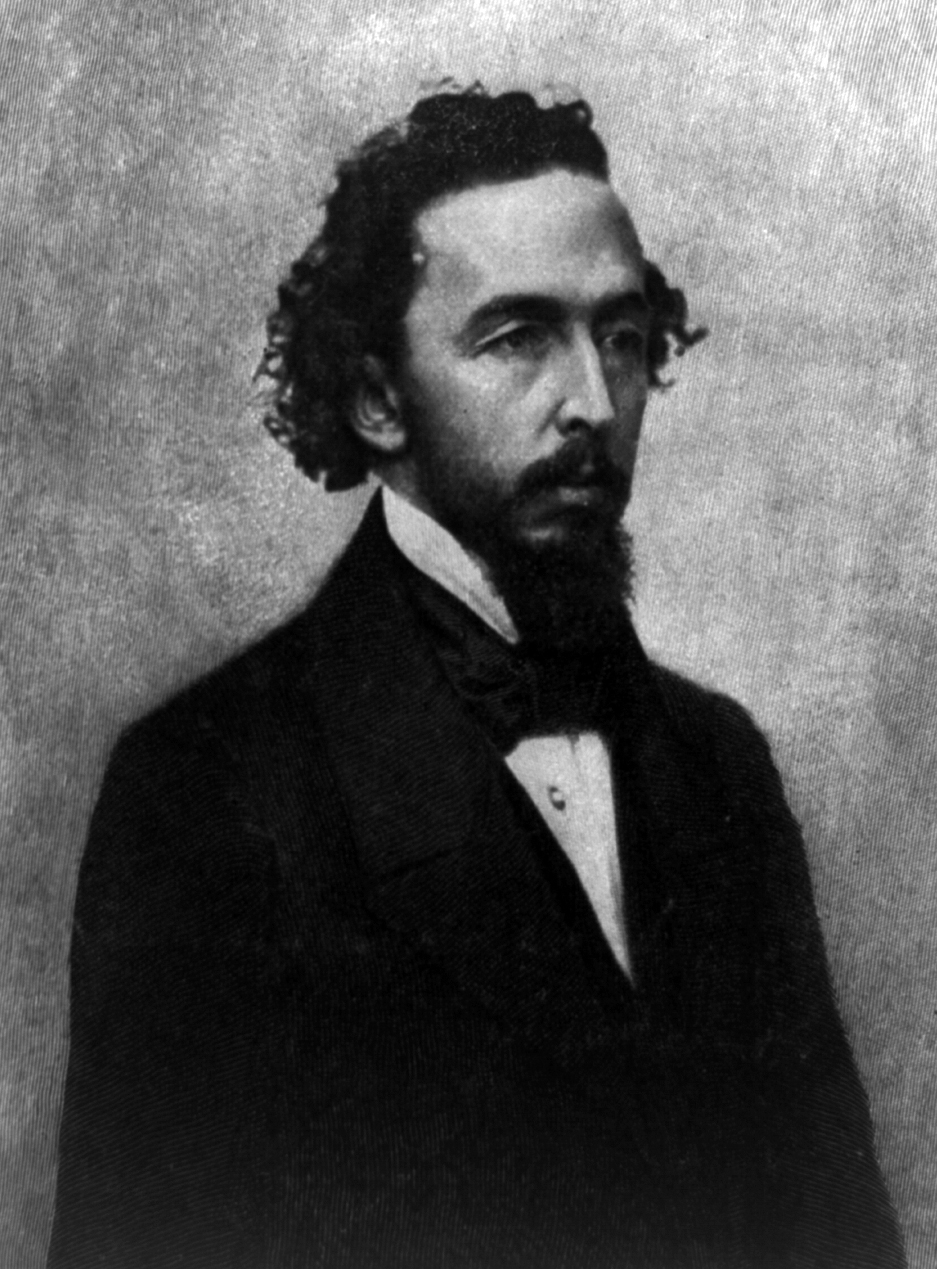
Here's a picture of the author:
Bayard_Taylor.jpg
 
Last edited:
Both Bayard Taylor and Philip Fallmeyar make racist and ignorant comments focussing on the physical appearance.
 
some additional points.

- anonymi descriptio europae orientalis. Imperium constantinopolitanum, albania, serbia, bulgaria, ruthenia, ungaria, polonia, bohemia. Anno mcccviii exarata. Cracoviae, 1916: As per the anonymous traveler of eastern europe from the xiv century, it is stated that vlachs (whom the author calls "blasi"), are a numerous people living between macedonia, achaia and salonika.

- johann thunmann, untersuchungen uber die geschichte der ostlichen europaischen volker, i. Leipzig, 1774: The author states (estimates) that vlachs represent half the population of thrace, and three quarters of inhabitants of thessaly and macedonia combined.

- in early march 1821, alexander ypsilanti called vlachs/romanians dacians!

http://www.freeinquiry.gr/pro.php?id=2213&phpsessid=ae517603cb7dd0fff1340ad4e35a8835

:14: :14: :14:
 
Η Τριπολιτσά ήταν η μεγαλύτερη πόλη τής νότιας Ελλάδας. Με πληθυσμό περίπου 35.000 τούρκους, αλβανούς και εβραίους ήταν η έδρα τής τουρκικής ηγεσίας, η οποία φιλοξενούσε πολλούς εξέχοντες οθωμανούς αξιωματούχους.

Tripolitsa was the largest city in southern Greece. With a population of about 35,000 Turks, Albanians and Jews, it was the seat of the Turkish leadership, which housed many prominent Ottoman officials.

Taken from, URL:
http://www.freeinquiry.gr/pro.php?id=3040#

Tripoli, Greece

Tripoli (Greek: Τρίπολη, Trípoli, formerly Τρίπολις, Trípolis; earlier Τριπολιτσά Tripolitsa) is a city in the central part of the Peloponnese, in Greece. It is the capital of the Peloponnese region as well as of the regional unit of Arcadia.

https://en.wikipedia.org/wiki/Tripoli,_Greece
 
The Synekdemos of Hierokles is the only text that reports that they left their city under pressure of the Slavic invasions and settled in Sicily. Nicephoros I rebuilt the polis of Lacedaemon and had a "mixed population" settle there. The early history of the bishopric of Lacedaemon is puzzling. The first known bishop, Hosios, is attested in 458; then, in 681, when the city was supposedly abandoned, when a bishop of the polis seems to be mentioned. In the notitiae the bishopric of "Lakedeon" in the Peloponnese appears around 800, and the later Synodikon of Lacedaemon begins probably around 843.
The vita of the 10th century saint Nikon the Metanleite, who lived in Lacedaemon, provides rich information about the city and its environs, including the existence of a Jewish community and pagan Slavs; it is, however, not certain whether the evidence of the vita can be taken at face value. At any rate, the identification of a church excavated in Sparta with one built by Nikon is probably incorrect.

The mixed population that Nicephorus I settled in (rebuilt) Lacedaemon were: 'Kapheroi, Thrakesians, Armenians and others from different places and cities'.

http://www.macedoniantruth.org/forum/showthread.php?t=1980&page=2
 
“The Greek geographer and historian Strabo (63 BCE-21 CE) described Greece as “a land entirely deserted; the depopulation begun since long continues. Roman soldiers camp in abandoned houses; Athens is populated by statues”.

Plutarch observed that “one would no longer find in Greece 3,000 hoplites [infantrymen].”

The historian Polybius (204-122 BCE) wrote: “One remarks nowadays all over Greece such a diminution in natality and in general manner such a depopulation that the towns are deserted and the fields lie fallow. Although this country has not been ravaged by wars or epidemics, the cause of the harm is evident: by avarice or cowardice the people, if they marry, will not bring up the children they ought to have. At most they bring up one or two. It is in this way that the scourge before it is noticed is rapidly developed. The remedy is in ourselves; we have but to change our morals.”

“Now moderation, adequacy, excess in nothing, and complete self-sufficiency are above all else the essential characteristics of everything done by the gods; and if anyone should take this fact as a starting-point, and assert that Greece has far more than its share in the general depopulation which the earlier discords and wars have wrought throughout practically the whole inhabited earth, and that to‑day the whole of Greece would hardly muster three thousand men-at‑arms, which is the number that the one city of the Megarians sent forth to Plataeae (for the god’s abandoning of many oracles is nothing other than his way of substantiating the desolation of Greece), in this way such a man would give some accurate evidence of his keenness in reasoning.”

URL:
https://bornposthumously.wordpress.com/
 
" . . . Τότε δή καί οἱ Λάκωνες τό πατρῷον ἔδαφος καταλιπόντες ἐν τῆ νήσῳ Σικελία ἐξέπλευσαν, οἵ καί εἰς ἔτι εἰσίν ἐν αύτῆ ἐν τόπω καλουμένω Δέμενα καί Δεμενῖται ἀντί Λακεδαιμονιτῶν κατονομαζόμενοι καί τήν ἰδίαν τῶν Λακώνων διάλεκτον διασώζοντες. Οἱ δέ δύσβατον τόπον παρά τόν τῆς θαλάσσης αἰγιαλόν εὑρόντες καί πόλιν ὀχυράν οἰκοδομήσαντες καί Μονεμβασίαν ταύτην ὀνομάσαντες διά τό μίαν ἔχειν τῶν ἐν αὐτῇ εἰσπορευομένων τήν εἴσοδον ἐν αὐτῇ τῇ πόλει κατῴκησαν μετά τοῦ ἰδίου αὐτῶν ἐπισκόπου. Οἱ δέ τῶν θρεμμάτων νομεῖς καί ἀγροικικοί κατωκίσθησαν ἐν τοῖς παρακειμένοις ἐκεῖσε τραχινοῖς τόποις, οἵ καί ἐπ᾿ ἐσχάτων Τζακωνίαι ἐπωνομάσθησαν . . . '', " Περί τῆς κτίσεως τῆς Μονεμβασίας Χρονικόν '' (Κώδιξ μονῆς Ἰβήρων). ". . . οἵ καί ἐπ᾿ ἐσχάτων Τζακωνίαι ἐπωνομάσθησαν διά τό καί αὐτούς τούς Λάκωνας Τζάκωνας μετονομασθῆναι . . . '', " Περί τῆς κτίσεως τῆς Μονεμβασίας Χρονικόν '' (Κώδιξ Κουτλουμουσίου)


'....Then Lakonians left their father's lands and to Sicily island sailed, and still there in place called Demena exist and Demenitai instead οf Lacedaemonians named and the Laconian dialect preserves. And the rough place despite the sea side found and city fortress built and Monemvasian named it for the one-being entrance of those inserting entry in that city, inhabitant with itself their bishop. And the shepherds and farmers people inhabit to the near by, rough places, which later Tzakoniai renamed.....'' Chronicle_of_Monemvasia (codix Iberon) , ''... which later Tzakoniai renamed, and for that (reason) the Lacones as Tzacones renamed.....''

https://en.wikipedia.org/wiki/Chronicle_of_Monemvasia

====

Tzakones were special guard of castles, in the latin translation of Constantine VII Porphyrogenitus, " De Cerimoniis '' Ι 695 - 696 , Bonn edition, " . . . e quibus etiam Tzecones [seu Peloponnesiaci] desumuntur et seliguntur in castella . . . '', gives the descent from Peloponnese, of Tzacones castle guards, and Roman/Byzantine historian Pachymeres in 13th/14th century describe more specific the identification of Lacones- Tzacones , ". . . ἄλλοι τε πλεῖστοι ἐκ τῶν Λακώνων, οὕς καί Τζάκωνας παραφθείροντες ἔλεγον. . . '', Ι . 309, 5 ". . . from the most of Lacones, that also named Tzacones who by corruption so called. . . '', Ι . 309, 5, ''... . . Soldiers inhabit the city [Constantinople 1261] and under necessity had, where and Lakones most from Morea[=Peloponnese] and the western parts[probably from Despotate of Epirus, serving as soldiers] arrived, allocate places on the city dwelling provided as indigenous and to most other works where need used them inside [the city] and outside, as valuable experience to wars having. . . ''Pachymeres , Ι, 188


". . . ἄλλοι τε πλεῖστοι ἐκ τῶν Λακώνων, οὕς καί Τζάκωνας παραφθείροντες ἔλεγον. . . '' , Ι . 309, 5 , Γεώργιος Παχυμέρης, ἔκδοση Βόννης , καί ". . . Λάκωνες ἄρτι προσελθόντες τῶ βασιλεῖ, οὕς ἡ κοινή παραφθείρασα γλῶσσα Τζάκωνας μετονόμασεν . . . '', Ι , 98, Νικηφόρος Γρηγορᾶς, Ρωμαϊκή Ἱστορία, ἔκδοση Βόννης , ". . . τῶν στρατιωτῶν οἰκίζειν τήν πόλιν[κωνσταντινουπολη 1261] καί λίαν ἐπ᾿ ἀνάγκης εἶχεν , ὅπου γε καί Λάκωσι πλείστοις ὕστερον ἐκ τοῦ Μορέου ἀφιγμένοις ἐπιμερίσας τόπους ἐπί τῆς πόλεως παρεῖχε κατοικεῖν ὡς αὐτόχθοσι καί πλεῖστοις ἄλλοις φιλοτιμήμασιν ἐπί πολλοῖς καί ἐντός καί ἐκτός ἔχρητο , ὡς ἀξίαν τριβήν ἐν πολέμοις ἔχουσι . . . '', Ι, 188, Γεώργιος Παχυμέρης, ἔκδοση Βόννη.
 
Χρήστος Νταβέλης (Christos Davelis)

https://el.wikipedia.org/wiki/Χρήστος_Νταβέλης
http://xantho.lis.upatras.gr/test2.php?art=11776

Christos Davelis was a notorious HELLENIC robber of Attica and
Boeotia. He was born to a shepherd family of ARVANITOVLACHS.

Κατά παλαιότερη εκδοχή, γεννήθηκε στο Στείρι Βοιωτίας περί το 1832 από ποιμενική οικογένεια αρβανιτόβλαχων.

HELLENE == ARVANITOVLACH
 
One wonders what sort of Greek colonists was medieval Thessaly (= Vlachia) sending out when, specifically Epirus, Thessaly and Attico-Boeotia confirm the discontinuity between ancient and modern Greece.

Taken from:
Ο ΦΑΛΜΕΡΑΫΕΡ ΚΑΙ ΝΕΟΤΕΡΑ ΣΤΟΙΧΕΙΑ ΓΙΑ ΤΗΝ ΕΘΝΙΚΗ ΚΑΤΑΓΩΓΗ ΤΩΝ ΕΛΛΗΝΩΝ (ΗΠΕΙΡΟΣ, ΘΕΣΣΑΛΙΑ ΚΑΙ Η ΑΤΤΙΚΟΒΟΙΩΤΙΑ), by Φίλιππας Κυρίτσης

URL:
http://www.academia.edu/8066812/Ο_Φ...ΕΛΛΗΝΩΝ_ΗΠΕΙΡΟΣ_ΘΕΣΣΑΛΙΑ_ΚΑΙ_Η_ΑΤΤΙΚΟΒΟΙΩΤΙΑ_
 
Paul Lovell Hooper, "Forced Population Transfers in Early Ottoman Imperial Strategy: a Comparative Approach" (Senior thesis, Princeton University, 2003).

Page 25:

The 16th century was host to a number of transfers undertaken as the Ottomans attempted to put down a series of insurgencies by the empire's disaffected tribalist Turkmen population. Responding to the pro-pastoralist shi'i propaganda of the new Ottoman rival to the east, the Safavids, these tribesmen - called kizilbas, or red-heads - were subject to harsh crack-downs starting in the reign of Bayezit II.

In response to growing Safavid support within the empire, in 1502 the sultan ordered the deportation of kizilbas from Teke, Hamid, and elsewhere in Anatolia to Coron and Modon in the Morea.


Page 74:

In the colonization of Cyprus in the 1570s, the surgun project for which - thanks to Barkan's studies - we have the most complete documentation, one out of every ten households of districts throughout Anatolia were to be set aside for immigration to the island.


Page 77/78:

Mehmet II "sent Zaganos, Governor of Gallipoli and admiral of the entire fleet, to the islands with forty ships. When this man arrived there, he removed some peoples of Thasos and Samothrace and settled them likewise."
 
Last edited:
Apeltai = Akritai
https://en.wikipedia.org/wiki/Akritai

The name that Constantine VII used to call Tsakones.

I also find it odd that how come Maniots and Tsakonians despite of sharing the same geography, despite of being pagans and despite of being Greeks, differed themselves in language (dialect) and name, if Tsakonian applies to Laconians why weren't Maniots called the same way?

You are asking the right questions.

Did you know how the Tsakonians call some of their settlements and towns, in their own dialect?

Modern Greek: Leonidio
Tsakonian: Aje Lidi

MG: Vaskina
Tsakonian: Vastsina

MG: Melana
Tsakonian: Meane

MG: Pragmateutis
Tsakonian: Pragmatefta

MG: Sapounakaiika
Tsakonian: Sapunatsi

MG: Tyros
Tsakonian: Dire

MG: Agios Andreas
Tsakonian: Jale

MG: Prastos
Tsakonian: Praste
 
HELLENE == ARVANITOVLACH

I really can't understand when you're joking.

Vlahos / Vlachos (Βλάχος) is the second most common surname of Greeks.

No, it's not.

I also find it odd that how come Maniots and Tsakonians despite of sharing the same geography, despite of being pagans and despite of being Greeks, differed themselves in language (dialect) and name, if Tsakonian applies to Laconians why weren't Maniots called the same way?

Check this:
http://historum.com/medieval-byzantine-history/81769-maniates-last-pagans-print.html
 
No, it's not.

I was talking with an Arvanite who lives in Spetses, his ancestors came from Shkodra 600 years ago, so ... he was giving me information about Arvanite surnames in Greece I was looking for them and I randomly found out about that surname here:

https://en.wikipedia.org/wiki/List_of_most_common_surnames_in_Europe#Greece


Is this ANAX guy trying to argue that Tsakonian applied to Maniots too? Because he doesn't make much sense. Or that Maniots are not ancient Hellenes but Tsakonians are, and that ''older Romans'' quote by Constantine refers to Tsakonians (in the castle of Mani), not Maniots?
 
Last edited:
Check this:
http://historum.com/medieval-byzantine-history/81769-maniates-last-pagans-print.html


That's a very creative and original interpretation of the passage in question.

https://en.wikipedia.org/wiki/Maniots

"Be it known that the inhabitants of Castle Maina are not from the race of aforesaid Slavs (Melingoi and Ezeritai dwelling on the Taygetus) but from the older Romaioi (= Romans), who up to the present time are termed Hellenes by the local inhabitants on account of their being in olden times idolaters and worshippers of idols like the ancient Greeks, and who were baptized and became Christians in the reign of the glorious Basil. The place in which they live is waterless and inaccessible, but has olives from which they gain some consolation."

Conclusion/analysis seems to be self-evident:

- We are told that the inhabitants of Castle Maina are of the Roman race. We are told they are not from the race of Slavs but from the older Romans. They are also not of Hellenic race or descent. If they were, Constantine VII would have written "... are not from the race of aforesaid Slavs ... but from the older Hellenes" - which is clearly not the case. As a result, these older Romaioi were most likely speaking a Latin-based dialect or language at this time.

- The narrative continues stating that these older Romans are termed Hellenes up to the present time, by the local inhabitants on account of their being in olden times idolaters and worshippers of idols like the ancient Greeks. We clearly don't know who these local inhabitants are/were, and can only speculate as to who they might have been. The most important point here is that these older Romans are termed Hellenes on account of their (formerly) being idolaters like the ancient Greeks - that is to say, this term - applied to them by the locals (whoever they might be) has clear religious value and meaning, not ethnic or racial.

(To continue, and to make use of ANAX's logic and reasoning, these older Roman inhabitants of the castle of Maina are not locals - because the locals themselves call them Hellenes on account of their former religion (= paganism), etc. We may then conclude that these older Romans are colonists or immigrants.)
 
Last edited:
Back
Top