• Welcome to the new Macedonian Truth Forum. All posts, members and private messages have been moved over from the old forum.

    Passwords from the old forum could not be carried over, so please use Forgot your password? to set a new one. The reset link is emailed to the address on your account.

  • Rules and Regulations at the forum of the Macedonian Truth Organisation (MTO)

    (1) The national-ethnic and cultural-linguistic identity of the Macedonian people is historically Macedonian, and derives its character from the native, indigenous and geographic homeland of the Macedonians, which is called Macedonia. To ensure that their human rights, integrity and heritage are appropriately respected, the only nouns and adjectives acceptable when reference is made to the above character and identity markers is Macedon, Macedonia, Macedonian and Macedonians.

    (2) The nation-state of the Macedonian people is the Republic of Macedonia, and is to be referred to by this official title so long as the 'republic' prefix is consistently applied to other states. Alternative references are the Macedonian Republic, or simply, Macedonia.

    (3) The 'ethnic' prefix is only acceptable for Macedonians in cases where differentiation is specifically required - so long as it is in context and consistent where it concerns its application to other ethnic groups.

    (4) Should any other differentiation be specifically required, the names of other ethnic groups that reside with Macedonians in either the Republic of Macedonia or the occupied Macedonian regions in Greece, Bulgaria, Serbia or Albania, are to be given a prefix.

    (5) Negating the identity, language and culture of the Macedonian people by deliberate avoidance of the terms Macedonia, Macedonian and Macedonians, or by any other means, is not permitted.

    (6) Systematic anti-Macedonian propaganda and rhetoric are not permitted.

    (7) Threads irrelevant to the Macedonian Cause, the community at the Macedonian Truth Organisation or the Macedonians in general may be considered as spam or not in the spirit of the forum. In such cases they are not permitted.

    (8) Continual posting of messages in threads with the sole purpose of deviating from the initial topics with the use of unrelated and unnecessary information is not permitted.

    (9) All posts, external articles, reports, etc that are cited in languages other than Macedonian or English, must be accompanied with a translation in one or both of the said languages.

    (10) Despite the possibility of some conversations and debates becoming heated, extreme abuse and/or racism, vulgar language and/or terminology, threats, revelation of personal information about others, harassment, and other such behavior will not be permitted. If deemed necessary all relevant information including member details will be reported to the appropriate authorities for investigation which may result in legal action.

    (11) Threads that are created must have a summary of a topic or excerpt of an article found in pertinent link(s) that have been included. One line threads will be considered unaccetable spam and are therefore not permitted.

    (12) Compulsive and deliberate lies, irrespective of the topic, are not permitted.

    (13) Any symbols or avatars found to be perceived as offensive to Macedonians are not permitted.

    (13) Any explicit or extreme material is not permitted.

    Failure to adhere to the above rules and regulations will result in a ban after 3 breaches. This may be reconsidered in some cases should the circumstances be of an unorthodox nature and/or require special consideration. To assure an effective deterrent against an individual or individuals with the sole purpose of causing dissent through spamming, racism or other improper means, the above rules will be strictly enforced.

    The MTO administration will monitor all discussions as reasonably practical and reserve the right to remove any post and/or member from the forum, and update the rules and regulations as required. Members are encouraged to immediately report any post and/or member to the MTO administration if they feel that these rules have not been abided by.

    The views expressed on this forum are those of the individuals. The only official representation of the MTO is made by the "Macedonian Truth Organisation (Site Owner)" username, and no other.

  • Macedonian Cause

    The Macedonian Truth Organisation calls on God in Heaven to protect, bless and guide the endeavour it is committing to undertake, and that is to work towards:

    Securing Macedonia as a free, independent and democratic republic in which sovereignty lies with the Macedonian citizens; as the nation-state of the Macedonian people in which they can preserve their culture, language and identity; as a state in which the Macedonian language and culture form the basis of public life and act as important unifying elements of Macedonian society; as the home of all its citizens to which it guarantees and obliges their inalienable natural rights and corresponding responsibilities;

    The acknowledgment as self-evident and irrefutable the existence of the:

    1) Indigenous, ethnonational name of Macedonia;
    2) Macedonian people, language and identity;
    3) Macedonian culture, symbols and folklore;
    4) Macedonian ancestry, heritage and history in its entirety; and
    5) Macedonian Orthodox Church;

    Securing recognition by the International Community of the tragedies endured by the Macedonian people, of the division of Macedonia with the signing of the Treaty of Bucharest on August 10, 1913, and the genocide committed against the Macedonian people at the hands of the Greek, Bulgarian and Serbian states and their respective churches during the 19th and 20th centuries;

    Ensuring that the Interim Accord is declared ‘null and void’ and that all constitutional provisions, acts, commitments, agreements, legislation, regulations, policies or programs emanating from, supporting or consequential to the Interim Accord are also declared ‘null and void’, including the use of any symbols and the completion of any acts imposed by, or originating from, the Interim Accord.

    Ensuring that the Framework Agreement is abolished and that all constitutional provisions, acts, commitments, agreements, legislation, regulations, policies and programs emanating from, supporting or consequential to the Framework Agreement are also abolished and replaced by a framework of constitutional and statutory law based on inalienable natural rights and corresponding responsibilities and universally codified human rights mechanisms.

    Securing the abolishment of any existing constitutional provisions, acts, agreements, legislation, regulations, policies and programs that discriminate against the Macedonian people, in any international organisation or any of the countries of the International Community where such constitutional provisions, acts, agreements, legislation, regulations, policies and programs exist, and thereby ensuring the freedom for Macedonians to exercise their inalienable natural rights and fulfil their corresponding responsibilities, and practice their culture, language and religious faiths in all the countries of the International Community without hindrance;

    The empowerment of Macedonians to undertake a moral revolution and to instil and/or reinvigorate within themselves a deep-rooted national, cultural, linguistic and historical dignity and a commitment to the exercise of freedom based on inalienable natural rights and corresponding responsibilities;

    The recognition of the Macedonian minorities in the neighbouring states of Macedonia as well as the respect for the inalienable rights and freedoms of the Macedonian minorities, as provided for by natural law and as codified by the United Nations Charter, the Universal Declaration of Human Rights and other universally codified human rights mechanisms;

    The full and unreserved respect of, and the support for, the rights of all people of non-Macedonian descent living in Macedonia and around the world, who share a reciprocal full and unreserved respect for the Macedonian people, their homeland and their state;

    The cultural unification and solidarity of the Macedonian people living in all parts of historical Macedonia and adjacent territories, as well as Macedonians throughout the world;

    The unity of all Macedonians on the principles, objectives and achievement of the Macedonian cause as defined by this declaration.

Was Ancient Egypt White?

Coolski,


You really like to play with words. Yes, I understand that among some South Americans, for example, and Indians, the people look black but are not negroids. This is not the issue.

The people of Egypt then as now, are not black in any way; they are white and dark olived skinned. That is why I gave you and everyone else to watch the videos I provided.

As for the relevance: just becaue it doesn't deal with Macedonia, doesn't mean it can't be discussed. It's Mediterranean history. The issue of whether they were white or black is very important. If the issue of skin color and race doesn't matter, why should the issue of national origin and ethnicity matter with the ancient Macedonians?

Hey Philosopher,

I don't think i'm playing with the words. I'm just taking them for what they are and perhaps questioning one aspect of the discussion which had not been considered. As a PhD student i'm sure you understand this.

As for the relevance of whether these people were black or white, i guess it depends on who is trying to find out. I mean, I don't think it would have much weight on us if it is determined that the ancient Egyptians were either 'black' or 'white' as you use the terms. Maybe it's part of your curiosity and research, which means that it has much relevance to you, or perhaps you see a links in ancient Egypt which I do not.
 
The people of Egypt then as now, are not black in any way; they are white and dark olived skinned.

Well actually according to mainstream biological and cultural references the earliest ancient Egyptians were a mixture of Afro-Asiatic Sub Saharan East Africans (like Somalis and Ethiopians) and Nilotic Saharan Africans (like the Nuer or Masai). The cultures of these various black African populations are what lead to the creation of dynastic Egyptian culture. AFTER the establishment of Dynastic Egypt many scholars have noted that "prolonged small scale migration" from the Middle East began to occur along the Nile. None the less the biological affinities of the ancient Egyptians remained with more southerly African populations (black) until the Late Period (when numerous invasion from the Mediterrean occurred). Future migrations (i.e the Arab invasion of 600 AD) would only further the biological distinction of later Egyptians with their original Egyptian ancestors. Below is just one peer reviewed article that details the population history of ancient Egypt:

"The question of the genetic origins of ancient Egyptians, particularly those during the Dynastic period, is relevant to the current study. Modern interpretations of Egyptian state formation propose an indigenous origin of the Dynastic civilization (Hassan, 1988). Early Egyptologists considered Upper and Lower Egyptians to be genetically distinct populations, and viewed the Dynastic period as characterized by a conquest of Upper Egypt by the Lower Egyptians. More recent interpretations contend that Egyptians from the south actually expanded into the northern regions during the Dynastic state unification (Hassan, 1988; Savage, 2001), and that the Predynastic populations of Upper and Lower Egypt are morphologically distinct from one another, but not sufficiently distinct to consider either non-indigenous (Zakrzewski, 2007). The Predynastic populations studied here, from Naqada and Badari, are both Upper Egyptian samples, while the Dynastic Egyptian sample (Tarkhan) is from Lower Egypt. The Dynastic Nubian sample is from Upper Nubia (Kerma). Previous analyses of cranial variation found the Badari and Early Predynastic Egyptians to be more similar to other African groups than to Mediterranean or European populations (Keita, 1990; Zakrzewski, 2002). In addition, the Badarians have been described as near the centroid of cranial and dental variation among Predynastic and Dynastic populations studied (Irish, 2006; Zakrzewski, 2007). This suggests that, at least through the Early Dynastic period, the inhabitants of the Nile valley were a continuous population of local origin, and no major migration or replacement events occurred during this time.

Studies of cranial morphology also support the use of a Nubian (Kerma) population for a comparison of the Dynastic period, as this group is likely to be more closely genetically related to the early Nile valley inhabitants than would be the Late Dynastic Egyptians, who likely experienced significant mixing with other Mediterranean populations (Zakrzewski, 2002). A craniometric study found the Naqada and Kerma populations to be morphologically similar (Keita, 1990). Given these and other prior studies suggesting continuity (Berry et al., 1967; Berry and Berry, 1972), and the lack of archaeological evidence of major migration or population replacement during the Neolithic transition in the Nile valley, we may cautiously interpret the dental health changes over time as primarily due to ecological, subsistence, and demographic changes experienced throughout the Nile valley region."

-- AP Starling, JT Stock. (2007). Dental Indicators of Health and Stress in Early Egyptian and Nubian Agriculturalists: A Difficult Transition and Gradual Recovery. AMERICAN JOURNAL OF PHYSICAL ANTHROPOLOGY 134:520–528

Also notice the mention of the continuous finding that Upper Egyptians (creators of Dynastic culture) were essentially biological essentially the same as lower Nubians (who are adjacent to one another). A 2009 study further confirms this consistent finding.

That is why I gave you and everyone else to watch the videos I provided.

you should watch the documentaries of renown African historian Basil Davidson:

Ancient Africa's Black Kingdoms - YouTube

"SKULLS - DETAILED STUDY REVEALS PAST

The course of racial developments in Egyptian history has been backed up by anthropological research. The British anthropologist G.M. Morant produced a comprehensive study of Egyptian skulls from commoner and royal graves from all parts of the Egyptian lands and times. His conclusions were that the majority of the population of Lower Egypt - that is in the Northern part of the country - were members of the (now virtually extinct) Mediterranean White sub-race. In the south (or Upper Egypt) this population pattern was repeated but this time showing a certain percentage of Black admixture (reflecting the proximity of the Nubian settlement). Significantly, Morant found that with the passage of time, the differentiation in skull types between Upper and Lower Egypt became less and less distinct, until ultimately they became indistinguishable - the surest sign of the absorption of the White sub-race into the growing non-White mass. (Race, John R. Baker, Oxford University Press, 1974, page 519)."

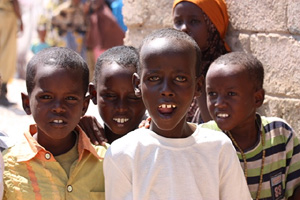
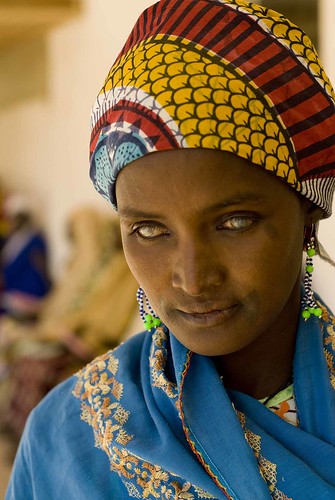
This reference is rather dated and pretty obviously tainted with common misconceptions of indigenous African diversity. The "Mediterranean White sub race" whom the author is referring to are Africans with elongated features (narrow nose, thin lips) such as those which are seen in many indigenous African populations today (Somalis, Ethiopians, Tutsi, Fulanis ect).

00000000afaroldman.jpg


Somali+Children+and+Armed+Conflict.jpg


420245384_7e130438b4.jpg


According to the criteria of most race scientist of that era these tropical Africans would have been considered "Mediterranean Caucasoid" (which is clearly a deceiving description in this case). As far as your source is concerned here is a much more recent and accurate (according to the consensus amongst modern scholars) encyclopedic reference of the physical appearance of the ancient Egyptians:

"There is now a sufficient body of evidence from modern studies of skeletal remains to indicate that the ancient Egyptians, especially southern Egyptians, exhibited physical characteristics that are within the range of variation for ancient and modern indigenous peoples of the Sahara and tropical Africa.. In general, the inhabitants of Upper Egypt and Nubia had the greatest biological affinity to people of the Sahara and more southerly areas." (Nancy C. Lovell, " Egyptians, physical anthropology of," in Encyclopedia of the Archaeology of Ancient Egypt, ed. Kathryn A. Bard and Steven Blake Shubert, ( London and New York: Routledge, 1999) pp 328-332)

and

"must be placed in the context of hypotheses informed by archaeological, linguistic, geographic and other data. In such contexts, the physical anthropological evidence indicates that early Nile Valley populations can be identified as part of an African lineage, but exhibiting local variation. This variation represents the short and long term effects of evolutionary forces, such as gene flow, genetic drift, and natural selection, influenced by culture and geography." ("Nancy C. Lovell, " Egyptians, physical anthropology of," in Encyclopedia of the Archaeology of Ancient Egypt, ed. Kathryn A. Bard and Steven Blake Shubert, ( London and New York: Routledge, 1999). pp 328-332)

Below is a study that specifies exactly which (as there are many and this region of Africa is the physically and genetically diverse in the world) more southerly African populations the ancient Egyptians resembled:

"Analysis of crania is the traditional approach to assessing ancient population origins, relationships, and diversity. In studies based on anatomical traits and measurements of crania, similarities have been found between Nile Valley crania from 30,000, 20,000 and 12,000 years ago and various African remains from more recent times (see Thoma 1984; Brauer and Rimbach 1990; Angel and Kelley 1986; Keita 1993). Studies of crania from southern predynastic Egypt, from the formative period (4000-3100 B.C.), show them usually to be more similar to the crania of ancient Nubians, Kushites, Saharans, or modern groups from the Horn of Africa than to those of dynastic northern Egyptians or ancient or modern southern Europeans." (S. O. Y and A.J. Boyce, "The Geographical Origins and Population Relationships of Early Ancient Egyptians", in Egypt in Africa, Theodore Celenko (ed), Indiana University Press, 1996, pp. 20-33)

Also notice the numerous studies cited within this study which back these conclusions. The same simply cannot be said for a backing that these ancient Africans were "white".
 
Last edited:
In terms of cultural origin of ancient Egypt here is an excellent article by leading linguist and head of African studies at UCLA Christopher Ehret:

Ancient Egyptian as an African Language, Egypt as an African Culture

ehret.jpg


Christopher Ehret
Professor of History, African Studies Chair
University of California at Los Angeles

africanlanguage.jpg


Ancient Egyptian civilization was, in ways and to an extent usually not recognized, fundamentally African. The evidence of both language and culture reveals these African roots.

The origins of Egyptian ethnicity lay in the areas south of Egypt. The ancient Egyptian language belonged to the Afrasian family (also called Afroasiatic or, formerly, Hamito-Semitic). The speakers of the earliest Afrasian languages, according to recent studies, were a set of peoples whose lands between 15,000 and 13,000 B.C. stretched from Nubia in the west to far northern Somalia in the east. They supported themselves by gathering wild grains. The first elements of Egyptian culture were laid down two thousand years later, between 12,000 and 10,000 B.C., when some of these Afrasian communities expanded northward into Egypt, bringing with them a language directly ancestral to ancient Egyptian. They also introduced to Egypt the idea of using wild grains as food.

A new religion came with them as well. Its central tenet explains the often localized origins of later Egyptian gods: the earliest Afrasians were, properly speaking, neither monotheistic nor polytheistic. Instead, each local community, comprising a clan or a group of related clans, had its own distinct deity and centered its religious observances on that deity. This belief system persists today among several Afrasian peoples of far southwest Ethiopia. And as Biblical scholars have shown, Yahweh, god of the ancient Hebrews, an Afrasian people of the Semitic group, was originally also such a deity. The connection of many of Egypt's predynastic gods to particular localities is surely a modified version of this early Afrasian belief. Political unification in the late fourth millennium brought the Egyptian deities together in a new polytheistic system. But their local origins remain amply apparent in the records that have come down to us.

During the long era between about 10,000 and 6000 B.C., new kinds of southern influences diffused into Egypt. During these millennia, the Sahara had a wetter climate than it has today, with grassland or steppes in many areas that are now almost absolute desert. New wild animals, most notably the cow, spread widely in the eastern Sahara in this period.

One of the exciting archeological events of the past twenty years was the discovery that the peoples of the steppes and grasslands to the immediate south of Egypt domesticated these cattle, as early as 9000 to 8000 B.C. The societies involved in this momentous development included Afrasians and neighboring peoples whose languages belonged to a second major African language family, Nilo-Saharan (Wendorf, Schild, Close 1984; Wendorf, et al. 1982). The earliest domestic cattle came to Egypt apparently from these southern neighbors, probably before 6000 B.C., not, as we used to think, from the Middle East.

One major technological advance, pottery-making, was also initiated as early as 9000 B.C. by the Nilo-Saharans and Afrasians who lived to the south of Egypt. Soon thereafter, pots spread to Egyptian sites, almost 2,000 years before the first pottery was made in the Middle East.

Very late in the same span of time, the cultivating of crops began in Egypt. Since most of Egypt belonged then to the Mediterranean climatic zone, many of the new food plants came from areas of similar climate in the Middle East. Two domestic animals of Middle Eastern origin, the sheep and the goat, also entered northeastern Africa from the north during this era.

But several notable early Egyptian crops came from Sudanic agriculture, independently invented between 7500 and 6000 B.C. by the Nilo-Saharan peoples (Ehret 1993:104-125). One such cultivated crop was the edible gourd. The botanical evidence is confirmed in this case by linguistics: Egyptian bdt, or "bed of gourds" (Late Egyptian bdt, "gourd; cucumber"), is a borrowing of the Nilo-Saharan word *bud, "edible gourd." Other early Egyptian crops of Sudanic origin included watermelons and castor beans. (To learn more on how historians use linguistic evidence, see note at end of this article.)

Between about 5000 and 3000 B.C. a new era of southern cultural influences took shape. Increasing aridity pushed more of the human population of the eastern Sahara into areas with good access to the waters of the Nile, and along the Nile the bottomlands were for the first time cleared and farmed. The Egyptian stretches of the river came to form the northern edge of a newly emergent Middle Nile Culture Area, which extended far south up the river, well into the middle of modern-day Sudan. [B]Peoples speaking languages of the Eastern Sahelian branch of the Nilo-Saharan family inhabited the heartland of this region.[/B]

From the Middle Nile, Egypt gained new items of livelihood between 5000 and 3000 B.C. One of these was a kind of cattle pen: its Egyptian name, s3 (earlier *sr), can be derived from the Eastern Sahelian term *sar. Egyptian pg3, "bowl," (presumably from earlier pgr), a borrowing of Nilo-Saharan *poKur, "wooden bowl or trough," reveals still another adoption in material culture that most probably belongs to this era.

One key feature of classical Egyptian political culture, usually assumed to have begun in Egypt, also shows strong links to the southern influences of this period. We refer here to a particular kind of sacral chiefship that entailed, in its earliest versions, the sending of servants into the afterlife along with the deceased chief. The deep roots and wide occurrence of this custom among peoples who spoke Eastern Sahelian languages strongly imply that sacral chiefship began not as a specifically Egyptian invention, but instead as a widely shared development of the Middle Nile Culture Area.

After about 3500 B.C., however, Egypt would have started to take on a new role vis-a-vis the Middle Nile region, simply because of its greater concentration of population. Growing pressures on land and resources soon enhanced and transformed the political powers of sacral chiefs. Unification followed, and the local deities of predynastic times became gods in a new polytheism, while sacral chiefs gave way to a divine king. At the same time, Egypt passed from the wings to center stage in the unfolding human drama of northeastern Africa.

A Note on the Use of Linguistic Evidence for History

Languages provide a powerful set of tools for probing the cultural history of the peoples who spoke them. Determining the relationships between particular languages, such as the languages of the Afrasian or the Nilo-Saharan family, gives us an outline history of the societies that spoke those languages in the past. And because each word in a language has its own individual history, the vocabulary of every language forms a huge archive of documents. If we can trace a particular word back to the common ancestor language of a language family, then we know that the item of culture connoted by the word was known to the people who spoke the ancestral tongue. If the word underwent a meaning change between then and now, a corresponding change must have taken place in the cultural idea or practice referred to by the word. In contrast, if a word was borrowed from another language, it attests to a thing or development that passed from the one culture to the other. The English borrowing, for example, of castle, duke, parliament, and many other political and legal terms from Old Norman French are evidence of a Norman period of rule in England, a fact confirmed by documents.


References Cited:

Ehret, Christopher, Nilo-Saharans and the Saharo-Sahelian Neolithic. In African Archaeology: Food, Metals and Towns. T. Shaw, P Sinclair, B. Andah, and A. Okpoko, eds. pp. 104-125. London: Routledge. 1993

Ehret, Christopher, Reconstructing Proto-Afroasiatic (Proto-Afrasian): Vowels, Tone Consonants, and Vocabulary. Los Angeles: University of California Press, Berkeley. 1995

Wendorf, F., et al., Saharan Exploitation of Plants 8000 Years B.P. Nature 359:721-724. 1982

Wendorf, F., R. Schild, and A. Close, eds. Cattle-Keepers of the Eastern Sahara. Dallas: Southern Methodist University, Department of Anthropology. 1984

The migration from Sub Saharan East Africa northward into the Nile and bi-directionally into Northwest Africa and the Middle East has been confirmed through recent Y-DNA analysis:

mm1E1b1bRoute.png


Link to study

A 2001 publication in the Oxford encyclopedia of ancient Egypt by Ian Shaw further confirms the inner (black) African origins of ancient Egypt:

"The evidence also points to linkages to other northeast African peoples, not coincidentally approximating the modern range of languages closely related to Egyptian in the Afro-Asiatic group (formerly called Hamito-Semetic). These linguistic similarities place ancient Egyptian in a close relationship with languages spoken today as far west as Chad, and as far south as Somalia. Archaeological evidence also strongly supports an African origin. A widespread northeastern African cultural assemblage, including distinctive multiple barbed harpoons and pottery decorated with dotted wavy line patterns, appears during the early Neolithic (also known as the Aqualithic, a reference to the mild climate of the Sahara at this time).

Saharan and Sudanese rock art from this time resembles early Egyptian iconography. Strong connections between Nubian (Sudanese) and Egyptian material culture continue in later Neolithic Badarian culture of Upper Egypt. Similarities include black-topped wares, vessels with characteristic ripple-burnished surfaces, a special tulip-shaped vessel with incised and white-filled decoration, palettes, and harpoons...

Other ancient Egyptian practices show strong similarities to modern African cultures including divine kingship, the
use of headrests, body art, circumcision, and male coming-of-age rituals, all suggesting an African substratum or foundation for Egyptian civilization.


Source: Donald Redford (2001) The Oxford encyclopedia of ancient Egypt, Volume 3. Oxford University Press. p. 28
 
Interesting information, thanks Sir Shaun, and welcome to the MTO. One comment I would make is that both Arabic and Egyptian are/were Afro-Asiatic tongues so thus came from the same pool of languages, which most likely have their origin in Africa and not Asia. Although, like your articles point out, there have been back and forth migrations, invasions, etc and this has had an impact on these languages, the largest being the adoption of Arabic by other Afro-Asiatic speakers in northern Africa. In terms of DNA, the situation is different. Ethiopians look more similar to other Sub-Saharan peoples but their language is more akin to Arabic (perhaps not mutually intelligible, but in terms of linguistic classification).
 
To be racially White is to be entirely of European ancestry, except for Jews. I don't think the ancient Egyptians were white, i believe they are similar to what modern Egyptians are today.
 
i believe they are similar to what modern Egyptians are today

Recent peer reviewed studies have found that while there is certainly continuity from Pre-Dynastic to modern Egyptians, there are also stark distinctions between populations of different periods of Egyptian history. Late Period Egyptians were found to be the most distinct from Pre and early Dynastic Egyptians:

"As a result of their facial prognathism, the Badarian sample has been described as forming a morphological cluster with Nubian, Tigrean, and other southern (or \Negroid") groups (Morant, 1935, 1937; Mukherjee et al., 1955; Nutter, 1958, Strouhal, 1971; Angel, 1972; Keita, 1990). Cranial nonmetric trait studies have found this group to be similar to other Egyptians, including much later material (Berry and Berry, 1967, 1972), but also to be significantly different from LPD material (Berry et al., 1967). Similarly, the study of dental nonmetric traits has suggested that the Badarian population is at the centroid of Egyptian dental samples (Irish, 2006), thereby suggesting similarity and hence continuity across Egyptian time periods. From the central location of the Badarian samples in Figure 2, the current study finds the Badarian to be relatively morphologically close to the centroid of all the Egyptian samples. The Badarian have been shown to exhibit greatest morphological similarity with the temporally successive EPD (Table 5). Finally, the biological distinctiveness
of the Badarian from other Egyptian samples has also been demonstrated (Tables 6 and 7).


These results suggest that the EDyn do form a distinct morphological pattern. Their overlap with other Egyptian samples (in PC space, Fig. 2) suggests that although their morphology is distinctive, the pattern does overlap with the other time periods. These results therefore do not support the Petrie concept of a "Dynastic race" (Petrie, 1939; Derry, 1956). Instead, the results suggest that the Egyptian state was not the product of mass movement of populations into the Egyptian Nile region, but rather that it was the result of primarily indigenous development combined with prolonged small-scale migration, potentially from trade, military, or other contacts.

This evidence suggests that the process of state formation itself may have been mainly an indigenous process, but that it may have occurred in association with in-migration to the Abydos region of the Nile Valley. This potential in-migration may have occurred particularly during the EDyn and OK. A possible explanation is that the Egyptian state formed through increasing control of trade and raw materials, or due to military actions, potentially associated with the use of the Nile Valley as a corridor for prolonged small scale movements through the desert environment.
(Sonia R. Zakrzewski. (2007). Population Continuity or Population Change: Formation of the Ancient Egyptian State. AMERICAN JOURNAL OF PHYSICAL ANTHROPOLOGY 132:501-509)

Also notice that this study notes the consistent finding that the earliest ancient Egyptians formed an overlapping morphological cluster with Nubians, Ethiopians and other more southerly African populations. Modern Egyptians for the most part (in the urban North) do not share that biological affinity with more southerly African populations (black). The distinction between early and late Dynastic Egyptians is explained by small scale migration and other events where populations from the Mediterranean settled on the Nile further down the line.
 
In terms of DNA, the situation is different. Ethiopians look more similar to other Sub-Saharan peoples but their language is more akin to Arabic (perhaps not mutually intelligible, but in terms of linguistic classification).

Yes since most Ethiopian languages and Arabic are apart of the Afro-Asiatic language family they will have more similarities to one another than say Beja and a Nilo Saharan language. In terms of genetics Ethiopians like most Horn Africans are primarily the result of a divergence from other Sub Saharan Africans populations.

Below is a recent article on the possible origins of the Semitic languages:

F1.medium.gif


Figure 1
Map of Semitic languages and inferred dispersals. The locations of all languages sampled in this study, both extinct and extant, are depicted on the map. The current distribution of Ethiosemitic languages follows Bender (1971) and distribution of the remaining languages follows Hetzron (1997). The ancient distribution of extinct languages is also indicated (i.e. Akkadian, Biblical Aramaic, Ge'ez, ancient Hebrew and Ugaritic; Bender 1971; Hetzron 1997). The West Gurage (Chaha, Geto, Innemor, Mesmes and Mesqan) and East Gurage (Walani and Zway) Ethiosemitic language groups in central Ethiopia are depicted as two combined groups. The map also presents the dispersal of Semitic languages inferred from our study. An origin of Afroasiatic along the African coast of the Red Sea, supported by comparative analyses (Ehret 1995; Ehret et al. 2004), is indicated in red, although other African origins of Afroasiatic have been proposed (e.g. southwest Ethiopia; Blench 2006). The assumed location of the divergence of ancestral Semitic from Afroasiatic between the African coast of the Red Sea and the Near East is indicated in italics. Semitic dispersals are depicted by arrows coloured according to the estimated time of divergence (see coloured time scale at top of figure), and important nodes from the phylogeny (figure 2) are placed on the arrows to indicate where and when these divergences occurred.
 
Sir Shawn said:
Yes since most Ethiopian languages and Arabic are apart of the Afro-Asiatic language family they will have more similarities to one another than say Beja and a Nilo Saharan language. In terms of genetics Ethiopians like most Horn Africans are primarily the result of a divergence from other Sub Saharan Africans populations.
Would you agree that the broad adoption of Arabic in north Africa was facilitated (at least in part) by the pre-existing linguistic commonalities with local Afro-Asiatic languages and descendant languages like Phoenician in Carthage?
 
i have met white egyptian people they are coptic well to do doctors. they had portraits of alexander & his generals in their office.I laughed with them because maybethey could be descended from alexanders generals.They looked white like any indo european people.
 
Last edited:
Back
Top