• Welcome to the new Macedonian Truth Forum. All posts, members and private messages have been moved over from the old forum.

    Passwords from the old forum could not be carried over, so please use Forgot your password? to set a new one. The reset link is emailed to the address on your account.

  • Rules and Regulations at the forum of the Macedonian Truth Organisation (MTO)

    (1) The national-ethnic and cultural-linguistic identity of the Macedonian people is historically Macedonian, and derives its character from the native, indigenous and geographic homeland of the Macedonians, which is called Macedonia. To ensure that their human rights, integrity and heritage are appropriately respected, the only nouns and adjectives acceptable when reference is made to the above character and identity markers is Macedon, Macedonia, Macedonian and Macedonians.

    (2) The nation-state of the Macedonian people is the Republic of Macedonia, and is to be referred to by this official title so long as the 'republic' prefix is consistently applied to other states. Alternative references are the Macedonian Republic, or simply, Macedonia.

    (3) The 'ethnic' prefix is only acceptable for Macedonians in cases where differentiation is specifically required - so long as it is in context and consistent where it concerns its application to other ethnic groups.

    (4) Should any other differentiation be specifically required, the names of other ethnic groups that reside with Macedonians in either the Republic of Macedonia or the occupied Macedonian regions in Greece, Bulgaria, Serbia or Albania, are to be given a prefix.

    (5) Negating the identity, language and culture of the Macedonian people by deliberate avoidance of the terms Macedonia, Macedonian and Macedonians, or by any other means, is not permitted.

    (6) Systematic anti-Macedonian propaganda and rhetoric are not permitted.

    (7) Threads irrelevant to the Macedonian Cause, the community at the Macedonian Truth Organisation or the Macedonians in general may be considered as spam or not in the spirit of the forum. In such cases they are not permitted.

    (8) Continual posting of messages in threads with the sole purpose of deviating from the initial topics with the use of unrelated and unnecessary information is not permitted.

    (9) All posts, external articles, reports, etc that are cited in languages other than Macedonian or English, must be accompanied with a translation in one or both of the said languages.

    (10) Despite the possibility of some conversations and debates becoming heated, extreme abuse and/or racism, vulgar language and/or terminology, threats, revelation of personal information about others, harassment, and other such behavior will not be permitted. If deemed necessary all relevant information including member details will be reported to the appropriate authorities for investigation which may result in legal action.

    (11) Threads that are created must have a summary of a topic or excerpt of an article found in pertinent link(s) that have been included. One line threads will be considered unaccetable spam and are therefore not permitted.

    (12) Compulsive and deliberate lies, irrespective of the topic, are not permitted.

    (13) Any symbols or avatars found to be perceived as offensive to Macedonians are not permitted.

    (13) Any explicit or extreme material is not permitted.

    Failure to adhere to the above rules and regulations will result in a ban after 3 breaches. This may be reconsidered in some cases should the circumstances be of an unorthodox nature and/or require special consideration. To assure an effective deterrent against an individual or individuals with the sole purpose of causing dissent through spamming, racism or other improper means, the above rules will be strictly enforced.

    The MTO administration will monitor all discussions as reasonably practical and reserve the right to remove any post and/or member from the forum, and update the rules and regulations as required. Members are encouraged to immediately report any post and/or member to the MTO administration if they feel that these rules have not been abided by.

    The views expressed on this forum are those of the individuals. The only official representation of the MTO is made by the "Macedonian Truth Organisation (Site Owner)" username, and no other.

  • Macedonian Cause

    The Macedonian Truth Organisation calls on God in Heaven to protect, bless and guide the endeavour it is committing to undertake, and that is to work towards:

    Securing Macedonia as a free, independent and democratic republic in which sovereignty lies with the Macedonian citizens; as the nation-state of the Macedonian people in which they can preserve their culture, language and identity; as a state in which the Macedonian language and culture form the basis of public life and act as important unifying elements of Macedonian society; as the home of all its citizens to which it guarantees and obliges their inalienable natural rights and corresponding responsibilities;

    The acknowledgment as self-evident and irrefutable the existence of the:

    1) Indigenous, ethnonational name of Macedonia;
    2) Macedonian people, language and identity;
    3) Macedonian culture, symbols and folklore;
    4) Macedonian ancestry, heritage and history in its entirety; and
    5) Macedonian Orthodox Church;

    Securing recognition by the International Community of the tragedies endured by the Macedonian people, of the division of Macedonia with the signing of the Treaty of Bucharest on August 10, 1913, and the genocide committed against the Macedonian people at the hands of the Greek, Bulgarian and Serbian states and their respective churches during the 19th and 20th centuries;

    Ensuring that the Interim Accord is declared ‘null and void’ and that all constitutional provisions, acts, commitments, agreements, legislation, regulations, policies or programs emanating from, supporting or consequential to the Interim Accord are also declared ‘null and void’, including the use of any symbols and the completion of any acts imposed by, or originating from, the Interim Accord.

    Ensuring that the Framework Agreement is abolished and that all constitutional provisions, acts, commitments, agreements, legislation, regulations, policies and programs emanating from, supporting or consequential to the Framework Agreement are also abolished and replaced by a framework of constitutional and statutory law based on inalienable natural rights and corresponding responsibilities and universally codified human rights mechanisms.

    Securing the abolishment of any existing constitutional provisions, acts, agreements, legislation, regulations, policies and programs that discriminate against the Macedonian people, in any international organisation or any of the countries of the International Community where such constitutional provisions, acts, agreements, legislation, regulations, policies and programs exist, and thereby ensuring the freedom for Macedonians to exercise their inalienable natural rights and fulfil their corresponding responsibilities, and practice their culture, language and religious faiths in all the countries of the International Community without hindrance;

    The empowerment of Macedonians to undertake a moral revolution and to instil and/or reinvigorate within themselves a deep-rooted national, cultural, linguistic and historical dignity and a commitment to the exercise of freedom based on inalienable natural rights and corresponding responsibilities;

    The recognition of the Macedonian minorities in the neighbouring states of Macedonia as well as the respect for the inalienable rights and freedoms of the Macedonian minorities, as provided for by natural law and as codified by the United Nations Charter, the Universal Declaration of Human Rights and other universally codified human rights mechanisms;

    The full and unreserved respect of, and the support for, the rights of all people of non-Macedonian descent living in Macedonia and around the world, who share a reciprocal full and unreserved respect for the Macedonian people, their homeland and their state;

    The cultural unification and solidarity of the Macedonian people living in all parts of historical Macedonia and adjacent territories, as well as Macedonians throughout the world;

    The unity of all Macedonians on the principles, objectives and achievement of the Macedonian cause as defined by this declaration.

Discussion on languages and etymologies

Hi Risto, thanks for response.

It seems like Macedonian has been derived from "iskam" or the other way around for other slavic languages.
 
I'm curious to know if any Macedonian words today were used back in Aleksandar Makedonski's time.
Although it is poorly attested, there are some Indo-European cognates that can be established, but it requires a bit of research. Below are some simple examples:

English - Anc. Mak - Mod. Mak - Mod. Greek

gather - bere - bere - fero
head - gavala - glava - kefali
branch - garkan - granka - charax (in Attic)
eyebrows - abroûwes - obrve (in Croatian) - frydia

Even from the few words above, it can be determined that Macedonian sound changes are different to Greek sound changes. If one were to take a more broader look and include other related languages, then there would be more. It is difficult to ascertain how much words today came directly from Paleo-Balkan languages as opposed to another language or dialect that was closely related.
 
Hi SoM. These ancient Macedonian words, where did u find them? Are those actually words that have been found and determined Macedonian?
How can linguists see these words and not see the similarities to slavic (not sure if I dare to even use this very handy expression ;)) words?
 
Zrinski, yes the above 4 words are ancient Macedonian. The first word is attested in the placename Beroia and the personal name Berenika, and is cognate with English 'bear'. They share the common IE sound change from bh > b (just like in all Balto-Slavic and Paleo-Balkan languages), whereas in Greek this sound changes from bh > ph > f. The next three words are recorded in Hesychius' lexicon during the 5th century AD. If you're interested I can provide snapshots from the lexicon with the relevant words.
Zrinski said:
How can linguists see these words and not see the similarities to slavic (not sure if I dare to even use this very handy expression ) words?
To be honest, I don't think many of them have given the notion a fair chance, because such a perception is overshadowed by politics. Things will change.
 
Voltron i have seen ancient greek & compared it to ancient macedonian i think it's totally different.Some words are similar ie they helenised them & over time said they are greek.Then there are words that are not the same,they are exclusively macedonian.An example like the name filipos or alexander alexandros.You'd think they were greek but on closer examination they were macedonian the greeks over time helenised them.Also there was the koine language.But the greeks couldn't understand ancient macedonian in general it was babbel to them.Maybe a handful of greek words are similar from phonecian influence & greek influence of the time like all languages.So voltron stop trying to helenise ancient macedonian as it's completely different.You only got to compare the words with a difference of ous at the end.
The Macedonian king Alexander the Great was not understood by the Greeks when he shouted an order in his native tongue and the Greek commander Eumenes needed a translator to address the soldiers of the Macedonian phalanx. The Greek orators Thrasymachus of Chalcedon and Demosthenes of Athens called Macedonian kings like Archelaus and Philip II barbarians, which prima facie means that they did not speak Greek. Now this happens in polemical contexts and is certainly exaggerated, but the statements need to refer to some kind of linguistic reality.
Words that have a counterpart in Greek. For example, the Macedonian title Nikatôr ("victor") is obviously the equivalent of Greek Nikêtêr. Usually, the Macedonian words are voiced and lack aspiration whereas Greek words are voiceless and aspirated: for example, Greek aithêr is the equivalent of Macedonian adê ("sky").
Words that do not resemble a Greek word: sarissa ("lance"), abagna ("rose"), peliganes ("senate"). It is certain that these words are Indo-European.
t is also certain that the Macedonian language became increasingly hellenized. Evidence for the pronunciation of Macedonian in the second half of the fourth century can be found in the cuneiform texts from Babylon. If Macedonian was still unaspirated and voiced when Alexander the Great conquered the Persian Empire, the Babylonian scribes would have spelled the name of the king's brother, called Philippos in Greek sources, something like Bi-líp+ending. However, the first syllable is always Pi, which also represents a sound like /vi/. This suggests that the Macedonians had began to aspire their consonants and were losing voice. The name Berenike (the Macedonian equivalent of Greek Pherenike) may also have been pronounced according to the Greek fashion, because it is rendered in Latin as Veronica.
Finally, it must be stressed that, despite what modern politicians and some modern scholars argue, language says not much about ethnicity. (People can speak Frisian and have a Dutch passport, whereas people speaking Dutch can live in Belgium and Surinam and feel offended when they are called Dutch.) The identification of "one language, one nation, one state", is nineteenth-century and says nothing about Antiquity. Still, language is one of the factors that is used to classify people, just like religion and a shared past, so it is not altogether irrelevant either.
The ancient Macedonians regarded the ancient Greeks as neighbors, not as kinsmen. The Greeks treated the Macedonians as foreigners ("barbarians") whose native language was Macedonian, not Greek.
 
Last edited:
The f to b argument is not correct for a number of reasons.
Lol, ok, humour me. What are these numerous reasons?
Today the closest language to Ancient Macedonian is Greek.
And you base that opinion on what, Greek loanwords in the ancient Macedonian language? Greek inscriptions in Macedonia like the "Pella Katadesmos" which don't even demonstrate Macedonian sound changes?
Furthermore anybody that is interested can study Phrygian vs Greek and see the similarities yourself.
The Phrygian language in Asia altered after a large number of them migrated to that region. Their original name (while still in Europe and neighbouring Macedonians) was Brygian, again sharing the same sound change as the rest of the Paleo-Balkan and Balto-Slavic languages. As for the relationship between Phrygian and Greek, see below:

English - Phrygian - Slovenian (instead of mod. Macedonian, just for fun)

God - Bago - Bog
Water - Vedi - Voda
City - Gordum - Grad (also Gorod in Russian)
Vegetables - Zelkia - Zelenjava (also Zelka for 'cabbage' in Macedonian)
Earth - Zemela - Zemlja

I am sure there are some Greek cognates too, but do those who make such comparisons also consider the above Phrygian words?
 
Lol, ok, humour me. What are these numerous reasons?

One is the relationship between Phrygian (as you mentioned below) and Greek.

And you base that opinion on what, Greek loanwords in the ancient Macedonian language? Greek inscriptions in Macedonia like the "Pella Katadesmos" which don't even demonstrate Macedonian sound changes?

How do you know they are loanwords ? Yes the Pella Katadesmos is a good example. There has been nothing to date to suggest otherwise. You might have remembered the example I brought up with the Thracian ring. Why cant we find anything similar for Macedonians ? Can it just be because there isnt ? Surely in their vast empire they could of scrambeled a few letters to make it fit to their language. Yet there is nothing.


The Phrygian language in Asia altered after a large number of them migrated to that region. Their original name (while still in Europe and neighbouring Macedonians) was Brygian, again sharing the same sound change as the rest of the Paleo-Balkan and Balto-Slavic languages. As for the relationship between Phrygian and Greek, see below:

Yes, I am familiar with the their name change. There are too many similarities to simply brush it off with disregard.

I am sure there are some Greek cognates too, but do those who make such comparisons also consider the above Phrygian words?

All im saying is just take a look at it. Some of the examples are on the link. For water though its Akkalos.
 
Voltrn the greeks are very happy to talk about what happened 3000 years ago but don't want to talk about what happened 100 years ago.If the macedonians were the same people they would call themselves greek.But they weren't the same people their language & their identity is proof of who they are.I have seen greeks deny that there was a different language spoken by the macedonians.The greeks are assuming that all they spoke was greek & from that they must have been greek.How wrong is thatThe macedonians had a mother tounge which was different to greek.
 
Thank u very much for the scans SoM. Very interesting indeed!
And I can´t wait until some linguists gets their heads out of their.... and start taking a broader and unbiased look at this....but I fear i have to wait for along time...
 
One is the relationship between Phrygian (as you mentioned below) and Greek.
You don't seem to get it, the Phrygian language began to exhibit the b > f sound change only after they moved to Asia. Macedonian continued to use the b despite having Greek neighbours to the south and the influence of the Greek language through trade and administration. So much for your one reason. What happened to the numerous reasons?
How do you know they are loanwords ? Yes the Pella Katadesmos is a good example.
I know some are loanwords because they don't exhibit typical Macedonian sound changes, just your like beloved 'Pella Katadesmos'. Furthermore, it would be naive to think that ancient Macedonians didn't adopt a number of Greek words given the influence and proximity. The same applies with modern Macedonian.
There has been nothing to date to suggest otherwise.
There is plenty to suggest otherwise, you just don't want to see it and would rather pretend that a Greek inscription is Macedonian just because it was found on Macedonian territory. Your reasoning is very elementary. You may as well claim both Illyria and Thrace while you're at it.
You might have remembered the example I brought up with the Thracian ring. Why cant we find anything similar for Macedonians ?
You can't find anything similar for Paeonians or Illyrians either, both of whom used Greek on their coins. Don't read too much into it, they aren't Greeks either. Even in the case of Thracian, there are only a few inscriptions. Literature wasn't a priority for most Paleo-Balkan peoples during antiquity. None of the above is proof that the native language of Macedonia was Greek.
Yes, I am familiar with the their name change. There are too many similarities to simply brush it off with disregard.
I am not brushing off similarities, just trying to make sense of them.
All im saying is just take a look at it. Some of the examples are on the link. For water though its Akkalos.
I have seen the examples, but they don't address the previous words I cited. As for one of the Phrygian words for water, you're correct, there is also Akala, and it is cognate with Thracian Achel and Lithuanian Akele - again, keeping it within the common Paleo-Balkan and Balto-Slavic group of languages.
 
Thank u very much for the scans SoM. Very interesting indeed!
And I can´t wait until some linguists gets their heads out of their.... and start taking a broader and unbiased look at this....but I fear i have to wait for along time...
No problem Zrinski, there are more words (mostly from Hesychius again) that are worthy of further inspection, such as:

Anc. Macedonian - Mod. Macedonian

karabos (sea creature) - korab (vessel)
kanadoi (jaws) - kandzhi (claws)
pez (walk) - pesh (walk)
gotan (pig) - goida (livestock)
grabion (oak) - grab (hornbeam - in Serbian/Croatian)

Most of the above also have cognates in Greek, some could have developed from a common IE root, others loaned from one to the other or from a third party. Below are some examples of how critical differences appear between Greek on the one hand and Paleo-Balkan/Balto-Slavic languages on the other. Individually, these examples may or may not result in significant differences. However, if they were all applied to Greek then it would be a markedly different language, nevermind the different suffixes and case endings that surely existed but were never recorded.

- Based on the sound change bh > b, and the existence of Illyrian 'bra' and Thracian 'brater' (both meaning 'brother'), it would be safe to assume that anc. Macedonian also had a similar word, which would obviously be closer to Old Macedonian (Old Church Slavonic) 'bratrŭ' than Greek 'phrater'. As there are other examples like the already mentioned anc. Macedonian 'ber' instead of Greek 'pher', further probable reconstructions of this nature could also be proposed.

- The sound change dh > d and d > d, in anc. Macedonian means that 'Makedonia' would have been pronounced with a hard 'd' just like in mod. Macedonian, and unlike mod. Greek. This sound change also applies to other words where the Greek equivalent uses a 'th', such as anc. Macedonian 'adē' for 'air' as opposed to Attic Greek 'aithēr'.

- Another sound change in anc. Macedonian was gh > g, which means 'branch' is 'garka' instead of Attic Greek 'charax', and 'intestines' is 'goda' instead of Homeric 'cholades', and 'head' is 'gavala' instead of Greek 'kefali'.

- Attic and mod. Greek have the feminine ending 'η' in some words, so the following would be pronounced as Phereniki, Saloniki, Katerini, Lysidiki, Kefali, etc. Some ancient Greek dialects also had the 'α' but so did the Paleo-Balkan languages, and Balto-Slavic languages still have them, so the same names would be pronounced as Berenika, Salonika, Katerina, Lysidika, Gavala, etc.

- Greek also has a tendency to more frequently drop the first initial in certain words that begin with an 's', whereas Balto-Slavic and Paleo-Balkan languages appear to retain them more often (but not in all cases). Therefore, Greek has Helios instead of Selios for 'sun', whereas So(l)ntse in mod. Macedonian; Triaditsa instead of Striaditsa for 'Serdica', whereas Sreditsa or Sredets in mod. Macedonian; Elefteria instead of Selefteria for 'freedom', whereas Sloboda in mod. Macedonian; Meidos instead of Smeidos for 'laugh', whereas Smei in mod. Macedonian; Hals instead of Sals for 'salt', whereas Sal in Illyrian; Heks instead of Seks for 'six', whereas Ses in Illyrian; Hýle instead of Sýle for 'forest groove', whereas Sula in Thracian; Kársis instead of Skársis for ‘transverse', whereas Skarsas in Thracian, and so on.

As can be seen, the suggestion of a more than common connection between Paleo-Balkan and Balto-Slavic languages (and the distinction of anc. Macedonian from Greek) is certainly not based on a weak foundation. The fact that few scholars have spent the time to explore the possibility makes it difficult to seek and find the truth, but not impossible.
 
http://en.wikipedia.org/wiki/Crepidoma
Crepidoma is an architectural term related to ancient Greek buildings. The crepidoma is the platform of, usually, three levels upon which the superstructure of the building is erected. The levels typically decrease in size incrementally, forming a series of steps along all or some sides of the building. The crepidoma rests on the euthynteria (foundation), which is normally constructed of locally available stone for the sake of economy.
This would be pronounced as 'Krepidoma'. The mod. Macedonian 'krepi doma' means 'strengthen/support home', which has an obviously relevant meaning, but it could be coincidental. I looked into the origin of the word a little, but couldn't find an etymology for it. Does anybody know if it has one in Greek or any other language?
 
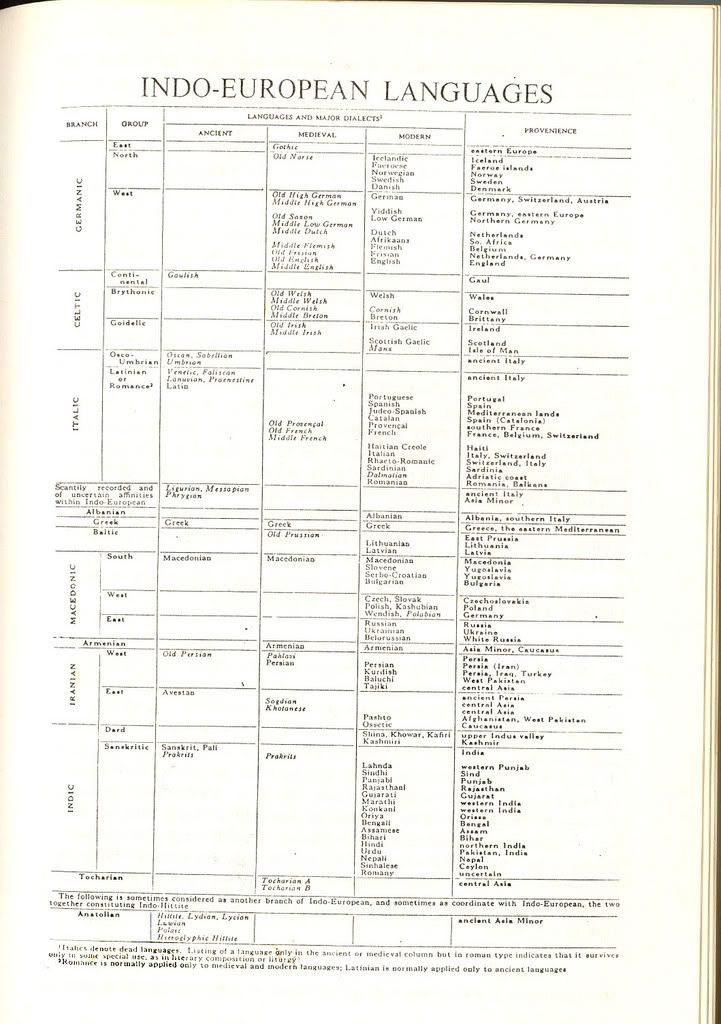
What are peoples thoughts on this:
Macedonian is the origin of all Slavic languages, Webster Dictionary, 1967-1969!

Macedonic-indo-small.png


Indoeuropean_languages.jpg
 
What are peoples thoughts on this:
Macedonian is the origin of all Slavic languages, Webster Dictionary, 1967-1969!
Therefore, all languages are "Macedonic" languages.
Oh how glorious are our people.

Good find lavce.


I know its only one source, but according this this.......Who or what is a slav?
 
Last edited:
Back
Top