• Welcome to the new Macedonian Truth Forum. All posts, members and private messages have been moved over from the old forum.

    Passwords from the old forum could not be carried over, so please use Forgot your password? to set a new one. The reset link is emailed to the address on your account.

  • Rules and Regulations at the forum of the Macedonian Truth Organisation (MTO)

    (1) The national-ethnic and cultural-linguistic identity of the Macedonian people is historically Macedonian, and derives its character from the native, indigenous and geographic homeland of the Macedonians, which is called Macedonia. To ensure that their human rights, integrity and heritage are appropriately respected, the only nouns and adjectives acceptable when reference is made to the above character and identity markers is Macedon, Macedonia, Macedonian and Macedonians.

    (2) The nation-state of the Macedonian people is the Republic of Macedonia, and is to be referred to by this official title so long as the 'republic' prefix is consistently applied to other states. Alternative references are the Macedonian Republic, or simply, Macedonia.

    (3) The 'ethnic' prefix is only acceptable for Macedonians in cases where differentiation is specifically required - so long as it is in context and consistent where it concerns its application to other ethnic groups.

    (4) Should any other differentiation be specifically required, the names of other ethnic groups that reside with Macedonians in either the Republic of Macedonia or the occupied Macedonian regions in Greece, Bulgaria, Serbia or Albania, are to be given a prefix.

    (5) Negating the identity, language and culture of the Macedonian people by deliberate avoidance of the terms Macedonia, Macedonian and Macedonians, or by any other means, is not permitted.

    (6) Systematic anti-Macedonian propaganda and rhetoric are not permitted.

    (7) Threads irrelevant to the Macedonian Cause, the community at the Macedonian Truth Organisation or the Macedonians in general may be considered as spam or not in the spirit of the forum. In such cases they are not permitted.

    (8) Continual posting of messages in threads with the sole purpose of deviating from the initial topics with the use of unrelated and unnecessary information is not permitted.

    (9) All posts, external articles, reports, etc that are cited in languages other than Macedonian or English, must be accompanied with a translation in one or both of the said languages.

    (10) Despite the possibility of some conversations and debates becoming heated, extreme abuse and/or racism, vulgar language and/or terminology, threats, revelation of personal information about others, harassment, and other such behavior will not be permitted. If deemed necessary all relevant information including member details will be reported to the appropriate authorities for investigation which may result in legal action.

    (11) Threads that are created must have a summary of a topic or excerpt of an article found in pertinent link(s) that have been included. One line threads will be considered unaccetable spam and are therefore not permitted.

    (12) Compulsive and deliberate lies, irrespective of the topic, are not permitted.

    (13) Any symbols or avatars found to be perceived as offensive to Macedonians are not permitted.

    (13) Any explicit or extreme material is not permitted.

    Failure to adhere to the above rules and regulations will result in a ban after 3 breaches. This may be reconsidered in some cases should the circumstances be of an unorthodox nature and/or require special consideration. To assure an effective deterrent against an individual or individuals with the sole purpose of causing dissent through spamming, racism or other improper means, the above rules will be strictly enforced.

    The MTO administration will monitor all discussions as reasonably practical and reserve the right to remove any post and/or member from the forum, and update the rules and regulations as required. Members are encouraged to immediately report any post and/or member to the MTO administration if they feel that these rules have not been abided by.

    The views expressed on this forum are those of the individuals. The only official representation of the MTO is made by the "Macedonian Truth Organisation (Site Owner)" username, and no other.

  • Macedonian Cause

    The Macedonian Truth Organisation calls on God in Heaven to protect, bless and guide the endeavour it is committing to undertake, and that is to work towards:

    Securing Macedonia as a free, independent and democratic republic in which sovereignty lies with the Macedonian citizens; as the nation-state of the Macedonian people in which they can preserve their culture, language and identity; as a state in which the Macedonian language and culture form the basis of public life and act as important unifying elements of Macedonian society; as the home of all its citizens to which it guarantees and obliges their inalienable natural rights and corresponding responsibilities;

    The acknowledgment as self-evident and irrefutable the existence of the:

    1) Indigenous, ethnonational name of Macedonia;
    2) Macedonian people, language and identity;
    3) Macedonian culture, symbols and folklore;
    4) Macedonian ancestry, heritage and history in its entirety; and
    5) Macedonian Orthodox Church;

    Securing recognition by the International Community of the tragedies endured by the Macedonian people, of the division of Macedonia with the signing of the Treaty of Bucharest on August 10, 1913, and the genocide committed against the Macedonian people at the hands of the Greek, Bulgarian and Serbian states and their respective churches during the 19th and 20th centuries;

    Ensuring that the Interim Accord is declared ‘null and void’ and that all constitutional provisions, acts, commitments, agreements, legislation, regulations, policies or programs emanating from, supporting or consequential to the Interim Accord are also declared ‘null and void’, including the use of any symbols and the completion of any acts imposed by, or originating from, the Interim Accord.

    Ensuring that the Framework Agreement is abolished and that all constitutional provisions, acts, commitments, agreements, legislation, regulations, policies and programs emanating from, supporting or consequential to the Framework Agreement are also abolished and replaced by a framework of constitutional and statutory law based on inalienable natural rights and corresponding responsibilities and universally codified human rights mechanisms.

    Securing the abolishment of any existing constitutional provisions, acts, agreements, legislation, regulations, policies and programs that discriminate against the Macedonian people, in any international organisation or any of the countries of the International Community where such constitutional provisions, acts, agreements, legislation, regulations, policies and programs exist, and thereby ensuring the freedom for Macedonians to exercise their inalienable natural rights and fulfil their corresponding responsibilities, and practice their culture, language and religious faiths in all the countries of the International Community without hindrance;

    The empowerment of Macedonians to undertake a moral revolution and to instil and/or reinvigorate within themselves a deep-rooted national, cultural, linguistic and historical dignity and a commitment to the exercise of freedom based on inalienable natural rights and corresponding responsibilities;

    The recognition of the Macedonian minorities in the neighbouring states of Macedonia as well as the respect for the inalienable rights and freedoms of the Macedonian minorities, as provided for by natural law and as codified by the United Nations Charter, the Universal Declaration of Human Rights and other universally codified human rights mechanisms;

    The full and unreserved respect of, and the support for, the rights of all people of non-Macedonian descent living in Macedonia and around the world, who share a reciprocal full and unreserved respect for the Macedonian people, their homeland and their state;

    The cultural unification and solidarity of the Macedonian people living in all parts of historical Macedonia and adjacent territories, as well as Macedonians throughout the world;

    The unity of all Macedonians on the principles, objectives and achievement of the Macedonian cause as defined by this declaration.

Just How 'Greek' Was The Byzantine Empire???

Constantinian dynasty (306-363)

Constantine I (306-337) - ILLYRIAN, born in Nish, Serbia.
Constantine II (337-361) - ILLYRIAN, son of Constantine I, born in Sremska Mitrovica, Serbia.
Julian (361-363) - ILLYRIAN, son of Constantine I's Brother.

Non-dynastic (363-364)

Jovian (363-364) - ILLYRIAN, born in Belgrade, Serbia.

Valentinian-Theodosian dynasty (364-377)

Valentinian I (364-375) - ILLYRIAN, Born in Vinkovci, Croatia.
Valens (375-378) - ILLYRIAN, Brother of Valentinian I, born in Vinkovci, Croatia.
Gratian (378-379) - ILLYRIAN, born in Sremska Mitrovica, Serbia.
Theodosius I (379-395) - SPANISH, born in Cauca, Spain.
Arcadius (395-408) - SPANISH, son of Theodosius I.
Theodosius II (408-450) - SPANISH, son of Arcadius.
Pulcheria (450-453) - SPANISH, daughter of Arcadius.
Marcian (450-457) - THRACIAN, born in Thrace, exact village or town unknown.

Leonid dynasty (457-518)

Leo I (457-474) - THRACIAN, born in Thrace, exact village or town unknown.
Leo II (474-474) - THRACIAN, Son of Zeno and grandson of Leo I.
Zeno (474-475) - KURDISH, born in Isauria, Turkey.
Basiliscus (475-476) - ILLYRIAN, Born in the northern Balkans, exact village or town unknown.
Zeno (476-491) - KURDISH, restored as emperor.
Anastasius I (491-518) - ILLYRIAN, born in Durres, Albania.

Justinian dynasty (518-602)

Justin I (518-527) - ILLYRIANO-THRACIAN, born in Nish, Serbia. (his real name was Istok).
Justinian I (527-565) - ILLYRIAN, born in Gradiste.
Justin II (565-578) - ILLYRIAN, nephew of Justinian I.
Tiberius II Constantine (578-582) - THRACIAN, born in Thrace, exact village or town unknown.
Maurice (582-602) - ARMENIAN, born in Arabissus, Turkey.

Non-dynastic (602-610)

Phocas (602-610) - THRACIAN, born in Thrace, exact village or town unknown.

Heraclian dynasty (610-711)

Heraclius (610–641) - ARMENIAN, born in Cappodocia, Turkey.
Constantine III (641-641) - ARMENIAN, son of Heraclius, born in Lazica, Republic of Georgia.
Heraklonas (641-641) - ARMENIAN, son of Heraclius, born in Lazica, Republic of Georgia.
Constans II (641–668) - ARMENIAN, son of Constatine III.
Mezezius (668–669) - ARMENIAN, born in Malazgirt, Turkey.
Constantine IV (668–685) - ARMENIAN, son of Constans II.
Justinian II (685–695) - ARMENIAN, son of Constatine IV.
Leontios (695–698) - KURDISH, born in Isauria, Turkey.
Tiberios III (698–705) - GERMAN, born in Germany, exact village or town unknown.
Justinian II (705–711) - ARMENIAN, restored.

Non-dynastic (711-717)

Philippikos Bardanes (711–713) - ARMENIAN, born in Armenia, exact village or town unknown.
Anastasios II (713–715) - UNKNOWN, possibly Armenian.
Theodosios III (715–717) - GERMAN, son of Tiberios III.

Isaurian dynasty (717-802)

Leo III (717–741) - KURDISH, born in Maras, Turkey.
Constantine V Kopronymos (741-741) - KURDISH, son of Leo III.
Artabasdus (741–743) - ARMENIAN, born in Armenia, exact village or town unknown.
Constantine V Kopronymos (743–775) - KURDISH, restored as emperor.
Leo IV (775–780) - KURDISH/KHAZAR son of Constantine V and a Khazar mother.
Constantine VI (780–797) - KURDISH/KHAZAR, son of Leo IV.
Irene (797–802) - UNKNOWN, born in Athens and ironically deposed and exiled to Lesbos.

Nikephoros dynasty (802-813)

Nikephoros I (802–811) - ARAB, born in Selef, Turkey.
Staurakios (811-811) - ARAB, son of Nikephoros I.
Michael I Rangabe (811–813) - UNKNOWN.

Non-dynastic (813-820)

Leo V (813–820) - ARMENIAN, born in Armenia, exact village or town unknown.

Phrygian dynasty (820-867)

Michael II (820-829) - ARMENIAN, Born in Amorium, Turkey.
Theophilus (829-842) - ARMENIAN, son of Michael II and an Armenian mother.
Theodora (842-855) - ARMENIAN, born in Paphlagonia, Turkey.
Michael III (855-867) - ARMENIAN, son of Theophilus.

Macedonian dynasty (867-1056)

Basil I (867-886) - ARMENIAN, born in Macedonia, exact village or town unknown.
Leo VI (886-912) - ARMENIAN, son of Michael III.
Alexander (912-913) - ARMENIAN, son of Basil I.
Constantine VII Porphyrogennetos (908-959) - ARMENIAN, son of Leo VI
Romanos I Lekapenos (920-944) - ARMENIAN, born in Lakape, Republic of Armenia.
Romanos II Porphyrogennetos (959-963) - ARMENIAN, son of Constantine VII Porphyrogennetos.
Nikephoros II Phokas (963-969) - ARMENIAN, born in Cappodocia, Turkey.
John I Tzimiskes (969-976) - ARMENIAN, born in Cappodocia, Turkey.
Basil II (976-1025) - ARMENIAN, exact village or town unknown.
Constantine VIII (1025-1028) - ARMENIAN, son of Romanos II Porphyrogennetos.
Zoe (1028-1050) - ARMENIAN, daugter of Constantine VIII.
Romanos III Argyros (1028-1034) - ARMENIAN, great grandson of Romanos I.
Michael IV (1034-1041) - PAPHLAGONIAN, born in Paphlagonia, Turkey.
Michael V (1041-1042) - PAPHLAGONIAN, nephew of Michael IV.
Theodora (1042-1042) - ARMENIAN, daughter of Constantine VIII.
Constantine IX (1042-1055) - UNKNOWN, possibly Armenian.
Theodora (1055-1056) - ARMENIAN, restored as emperor.

Non-dynastic (1056-1057)

Michael VI the General (1056–1057) - UNKNOWN.

Komnenid dynasty (1057-1059)

Isaac I Komnenos (1057–1059) - ARMENIAN, family originates from Paphlagonia, Turkey.

Doukid dynasty (1059-1081)

Constantine X (1059-1067) - PAPHLAGONIAN, born exact village or town unknown.
Michael VII (1067-1090) - PAPHLAGONIAN, son of Constantine X.
Romanos IV (1067-1071) - ARMENIAN, family originates from Cappodocia, Turkey.
Nikephoros III (1078-1081) - ITALIAN, descended from the Fabii, a leading patrician family from Rome.

Komnenid dynasty (1081-1185)

Alexios I Komnenos (1081-1118) - ARMENIAN, nephew of Isaac I Komnenos, family originates from Paphlagonia, Turkey.
John II Komnenos (1118-1143) - ARMENIAN, son of Alexios I Komnenos.
Manuel I Komnenos (1143-1180) - ARMENIAN, son of Andronikos I Komnenos.
Alexios II Komnenos (1180-1183) - ARMENIAN, son of Manuel I Komnenos.
Andronikos I Michael VIII Palaiologos 1183-1185) - ARMENIAN, grandson of Alexios I.

Angelid dynasty (1185-1204)

Isaac II Angelos (1185-1195) - ARMENIAN, grandson of Alexios I Komnenos.
Alexios III Angelos (1195-1203) - ARMENIAN, grandson of Alexios I Komnenos.
Isaac II Angelos (1203-1205) - ARMENIAN, restored as emperor.
Alexios IV Angelos (1203-1204) - ARMENIAN, son of Isaac II Angelos.
Nikolaos Kanabos (1204-1205) - UNKNOWN.
Alexios V Doukas (1204-1205) - PAPHLAGONIAN, descended from the Ducas family who originate from Paphlagonia, Turkey.

Latin dynasty - Empire of Constantinople (1204-1237)

Baldwin I (1204–06) - FRENCH, born in Valenciennes, France.
Henry (1206–1217) - FRENCH, born in Valenciennes, France.
Peter (1217-1217) - FRENCH, born in Auxerre, France.
Yolande (1217–1219) - FRENCH, sister of Balwin I.
Robert (1221–1228) - FRENCH, born in Flanders, France.
Baldwin II Porphyrogennetos (1228–1261) - FRENCH, son of Yolande.
John (1231–1237) - FRENCH, born in Brienne, France.

Laskarid dynasty - Empire of Nicaea (1204-1261)

Constantine Laskaris (1204-1204) - UNKNOWN.
Theodore I Laskaris (1174–1222) - UNKNOWN.
John III Doukas Vatatzes (1222–1254) - ARMENIAN, cousin of Isaac II Angelos.
Theodore II Doukas Laskaris (1254–1258) - UNKNOWN.
John IV Doukas Laskaris (1258–1261) - UNKNOWN.

Palaiologan Dynasty (1259-1453)

Michael VIII Palaiologos (1259–1282) - ARMENIAN, descended from both the Armenian Ducas and Komnenos families.
Andronikos II Palaiologos the Elder (1282–1328) - ARMENIAN, son of Michael VIII Palaiologos.
Andronikos III Palaiologos the Younger (1328–1341) - ARMENIAN , son of and Michael IX Palaiologos and princess Rita of Armenia.
John V Palaiologos (1341–1347) - ARMENIAN, son of Andronikos III Palaiologos the Younger.
John VI Kantakouzenos (1347–1354) - UNKNOWN, born in Morea.
John V Palaiologos (1354–1376) - ARMENIAN, restored as emperor.
Andronikos IV Palaiologos (1376–1379) - ARMENIAN, son of John V Palaiologos.
John VII Palaiologos (1376-1379) - ARMENIAN, son of Andronikos IV Palaiologos.
John V Palaiologos (1379–1390) - ARMENIAN, restored as emperor.
John VII Palaiologos (1390-1390) - ARMENIAN, son of Andronikos IV Palaiologos.
John V Palaiologos (1390–1391) - ARMENIAN, son of Andronikos III Palaiologos.
Manuel II Palaiologos (1391–1425) - ARMENIAN, son of John V Palaiologos.
John VII Palaiologos (1399–1402) - ARMENIAN, restored as emperor.
John VIII Palaiologos (1425–1448) - ARMENIAN, son of Manuel II Palaiologos.
Constantine XI Palaiologos Dragases (1449–1453) - ARMENIAN, son of Manuel II Palaiologos.
 
Last edited:
Nice list. Although just to point out some ambiguity, Basil I was not born in geographic Macedonia but rather the theme of Macedonia which was situated within Thrace.
 
Two questions/points:

1. Why were there so many Armenians in the Balkans at that time and where are they all now?
2. Why is called the Macedonian dynasty when they were all Armenians not even born in Macedonia. I read that this dynasty was likely of mixed Macedono-Armenian heritage.
 
Anatolia was a part of Byzantine Empire. I did not check the whole list some part were copy-pasted. However from what I saw Armenians were the easiest to be distinguished.

For Liberator of Makedonija

I think it has to do with aristocracy class. The dominant Slavic element is well documented in Macedonia. In Macedonia there has been a considerable Anatolian element too during history.

For example Albanians formed the bulk of population in Peloponesse not to mention other ethnicities and yet it was ruled by Byzantines.
 
Last edited:
Flavius Valerius Constantinus, as he was originally named, was born in the city of Naissus, (today Niš, Serbia) part of the Dardania province of Moesia on 27 February,[30] probably c. 272 AD.[31] His father was Flavius Constantius, an Illyrian,[32]

About Heraclius it is basically saying he is an Armenian. No Byzantine Emperor would rule without knowing to speak Greek.
 
Last edited:
Doesn't Wikipedia work for you?

Here's how much of an Armenian Michael II (Psellos) was:
https://en.wikipedia.org/wiki/Michael_II#Early_life

and here's how much of an Armenian Heraclius was (this is about his father, Heraclius the Elder)
https://en.wikipedia.org/wiki/Heraclius_the_Elder#Origin

and how much of an "Illyrian" Constantine the Great was (This is also about his father Constantius Chlorus)
https://en.wikipedia.org/wiki/Constantius_Chlorus


Wikipedia will never fly as a good source in these forums
 
Komnenid dynasty (1081-1185)

Alexios I Komnenos (1081-1118) - ARMENIAN, nephew of Isaac I Komnenos, family originates from Paphlagonia, Turkey.
John II Komnenos (1118-1143) - ARMENIAN, son of Alexios I Komnenos.
Manuel I Komnenos (1143-1180) - ARMENIAN, son of Andronikos I Komnenos.
Alexios II Komnenos (1180-1183) - ARMENIAN, son of Manuel I Komnenos.
Andronikos I Michael VIII Palaiologos 1183-1185) - ARMENIAN, grandson of Alexios I.

Angelid dynasty (1185-1204)

Isaac II Angelos (1185-1195) - ARMENIAN, grandson of Alexios I Komnenos.
Alexios III Angelos (1195-1203) - ARMENIAN, grandson of Alexios I Komnenos.
Isaac II Angelos (1203-1205) - ARMENIAN, restored as emperor.
Alexios IV Angelos (1203-1204) - ARMENIAN, son of Isaac II Angelos.
Nikolaos Kanabos (1204-1205) - UNKNOWN.
Alexios V Doukas (1204-1205) - PAPHLAGONIAN, descended from the Ducas family who originate from Paphlagonia, Turkey.


Laskarid dynasty - Empire of Nicaea (1204-1261)

Constantine Laskaris (1204-1204) - UNKNOWN.
Theodore I Laskaris (1174–1222) - UNKNOWN.
John III Doukas Vatatzes (1222–1254) - ARMENIAN, cousin of Isaac II Angelos.
Theodore II Doukas Laskaris (1254–1258) - UNKNOWN.
John IV Doukas Laskaris (1258–1261) - UNKNOWN.

http://illyria.proboards.com/thread/23771/byzantine-facts
 
Manuel Erotikos Komnenos (Greek: Μανουήλ Ἐρωτικός Κομνηνός, Manouēl Erōtikos Komnēnos; 955/960 – c. 1020) was a Byzantine military leader under Basil II, and the first fully documented ancestor of the Komnenos dynasty.

Nothing is known otherwise about his life and career. According to Varzos, Manuel inherited his surname of "Komnenos" from his father, while his equally obscure mother was an unnamed lady of the Erotikos family, possibly related to the 11th-century rebel Theophilos Erotikos.

Nikephoros Komnenos

He served as governor of the Armenian region of Vaspurakan, and is one of the first known members of the Komnenos family, which came to rule the Byzantine Empire in 1081–1185.

https://en.wikipedia.org/wiki/Vaspurakan
 
Heraclius, born in or near Cappadocia in 575 , was the son of the patrician Heraclius, known as the "Ancient" , a senior officer of the army of the Emperor Maurice (regn. 582-602 ), of Armenian origin, And his wife Epiphania. Heraclius the Elder served for a long time in the eastern provinces, near the Persian frontier (as deputy of the magister militum per Orientem , then from about 595 as magister militum per Armeniam ).

Heraclian dynasty (610-711)

Heraclius (610–641) - ARMENIAN, born in Cappodocia, Turkey.
Constantine III (641-641) - ARMENIAN, son of Heraclius, born in Lazica, Republic of Georgia.
Heraklonas (641-641) - ARMENIAN, son of Heraclius, born in Lazica, Republic of Georgia.
Constans II (641–668) - ARMENIAN, son of Constatine III.
Mezezius (668–669) - ARMENIAN, born in Malazgirt, Turkey.
Constantine IV (668–685) - ARMENIAN, son of Constans II.
Justinian II (685–695) - ARMENIAN, son of Constatine IV.
Leontios (695–698) - ISAURIAN, born in Isauria, Turkey.
Tiberios III (698–705) - GERMAN, born in Germany, exact village or town unknown.
Justinian II (705–711) - ARMENIAN, restored.


^Those are confirmed. French Wiki is more accurate.
Read for Isaurians:
https://fr.wikipedia.org/wiki/Isaurie
 
Last edited:
Leonid dynasty (457-518)

Leo I (457-474) - THRACIAN, born in Thrace, exact village or town unknown.
Leo II (474-474) - ISAURIAN, Son of Zeno
Zeno (474-475) - ISAURIAN, born in Isauria, Turkey.
Basiliscus (475-476) - UNKNOWN, Born in the northern Balkans, exact village or town unknown, brother-in-law of Leo I the Thracian
Zeno (476-491) - ISAURIAN, restored as emperor.
Anastasius I (491-518) - ILLYRIAN, born in Durres, Albania.

Phrygian dynasty (820-867)

Michael II(820-829) - possibly of ARMENIAN origin, Born in Amorium, Turkey, married to an Armenian
Theophilus (829-842) - ARMENIAN, son of Michael II and an Armenian mother and Armenian wife. (Theodora )
(Theodora (842-855) - ARMENIAN, born in Paphlagonia, Turkey.)
Michael III (855-867) - ARMENIAN, son of Theophilus.
 
Last edited:
2. Origin - Dynasty appearance

The oral tradition about the origin of the imperial house of Palaiologos dictates her in Italy. According to one version, the Palaiologians came from the Italian city of Viterbo (old word = vetus verbus); in another version, they were of Roman descent and arrived in Constantinople along with the great Constantine . This second variation resembles similar traditions about other Byzantine aristocratic families with aspirations in the imperial throne (eg Phocades and Doukas ): the origin from Rome and the movement to Constantinople together with its founder and emperor Megalo Konstantinos ensured glamor and somehow legitimized the imperial claims of these families. 1

In fact it seems that the Palaeologists came from Asia Minor , and indeed from the Byzantine theme of the East . 2 On the etymology of their surname, Kazhdan considers it to be a "picker", possibly indicating a humble origin, while Vannier prefers to interpret it as a "collector of ancient objects". 3 In relation to the other Byzantine aristocratic families, Palaeologists appear relatively late in the second half of the 11th century. So the first known Palaiologos - perhaps the family's originator - was Nikephoros; commander of the Mesopotamian theme probably with the title duke during the reign of Michael Z (1071-1078) actively supported Nikephoros' stance ) Botanei . On the contrary, the son of Nikephorus, George, was a supporter of the Doukas and then of Alexios I Komnenos ; his marriage to his granddaughter, John Duke, Anna, connected the Palaiologists with the families of Doukas and Komnenos and accordingly regulated and their alliances. George is referred to as the coroner and duke of Durres on Alexios I Komnenos (1081-1118).

During the 12th century Palaiologists appeared to belong to the military aristocracy and did not occupy political offices. They appeared as donors in monasteries and continued the tactics of the marriages with members of the Imperial dynasty of the Komnenoi. Their relative ties with the families of Doukas and Komnenians were highlighted by the first emperors of the Palaiologian dynasty, also signing these names, in part to promote their origins from an imperial dynasty and thus the legality of their own dynasty; later this practice was abandoned. The Palaiologos family followed Theodore A Laskaris in Nicaea , where they continued to occupy high offices (the father of the later emperor Michael II, Andronikos Palaiologos, was awarded the title of the great domestikos , probably on John C. Vatatzis , while Michael also worked as a soldier, and until 1254 he had already occupied the post of great coposta ).
 
^Great find

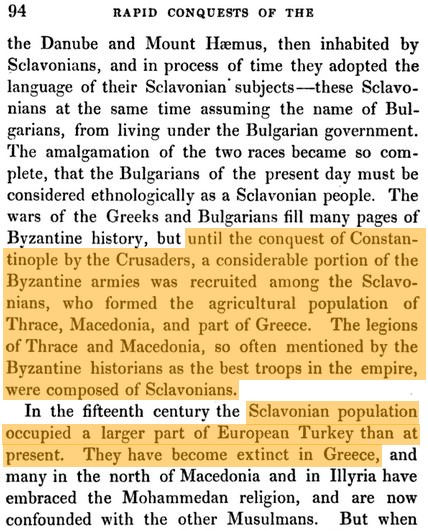
It seems that the Slavic speakers of Macedonia and Thrace where an agricultural class even as far back to the medieval era. Sort of explains how in a few non-Slavic languages, most Slavic loanwords relate to agriculture.
 
I’m just going to put my 2 cents worth.
As I stated in another thread, I’m an avid reader and student of history, the Roman Empire and it’s successor The Eastern Roman Empire (The term Byzantine Empire was never the official name of the empire, it was a title bestowed by later Western European historians after its collapse in 1453) as it is part of our history as well.
The Eastern Roman Empire was never the Greek and it’s citizens never viewed themselves as Greek, they called themselves Romans, the only thing Greek about the Empire was that Greek was the official language throughout the Empire for administrive purposes. All citizens within the Empire considered themselves Romans regardless of their ethnicity. In fact there were islolated villages within Greece as late as early last century when encountered and asked what nationality they replied they were Romans and this is a well documented fact.
Back in the days of the Empire Western Europe referred to the Empire as the Empire of the Greeks and this was done in a derogatory manner, not as a compliment as the Eastern Romans were viewed with suspicion and were thought of as very effeminate and due to the fact that the official administrative language of the Empire was Greek in much the same way the official language of the whole Roman Roman Empire was Latin. It was only after the ascension of Heraclius in the early 600’s that the official language of the Eastern Roman Empire was changed from Latin to Greek.
Most of the Eastern Roman Emperors were not Greek, a sizeable amount of them had Armenian Heritage. In fact the last Emperor Constantine Palaiologus was only a quarter Greek, the other quarter was Italian and the other whole half was Serbian. Also there is a possibility that Mehmet The Conqueror was either half Serbian or half Macedonian (see Roger Crowley’s Constantinople, The Last Great Siege, 1453)
The Greek Claim that the Eastern Roman Empire was Greek is very laughable and is just more of their propaganda as there is a huge amount of documentation from various eminent historians that refute this. Granted Constantinople was founded upon the Ancient Greek city of Byzantium. The Eastern Roman Empire history does not just belong to the history of Greece, it belongs to the history of Macedonia, Serbia, etc including Russia.
The two headed eagle that was the symbol of the Eastern Roman Empire that appears on the Albanian flag, in Greek, Macedonian churches etc. I bet you that most Greeks, hell most people do not know what it symbolises. It symbolises the whole original Roman Empire, one looking west and the other looking east due to the partition of the Empire in 2 and I it also symbolised that the eastern Roman Emperor was the rightful ruler and inheritor of the whole original Roman Empir.
I could go way more in depth about this topic, as stated it is a passion of mine because it is a part of Macedonian history but I’ll be sitting here for days on end writing a whole book

Well put.


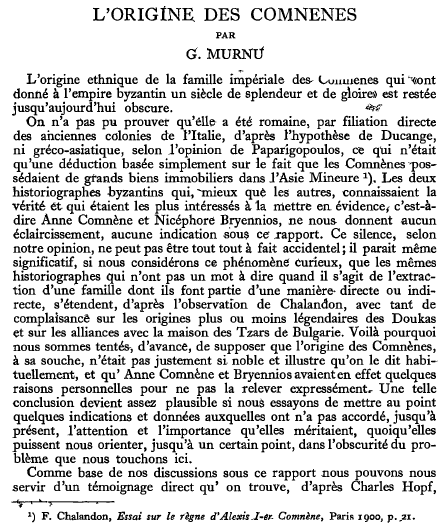
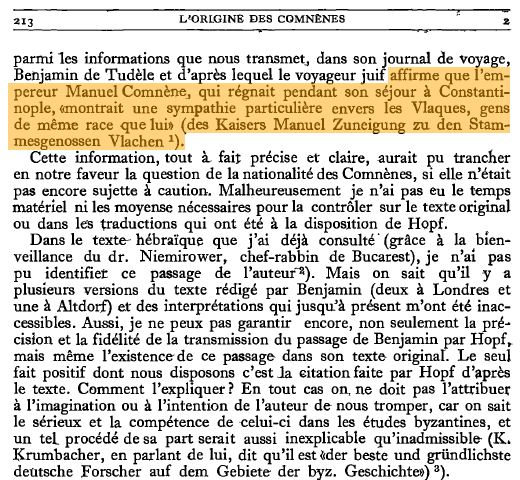
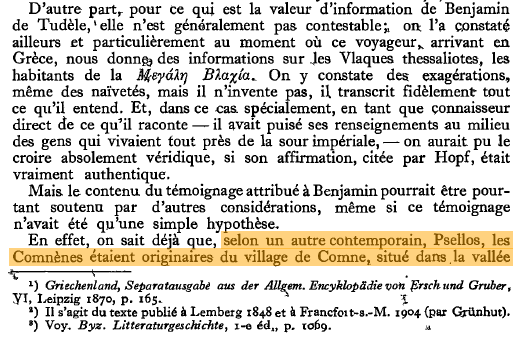
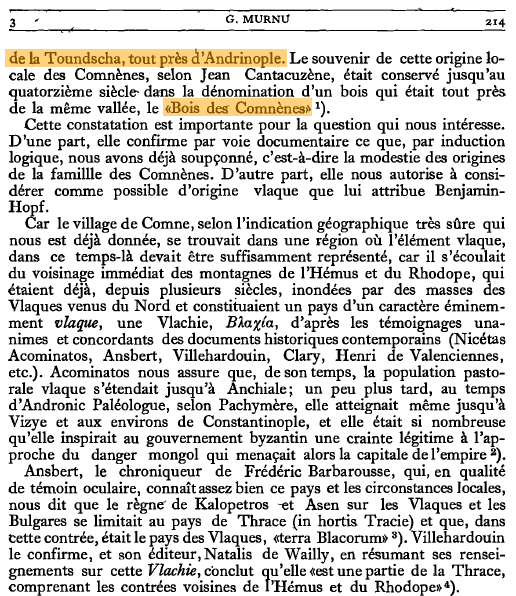
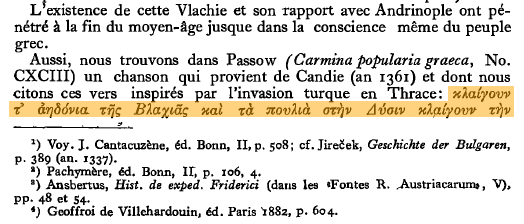
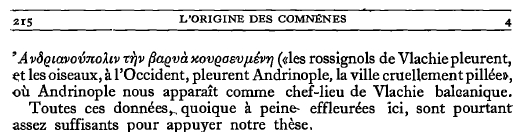
FYI - The Vlach origin of Comnenes:

1) The Emperor Manuel Comnene "showed a particular sympathy towards the Vlachs, people of the same race as him".
2) According to Psellos, the Comnenes were from the village of Comne, located in the Toundscha valley, near Adrianople - a region with a Vlach element.

I can't see the sources for [1] or [2] (I don't mean Psellos, but the info that Comne has a Vlach element).

Is this the same Comnenos that is characterized as... an ethnic-Armenian 195 times in the previous pages? Get serious you guys. Unfortunately, nothing specific is known about the origins of the first famous male of the Comnenos family.
 
Back
Top