• Welcome to the new Macedonian Truth Forum. All posts, members and private messages have been moved over from the old forum.

    Passwords from the old forum could not be carried over, so please use Forgot your password? to set a new one. The reset link is emailed to the address on your account.

  • Rules and Regulations at the forum of the Macedonian Truth Organisation (MTO)

    (1) The national-ethnic and cultural-linguistic identity of the Macedonian people is historically Macedonian, and derives its character from the native, indigenous and geographic homeland of the Macedonians, which is called Macedonia. To ensure that their human rights, integrity and heritage are appropriately respected, the only nouns and adjectives acceptable when reference is made to the above character and identity markers is Macedon, Macedonia, Macedonian and Macedonians.

    (2) The nation-state of the Macedonian people is the Republic of Macedonia, and is to be referred to by this official title so long as the 'republic' prefix is consistently applied to other states. Alternative references are the Macedonian Republic, or simply, Macedonia.

    (3) The 'ethnic' prefix is only acceptable for Macedonians in cases where differentiation is specifically required - so long as it is in context and consistent where it concerns its application to other ethnic groups.

    (4) Should any other differentiation be specifically required, the names of other ethnic groups that reside with Macedonians in either the Republic of Macedonia or the occupied Macedonian regions in Greece, Bulgaria, Serbia or Albania, are to be given a prefix.

    (5) Negating the identity, language and culture of the Macedonian people by deliberate avoidance of the terms Macedonia, Macedonian and Macedonians, or by any other means, is not permitted.

    (6) Systematic anti-Macedonian propaganda and rhetoric are not permitted.

    (7) Threads irrelevant to the Macedonian Cause, the community at the Macedonian Truth Organisation or the Macedonians in general may be considered as spam or not in the spirit of the forum. In such cases they are not permitted.

    (8) Continual posting of messages in threads with the sole purpose of deviating from the initial topics with the use of unrelated and unnecessary information is not permitted.

    (9) All posts, external articles, reports, etc that are cited in languages other than Macedonian or English, must be accompanied with a translation in one or both of the said languages.

    (10) Despite the possibility of some conversations and debates becoming heated, extreme abuse and/or racism, vulgar language and/or terminology, threats, revelation of personal information about others, harassment, and other such behavior will not be permitted. If deemed necessary all relevant information including member details will be reported to the appropriate authorities for investigation which may result in legal action.

    (11) Threads that are created must have a summary of a topic or excerpt of an article found in pertinent link(s) that have been included. One line threads will be considered unaccetable spam and are therefore not permitted.

    (12) Compulsive and deliberate lies, irrespective of the topic, are not permitted.

    (13) Any symbols or avatars found to be perceived as offensive to Macedonians are not permitted.

    (13) Any explicit or extreme material is not permitted.

    Failure to adhere to the above rules and regulations will result in a ban after 3 breaches. This may be reconsidered in some cases should the circumstances be of an unorthodox nature and/or require special consideration. To assure an effective deterrent against an individual or individuals with the sole purpose of causing dissent through spamming, racism or other improper means, the above rules will be strictly enforced.

    The MTO administration will monitor all discussions as reasonably practical and reserve the right to remove any post and/or member from the forum, and update the rules and regulations as required. Members are encouraged to immediately report any post and/or member to the MTO administration if they feel that these rules have not been abided by.

    The views expressed on this forum are those of the individuals. The only official representation of the MTO is made by the "Macedonian Truth Organisation (Site Owner)" username, and no other.

  • Macedonian Cause

    The Macedonian Truth Organisation calls on God in Heaven to protect, bless and guide the endeavour it is committing to undertake, and that is to work towards:

    Securing Macedonia as a free, independent and democratic republic in which sovereignty lies with the Macedonian citizens; as the nation-state of the Macedonian people in which they can preserve their culture, language and identity; as a state in which the Macedonian language and culture form the basis of public life and act as important unifying elements of Macedonian society; as the home of all its citizens to which it guarantees and obliges their inalienable natural rights and corresponding responsibilities;

    The acknowledgment as self-evident and irrefutable the existence of the:

    1) Indigenous, ethnonational name of Macedonia;
    2) Macedonian people, language and identity;
    3) Macedonian culture, symbols and folklore;
    4) Macedonian ancestry, heritage and history in its entirety; and
    5) Macedonian Orthodox Church;

    Securing recognition by the International Community of the tragedies endured by the Macedonian people, of the division of Macedonia with the signing of the Treaty of Bucharest on August 10, 1913, and the genocide committed against the Macedonian people at the hands of the Greek, Bulgarian and Serbian states and their respective churches during the 19th and 20th centuries;

    Ensuring that the Interim Accord is declared ‘null and void’ and that all constitutional provisions, acts, commitments, agreements, legislation, regulations, policies or programs emanating from, supporting or consequential to the Interim Accord are also declared ‘null and void’, including the use of any symbols and the completion of any acts imposed by, or originating from, the Interim Accord.

    Ensuring that the Framework Agreement is abolished and that all constitutional provisions, acts, commitments, agreements, legislation, regulations, policies and programs emanating from, supporting or consequential to the Framework Agreement are also abolished and replaced by a framework of constitutional and statutory law based on inalienable natural rights and corresponding responsibilities and universally codified human rights mechanisms.

    Securing the abolishment of any existing constitutional provisions, acts, agreements, legislation, regulations, policies and programs that discriminate against the Macedonian people, in any international organisation or any of the countries of the International Community where such constitutional provisions, acts, agreements, legislation, regulations, policies and programs exist, and thereby ensuring the freedom for Macedonians to exercise their inalienable natural rights and fulfil their corresponding responsibilities, and practice their culture, language and religious faiths in all the countries of the International Community without hindrance;

    The empowerment of Macedonians to undertake a moral revolution and to instil and/or reinvigorate within themselves a deep-rooted national, cultural, linguistic and historical dignity and a commitment to the exercise of freedom based on inalienable natural rights and corresponding responsibilities;

    The recognition of the Macedonian minorities in the neighbouring states of Macedonia as well as the respect for the inalienable rights and freedoms of the Macedonian minorities, as provided for by natural law and as codified by the United Nations Charter, the Universal Declaration of Human Rights and other universally codified human rights mechanisms;

    The full and unreserved respect of, and the support for, the rights of all people of non-Macedonian descent living in Macedonia and around the world, who share a reciprocal full and unreserved respect for the Macedonian people, their homeland and their state;

    The cultural unification and solidarity of the Macedonian people living in all parts of historical Macedonia and adjacent territories, as well as Macedonians throughout the world;

    The unity of all Macedonians on the principles, objectives and achievement of the Macedonian cause as defined by this declaration.

The Real Ethnic Composition of Modern Greece

When the island was occupied by the Greek navy, Greek soldiers were sent to the villages and stationed themselves in the public squares. Some of the children ran to see what these Greek soldiers, these Hellenes, looked like. "What are you looking at?" one of them asked. "At Hellenes," we replied. "Are you not Hellenes yourselves," he retorted. "No, we are Romans."
 
This Ottoman success paved the way for Gazi Hüseyin Pasha, the local commander, to conquer the eastern half of the island, except for the fortress of Siteia. The Venetians and the local population suffered some grievous losses: it is estimated that by 1648, almost 40% of the Cretan population had perished of disease or warfare, and in 1677, the island's pre-war population of ca. 260,000 had dropped to about 80,000.
 
''The last six centuries The Venetians thought Crete was underpopulated, even though it did not consistently grow enough to feed itself. They encouraged various nations to set up colonies. In 1363 they invited Armenians to settle" In 1416 they transported to Crete a large number of Turkish prisoners-of-war, who two years later were encouraged to send for their families and settle down in the island. (The Venetians may have settled more Turks in Crete than the Turks did.) In the later Venetian period we find a remarkable set of censuses. Governors' reports give apparently exact counts for the whole island or for its four provinces or nineteen districts (exclud-ing Sphakia). The earliest, that of Geronimo Zane in 1534, puts the population of Crete at 175,268, about one-third of what it is today.' The most complete census is that of Castrofilaca in 1583, which gives the number of huomini da !anion, 'men of action' (aged between 15 and 60), of boys, old men, and females, in the cities and in each of 1,073 casali. There are further lists of the number of men owing public services. Can we believe the lists and numbers? According to Bernardo's census of 1536, the village of Gavalokheri (Ap) - to take a typical example - comprised two casali with a total of 172 action-men. Of these, 59 were named Gavalla, including eleven Constantin Gavallas, eight called Janni, and seven called Manoli. It can have been no light matter to keep track of all these Gavallas; and they themselves may not have been over-meticulous about giving information, since being inscribed could have led to an uncom-fortable spell at the oar or digging ditches. To number the people of Crete can never have been a light task, because settlements are not neatly aggregated into villages and ...
 
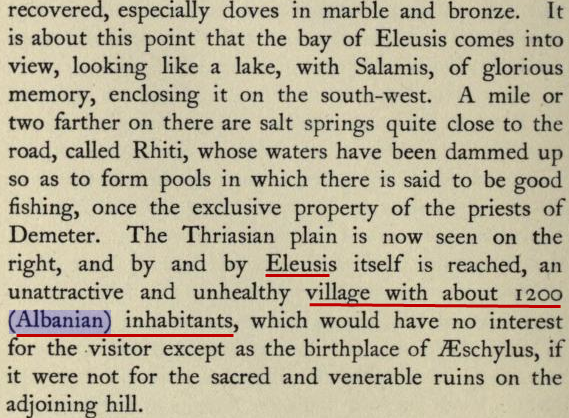
A Venetian chronicler (Stefano Magno) records that "30,000 Albanian inhabitants in the mountains" of Peloponnese rose against the despot Thomas in 1453. In 1455 the Signory authorized the settlement of more Albanians in its Messenian ...
 
Northern Epirotes:
Ioannis Chalkeus - (Vlach: Joan Chalkeus)
Daniel of Moscopole - (Vlach: Daniil Moscopoleanu)
Theodore Kavalliotis - Teodor Kavalioti (Vlach)
Konstantinos Tzechanis - Constantinus Tzechani (Vlach)
---
Dimitri Nanopoulos - From a Vlach family of Northern Epirus. (Physicist. He is one of the most regularly cited researchers in the world, cited more than 43,200 times over across a number of separate branches of science.)
Evangelis Zappas (1800–1865) - Vlach
Konstantinos Zappas (1814–1892) -Vlach
George Tenet, former Director of CIA - Albanian
Panagiotis Kone - Albanian
Petros Zappas - Vlach surname.
Nektarios Terpos - Vlach etc.
Plenty of others I can find.
 
STRABO-
The cities along the side that forms the Strait are, first, Messene, and then Tauromenium, Catana, and Syracuse; but those that were between Catana and Syracuse have disappeared—Naxus and Megara; and on this coast are the outlets of the Symaethus and all rivers that flow down from Aetna and have good harbors at their mouths; and here too is the promontory of Xiphonia. According to Ephorus these were the earliest Greek cities to be founded in Sicily, that is, in the tenth generation after the Trojan war; for before that time men were so afraid of the bands of Tyrrhenian pirates and the savagery of the barbarians in this region that they would not so much as sail thither for trafficking; but though Theocles, the Athenian, borne out of his course by the winds to Sicily, clearly perceived both the weakness of the peoples and the excellence of the soil, yet, when he went back, he could not persuade the Athenians, and hence took as partners a considerable number of Euboean Chalcidians and some Ionians and also some Dorians (most of whom were Megarians) and made the voyage; so the Chalcidians founded Naxus, whereas the Dorians founded Megara, which in earlier times had been called Hybla. The cities no longer exist, it is true, but the name of Hybla still endures, because of the excellence of the Hyblaean honey.
 
Historical Documents: Albanians (and other peoples) in various Greek Islands.

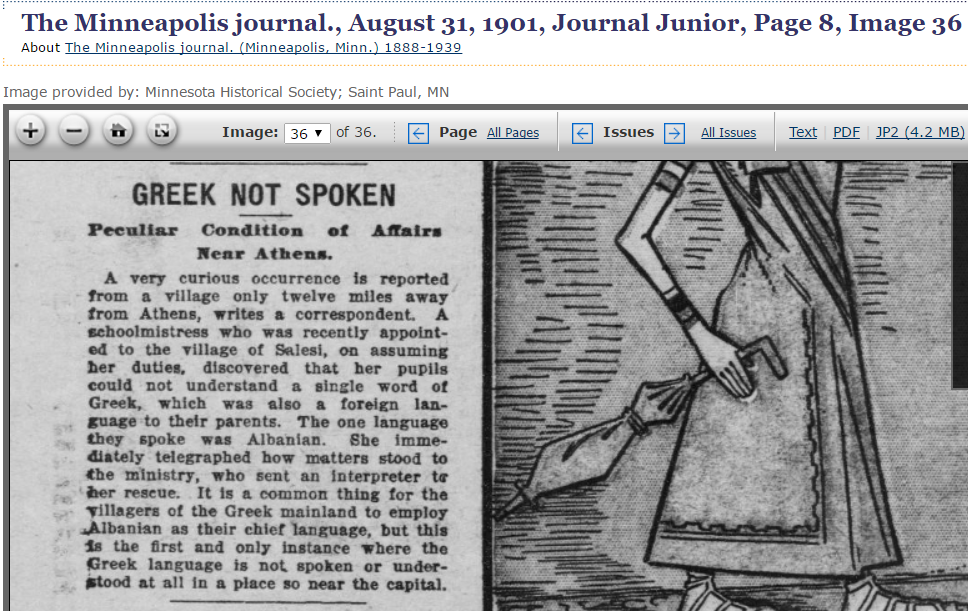
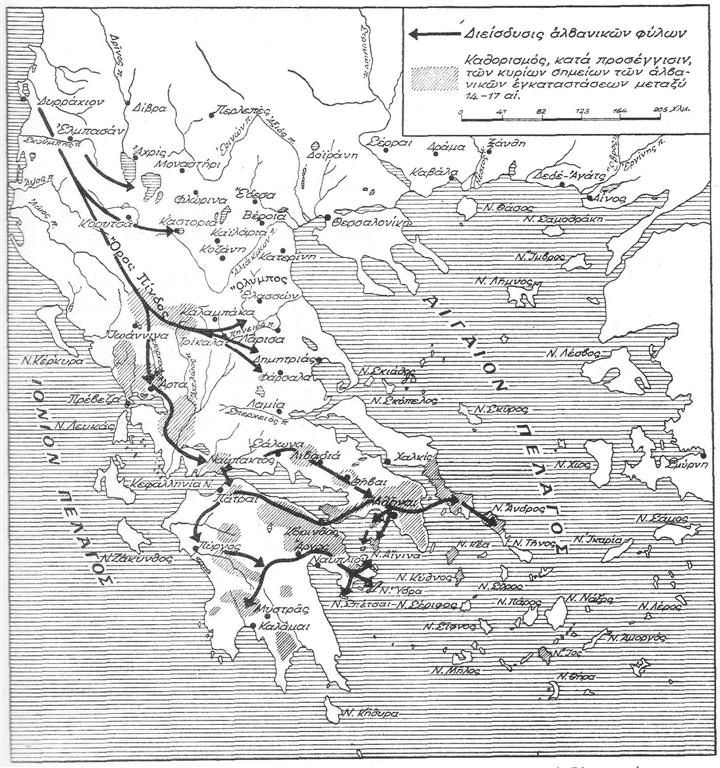
Presence of Albanians located in the northeastern Aegean islands (Samos, Psara) and some islands of the Cyclades (Andros, Ios, Kea, Kythnos). Just a few random examples (Google Translation):
Ios:

"Throughout the island there is only a small town on a hillside. The inhabitants are ethnic Albanians ...." (Francois Richard, 1650).
Homer died on Ios. :37:
I have a horrible cover page of Iliad and very poorly treated by me too (a little scratched of the upper layer I mean it looks white you know). Inside it looks very elegant and it's translation respects the literal version with balanced words. For cover page I would choose this one:
images


However this one is not so great inside. perseus.tufts
 
Last edited:
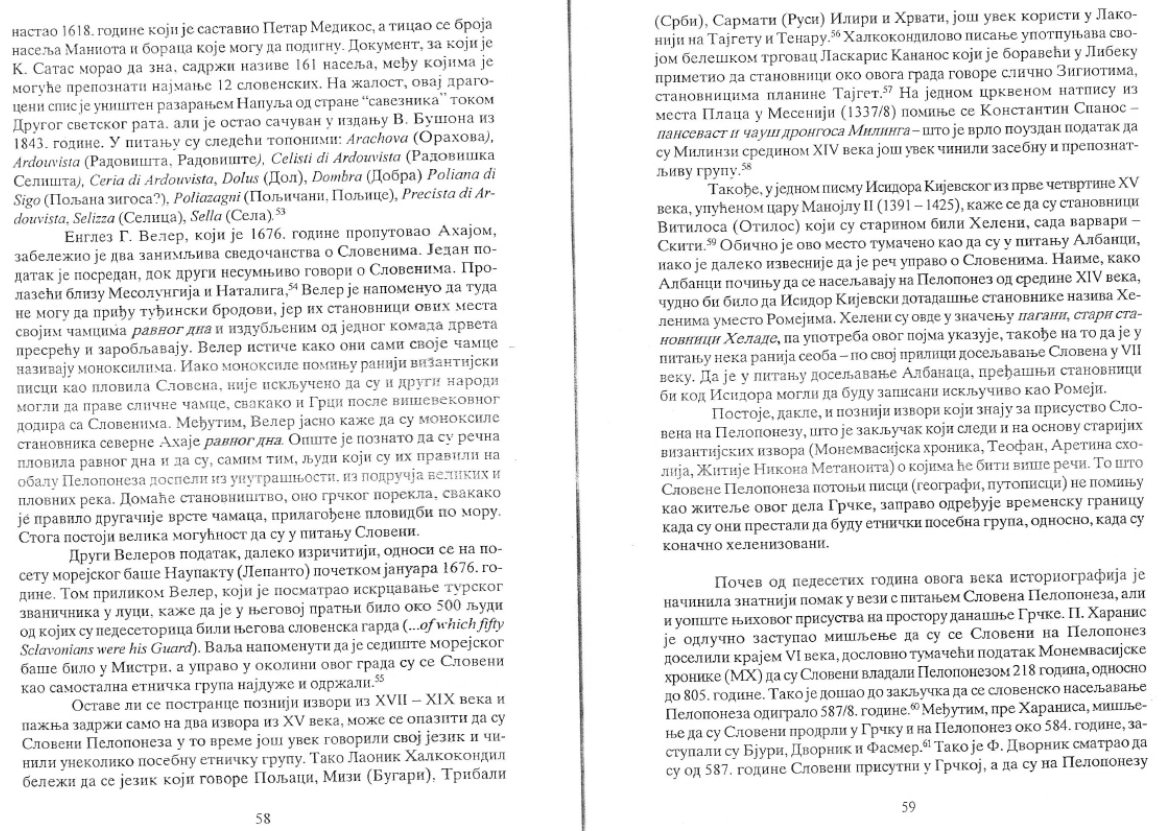
I will just be posting the relevant URLs/Screenshots to save time. Everyone is welcome and encouraged to explore and verify the sources/links.

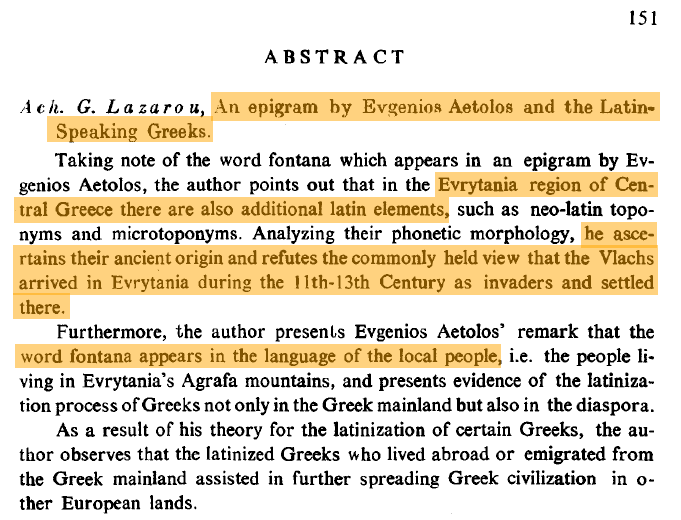
1) "The Vlachs filled Thessaly and for this reason it was called "Great Vlachia". Also Vlachs were in Roumeli, Euboia and the Peloponnese. Arvanites who settled in Attica, Corinthia, Epirus, Mani, in Thessaly and the islands were not few, and the 'Franks' (Italians, Catalans, Venetians, etc.) from the Crusades were established in many Greek regions (the coasts of Eastern Thessaly, Ionian Islands, Attica, Roumeli, Aegean islands etc.)."

URL:
https://www.google.ca/search?tbm=bk...sy-ab..0.0.0....0.9SNvkwM0iQk&gws_rd=cr&dcr=0

2) The village of Agios Akakios (formerly known as Golitsa), an important settlement which according to the local historians "is said to be founded in the 14th century by Vlach and Serbian nobles." Other villages of the same region such as Achladia (Amurlar), Leontari (Aslanar), Anthohori (also known by the blatant Vlach name Floresi) etc., where the Vlach presence -even more spectacularly- is attested up to this day are also utterly neglected as if they do not exist at all.

Another area of Greece where Vlachs still linger and which again is outside Thede Kahl's reach -if not interest- is Euboea. A long and lanky island which almost touches the mainland at Chalkis, Euboea, known in mediaeval times as Negroponte is described by the Encyclopaedia Britannica (15th edition, 1995, vol. 4, pag. 587) as having a Vlach element: ".. the population of the island is varied (..) there is a Vlach element in the hill country".

URL:
http://www.network54.com/Search/vie...The+Vanishing+Tribes?term=Discovery&page=6666

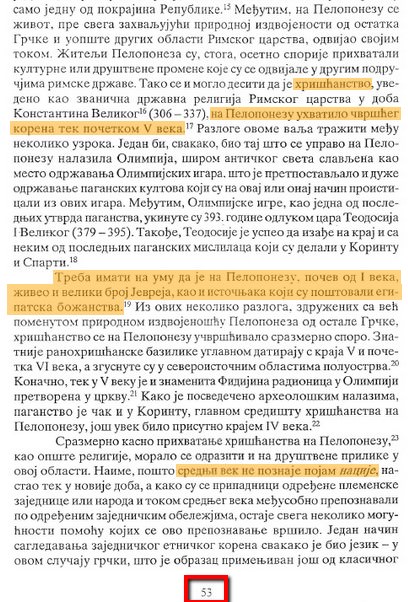
3)


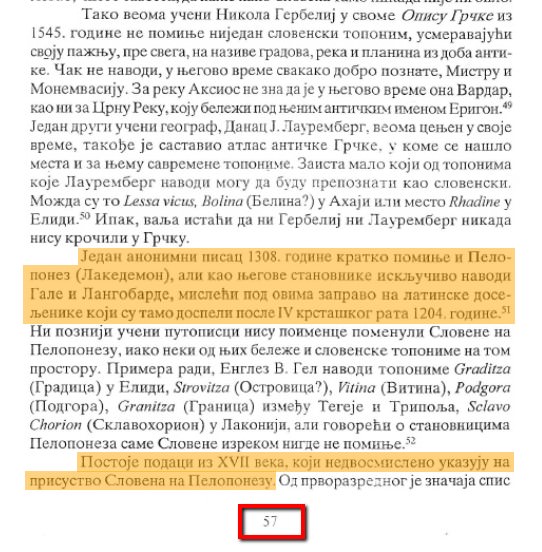
4)


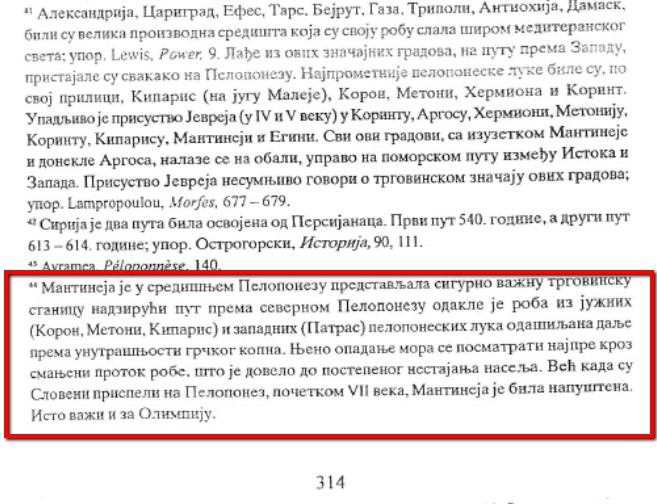
5) The following comes from the (deceased) Serbian historian Tibor Zivkovic. I will provide translations later on, when I have time - apologies.


For the last page, 314, the gist of it is as follows:
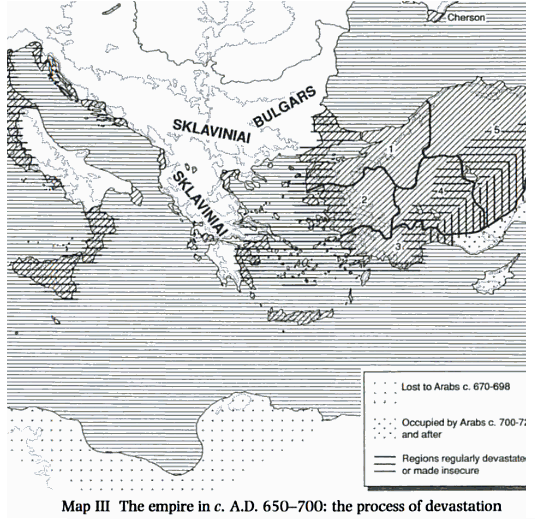
Both Mantineia and Olympia (in the Peloponnese) were entirely empty and deserted (abandoned) by the time Slavs arrived and settled here in the 7th century.

URL - Tibor Zivkovic - Juzni Sloveni Pod Vizantijskom Vlascu Od 600-1025:
https://www.scribd.com/document/569...i-Sloveni-Pod-Vizantijskom-Vlascu-Od-600-1025
 
Last edited:
URL:
https://books.google.ca/books?id=7V...#v=onepage&q=Sclaves Wallachians Epir&f=false

Putnam's Magazine - Volume 4 - Page 566, Year 1869.

Page 566:

"In Epirus, there are, no doubt, a few places where the tongue has been preserved with considerable purity; but, in the main, that province is inhabited by Albanese, Sclaves, Wallachians, and similar incongruous tribes."


URL:
https://books.google.ca/books?id=bj... longer to be found wallachs romounoi&f=false

Twixt Greek and Turk; Or, Jottings During a Journey Through Thessaly ..., By Sir Valentine Chirol, Year 1881.

Pages 37 and 38:

"... northwards into Macedonia pure Greeks are no longer to be found. All the communities which are included under that designation are Wallachs; or Romounoi, as they call themselves -- Greco - Wallachs, as they are called by the Hellenes."
 
Last edited:
The Twentieth Century, Volume 6.

Page 937:
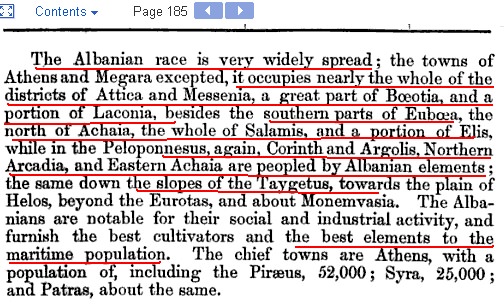
"The Greek population round Argos and Nauplia, we are told, was entirely exterminated, and replaced by Albanians, who remain to-day. In Aegina all the males were massacred, 6000 women and children were sold as slaves, and their place was taken by the ancestors of the present Albanian inhabitants."

Page 938:
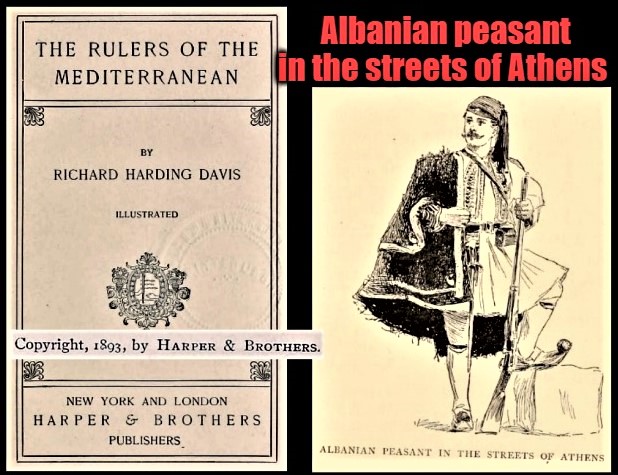
"In Greece proper, the Albanians occupied large areas abandoned by the rural population, and became the only inhabitants of some of the most famous sites. They cultivated the fields of Marathon and Plataea, and pastured their flocks on Helicon and Parnassus. The whole of Boeotia, Attica, Megaris, Corinthia, and Argolis, a great portion of Laconia and Messenia, Arcadia, Elis, and Acarnania were so colonised. Indeed, the Albanians appear to have done for Greece in the sixteenth and seventeenth centuries something like that which the Sclavonians had done in the sixth and seventh."

URL:
https://books.google.ca/books?id=51...ves were chiefly Thracians Slavonians&f=false
 
The Arvanites were so dominant in Attica that even the Bavarians who settled in Attica were forced to speak Arvanitika.

The following comes from the book Arvanites written by Kostas Biris in 1960. The actual title of the book in Greek is Αρβανίτες οι Δωριείς του νεότερου Ελληνισμού: ιστορία των Ελλήνων Αρβανιτών.

We read the following on Page 320:

"As for the presence of the Bavarians on the northern outskirts of Athens, the story is as follows: during the first years after Otto's coming to Greece, many of his compatriots decided to come and settle in Athens in the hope that they would find work here to live. However, the competition in the civil professions, both towards the Greek and the other Europeans and, most importantly, towards the Maltese and the Napolitans, has frustrated their predictions. Most were forced to return home, while for the rest and for the Bavarian guard, the "Leadership of the Greek Rule" (Αντιβασιλεία) was forced to give them an agricultural settlement. Indeed, in 1838 estates in Heraklion (Athens) were granted to them by those who had bought it for the Greek state from the Turks and exacted for them a poor settlement around a chapel of Catholic faith to which all of them belonged. They were also given horses and other supplies for the cultivation of their fields. Since they were neither farmers, nor the animals and supplies that were given to them were fit, they failed in their first attempts when Buchon visited them in 1841 during his tour of the northern suburbs of Athens. He predicted that their settlement would dissolve after a few years. However, they themselves, with their prowess and perseverance, denied these predictions. Because they adapted to not only the requirements of their new surroundings, but also to the inhabitants of the surrounding villages, and they have been completely assimilated. They received from their neighbours all the characteristics of the Attica peasant. That is why, even before they completed 100 years from their original establishment and settlement, as seen in Arakli or in the neighboring suburbs the (Bavarian) villagers spoke Arvanitika, and others were astonished to hear German names, although they later found out that they did not even know German."

Sorry for the translation but I tried my best. Anyway here is the original text:

Όσο για την παρουσία των Βαυαρών στα βόρεια περίχωρα της Αθήνας η ιστορία έχει ως εξής: κατά τα πρώτα χρόνια μετά την κάθοδο του Όθωνος στην Ελλάδα, πολλοί συμπατριώτες του απεφάσισαν να έλθουν και να εγκατασταθούν στην Αθήνα με την ελπίδα ότι θα εύρισκαν εδώ εργασία να ζήσουν. Ο συναγωνισμός όμως στα αστικά επαγγέλματα, τόσο προς τους Έλληνας όσο και προς τους άλλους Ευρωπαίους παροίκους και - κυρίως - προς τους Μαλτέζους και τους Ναπολιτάνους, διέψευσε τις προβλέψεις τους. Οι περισσότεροι αναγκάσθηκαν να επιστρέψουν στην πατρίδα τους, ενώ για τους υπόλοιπους, καθώς και για τους απομάχους της βαυαρικής φρουράς, εφρόντισε η Αντιβασιλεία να τους δοθεί αγροτική εγκατάσταση. Πραγματικά, παρεχωρήθησαν σε αυτούς το 1838 κτήματα στο Ηράκλειο (της Αθήνας) από εκείνα που είχε εξαγοράσει το ελληνικό δημόσιο από τους Τούρκουςκαι εκτίσθη για αυτούς ένας φτωχός συνοικισμός γύρω από μιαν εκκλησούλα καθολικού δόγματος στην οποία ανήκαν όλοι. Τους εδόθηκαν επίσης άλογα και άλλα εφόδια για την καλλιέργεια των χωραφιών τους. Επειδή όμως ούτε αυτοί ήσαν γεωργοί, ούτε τα ζώα και τα εφόδια που τους έδωσαν ήταν κατάλληλα, απέτυχαν στις πρώτες προσπάθειές τους ώστε ο Buchon που τους επεσκέφθη το 1841 κατά την περιοδεία του στα βόρεια προάστεια της Αθήνας. προέβλεψε ότι ο συνοικισμός τους θα διαλυόταν ύστερα από μερικά χρόνια. Οι ίδιοι ωστόσο με την φιλοπονία και με την επιμονή τους διέψευσαν τις προβλέψεις του. Γιατί όχι μόνο στις απαιτήσεις της νέας τους επιδόσεως προσαρμόσθησαν αλλά και με τους κατοίκους των γύρω χωριών αφοιμοιώθηκαν τελείως. Και ενώ αυτοί έγιναν η αιτία να διαδοθή σε όλους ο πάνινος κούκος με το γείσο, παρέλαβαν από εκείνους όλα τα άλλα χαρακτηριστικά του χωρικού της Αττικής. Γι' αυτό και προτού συμπληρωθούν ακόμη 100 χρόνια από την αρχική τους εγκατάστασι, βλέποντας κανείς στο Αράκλι ή στα γειτονικά προάστεια χωρικούς να μιλούν αρβανίτικα, με κατάπληξη άκουε μεταξύ τους γερμανικά επώνυμα, αν και διεπίστωνε ύστερα ότι δεν ήξευραν ύστερα ούτε λέξι γερμανική.

από το βιβλίο του Κώστα Μπίρη - Αρβανίτες, οι δωριείς του νεώτερου ελληνισμού, Αθήνα 1960, σελίδα 320.
 
No doubt Albanians were the dominant element in Attica, however I would use 'obligated' instead of 'forced'.

You are correct.


The following comes from URL:
https://en.wikisource.org/wiki/1911_Encyclopædia_Britannica/Macedonia

1911 Encyclopædia Britannica/Macedonia

- "With the exception of the southern and western districts already specified, the principal towns, and certain isolated tracts, the whole of Macedonia is inhabited by a race or races speaking a Slavonic dialect. If language is adopted as a test, the great bulk of the rural population must be described as Slavonic. The Slavs first crossed the Danube at the beginning of the 3rd century, but their great immigration took place in the 6th and 7th centuries."

- "After its subjugation by the Romans the country was divided into four districts separated by rigid political and social limitations. Before long it was constituted a province, which in the time of Augustus was assigned to the senate. Thenceforward it followed the fortunes of the Roman empire, and, after the partition of that dominion, of its eastern branch. Its Thraco-Illyrian inhabitants had already been largely latinized when Constantine the Great made Byzantium the imperial residence in A.D. 330; they called themselves Romans and spoke Latin. Towards the close of the 4th century the country was devastated by the Goths and Avars, whose incursions possessed no lasting significance. It was otherwise with the great Slavonic immigration, which took place at intervals from the 3rd to the 7th century. An important ethnographic change was brought about, and the greater part of Macedonia was colonized by the invaders..."

- "The well-wooded and cultivated districts of Grevena and Castoria, which are mainly inhabited by a Vlach population, are remarkably beautiful, and the scenery around Lakes Ochrida and Prespa is exceedingly picturesque."

- "The Greek and Vlach populations are not always easily distinguished, as a considerable proportion of the Vlachs have been hellenized. Both show a remarkable aptitude for commerce..."


Last edited:
Back
Top