• Welcome to the new Macedonian Truth Forum. All posts, members and private messages have been moved over from the old forum.

    Passwords from the old forum could not be carried over, so please use Forgot your password? to set a new one. The reset link is emailed to the address on your account.

  • Rules and Regulations at the forum of the Macedonian Truth Organisation (MTO)

    (1) The national-ethnic and cultural-linguistic identity of the Macedonian people is historically Macedonian, and derives its character from the native, indigenous and geographic homeland of the Macedonians, which is called Macedonia. To ensure that their human rights, integrity and heritage are appropriately respected, the only nouns and adjectives acceptable when reference is made to the above character and identity markers is Macedon, Macedonia, Macedonian and Macedonians.

    (2) The nation-state of the Macedonian people is the Republic of Macedonia, and is to be referred to by this official title so long as the 'republic' prefix is consistently applied to other states. Alternative references are the Macedonian Republic, or simply, Macedonia.

    (3) The 'ethnic' prefix is only acceptable for Macedonians in cases where differentiation is specifically required - so long as it is in context and consistent where it concerns its application to other ethnic groups.

    (4) Should any other differentiation be specifically required, the names of other ethnic groups that reside with Macedonians in either the Republic of Macedonia or the occupied Macedonian regions in Greece, Bulgaria, Serbia or Albania, are to be given a prefix.

    (5) Negating the identity, language and culture of the Macedonian people by deliberate avoidance of the terms Macedonia, Macedonian and Macedonians, or by any other means, is not permitted.

    (6) Systematic anti-Macedonian propaganda and rhetoric are not permitted.

    (7) Threads irrelevant to the Macedonian Cause, the community at the Macedonian Truth Organisation or the Macedonians in general may be considered as spam or not in the spirit of the forum. In such cases they are not permitted.

    (8) Continual posting of messages in threads with the sole purpose of deviating from the initial topics with the use of unrelated and unnecessary information is not permitted.

    (9) All posts, external articles, reports, etc that are cited in languages other than Macedonian or English, must be accompanied with a translation in one or both of the said languages.

    (10) Despite the possibility of some conversations and debates becoming heated, extreme abuse and/or racism, vulgar language and/or terminology, threats, revelation of personal information about others, harassment, and other such behavior will not be permitted. If deemed necessary all relevant information including member details will be reported to the appropriate authorities for investigation which may result in legal action.

    (11) Threads that are created must have a summary of a topic or excerpt of an article found in pertinent link(s) that have been included. One line threads will be considered unaccetable spam and are therefore not permitted.

    (12) Compulsive and deliberate lies, irrespective of the topic, are not permitted.

    (13) Any symbols or avatars found to be perceived as offensive to Macedonians are not permitted.

    (13) Any explicit or extreme material is not permitted.

    Failure to adhere to the above rules and regulations will result in a ban after 3 breaches. This may be reconsidered in some cases should the circumstances be of an unorthodox nature and/or require special consideration. To assure an effective deterrent against an individual or individuals with the sole purpose of causing dissent through spamming, racism or other improper means, the above rules will be strictly enforced.

    The MTO administration will monitor all discussions as reasonably practical and reserve the right to remove any post and/or member from the forum, and update the rules and regulations as required. Members are encouraged to immediately report any post and/or member to the MTO administration if they feel that these rules have not been abided by.

    The views expressed on this forum are those of the individuals. The only official representation of the MTO is made by the "Macedonian Truth Organisation (Site Owner)" username, and no other.

  • Macedonian Cause

    The Macedonian Truth Organisation calls on God in Heaven to protect, bless and guide the endeavour it is committing to undertake, and that is to work towards:

    Securing Macedonia as a free, independent and democratic republic in which sovereignty lies with the Macedonian citizens; as the nation-state of the Macedonian people in which they can preserve their culture, language and identity; as a state in which the Macedonian language and culture form the basis of public life and act as important unifying elements of Macedonian society; as the home of all its citizens to which it guarantees and obliges their inalienable natural rights and corresponding responsibilities;

    The acknowledgment as self-evident and irrefutable the existence of the:

    1) Indigenous, ethnonational name of Macedonia;
    2) Macedonian people, language and identity;
    3) Macedonian culture, symbols and folklore;
    4) Macedonian ancestry, heritage and history in its entirety; and
    5) Macedonian Orthodox Church;

    Securing recognition by the International Community of the tragedies endured by the Macedonian people, of the division of Macedonia with the signing of the Treaty of Bucharest on August 10, 1913, and the genocide committed against the Macedonian people at the hands of the Greek, Bulgarian and Serbian states and their respective churches during the 19th and 20th centuries;

    Ensuring that the Interim Accord is declared ‘null and void’ and that all constitutional provisions, acts, commitments, agreements, legislation, regulations, policies or programs emanating from, supporting or consequential to the Interim Accord are also declared ‘null and void’, including the use of any symbols and the completion of any acts imposed by, or originating from, the Interim Accord.

    Ensuring that the Framework Agreement is abolished and that all constitutional provisions, acts, commitments, agreements, legislation, regulations, policies and programs emanating from, supporting or consequential to the Framework Agreement are also abolished and replaced by a framework of constitutional and statutory law based on inalienable natural rights and corresponding responsibilities and universally codified human rights mechanisms.

    Securing the abolishment of any existing constitutional provisions, acts, agreements, legislation, regulations, policies and programs that discriminate against the Macedonian people, in any international organisation or any of the countries of the International Community where such constitutional provisions, acts, agreements, legislation, regulations, policies and programs exist, and thereby ensuring the freedom for Macedonians to exercise their inalienable natural rights and fulfil their corresponding responsibilities, and practice their culture, language and religious faiths in all the countries of the International Community without hindrance;

    The empowerment of Macedonians to undertake a moral revolution and to instil and/or reinvigorate within themselves a deep-rooted national, cultural, linguistic and historical dignity and a commitment to the exercise of freedom based on inalienable natural rights and corresponding responsibilities;

    The recognition of the Macedonian minorities in the neighbouring states of Macedonia as well as the respect for the inalienable rights and freedoms of the Macedonian minorities, as provided for by natural law and as codified by the United Nations Charter, the Universal Declaration of Human Rights and other universally codified human rights mechanisms;

    The full and unreserved respect of, and the support for, the rights of all people of non-Macedonian descent living in Macedonia and around the world, who share a reciprocal full and unreserved respect for the Macedonian people, their homeland and their state;

    The cultural unification and solidarity of the Macedonian people living in all parts of historical Macedonia and adjacent territories, as well as Macedonians throughout the world;

    The unity of all Macedonians on the principles, objectives and achievement of the Macedonian cause as defined by this declaration.

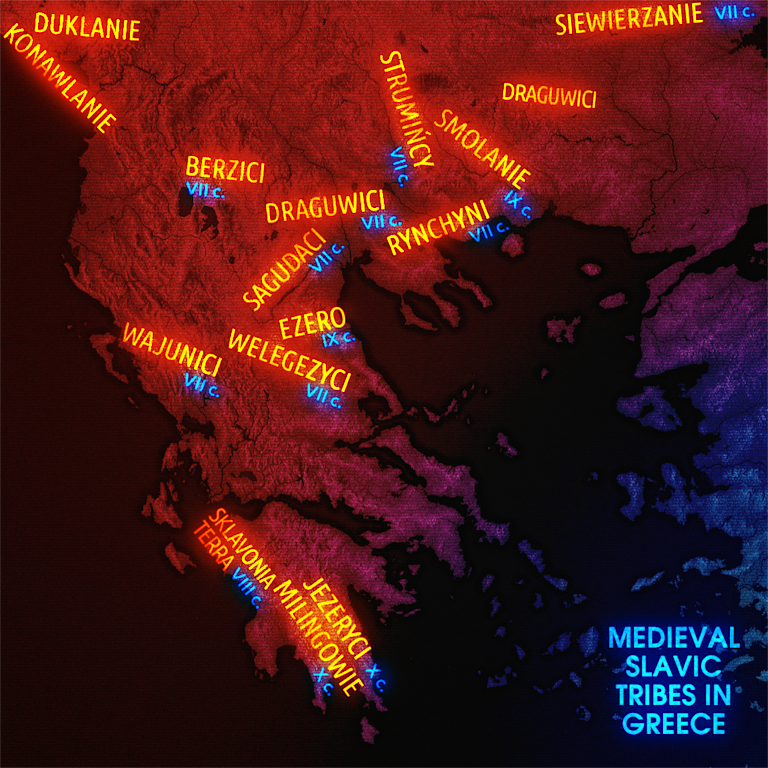
The Real Ethnic Composition of Modern Greece


I will provide a quick summary of the interesting points above, with additional explanations/clarifications, in English:
- "Pistiki" were the last remnants of actual Vlach-speakers (and/or actual Shepherds) in Akarnania. By this time (late 19th century), almost all Vlach-speakers (most of the population) of Akarnania & Aetolia were Greeks and fully (self-)hellenized and abandoned their Vlach language.*
- The same name, "Pistiki", is also found among the Vlachs who emigrated to Asia Minor (Burad left an interesting short testimony). These "Pistiki" of Asia Minor were fully hellenized. The same case happened with the Bomi - the Vlach-speakers of Boeotia - who fully self-hellenized.
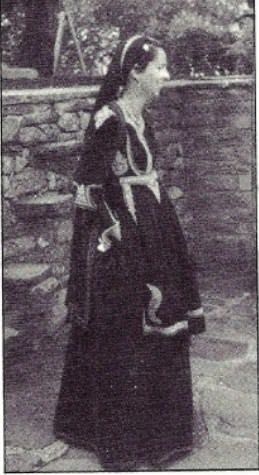
- Sarakatsani most likely of Vlach origins - they used to wear very similar clothing/costumes as the Farsherioti Vlachs.

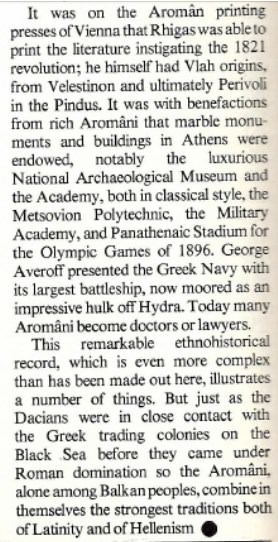
* - Vlach-speakers basically comprised the bulk and outright majority of Aetolia, Akarnania, and adjacent areas in the Middle Ages; these regions comprised an extensive district which was known in the Middle Ages as Small Wallachia (Μικρή Βλαχία; Mikrí vlahía).

Edited (added additional screenshot, below)


BUMP .... anyways I still would like to see a primary source saying most people in those region were Vlachs.
 
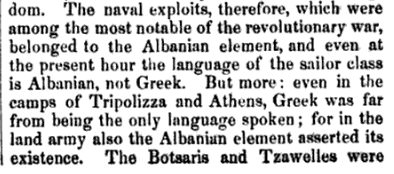
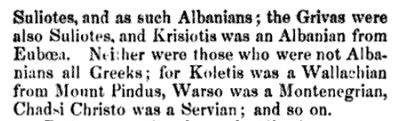
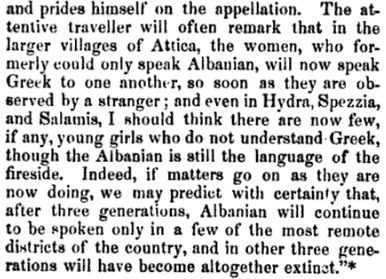
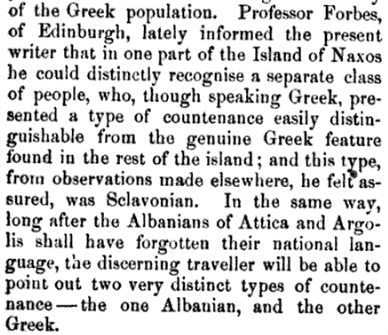
The Westminster Review - Volumes 61-62 - Pages 191 and 192, Year 1854.

o6kp38I.gif


bXPfwgV.jpg

8JfAmA0.jpg


GpokHq6.jpg


pzbfknX.jpg
 
Tripoli - For his part, François Pouqueville talks about colonies established by refugees of Slavic and Vlach origin from northern Greece and if Slavo-Vlach etymologies are good Tripolitsa is likely to be one of them.

La ville fut fondée vers le xive siècle. Son nom grec de « Tripolitsa » pourrait peut-être se référer aux trois villes alors abandonnées de Mantinée, Tégée et Pallantion. Au Moyen Âge, elle apparaît sous les noms de « Dobrolica » signifiant en slave, selon les interprétations, « bon lieu » ou « ville aux chênes », de « Drobolitsa » signifiant en valaque « morcelé, fragmenté, partagé », de « Tripolizza » pour les génois et les vénitiens au xviie siècle, et de « Tarabolusa » pour les turcs. De son côté, François Pouqueville évoque des colonies établies par des réfugiés d'origine slave et valaque venus du nord de la Grèce et si les étymologies slavo-valaques sont les bonnes, Tripolitsa pourrait être l'une d'elles.
↑ François Pouqueville, Mémoire sur les colonies valaques établies dans les montagnes de la Grèce depuis Fienne jusque dans la Morée, Ernest Desplaces, Paris 1834, dans Louis Gabriel Michaud.


2VG33LD.jpg

BAVRhzl.jpg

uTwENAV.jpg

y6vw4Rs.jpg

MiwV2OC.jpg


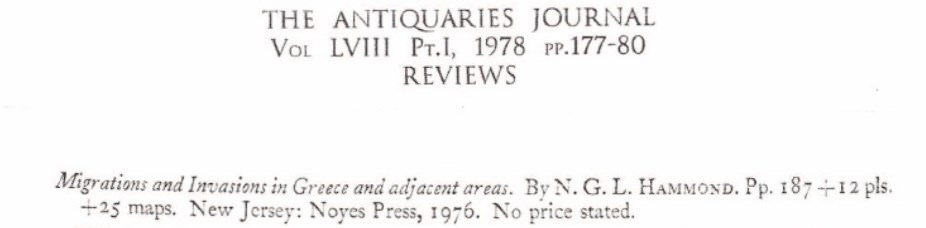
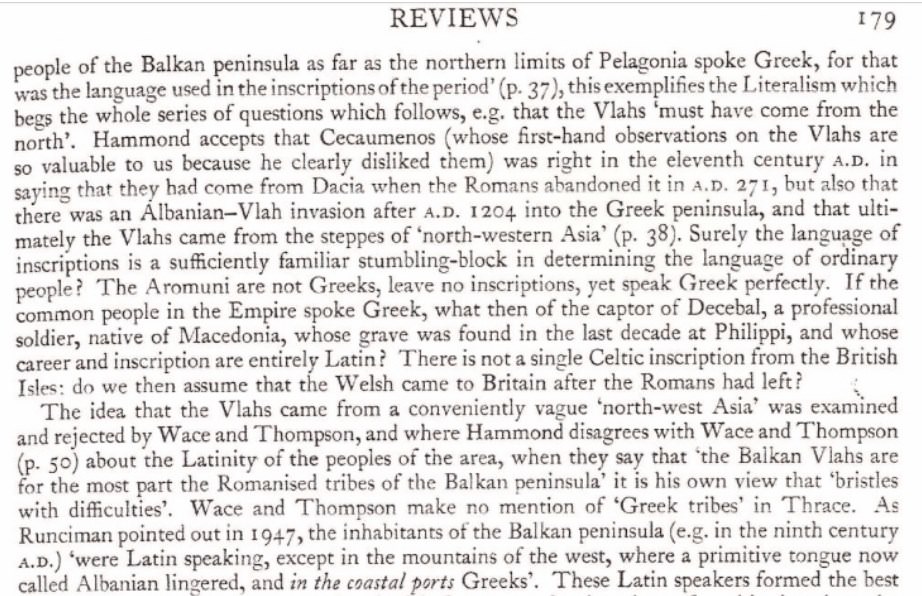
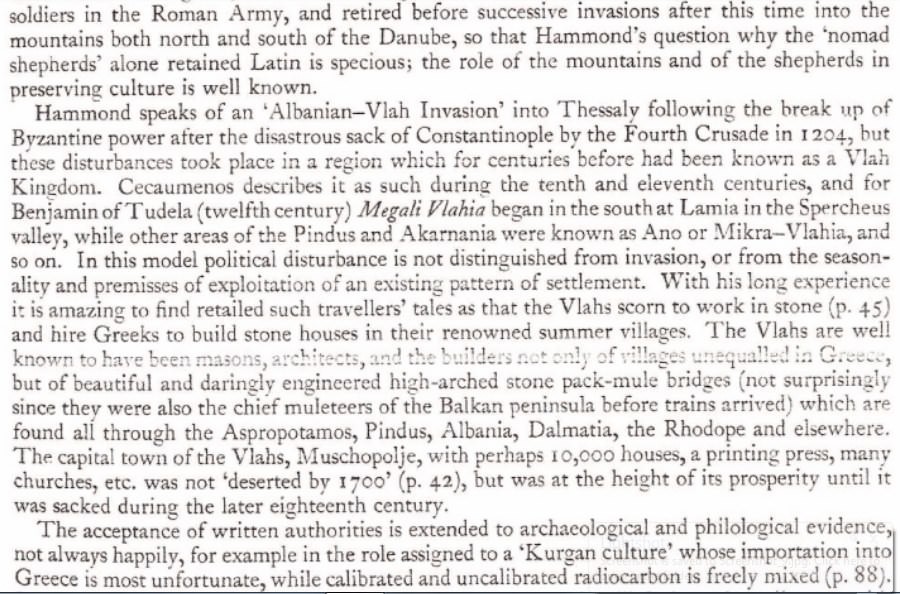
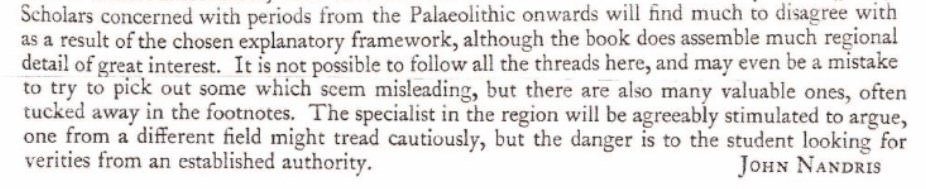
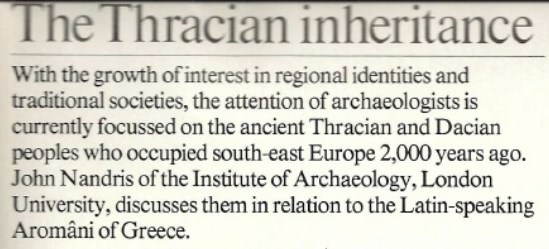
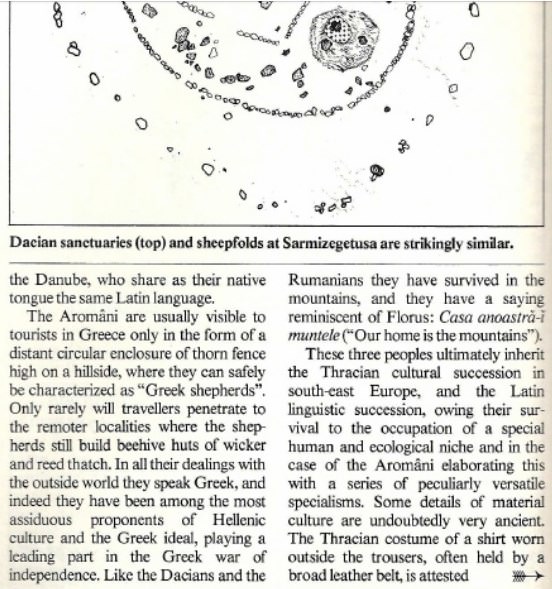
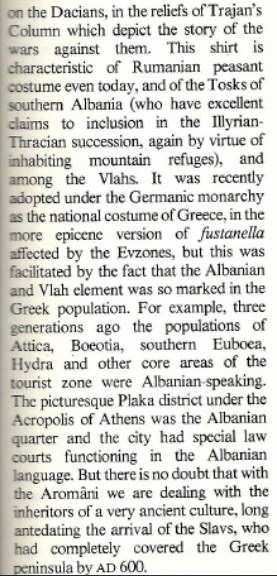
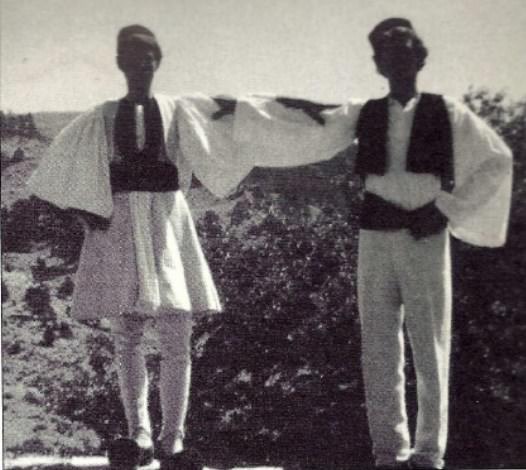
John Nandris
EEMGgjD.jpg

GOnVyFd.jpg

NqjyY4v.jpg

6r4wS48.jpg

FWvnQTV.jpg

LeerpNF.jpg
 
Last edited:
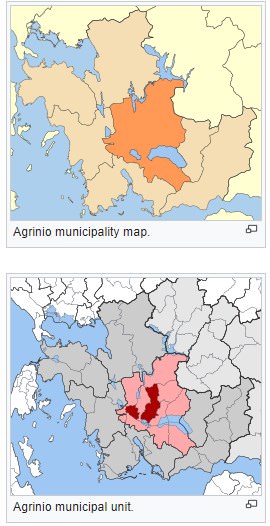
Agrinio (Greek: Αγρίνιο, Latin: Agrinium) is the largest city of the Aetolia-Acarnania regional unit of Greece and its largest municipality, with 106,053 inhabitants. In medieval times and until 1836, the city was known as Vrachori (Βραχώρι).

30CwVkM.jpg


URL:
https://en.wikipedia.org/wiki/Agrinio

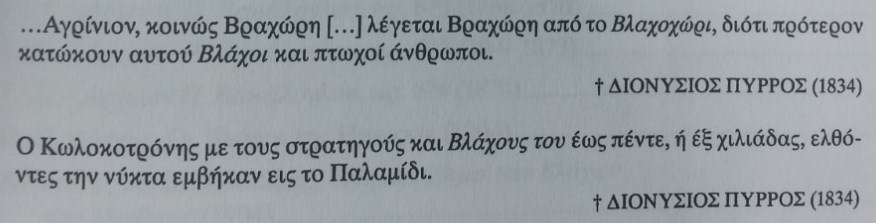
Testimony from Dionysios Pyrros, 1834 (first citation below - the second testimony, also from Pyrros, refers to Kolokotronis and many thousands of his VLACH comrades/fighters).
98IJgDI.jpg


"Agrinio, commonly known as Vrachori ... It is called Vrachori from Vlachohori, because the first settlers were Vlachs, poor people"

URL:
https://www.agrinionews.gr/παρουσίαση-του-βιβλίου-τοπωνυμικό-τ/

From this link, we read the following relevant points:
- The city of Agrinio was founded by Vlachs in the beginning of the 13th century
- The previous name of the city (Vrachori) according to the prevailing etymological approach comes from the word Vlachohori
- The Vlach language group is therefore an integral part of Aetolia-Acarnania and especially the city of Agrinio for centuries


The residents of modern Agrinio and adjacent areas are mostly (Self-) Hellenized descendants of medieval Vlachs who formed the ethnic bulk of Aetolia-Acarnania as a whole. (I also read recently that not that long ago some Souliotes and Epirotes came from the north and settled in Agrinio.)
 
Last edited:
Bernard Randolph - 1643

IT Lyes to the North of Boeotia extending North West and South East about 120 miles; Its Breadth, at the broadest place not above 30. It was taken from the Venetians in the year 1471. The soil is very fertile, affording all sorts of Graine, Wine, and Oyle, as likewise Flesh and Fowl; the Sea abounding with Fish. Since the Turks have had possession of it, most of the Greeks are Fled from the Villages, and Townes; So as the inland places are mostly supplyed by Al∣baneses, who are the Shepherds, and serve the Turks at their Farmes. Formerly here were two Citys, and 500. Townes and Villages; Now there is but one, which can be called a City, which is the ancient Chalcis and now hath the name of the Island; by the Turks it is called Egriboz. It stands on a point of Land, having the Sea two Thirds about it. Betwixt it and the Maine is a small Island, with a strong Castle. From the Maine to the small Island is a bridge built up∣on six good Arches, and thence to the Maine

...

None but Turks and Jews live within the Ca∣stle, where are very spacious houses, and four which deserve the name of Seraglios; One for the Basha, at the right hand coming into the Castle from the Port; One for his Lievetenant or Ki∣ahja; a Third belonging to Ibrahim Aga's Son (of whose Father we will speak anon; ) and the Fourth, to Muzlee Aga; Which are very richly set out with carved work and painting.


https://quod.lib.umich.edu/e/eebo2/A70955.0001.001/1:5?rgn=div1;view=fulltext
 
Vasili: The Arvanite language was used by the people in Greece

URLs:
http://360grade.al/148796/vasili-gjuha-arvanite-perdorej-ne-popull-ne-greqi/
https://www.youtube.com/watch?v=ZEHIqpGtoNo
https://www.youtube.com/watch?v=zYS60LKiWlg

Vasili: "For many years, Arvanite language was accepted as the language of the people. So, the Arvanite language was the language of the people, while the official language was Hellenic. The most elite area of Nafplio is called "Arvanitja". It is the first capital."

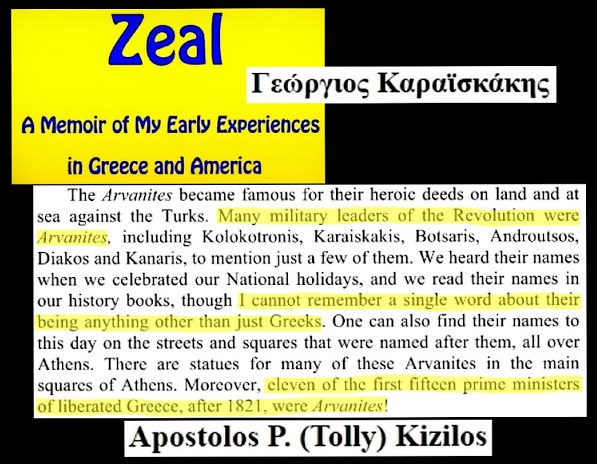
Vasili: "The Arvanites have been an extraordinary factor. They were 90% of the uprising against the Ottomans in 1921."

1. It would be interesting to know what Laertis Vasileiou is saying as he is a Greek-Albanian (meaning half-Greek, half-Albanian).

2. Nope. Arvanite was not the “language of the people", it was the language of the Arvanites. Arvanitia is not an elite segment of Nauplio, it is a beach where hundreds of Albanians were framed and killed by Turks, that’s how it got its’ name.

3. Nope, Arvanites were not an extraordinary factor (or… 90%) of Greek revolution. The extended article on Greek Revolution from English Wikipedia doesn’t even mention them once, while Albanian Wikipedia doesn’t even host an article on Greek Revolution.
https://en.wikipedia.org/wiki/Greek_War_of_Independence
 
1. It would be interesting to know what Laertis Vasileiou is saying as he is a Greek-Albanian (meaning half-Greek, half-Albanian).

2. Nope. Arvanite was not the “language of the people", it was the language of the Arvanites. Arvanitia is not an elite segment of Nauplio, it is a beach where hundreds of Albanians were framed and killed by Turks, that’s how it got its’ name.

3. Nope, Arvanites were not an extraordinary factor (or… 90%) of Greek revolution. The extended article on Greek Revolution from English Wikipedia doesn’t even mention them once, while Albanian Wikipedia doesn’t even host an article on Greek Revolution.
https://en.wikipedia.org/wiki/Greek_War_of_Independence

http://www.macedoniantruth.org/forum/showthread.php?t=5473
 
1. It would be interesting to know what Laertis Vasileiou is saying as he is a Greek-Albanian (meaning half-Greek, half-Albanian).

2. Nope. Arvanite was not the “language of the people", it was the language of the Arvanites. Arvanitia is not an elite segment of Nauplio, it is a beach where hundreds of Albanians were framed and killed by Turks, that’s how it got its’ name.

3. Nope, Arvanites were not an extraordinary factor (or… 90%) of Greek revolution. The extended article on Greek Revolution from English Wikipedia doesn’t even mention them once, while Albanian Wikipedia doesn’t even host an article on Greek Revolution.

https://en.wikipedia.org/wiki/Greek_War_of_Independence


Can you provided any sources to discredit Carlin's claims though?
 

Don't know what this is exactly, but of the six notables mentioned in lines 3 & 4 as Arvanites, only one was, Botsaris (a Souliote actually). There are probably discussions for each one of them in the forum (you can use the search engine).

You can also check it in Albanian wikipedia.
 
- Today, Cyclades islands such as Syros and Tinos have some entirely Catholic villages and parishes, while many Greeks from the Cyclades have surnames with a distinctly Italo-Venetian origin e.g. Venieris, Ragousis, Dellaportas, Damigos etc.

URL:
https://en.wikipedia.org/wiki/Duchy_of_the_Archipelago

- Albanians, mostly on the Argosaronic gulf islands, the northeastern Aegean and on some Cycladic islands (e.g. Andros, Ios, Kea and Kythnos),
- Catholics, mostly on the Cyclads, with their most significant communities being on Syros, Tinos, Naxos, Thera, Milos, Paros and Sifnos.

URL:
http://www.ehw.gr/asiaminor/Forms/fLemmaBody.aspx?lemmaid=10496
 
OWgKKVL.jpg

WZI9lvv.jpg

3VQDUrN.jpg

dyw6jn7.jpg

tLcf3UW.jpg

NbHi5Qf.jpg


Traditional “Vlach Wedding” in Thebes. Men and women in traditional costumes parade at the central streets of Thebes, re-enacting the custom of the “Vlach wedding” - newsreel 1962:
https://www.europeana.eu/portal/en/record/09204/EUS_9B202B4A690F47CC940E9A86C56A814A.html

Greek Vlachs dancing during the Vlach wedding ritual at Thebes city, Boeotia, Greece.
https://www.alamy.com/stock-photo-g...h-wedding-ritual-at-thebes-city-88534535.html

In 1830, after liberation of Greece, Vlachs transfered their rituals to Thebes (birthplace of Bacchus, similar to Dionysian symposiums & worships taking place at that time) in an attempt to move from a infertile soil to a fresh pasture for their livestock. The cult combined with Christianity, in The Vlach Wedding revival, a bucolic wedding ritual parody, with a disguised bride, impersonated by a man, called the 'Vlach' thus making a mockery of the wedding custom itself.
 
Last edited:
Back
Top