• Welcome to the new Macedonian Truth Forum. All posts, members and private messages have been moved over from the old forum.

    Passwords from the old forum could not be carried over, so please use Forgot your password? to set a new one. The reset link is emailed to the address on your account.

  • Rules and Regulations at the forum of the Macedonian Truth Organisation (MTO)

    (1) The national-ethnic and cultural-linguistic identity of the Macedonian people is historically Macedonian, and derives its character from the native, indigenous and geographic homeland of the Macedonians, which is called Macedonia. To ensure that their human rights, integrity and heritage are appropriately respected, the only nouns and adjectives acceptable when reference is made to the above character and identity markers is Macedon, Macedonia, Macedonian and Macedonians.

    (2) The nation-state of the Macedonian people is the Republic of Macedonia, and is to be referred to by this official title so long as the 'republic' prefix is consistently applied to other states. Alternative references are the Macedonian Republic, or simply, Macedonia.

    (3) The 'ethnic' prefix is only acceptable for Macedonians in cases where differentiation is specifically required - so long as it is in context and consistent where it concerns its application to other ethnic groups.

    (4) Should any other differentiation be specifically required, the names of other ethnic groups that reside with Macedonians in either the Republic of Macedonia or the occupied Macedonian regions in Greece, Bulgaria, Serbia or Albania, are to be given a prefix.

    (5) Negating the identity, language and culture of the Macedonian people by deliberate avoidance of the terms Macedonia, Macedonian and Macedonians, or by any other means, is not permitted.

    (6) Systematic anti-Macedonian propaganda and rhetoric are not permitted.

    (7) Threads irrelevant to the Macedonian Cause, the community at the Macedonian Truth Organisation or the Macedonians in general may be considered as spam or not in the spirit of the forum. In such cases they are not permitted.

    (8) Continual posting of messages in threads with the sole purpose of deviating from the initial topics with the use of unrelated and unnecessary information is not permitted.

    (9) All posts, external articles, reports, etc that are cited in languages other than Macedonian or English, must be accompanied with a translation in one or both of the said languages.

    (10) Despite the possibility of some conversations and debates becoming heated, extreme abuse and/or racism, vulgar language and/or terminology, threats, revelation of personal information about others, harassment, and other such behavior will not be permitted. If deemed necessary all relevant information including member details will be reported to the appropriate authorities for investigation which may result in legal action.

    (11) Threads that are created must have a summary of a topic or excerpt of an article found in pertinent link(s) that have been included. One line threads will be considered unaccetable spam and are therefore not permitted.

    (12) Compulsive and deliberate lies, irrespective of the topic, are not permitted.

    (13) Any symbols or avatars found to be perceived as offensive to Macedonians are not permitted.

    (13) Any explicit or extreme material is not permitted.

    Failure to adhere to the above rules and regulations will result in a ban after 3 breaches. This may be reconsidered in some cases should the circumstances be of an unorthodox nature and/or require special consideration. To assure an effective deterrent against an individual or individuals with the sole purpose of causing dissent through spamming, racism or other improper means, the above rules will be strictly enforced.

    The MTO administration will monitor all discussions as reasonably practical and reserve the right to remove any post and/or member from the forum, and update the rules and regulations as required. Members are encouraged to immediately report any post and/or member to the MTO administration if they feel that these rules have not been abided by.

    The views expressed on this forum are those of the individuals. The only official representation of the MTO is made by the "Macedonian Truth Organisation (Site Owner)" username, and no other.

  • Macedonian Cause

    The Macedonian Truth Organisation calls on God in Heaven to protect, bless and guide the endeavour it is committing to undertake, and that is to work towards:

    Securing Macedonia as a free, independent and democratic republic in which sovereignty lies with the Macedonian citizens; as the nation-state of the Macedonian people in which they can preserve their culture, language and identity; as a state in which the Macedonian language and culture form the basis of public life and act as important unifying elements of Macedonian society; as the home of all its citizens to which it guarantees and obliges their inalienable natural rights and corresponding responsibilities;

    The acknowledgment as self-evident and irrefutable the existence of the:

    1) Indigenous, ethnonational name of Macedonia;
    2) Macedonian people, language and identity;
    3) Macedonian culture, symbols and folklore;
    4) Macedonian ancestry, heritage and history in its entirety; and
    5) Macedonian Orthodox Church;

    Securing recognition by the International Community of the tragedies endured by the Macedonian people, of the division of Macedonia with the signing of the Treaty of Bucharest on August 10, 1913, and the genocide committed against the Macedonian people at the hands of the Greek, Bulgarian and Serbian states and their respective churches during the 19th and 20th centuries;

    Ensuring that the Interim Accord is declared ‘null and void’ and that all constitutional provisions, acts, commitments, agreements, legislation, regulations, policies or programs emanating from, supporting or consequential to the Interim Accord are also declared ‘null and void’, including the use of any symbols and the completion of any acts imposed by, or originating from, the Interim Accord.

    Ensuring that the Framework Agreement is abolished and that all constitutional provisions, acts, commitments, agreements, legislation, regulations, policies and programs emanating from, supporting or consequential to the Framework Agreement are also abolished and replaced by a framework of constitutional and statutory law based on inalienable natural rights and corresponding responsibilities and universally codified human rights mechanisms.

    Securing the abolishment of any existing constitutional provisions, acts, agreements, legislation, regulations, policies and programs that discriminate against the Macedonian people, in any international organisation or any of the countries of the International Community where such constitutional provisions, acts, agreements, legislation, regulations, policies and programs exist, and thereby ensuring the freedom for Macedonians to exercise their inalienable natural rights and fulfil their corresponding responsibilities, and practice their culture, language and religious faiths in all the countries of the International Community without hindrance;

    The empowerment of Macedonians to undertake a moral revolution and to instil and/or reinvigorate within themselves a deep-rooted national, cultural, linguistic and historical dignity and a commitment to the exercise of freedom based on inalienable natural rights and corresponding responsibilities;

    The recognition of the Macedonian minorities in the neighbouring states of Macedonia as well as the respect for the inalienable rights and freedoms of the Macedonian minorities, as provided for by natural law and as codified by the United Nations Charter, the Universal Declaration of Human Rights and other universally codified human rights mechanisms;

    The full and unreserved respect of, and the support for, the rights of all people of non-Macedonian descent living in Macedonia and around the world, who share a reciprocal full and unreserved respect for the Macedonian people, their homeland and their state;

    The cultural unification and solidarity of the Macedonian people living in all parts of historical Macedonia and adjacent territories, as well as Macedonians throughout the world;

    The unity of all Macedonians on the principles, objectives and achievement of the Macedonian cause as defined by this declaration.

The Real Ethnic Composition of Modern Greece

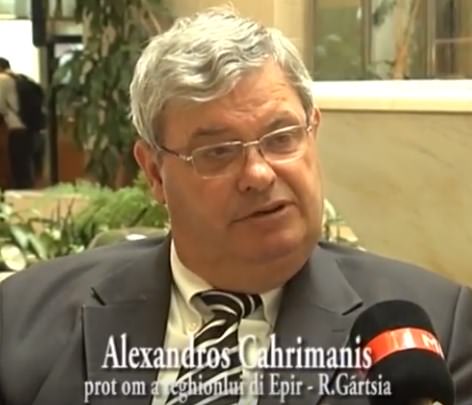
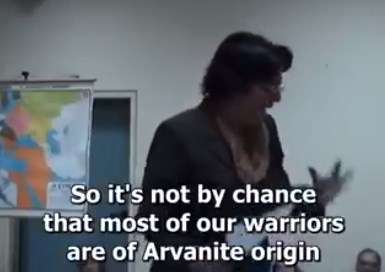
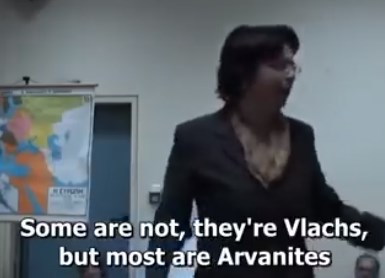
Interview (in Vlach) with Alexandros Kachrimanis, Governor of Epirus - Kachrimanis was born in Ioannina in 1956.
GJyBPmb.jpg

Video:
https://www.youtube.com/watch?time_continue=1600&v=lPo2BjKFvjQ

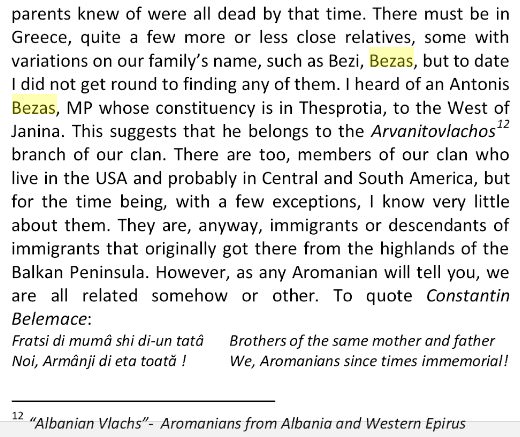
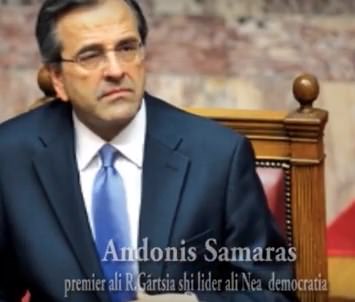
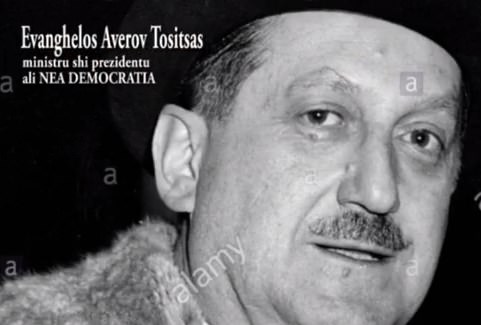
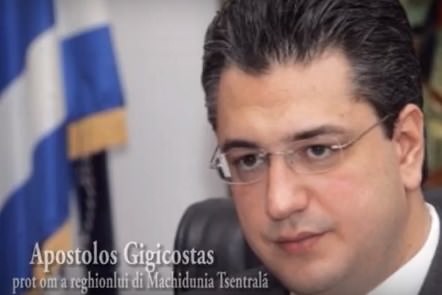
Per Kachrimanis, the following are but a few notable Greek personalities of Vlach stock (there are countless others):

0K9BiKn.jpg

xhef5Jo.jpg

qstcEQb.jpg

lEqeOsy.jpg

U8eyY2J.jpg

FCzQlLE.jpg

tP42MGK.jpg

TbNir01.jpg


The interview was made by Scanteau program from Rep. of Macedonia.
 
Last edited:
The Peloponnese is only one part of Greece, but let us look closely at the other censuses, more specifically the study of Greek Ottomanology Evangelia Balta with reference to the census of the Euboean Island in 1474, (ref. L’Eubée à la fin du XVe siècle: Economie et population, les registres de l’année 1474), where, based on the anthroponymic discerning criterion, we observe that the settlements of the Chalcis-Aliveris (central Euboea) are inhabited by an absolute Arvanite majority, also knowing that historically and traditionally the provinces of Boetia and Attica has been inhabited by an Albanian majority ...

http://27.al/arvanitet-iken-ne-greq...buti-dhe-numri-tyre-fakte-qe-duan-ti-fshehin/

1) Vlach villages/settlements in Euboea, both in the central and northern Euboea and in Kymi-Aliveri, lost the Vlach language in the early 19th century.

The municipality of Kymi-Aliveri:
https://en.wikipedia.org/wiki/Kymi-Aliveri

2)
s06gbei.jpg


URL:
https://www.jstor.org/stable/30096412?seq=1#page_scan_tab_contents
 
Last edited:
The following are direct quotations from the Greek article GREECE THROUGH THE AGES: A historical and socio-political overview.

Link here:
https://www.freeinquiry.gr/single-post.php?id=4192

- The Greek war of Independence didnʼt take place because the Greek subjects re-discovered their past which was completely forgotten. The “new comers” that had become subjects of the Ottoman Empire were mere savages that survived by getting ransom after blackmailing and kidnapping both Muslims and Christians and by looting villages. Kyriakos Simopoulos, a noted Greek author in his multi-volume work titled:“Foreign Sight-Seers in Greece” and ”How The Foreign Visitors Saw Greece in 1821” which is based on the narrations of European visitors presents the completely distorted ideas that the European Romantics had about the “modern population” of Greece. They chartered ships to bring clothing and food to the “Greeks” who were supposedly suffering from the “Ottoman yoke” but they ended up returning to their ships not only disappointed but also completely naked since the minute they disembarked, they were attacked by local (mainly of Albanian and Wallachian origin) uncouth mobs who violently stole all of their possessions including their clothes.
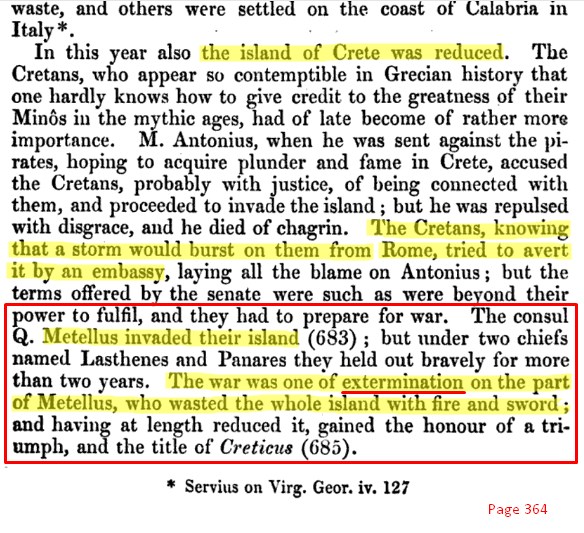
- The majority of modern Greeks today traces its origin from the mixture of Albanians, Wallachians, Northern Africans and Anatolians who had infested the land of Greece back then along with Slavs and some Francs and Venetians. Unfortunately even today, most modern Greeks are oblivious to their true historic and genetic origin. They think that they are the offsprings of ancient Greeks who suddenly saw the “light” and became Christians. Quite the opposite is true; they were Christians who were made to believe that their ancestors were the ancient Greeks.
 
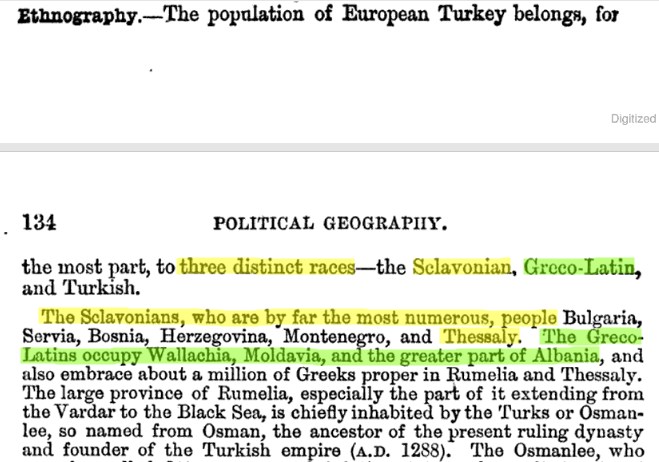
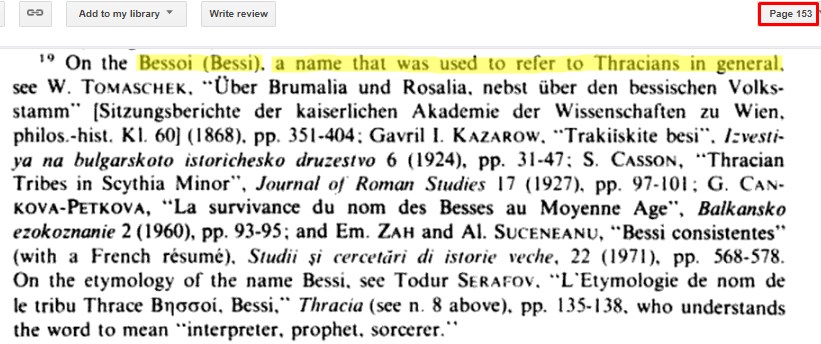
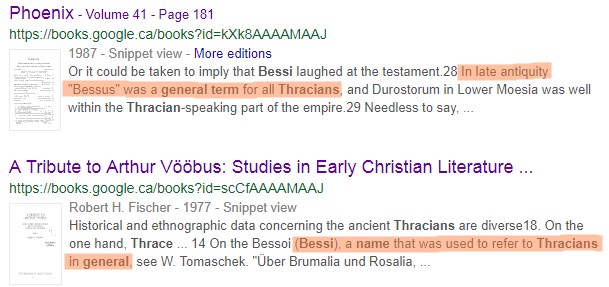
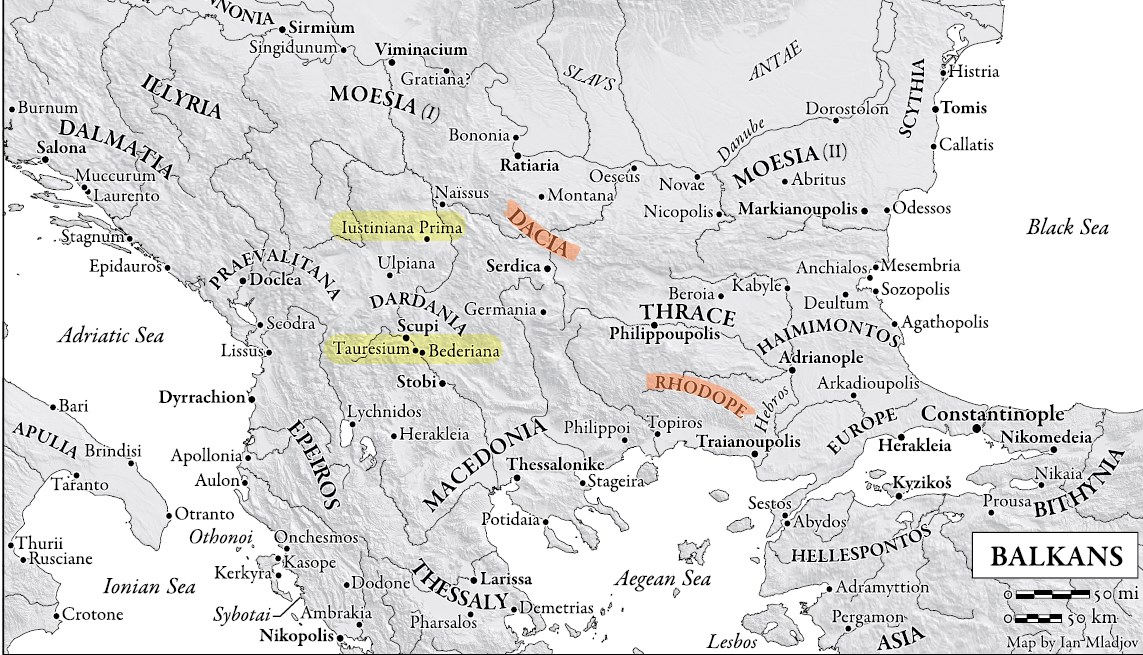
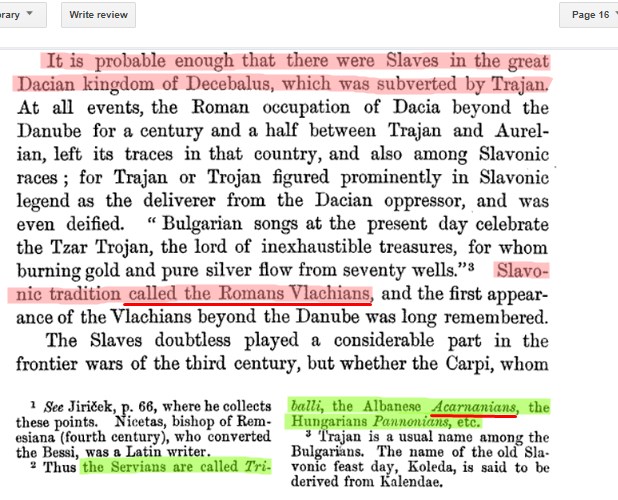
The Byzantine writer Cecaumenos, in his Strategicon of 1066 wrote that the Vlachs of Epirus and Thessalia came from North of the Danube and from along the Sava and that they were the descendants of the Dacians and the Bessi.

uO06lIp.jpg

7D6yhSK.jpg

ScklAAu.jpg


Bessi was general name of all Thracian tribes around Rhodope Mountains in Roman Empire time. Romans used name "Bessi" to describe other subgroups of Thracians in Rhodope such as Dii,Satrae,Maedi..etc. too.
https://www.familytreedna.com/groups/ftdna-thracian-i-y13338/about/background

Y0slIuB.jpg


We know that Pachymeres called the Vlachs of Thessaly Myrmidons as he wrote that they descend from Achilles. (Phrantzes also calls Myrmidons the inhabitants of Tzaconia.)

cbv8ZHc.jpg


Why did Kekaumenos and Pachymeres have such differing opinions?


PS:

In the 14th century, Ephraim reports in his chronicle about ACHAIA VLACHIA (unsure what this might refer to precisely; perhaps it also refers to Thessaly but that does not seem to make sense as Thessaly and neighboring areas were (consistently) known as Great Vlachia, as reported by several authors).

yXn8TU2.jpg
 
Last edited:
The Encyclopaedia Britannica: A Dictionary of Arts, Sciences, ... , 1911:

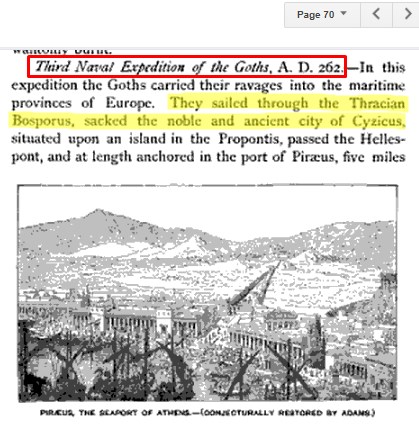
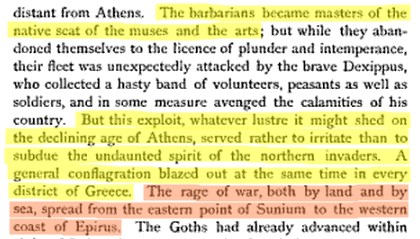
"In A.D. 395 a Gothic horde under Alaric devastated Laconia, and subsequently it was overrun by large bands of Slavic immigrants."


URL:
https://books.google.ca/books?id=Uy...ved=0ahUKEwjzv8z08ePgAhUMVa0KHUX-AN4Q6AEITjAH
https://www.google.ca/search?tbm=bks&hl=en&q=laconia+devastated


The Illustrated History of Rome: From the Founding of the City by, ... , George A. Smith - 1884:
QGGmKdE.jpg

qeUYfOQ.jpg


URL:
https://books.google.ca/books?id=jE...4MKHaTiBaUQ6AEwBnoECAgQAQ#v=onepage&q&f=false
 
Last edited:
- Between 1480 and 1546, the city of Athens had been vacated by epidemics, as evidenced by the anonymous chronicle of Oxford (Ectesis chronica and chronicon Athenarum, London, 1902).

- Historians agree: Athens had been forgotten because of the historical vacuum of so many centuries. It was an insignificant castle of Frankish rule. Until the last quarter of the 17th century it was almost non-existent for foreigners. Everyone believed that it was a bunch of ruins if it had not disappeared altogether. Guillet wrote in 1675: "I had read and heard a thousand times that Athens was a desolate place" (Guillet, p. 211).

- The Dutch traveler Favolius described the city of Athens as "a land of poor people". (Hodoeporiki byzantini lib. III auctore Hugone Favolio – Lovanii (Excudebat Servatius Sassenus, 1563).

- Julien Bordier, a French traveler, saw a Turkish village in Athens: "From this pervasive state, there is only a sad Turkish village, called Setina, and it is in the hands of one aga." (Athens was called Satines or Setines or Stines; Acropolis was Castro; Piraeus was called Porto-Draco or Porto-Leone from the marble lion, seized by the Venetians.)

- Genovese captain Francesco - Maria Levanto noted in his chronicle: "Today's Athens is but a deserted, barren place scattered with stones." (Prima parte dello specchio del Mare Mediterraneo dal capitan Francesco – Maria Levanto (In Genova, 1664.).

- "The once glorious Athens is so desolate, it seems incredible, that it was once glorious. I, at least, have not seen a more terrible place. Deserts, marshlands and marshes..." Impressions of the French ambassador, D'Aramon, as noted by his grammatist, the noble Jean Chesneau in 1546. (Jean Chesneau: Le voyage de monsieur d΄Aramon ambassadeur pour le Roy en Levant, escript par un noble homme Jean Chesneau publie et annote par M. Ch. Schefer (Paris, 1887).

URL:
https://diktyoellinwn.wordpress.com/2011/05/26/αλβανική-κι-όχι-ελληνική-η-καταγωγή-τω/
 
Last edited:
"Most of the merchants and leading persons at Janina and Metsovo are Vlachs. These Vlachs of Epirus would esteem it an offence to be considered of a comrade race with the Roumans."

- Papers by Command - Volume 87 - Page 104 (Great Britain. Parliament. House of Commons - 1903)
 
1) In Cephalonia, the Arvanites were first settled by the Venetian administration in May 1502 (K. Sathas: «Ελληνικά ανέκδοτα», τόμ. Α΄). Theodoros Bouas Grivas clan established in 1502 on the almost deserted and uninhabited Ithaca.

https://diktyoellinwn.wordpress.com/2011/05/26/αλβανική-κι-όχι-ελληνική-η-καταγωγή-τω/

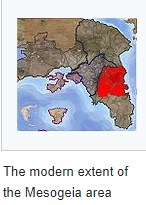
2) Testimony of De la Guilletiere who wrote in 1672: "All the inhabitants of Mesogeia are called Arvanites." (Georges Guillet de la Guilletiere, Athenes ancienne et nouvelle et l΄etat present de l΄Empire Turc, 1675.)

Mesogeia - the term designates since antiquity roughly the inland portion of the Attic peninsula
HQfRN4z.jpg


3) "Leaving Aulis ... we reached a village of Arnaouts. Here they call themselves Arvanites, but I do not know if they come from Albania. They speak their own language that no one understands. Their clothing is different from the clothing of the Greeks. It is more like the costume of the villagers of France. In their shaved head they wear a pointed hat." (Sieur d' Loir, French traveler, 1639.)

4) Traveler Nicholas Biddle, comparing the number of Albanians with the "Greeks", estimated at the end of the 19th century that the Albanians would one day absorb the "Greeks":

"Albanians are very likely to absorb the Greeks, who are decreasing rather than rising."

(«Αθήνα. Το τέλειο πρόσωπο τής ερήμωσης» από το βιβλίο: «Nicholas Biddle in Greece, The journals and letters of 1806», Πενσυλβάνια, 1991.)

https://www.freeinquiry.gr/single-post.php?id=1248
 
Piana degli Albanesi = Piana dei Greci

URL:
https://en.wikipedia.org/wiki/Piana_degli_Albanesi

Piana degli Albanesi was founded in the late 15th century by a large group of Albanian refugees coming from the Balkans during the conquest of the latter by the Ottoman Empire.

King John II of Spain and Sicily allowed the original refugees to occupy the present place and to preserve their Orthodox Christian rite. These Albanian refugees were at the time referred to by the surrounding population as "Greeks" on account of their Orthodox faith and the settlement became known as Piana dei Greci. For example, in 1673, the local priest Domenico Mamola in a note written in Greek refers to the settlement as Piana dei Greci.

In 1941 during Mussolini's invasion of Greece, the name was changed to Piana degli Albanesi so as to gain the locals support for the fascist regime's imperialist intentions toward Albania.


Piana dei Greci - initially "Greeks", as referred to by the surrounding population while local priests were writing notes in Greek.
They might as well have had some form of medieval Greek "identity" -- and yet nothing, absolutely nothing, changes the fact that the totality of these settlers were Albanian-speakers.
 
Last edited:
Back
Top