• Welcome to the new Macedonian Truth Forum. All posts, members and private messages have been moved over from the old forum.

    Passwords from the old forum could not be carried over, so please use Forgot your password? to set a new one. The reset link is emailed to the address on your account.

  • Rules and Regulations at the forum of the Macedonian Truth Organisation (MTO)

    (1) The national-ethnic and cultural-linguistic identity of the Macedonian people is historically Macedonian, and derives its character from the native, indigenous and geographic homeland of the Macedonians, which is called Macedonia. To ensure that their human rights, integrity and heritage are appropriately respected, the only nouns and adjectives acceptable when reference is made to the above character and identity markers is Macedon, Macedonia, Macedonian and Macedonians.

    (2) The nation-state of the Macedonian people is the Republic of Macedonia, and is to be referred to by this official title so long as the 'republic' prefix is consistently applied to other states. Alternative references are the Macedonian Republic, or simply, Macedonia.

    (3) The 'ethnic' prefix is only acceptable for Macedonians in cases where differentiation is specifically required - so long as it is in context and consistent where it concerns its application to other ethnic groups.

    (4) Should any other differentiation be specifically required, the names of other ethnic groups that reside with Macedonians in either the Republic of Macedonia or the occupied Macedonian regions in Greece, Bulgaria, Serbia or Albania, are to be given a prefix.

    (5) Negating the identity, language and culture of the Macedonian people by deliberate avoidance of the terms Macedonia, Macedonian and Macedonians, or by any other means, is not permitted.

    (6) Systematic anti-Macedonian propaganda and rhetoric are not permitted.

    (7) Threads irrelevant to the Macedonian Cause, the community at the Macedonian Truth Organisation or the Macedonians in general may be considered as spam or not in the spirit of the forum. In such cases they are not permitted.

    (8) Continual posting of messages in threads with the sole purpose of deviating from the initial topics with the use of unrelated and unnecessary information is not permitted.

    (9) All posts, external articles, reports, etc that are cited in languages other than Macedonian or English, must be accompanied with a translation in one or both of the said languages.

    (10) Despite the possibility of some conversations and debates becoming heated, extreme abuse and/or racism, vulgar language and/or terminology, threats, revelation of personal information about others, harassment, and other such behavior will not be permitted. If deemed necessary all relevant information including member details will be reported to the appropriate authorities for investigation which may result in legal action.

    (11) Threads that are created must have a summary of a topic or excerpt of an article found in pertinent link(s) that have been included. One line threads will be considered unaccetable spam and are therefore not permitted.

    (12) Compulsive and deliberate lies, irrespective of the topic, are not permitted.

    (13) Any symbols or avatars found to be perceived as offensive to Macedonians are not permitted.

    (13) Any explicit or extreme material is not permitted.

    Failure to adhere to the above rules and regulations will result in a ban after 3 breaches. This may be reconsidered in some cases should the circumstances be of an unorthodox nature and/or require special consideration. To assure an effective deterrent against an individual or individuals with the sole purpose of causing dissent through spamming, racism or other improper means, the above rules will be strictly enforced.

    The MTO administration will monitor all discussions as reasonably practical and reserve the right to remove any post and/or member from the forum, and update the rules and regulations as required. Members are encouraged to immediately report any post and/or member to the MTO administration if they feel that these rules have not been abided by.

    The views expressed on this forum are those of the individuals. The only official representation of the MTO is made by the "Macedonian Truth Organisation (Site Owner)" username, and no other.

  • Macedonian Cause

    The Macedonian Truth Organisation calls on God in Heaven to protect, bless and guide the endeavour it is committing to undertake, and that is to work towards:

    Securing Macedonia as a free, independent and democratic republic in which sovereignty lies with the Macedonian citizens; as the nation-state of the Macedonian people in which they can preserve their culture, language and identity; as a state in which the Macedonian language and culture form the basis of public life and act as important unifying elements of Macedonian society; as the home of all its citizens to which it guarantees and obliges their inalienable natural rights and corresponding responsibilities;

    The acknowledgment as self-evident and irrefutable the existence of the:

    1) Indigenous, ethnonational name of Macedonia;
    2) Macedonian people, language and identity;
    3) Macedonian culture, symbols and folklore;
    4) Macedonian ancestry, heritage and history in its entirety; and
    5) Macedonian Orthodox Church;

    Securing recognition by the International Community of the tragedies endured by the Macedonian people, of the division of Macedonia with the signing of the Treaty of Bucharest on August 10, 1913, and the genocide committed against the Macedonian people at the hands of the Greek, Bulgarian and Serbian states and their respective churches during the 19th and 20th centuries;

    Ensuring that the Interim Accord is declared ‘null and void’ and that all constitutional provisions, acts, commitments, agreements, legislation, regulations, policies or programs emanating from, supporting or consequential to the Interim Accord are also declared ‘null and void’, including the use of any symbols and the completion of any acts imposed by, or originating from, the Interim Accord.

    Ensuring that the Framework Agreement is abolished and that all constitutional provisions, acts, commitments, agreements, legislation, regulations, policies and programs emanating from, supporting or consequential to the Framework Agreement are also abolished and replaced by a framework of constitutional and statutory law based on inalienable natural rights and corresponding responsibilities and universally codified human rights mechanisms.

    Securing the abolishment of any existing constitutional provisions, acts, agreements, legislation, regulations, policies and programs that discriminate against the Macedonian people, in any international organisation or any of the countries of the International Community where such constitutional provisions, acts, agreements, legislation, regulations, policies and programs exist, and thereby ensuring the freedom for Macedonians to exercise their inalienable natural rights and fulfil their corresponding responsibilities, and practice their culture, language and religious faiths in all the countries of the International Community without hindrance;

    The empowerment of Macedonians to undertake a moral revolution and to instil and/or reinvigorate within themselves a deep-rooted national, cultural, linguistic and historical dignity and a commitment to the exercise of freedom based on inalienable natural rights and corresponding responsibilities;

    The recognition of the Macedonian minorities in the neighbouring states of Macedonia as well as the respect for the inalienable rights and freedoms of the Macedonian minorities, as provided for by natural law and as codified by the United Nations Charter, the Universal Declaration of Human Rights and other universally codified human rights mechanisms;

    The full and unreserved respect of, and the support for, the rights of all people of non-Macedonian descent living in Macedonia and around the world, who share a reciprocal full and unreserved respect for the Macedonian people, their homeland and their state;

    The cultural unification and solidarity of the Macedonian people living in all parts of historical Macedonia and adjacent territories, as well as Macedonians throughout the world;

    The unity of all Macedonians on the principles, objectives and achievement of the Macedonian cause as defined by this declaration.

The Real Ethnic Composition of Modern Greece

Thank you. And nevermind my question. You are not in the place to know the answer I should recheck the page. But if you are curious what I meant was is that census (based on families ex 1762 Greek families) related to the Ottoman sites like those that we just discussed above.

Yes, it's the same (indirect) census of Christian population (Muslims were not taxed) that was presented in post#584 and refers to a certain district of NW Peloponnese.
 
1) What was the methodology and approach used to determine which language was spoken where? What data or documents were used to gather this information? If I am not mistaken, we are talking about the 15th century here - this is long time ago. I have no doubt that the Orthodox clergy, churchmen and others associated with the church (and also merchants) spoke Greek - but languages/dialects did the masses speak?

2) Whence the names: Arvanokastro, Politsa, Franka Villa, Garditsko, Mokiste, Vesini, Porta, Sandameri?
 
According to the indirect census Albanians were above Greeks by a single percent. Reliable or not it helps us to recognize a significant Albanian presence in the region.

"Half of Peloponnese land was actually occupied by the Albanians at that time and they attempted to get the other half, too, both by force of arms and by negotiation with Sultan Mehmed II.”
 
Last edited:
Foreigners of the Land

Who were these Turkish-speaking Orthodox people? There are two theories about their origin. The first one claims that they are Byzantines who underwent a Turkification process due to mutual relationships at the time of the Seljuks. The second theory claims that they were Turkic Christians who settled in Anatolia before the Seljuks and Ottomans converted them to Islam. The second theory seems more reasonable. Professor J. Eckmann and Atanas Monof agree. Moreover, the view that the Christian Oghuz and Pecheneg Turkic people who sided with the Seljuks in the Battle of Manzikert in 1071 were the forefathers of this community, is a historical fact. Indeed, small Turkic Orthodox communities called "Rumyj" are found in Ukraine and the Caucasus.

Some of these Turkish speaking Orthodox Christians are called the Karamanlides. Evliya Çelebi, a 17th century Ottoman traveler, mentioned this community in his writings and says that they are of Turkish origin. Their Turkish accent was the same as the other locals and they used Greek and Latin words as well. They printed and published books, mostly the Bible, and newspapers in the Ottoman Empire and abroad using the Greek alphabet, which they changed a little. They were religiously affiliated to the Ecumenical Patriarchate of Constantinople. In the Ottoman era, hymns and prayers were chanted in Karamanlides Turkish at local churches in the neighborhoods that were mostly populated by the Greek speaking community. While non-Muslims were called "foreigners (Giaour) with a hat" by the Muslim population, Karamanlı Greeks were called "Ellik" (Giaour), meaning "foreigners of the land."

Sultan Mehmet the Conqueror settled the Karamanlides in Istanbul's Yedikule district following the conquest of Constantinople. Most of these Karamanlides managed jewelry shops in the Grand Bazaar, but they later moved to other districts and neighborhoods in the city. There were many soap traders, dried nuts and fruits seller, middleman, cheese mongers and wine distributers from this community. Since most of Istanbul's grocers were Karamanlides, there is a character named "Karamanlı grocer" in traditional Turkish theater.

https://www.dailysabah.com/feature/...speaking-greek-orthodox-community-in-anatolia
 
In the cadastral register of the years 1582-1583 of the Delvina sanctuary of Delvina, stored in the Sultan Archives of Istanbul, now called the Archives of the Prime Minister's Office, it is clear that the registered population was entirely Albanian. While in the cadastral register of Himara 1520-1536, as well as cadastral records of the districts of Delvina, Saranda and Gjirokastra and of a part of the Chameria of the 1690s, it appears that until 1690, Greek minorities in Albania did not exist. In all these areas, the names of all residents were Albanian. Likewise, in Himara's censuses in the early 16th century, it is impressive that the names Llesh, Gjon, Gjin, Nue were dominating throughout that area.


In these registers of Livas of Vlora are noted the names and surnames of the families of Palasa, Dhërmiu, Himara, Piluri etc. It is regrettable that some scholars are based on statements allegedly that some families were settled there in 1475, coming from the north of Albania. We know that in the census of 1431, Kruja had 140 houses. Also, the villages of Kruja we have registered. Some scholars say that the seizures have come from Kruja, which, according to them, seems to have had thousands of inhabitants. History has sealed the fact that the shutdowns, as well as the anthems, are indigenous residents. It should be noted that the overwhelming majority of himariots are kurveleshas. Venetian documents clearly show Himara Albanian. It is worth mentioning here also a letter that the inhabitants of this province wrote to the Pope in 1577, they sign from Himara, that is, from Epirus of Albanians."


In the 21st volume (published in Bonn in 1840 under the supervision of Immanuel Bekker), texts of Ephraim (late 13th - first half of the 14th century) are found. In verse 7674, Ephraim describes the inhabitants of Illyria as Albanians. More importantly, in verses 7671-7674 we find which regions and areas the Albanians passed through and ultimately colonized in large numbers.

In Latin:

……THESSALIAM OCCUPAVIT CUM ACHAIA,
ET MACEDONIAM CUM THRACIAE PARTICULA,
DALMATIAM ACQUISIVIT CUM EPIDAURO,
ILLYRI TRACTOS MONTICOLAS ALBANOS


Verses 7671-7674 in Greek are:

……χρατεΐ Θεσσαλίας τε συν Αχαΐα
Μακεδονίας χαι μέρους τίνος θράχης
αίρει Λαλματίαν τι συν Έπιδάμνω
Ιλλυρίδα γην, Αλβανούς οριτρόφονς

URL:
https://athens.indymedia.org/post/271457/
 
Last edited:
That's not what Wikipedia says.
https://en.wikipedia.org/wiki/Himara
Can you share some of these data and sources?
That is all I have. Wikipedia is highly manipulated by the Greeks. Why it ignores the Vlach farmers? Why it ignores the fact that in your country religion and nationality are nearly synonyms? Why it portrays Fallmerayer's book as Nazi guide? And much more.

Albanian Christians were depended by the Greek church and so were the schools till the 20th century. The text writes Himarotes but who were those Himariotes that joined Gjon Kastrioti II?

"They also promised to transfer their religious allegiance to Rome, provided that they will retain their Eastern Orthodox liturgical customs since the majority of the population was Greek and didn't understand the Frankish language.[24]"

Yes but did those Orthodox Christians understand Albanian?

Greek =Orthodox = Epirotes = Albanian

Weren't Arbereshe called Greci too?
 
Last edited:
In Latin:

……THESSALIAM OCCUPAVIT CUM ACHAIA,
ET MACEDONIAM CUM THRACIAE PARTICULA,
DALMATIAM ACQUISIVIT CUM EPIDAURO,
ILLYRI TRACTOS MONTICOLAS ALBANOS


Verses 7671-7674 in Greek are:

……χρατεΐ Θεσσαλίας τε συν Αχαΐα
Μακεδονίας χαι μέρους τίνος θράχης
αίρει Λαλματίαν τι συν Έπιδάμνω
Ιλλυρίδα γην, Αλβανούς οριτρόφονς

This small part is presented in a misleading manner. One may wrongly think Albanians were in Thessaly, Achaea, Thrace or Macedonia.

It only says mountainous Albanians lived around Epidamnos/Dyrrachium (not Epidaurus).

https://books.google.gr/books?id=BT0TAAAAQAAJ&pg=PA310&lpg=PA310&dq=%CE%B1%CE%AF%CF%81%CE%B5%CE%B9+%CE%9B%CE%B1%CE%BB%CE%BC%CE%B1%CF%84%CE%AF%CE%B1%CE%BD+%CF%84%CE%B9+%CF%83%CF%85%CE%BD+%CE%88%CF%80%CE%B9%CE%B4%CE%AC%CE%BC%CE%BD%CF%89&source=bl&ots=9rwDb6bXLb&sig=x8y4BrXd6a7cPtBJBMGTC0RnsIg&hl=el&sa=X&ved=0ahUKEwiyvM6dq-LUAhWrKsAKHWHzCkIQ6AEILzAB#v=onepage&q=%CE%B1%CE%AF%CF%81%CE%B5%CE%B9%20%CE%9B%CE%B1%CE%BB%CE%BC%CE%B1%CF%84%CE%AF%CE%B1%CE%BD%20%CF%84%CE%B9%20%CF%83%CF%85%CE%BD%20%CE%88%CF%80%CE%B9%CE%B4%CE%AC%CE%BC%CE%BD%CF%89&f=false


=
 
Last edited:
What do you mean "That's all"? Where does the content of post #606 come from?

An Albanian article however it does not have extra information or any source.
BUT ...
When describing Epirus around 1400, Isidore of Kiev writes that only the coast and the major 2 cities of Epirus have 'Hellenic' culture. The rest is inhabited by barbarians (Vlachs, Slavs, Albanians) and he names the Albanians because they were the less civilized of the barbarians.
 
Book: The Crusades from the Perspective of Byzantium and the Muslim World, edited by Angeliki E. Laiou, Roy P. Mottahedeh.

Page 204, footnote 42: Some 2,000 Armenians were settled in Crete in 1363.


Amphipolis, your interpretation may be correct and I am inclined to even agree with it, however - it then follows that there were a few (or several) waves of Albanian migrations (since, as we saw from my post using "The Statesman's Year-Book", the Albanian race occupied a considerable portion of the soil of ancient Greece, both within and outside of the new frontiers). Perhaps, the verses from Ephraim were just one example, or a sign of things to come.

[As I have already brought up to attention elsewhere, these Albanian migrations and settlements likely included significant numbers of Latinophone / Vlachophone Albanians.]
 
''Be it known that the inhabitants of Castle Maina are not from the race of aforesaid Slavs (Melingoi and Ezeritai dwelling on the Taygetus) but from the older Romaioi, who up to the present time are termed Hellenes by the local inhabitants on account of their being in olden times idolaters and worshippers of idols like the ancient Greeks, and who were baptized and became Christians in the reign of the glorious Basil. The place in which they live is waterless and inaccessible, but has olives from which they gain some consolation.''

It is interesting that the author did not use the term "Tzakones" but instead he refers to the inhabitants of Castle Mania.
 
1) References to the Helladikoi seem to show that there were military units commanded by officers bearing titles typical of late Roman and early "Byzantine" military organization, and that these units had a geographical identity. A seal referring to the regions under the military command of the Helladic forces supports this impression.


:innocent: It is so interesting how often soldiers are mentioned when the topic of Tsakonians is brought up.
 
The grecophone population, which had come to South Albania in the XVII-XVIII century mainly as farmers in Albania for Albanian Beys, property managed to consolidate, evolve and become a national minority. During this process, part of this minority became not only the grecophone emigrants from Greece, but also Vlach individuals who lived or settled at different times in the area where the Albanian minority lives today as well as Albanian Orthodox who descended to Vurgu area Of Dropull from the surrounding highlands. These were hellenized as a result of historical circumstances such as the powerful influence of the Greek church, Greek-language education, contacts with Greece, the intensive political activity of the Greek government, as well as daily contacts and broad links with the Grecofone population as well as marriages.

Ottoman census on Northern Epirus

The last Ottoman census, conducted in 1908, counted 128,000 Orthodox Christians and 95,000 Muslims in the region. Of the Orthodox population, an estimated 30,000 to 47,000 spoke Greek exclusively [23% to 36%]. The rest of the Orthodox community spoke an Albanian patois at home, but was literate only in Greek, which was used in cultural, trading and economic activities

http://www.uni-koeln.de/jur-fak/ostrecht/minderheitenschutz/Vortraege/Albanien/Albanien_Stoppel.pdf
Page 10 and 11.
Total Greek Orthodox population of Northern Epirus: 13% to 22%.
 
Last edited:
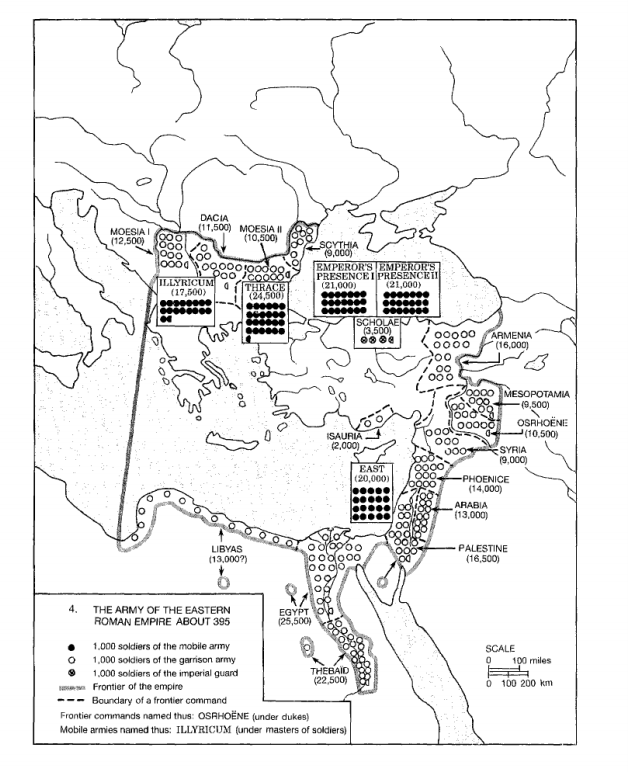
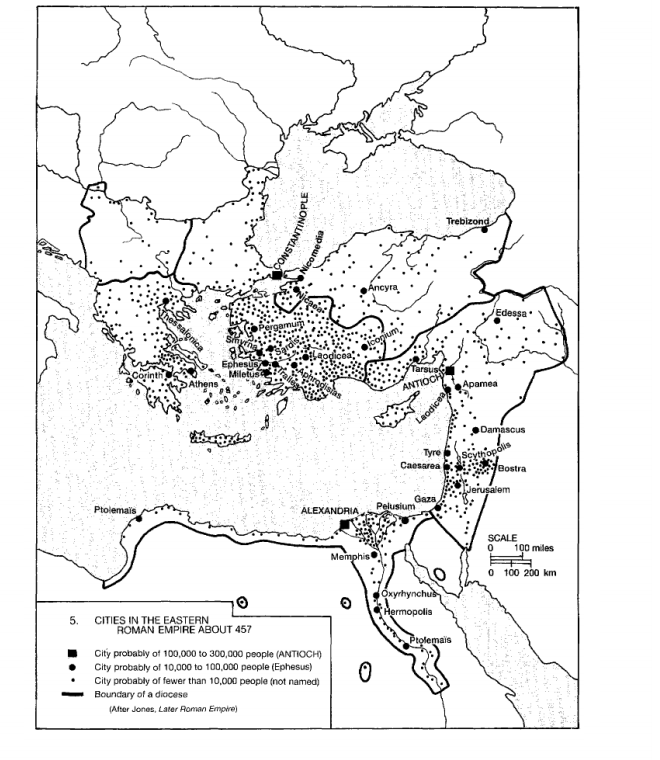
Untitled.png

Untitled02.png


Middle East and Egypt lost glory.
https://smerdaleos.files.wordpress....-a-history-of-byzantine-state-and-society.pdf
 
Last edited:
main-qimg-0aefdf18f5f3a6b051c97e1fc855b6f9-c

Is this real?

Not exactly (only Frankish and Slavic)

Ξέρω πως είναι τίποτε όλ' αυτά και πως η γλώσσα που μιλώ δεν έχει αλφάβητο
Αφού και ο ήλιος και τα κύματα είναι μια γραφή συλλαβική που την αποκρυπτογραφείς μονάχα στους καιρούς της λύπης και της εξορίας
Κι η πατρίδα μια τοιχογραφία μ' επιστρώσεις διαδοχικές φράγκικες ή σλαβικές που αν τύχει και βαλθείς για να την αποκαταστήσεις πας αμέσως φυλακή και δίνεις λόγο
Σ' ένα πλήθος Εξουσίες ξένες μέσω της δικής σου πάντοτε
Όπως γίνεται για τις συμφορές
Όμως ας φανταστούμε σ' ένα παλαιών καιρών αλώνι που μπορεί να 'ναι και σε πολυκατοικία ότι παίζουνε παιδιά και ότι αυτός που χάνει
Πρέπει σύμφωνα με τους κανονισμούς να πει στους άλλους και να δώσει μιαν αλήθεια
Oπόταν βρίσκονται στο τέλος όλοι να κρατούν στο χέρι τους ένα μικρό Δώρο ασημένιο ποίημα.
 
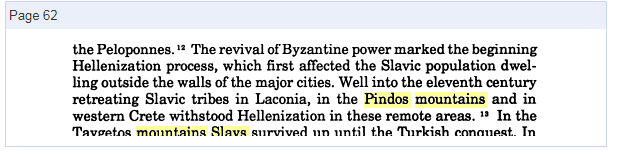
Slavs retreated Pindos mountains, western Crete, Laconia* in 11th century according to this book:
https://books.google.com/books?id=m...ved=0ahUKEwjL2eWAr6nTAhUBOhQKHby3CooQ6AEIJDAA
Mysteriously Vlachs appear in those zones times after.


* - Keep in your mind that Slavs according to Byzantine historians ruled Peloponnese for over 200 years, so it puts things on perspective. Also it is fair to mention that non Slavic population start appearing in those zones after ''Hellenization'' of those Slavs.

PINODS.png
 
Last edited:
Back
Top