• Welcome to the new Macedonian Truth Forum. All posts, members and private messages have been moved over from the old forum.

    Passwords from the old forum could not be carried over, so please use Forgot your password? to set a new one. The reset link is emailed to the address on your account.

  • Rules and Regulations at the forum of the Macedonian Truth Organisation (MTO)

    (1) The national-ethnic and cultural-linguistic identity of the Macedonian people is historically Macedonian, and derives its character from the native, indigenous and geographic homeland of the Macedonians, which is called Macedonia. To ensure that their human rights, integrity and heritage are appropriately respected, the only nouns and adjectives acceptable when reference is made to the above character and identity markers is Macedon, Macedonia, Macedonian and Macedonians.

    (2) The nation-state of the Macedonian people is the Republic of Macedonia, and is to be referred to by this official title so long as the 'republic' prefix is consistently applied to other states. Alternative references are the Macedonian Republic, or simply, Macedonia.

    (3) The 'ethnic' prefix is only acceptable for Macedonians in cases where differentiation is specifically required - so long as it is in context and consistent where it concerns its application to other ethnic groups.

    (4) Should any other differentiation be specifically required, the names of other ethnic groups that reside with Macedonians in either the Republic of Macedonia or the occupied Macedonian regions in Greece, Bulgaria, Serbia or Albania, are to be given a prefix.

    (5) Negating the identity, language and culture of the Macedonian people by deliberate avoidance of the terms Macedonia, Macedonian and Macedonians, or by any other means, is not permitted.

    (6) Systematic anti-Macedonian propaganda and rhetoric are not permitted.

    (7) Threads irrelevant to the Macedonian Cause, the community at the Macedonian Truth Organisation or the Macedonians in general may be considered as spam or not in the spirit of the forum. In such cases they are not permitted.

    (8) Continual posting of messages in threads with the sole purpose of deviating from the initial topics with the use of unrelated and unnecessary information is not permitted.

    (9) All posts, external articles, reports, etc that are cited in languages other than Macedonian or English, must be accompanied with a translation in one or both of the said languages.

    (10) Despite the possibility of some conversations and debates becoming heated, extreme abuse and/or racism, vulgar language and/or terminology, threats, revelation of personal information about others, harassment, and other such behavior will not be permitted. If deemed necessary all relevant information including member details will be reported to the appropriate authorities for investigation which may result in legal action.

    (11) Threads that are created must have a summary of a topic or excerpt of an article found in pertinent link(s) that have been included. One line threads will be considered unaccetable spam and are therefore not permitted.

    (12) Compulsive and deliberate lies, irrespective of the topic, are not permitted.

    (13) Any symbols or avatars found to be perceived as offensive to Macedonians are not permitted.

    (13) Any explicit or extreme material is not permitted.

    Failure to adhere to the above rules and regulations will result in a ban after 3 breaches. This may be reconsidered in some cases should the circumstances be of an unorthodox nature and/or require special consideration. To assure an effective deterrent against an individual or individuals with the sole purpose of causing dissent through spamming, racism or other improper means, the above rules will be strictly enforced.

    The MTO administration will monitor all discussions as reasonably practical and reserve the right to remove any post and/or member from the forum, and update the rules and regulations as required. Members are encouraged to immediately report any post and/or member to the MTO administration if they feel that these rules have not been abided by.

    The views expressed on this forum are those of the individuals. The only official representation of the MTO is made by the "Macedonian Truth Organisation (Site Owner)" username, and no other.

  • Macedonian Cause

    The Macedonian Truth Organisation calls on God in Heaven to protect, bless and guide the endeavour it is committing to undertake, and that is to work towards:

    Securing Macedonia as a free, independent and democratic republic in which sovereignty lies with the Macedonian citizens; as the nation-state of the Macedonian people in which they can preserve their culture, language and identity; as a state in which the Macedonian language and culture form the basis of public life and act as important unifying elements of Macedonian society; as the home of all its citizens to which it guarantees and obliges their inalienable natural rights and corresponding responsibilities;

    The acknowledgment as self-evident and irrefutable the existence of the:

    1) Indigenous, ethnonational name of Macedonia;
    2) Macedonian people, language and identity;
    3) Macedonian culture, symbols and folklore;
    4) Macedonian ancestry, heritage and history in its entirety; and
    5) Macedonian Orthodox Church;

    Securing recognition by the International Community of the tragedies endured by the Macedonian people, of the division of Macedonia with the signing of the Treaty of Bucharest on August 10, 1913, and the genocide committed against the Macedonian people at the hands of the Greek, Bulgarian and Serbian states and their respective churches during the 19th and 20th centuries;

    Ensuring that the Interim Accord is declared ‘null and void’ and that all constitutional provisions, acts, commitments, agreements, legislation, regulations, policies or programs emanating from, supporting or consequential to the Interim Accord are also declared ‘null and void’, including the use of any symbols and the completion of any acts imposed by, or originating from, the Interim Accord.

    Ensuring that the Framework Agreement is abolished and that all constitutional provisions, acts, commitments, agreements, legislation, regulations, policies and programs emanating from, supporting or consequential to the Framework Agreement are also abolished and replaced by a framework of constitutional and statutory law based on inalienable natural rights and corresponding responsibilities and universally codified human rights mechanisms.

    Securing the abolishment of any existing constitutional provisions, acts, agreements, legislation, regulations, policies and programs that discriminate against the Macedonian people, in any international organisation or any of the countries of the International Community where such constitutional provisions, acts, agreements, legislation, regulations, policies and programs exist, and thereby ensuring the freedom for Macedonians to exercise their inalienable natural rights and fulfil their corresponding responsibilities, and practice their culture, language and religious faiths in all the countries of the International Community without hindrance;

    The empowerment of Macedonians to undertake a moral revolution and to instil and/or reinvigorate within themselves a deep-rooted national, cultural, linguistic and historical dignity and a commitment to the exercise of freedom based on inalienable natural rights and corresponding responsibilities;

    The recognition of the Macedonian minorities in the neighbouring states of Macedonia as well as the respect for the inalienable rights and freedoms of the Macedonian minorities, as provided for by natural law and as codified by the United Nations Charter, the Universal Declaration of Human Rights and other universally codified human rights mechanisms;

    The full and unreserved respect of, and the support for, the rights of all people of non-Macedonian descent living in Macedonia and around the world, who share a reciprocal full and unreserved respect for the Macedonian people, their homeland and their state;

    The cultural unification and solidarity of the Macedonian people living in all parts of historical Macedonia and adjacent territories, as well as Macedonians throughout the world;

    The unity of all Macedonians on the principles, objectives and achievement of the Macedonian cause as defined by this declaration.

The Real Ethnic Composition of Modern Greece

Demetrias is now known as Volos.

It was founded in 'Hellenistic' times, named after Greek goddess Demetra.

Goddess Demetra had a lot in common with the Slavic god Volos/Veles.

So, it is possible that the Slavs of Magnesia "translated" the name into their own respective god.
 
Last edited:
1) Case Sotiris Bletsas for Minority Languages - Video:
https://www.youtube.com/watch?time_continue=74&v=e7tP0XpX9ns&feature=emb_title

The case of Sotiris Bletsas that has been chased by the Greek Law for declaring that his mother language and his origin was Vlach

In 1995, at an Aromanian festival in Greece, he distributed some EBLUL material about minority languages in Greece. In 2001, on an initiative of the MP for Edessa Evgenios Haïtidis, he was charged with "dissemination of false information" (contrary to article 191 of the Greek Penal Code) who reportedly was supported by the leadership of the Panhellenic Federation of Cultural Associations of Vlachs. The case drew protest from the Greek Helsinki Monitor and from abroad. He was first found guilty and sentenced to fifteen months in jail, suspended for three years, and fined 500,000 drachmas, however, he successfully appealed the decision and was subsequently found not guilty on 18 October 2001.

2) Emperor Nicephorus (802-811) settled colonists from various parts of the empire - "Kapheroi, Thrakesians, Armenians, and others from different places and cities" - in the Peloponnese.

Possibly these "Kapheroi" may have been Syrian Christian ex-subjects of the Caliphate who had become refugees or evacuees.

URLs:
https://books.google.ca/books?id=-s...Q6AEIMTAB#v=onepage&q=Kapheroi Sparta&f=false
https://books.google.ca/books?id=Y2...=0ahUKEwiGzM31qdnnAhWMmuAKHfmoCPo4ChDoAQgnMAA

3) The Venetian Senate authorized the chatelain of Methoni to hire 300 mercenaries. Methoni is an interesting example of how Venetian colonists were settled, and their subsequent way of life. In 1293 the Senate ordered the walls of Methoni and Korone to be rebuilt and the towns populated by 24 families sent from Venice. Inside the burgus, or fortified town, of Methoni were commercial warehouses.

URL:
https://books.google.ca/books?id=kj...#v=onepage&q=venetian colonists cyprus&f=true
Who were Thrakesians?
 
- Constantine VII Porphyrogennetos (913-920/944-959), in his text On themes, informs us that the area’s inhabitants were called Thrakesians because they came from Thrace; He also adds that they were «laborious» and «manual workers».

- The failed mutiny against Basil I (867-886) the Macedonian, co-emperor to Michael III (842-867), in 866, was led by the Thrakesian general Symbatios and the earl of Opsikion George Peganes. (Symbatios or Symbatius is the Hellenized form of the Armenian name Smbat. It was particularly frequent in Byzantine times.)

URLs:
http://www.ehw.gr/asiaminor/Forms/fLemmaBody.aspx?lemmaid=8714
https://en.wikipedia.org/wiki/Symbatios
 
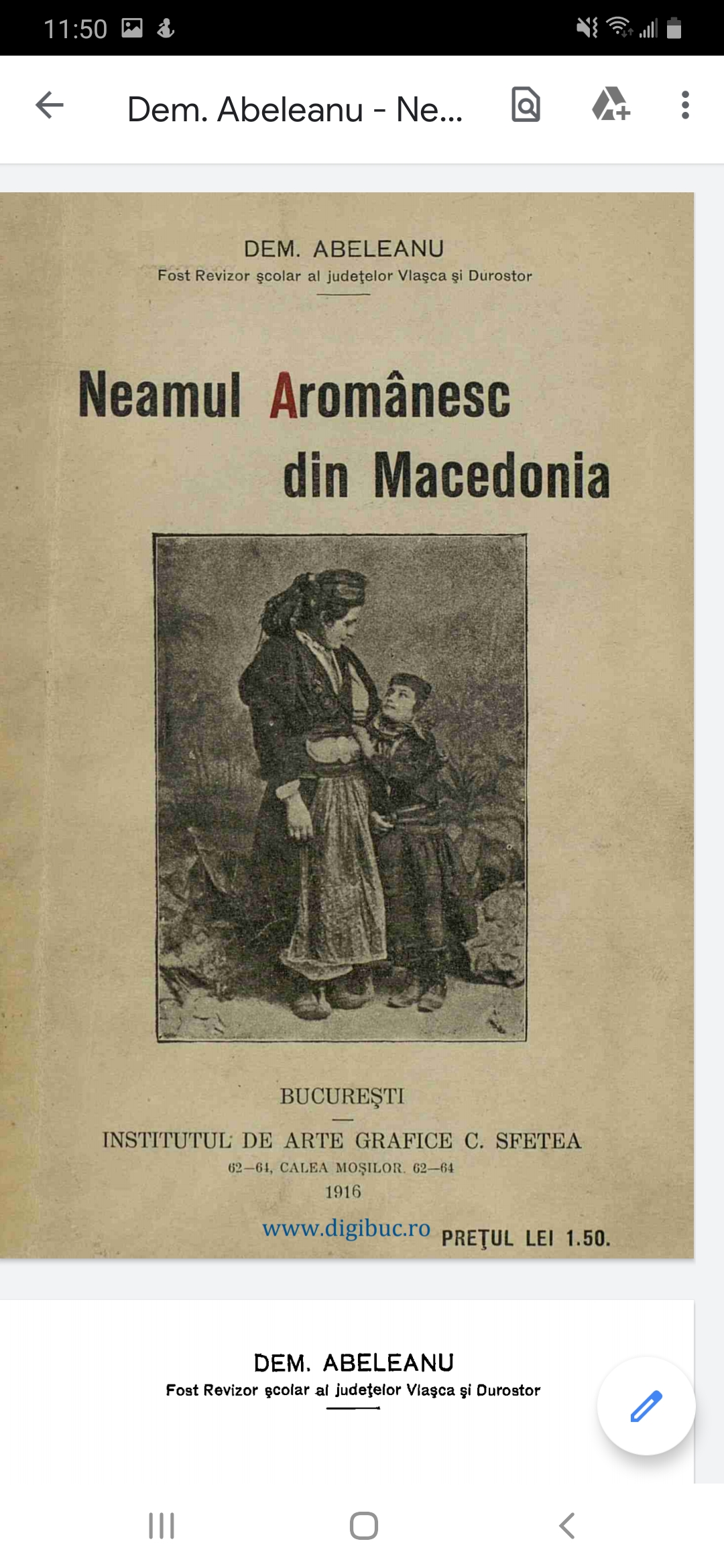
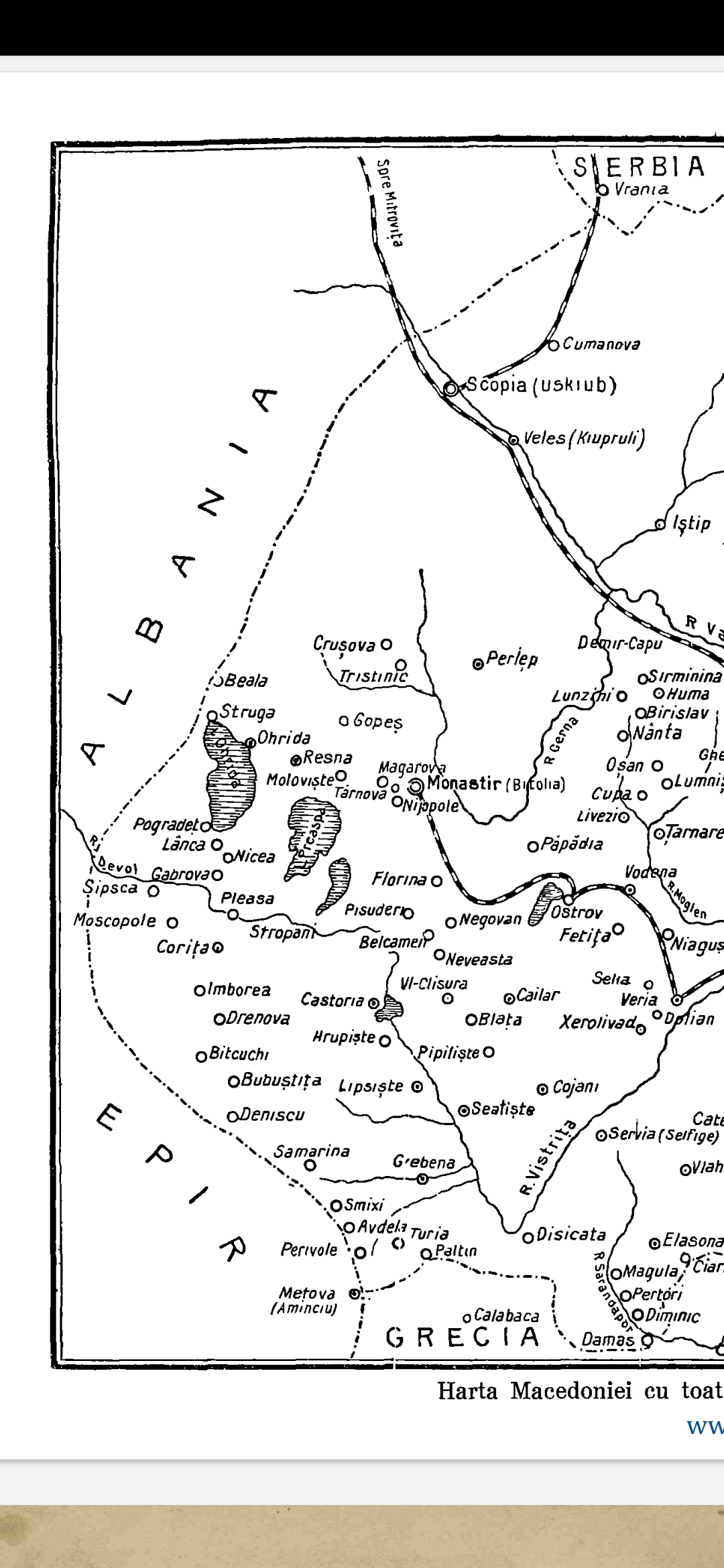
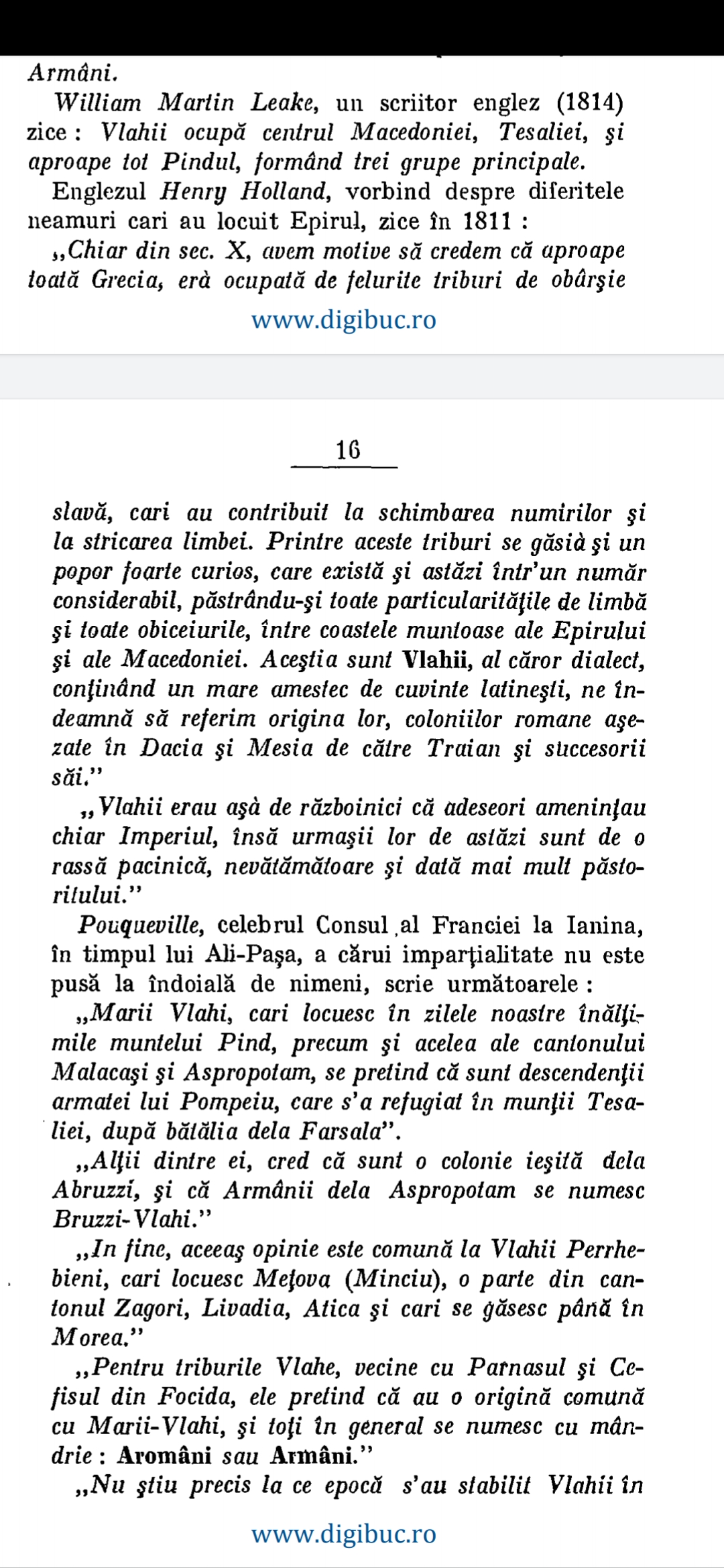
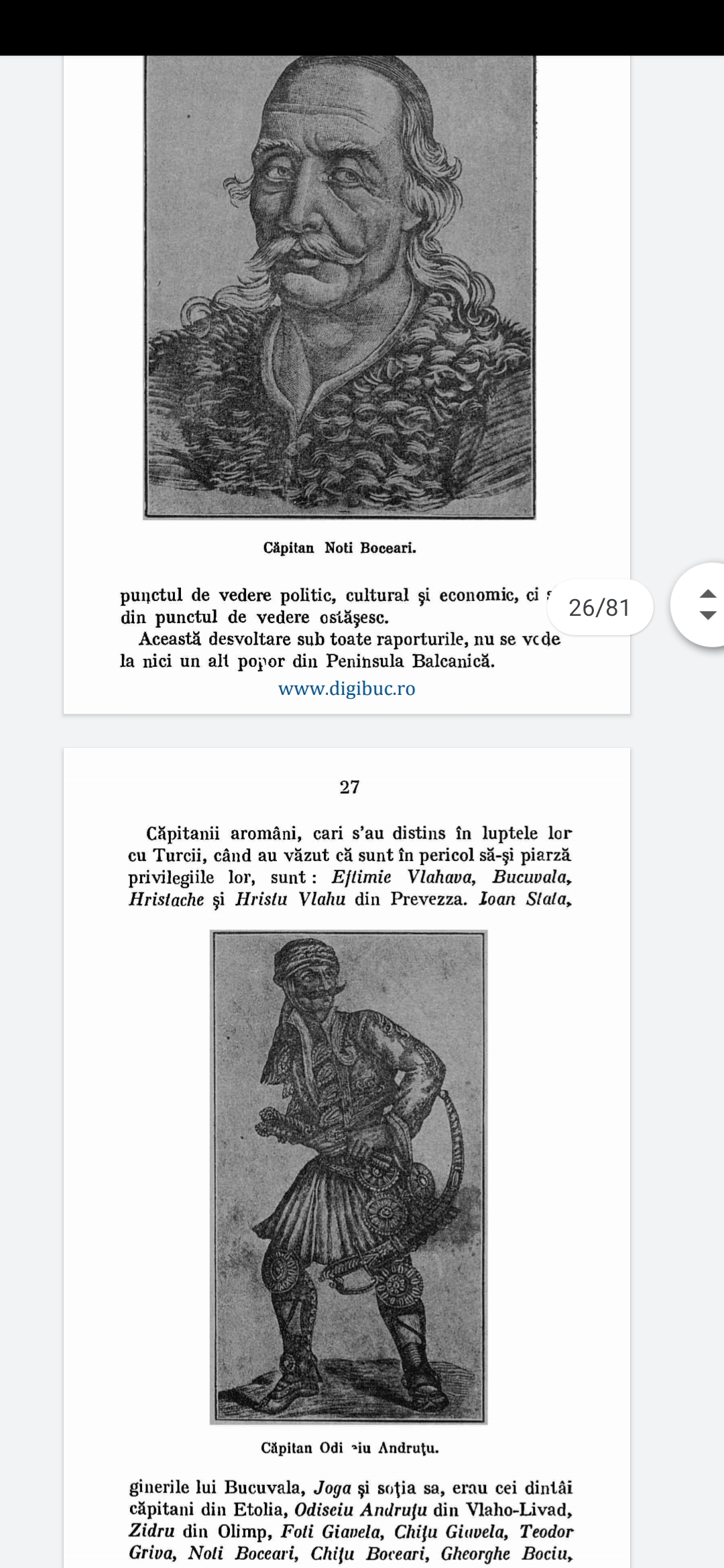
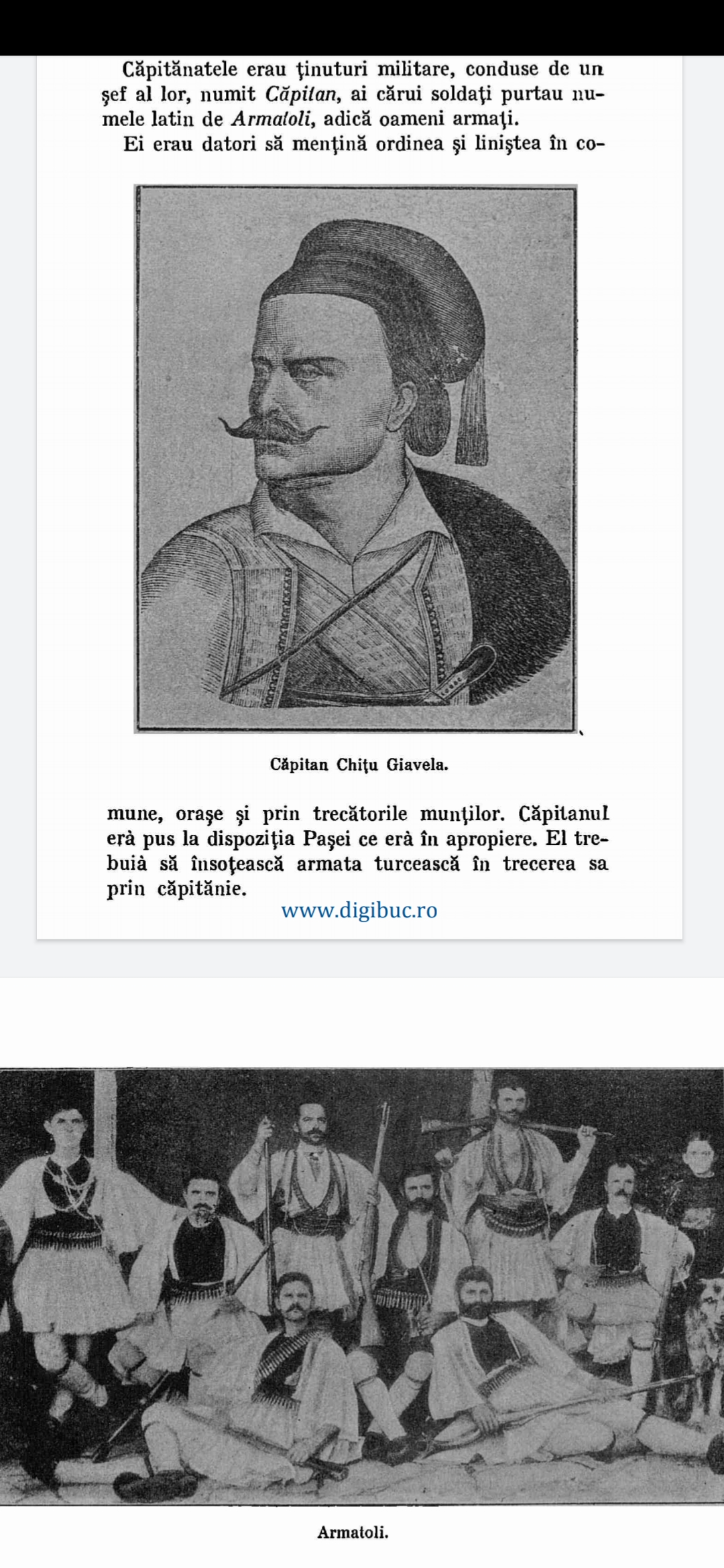
Dimitri Abeleanu from Avdella, Aegean Macedonia - "Neamul Aromanesc din Macedonia", Bucharest 1916.

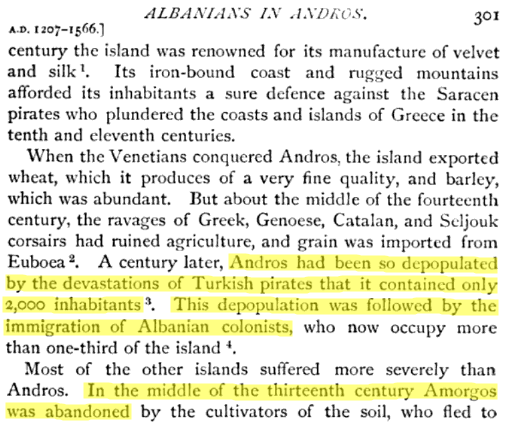
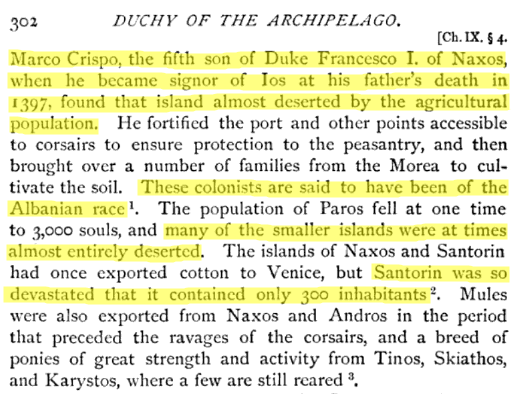
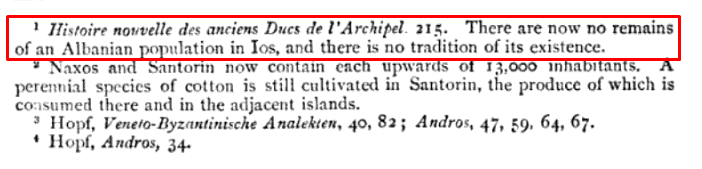
4ZNBEut.jpg

GwLt88U.jpg

1HDvwIJ.jpg

SmN7eo1.jpg

xHARg5z.jpg
 
Ethnic categorization in the slave market of Crete

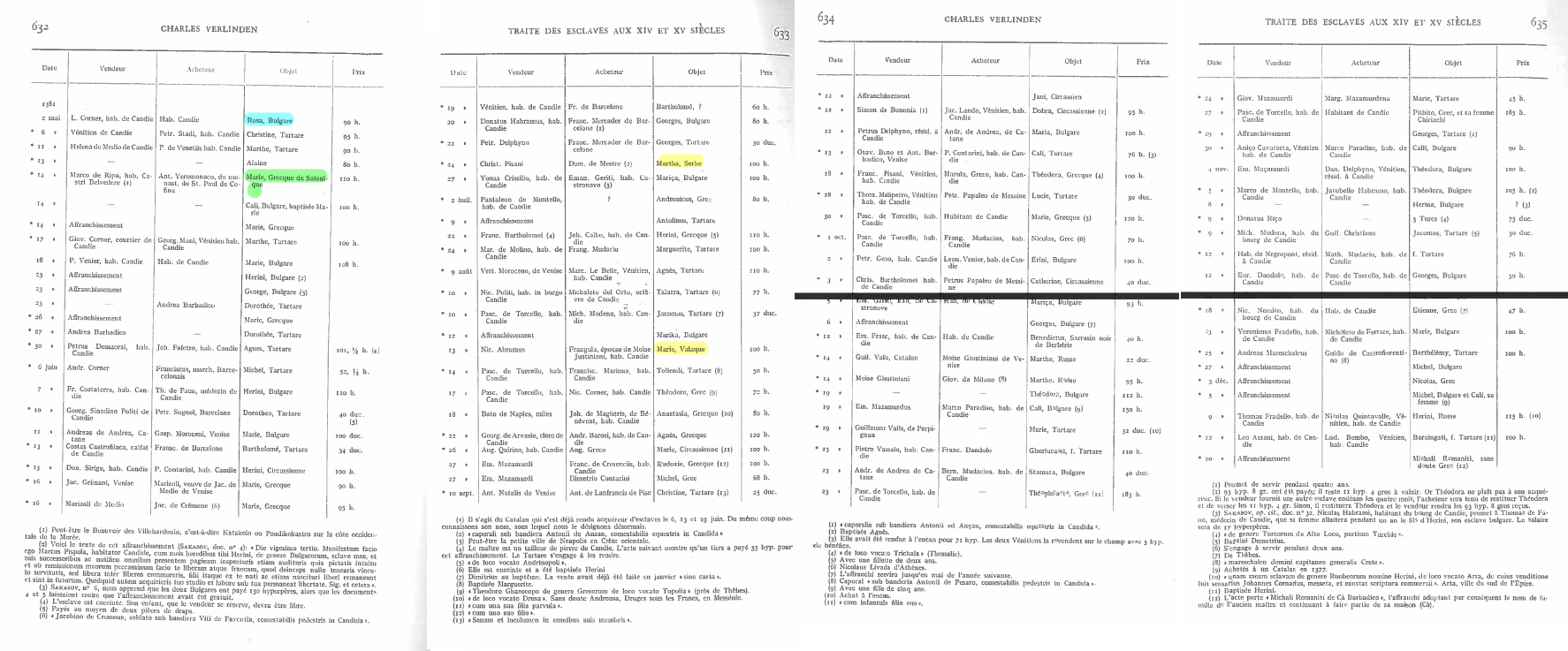
Let's review the ethnic categorization in the medieval documents of Venetian slave market notarial deeds. Venetian notaries recorded hundreds of slave sales in which slaves are categorized by their respective Venetian notary. Of course, we are talking about ethnic terms as the Venetian notaries understood them at the time.

Charles Verlinden has written extensively about the slave trade in the eastern Mediterranean and his notarial deeds in the late Middle Ages (14th-15th centuries): Charles Verlinden (1962), La Crète, débouché et plaque tournante de la traite des esclaves aux XIVe et XVe siècles, στο Amintore Fanfani (επ.), Studi in onore di Amintore Fanfani III: Medioevo (Milano A. Giuffrè 1962), pp. 593-669.

The slave market of Crete (Candia) was the most important slave market in the eastern Mediterranean.

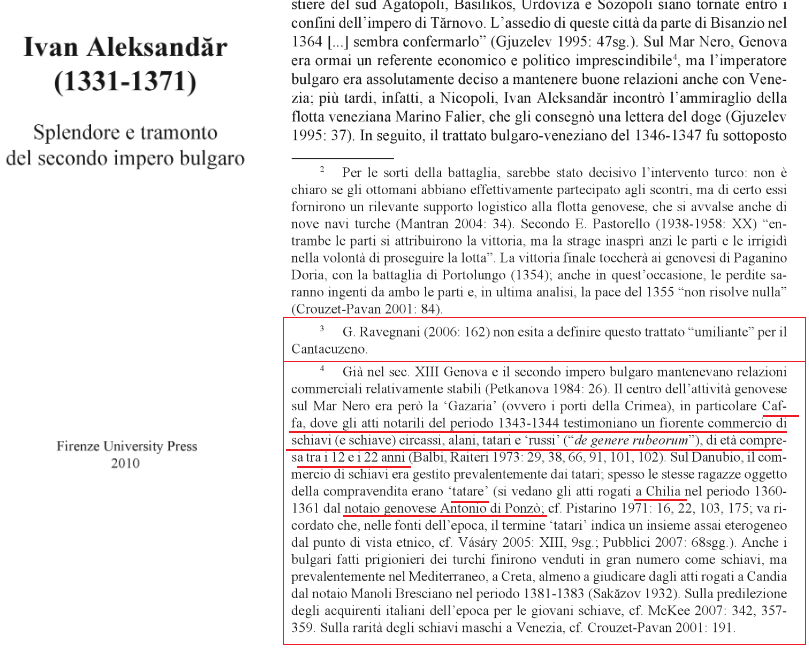
The ethnic composition of the slaves of the Genoese slave trade in the Black Sea included the Tatars (by far the most common ethnicity of the slaves there), Russians, Alans, Cumans, Circassians, etc. These typical ethnicities of the Black Sea / Genoese slave trade constituted about 28% of the slaves trafficked into the Venetian slave market in Crete, which, according to Verlinden, is an indication of the high commercial activity of the Genoese.

LLSdPHP.png


I won't go into too much detail, but here is a sample list of slaves in Crete per Manoli Bresciano: Bulgarians, Serbs, Vlachs, Arvanites, etc.

MxfkJWN.png

9NxBl5V.png
 
Interesting how the same names appear across all ethnicities. A lack of imagination on someone’s behalf, or a complete lack of interest/care considering slaves are stripped of all dignity. And Marica is Greek apparently.
 
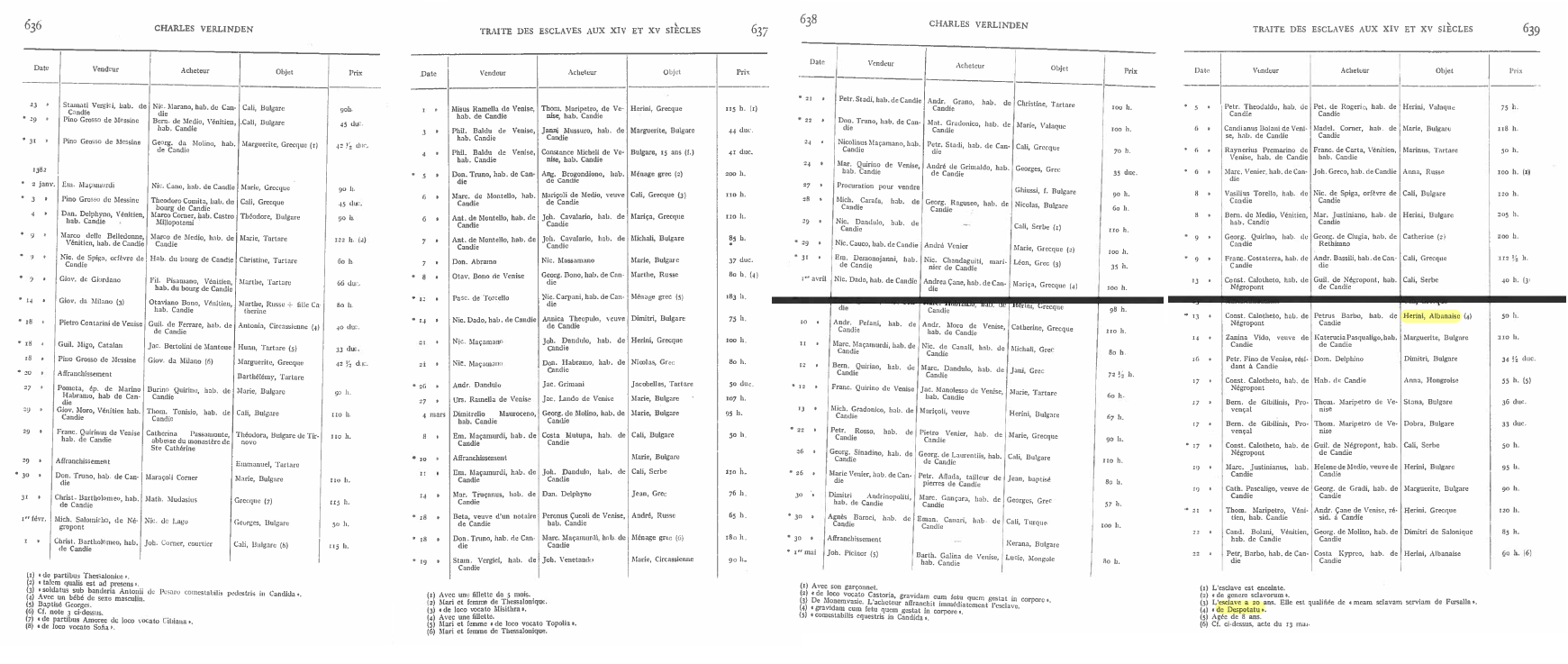
As mentioned above, we are talking about ethnic terms here as the Venetian notaries understood them at the time. The most problematic one (again) proves to be the ethnic term "Greek". The Albanian slaves from Epirus were called Greeks:

"In the Venetian archies of archivio notarile there are reports of Albanian slaves in Crete noted by Manoli Bresciano from 1359-1388. The majority of Albanian slaves from Epirus (de partibus Despotate) were called "Greeks"."

So, when we see in lists "Greeks" alongside "Albanians", "Vlachs" or others, we can't conclude anything with a significant degree of confidence as those Greeks might have been Albanian-speaking and/or Vlach-speaking (bilingual) Christians, etc.

URL:
https://en.wikipedia.org/wiki/Albanian_slaves


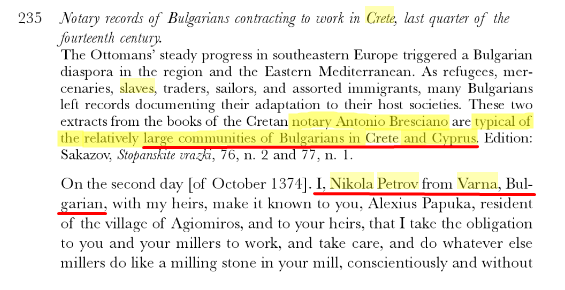
Also, according to the analysis in this book, the communities of Bulgarians in Crete as well as Cyprus were "relatively large":
amPNmJq.png


URL:
https://books.google.ca/books?id=tj...ge&q=nikola petrov varna slaves crete&f=false

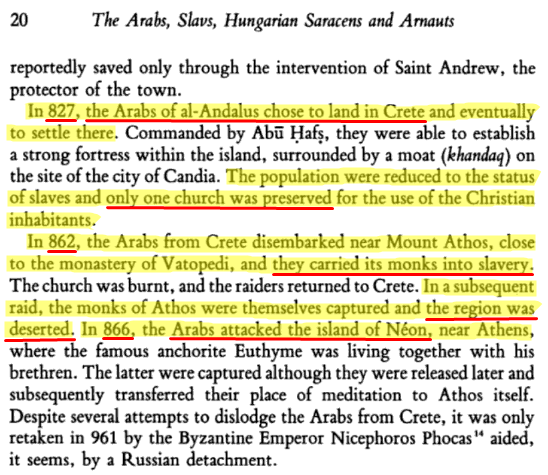
In conclusion, the above proves the existence of Albanian, Vlach, and Slavonic communities on Crete.
 
Last edited:
The contrast of Gothic toponyms in Italy and the Slavic toponyms in Greece is very interesting.
''Despite a sustained Lombard presence, the region has few Germanic toponyms.''
https://books.google.com/books?id=x...=onepage&q=germanic toponyms in italy&f=false

''All the Germanic placenames that do exist in Italy are only attached to small settlements, and it is noteworthy that no sixth-centry source refers to a single one.''
https://books.google.com/books?id=7...onepage&q=gothic place names in italy&f=false

Given the fact that Italy had 18,100,000 inhabitants in 1800, there were less Germanic toponyms in the whole of Italy than the 350-450 Slavic toponyms of Peloponnese with a population of 330,000 in 1800.
The Germanic impact in the gene pool of Italians is around 10% to 15%, so you have your conclusions.
 
Last edited:
Year 1814: Aetolia, now called Vlakia

A Sketch of Modern and Antient Geography ... Third edition, By Samuel Butler, 1814.

Page 150:
"West of Locris, Phocis, and Doris, was Aetolia, now called Vlakia, from the Valaques, settled there by the Greek Emperors, having the Sinus Corinthiacus for its Southern, the river Achelous for its Western, and Thessaly for its Northern boundary."

Greek Emperors = Byzantine or Roman Emperors
Sinus Corinthiacus = the Gulf of Corinth or the Gulf of Lepanto: the gulf between Northern Greece or Hellas Proper, and the Peloponnesus. It commenced, according to Strabo (viii. p.335, seq.), at the mouth of the Evenus in Aetolia (some said at the mouth of the Achelous) and the promontory Araxus in Achaia, and extended to the Isthmus of Corinth. It consisted of two distant portions, an outer and an inner sea, separated from one another by the narrow strait, between the promontories Rhium and Antirrhium.

URL:
https://books.google.ca/books?id=aE...ECAwQOw#v=onepage&q=Valaques Thessaly&f=false
 
Carlin here is how I see it:
Thrace:Slavs>Vlachs>Albanians
Macedonia: Slavs > Vlachs> Albanians
Epirus: Albanians> Vlachs> Slavs
Thessaly: Vlachs>Slavs>Albanians
Attico-Boetia: Albanians>Vlachs>Slavs
Euboea: Albanians>Vlachs>Slavs
 
Carlin here is how I see it:
Thrace:Slavs>Vlachs>Albanians
Macedonia: Slavs > Vlachs> Albanians
Epirus: Albanians> Vlachs> Slavs
Thessaly: Vlachs>Slavs>Albanians
Attico-Boetia: Albanians>Vlachs>Slavs
Euboea: Albanians>Vlachs>Slavs

Based on the 1951 census, 5 biggest ethnic groups (based on mother language), bold when exceeding 1%

Continental Greece (& Euboea): Greek>Turkish>Armenian>Albanian>Vlach
Peloponnesus: Greek>Albanian>Turkish>Gypsy>Armenian
Ionian Islands: Greek>Turkish>Armenian>Albanian>Italian
Thessaly: Greek>Vlach>Turkish>Gypsy>Latino-Jewish
Macedonia: Greek(92,9%)>Turkish(3,3%)>Slavic(2,4%)>Vlach(0,7%)>Gypsy(0,2%)
Epirus: Greek>Vlach>Albanian>Turkish>Gypsy
Crete: Greek>Turkish>Armenian>French=English
Aegean Islands: Greek>Turkish>Slavic>Romanian>Armenian
Thrace: Greek>Turkish>Pomak>Albanian>Gypsy


==
 
Last edited:
Based on the 1951 census, 5 biggest ethnic groups (based on mother language), bold when exceeding 1%

Continental Greece (& Euboea): Greek>Turkish>Armenian>Albanian>Vlach
Peloponnesus: Greek>Albanian>Turkish>Gypsy>Armenian
Ionian Islands: Greek>Turkish>Armenian>Albanian>Italian
Thessaly: Greek>Vlach>Turkish>Gypsy>Latino-Jewish
Macedonia: Greek(92,9%)>Turkish(3,3%)>Slavic(2,4%)>Vlach(0,7%)>Gypsy(0,2%)
Epirus: Greek>Vlach>Albanian>Turkish>Gypsy
Crete: Greek>Turkish>Armenian>French=English
Aegean Islands: Greek>Turkish>Slavic>Romanian>Armenian
Thrace: Greek>Turkish>Pomak>Albanian>Gypsy


==

Amphipolis, nobody really doubts the modern/official numbers of Greece, whether it's from a census from 1951... or 1911, etc.

For the most part, we are talking about ethnic and linguistic population groups that have historically inhabited the various regions of modern Greece, prior to the modern era.

For example, your 1951 census figures do not change the fact that Bernard Randolph (year 1687) reported that the Christian population of Euboea was in his day almost entirely Albanian.

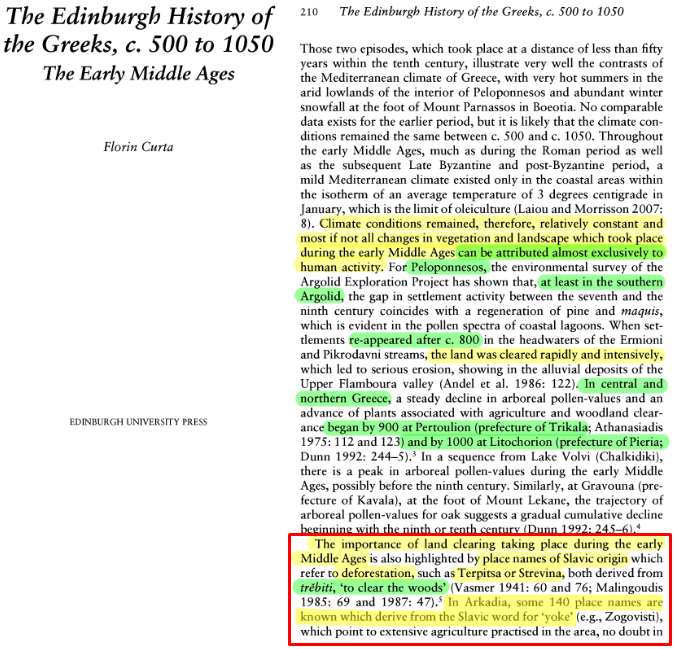
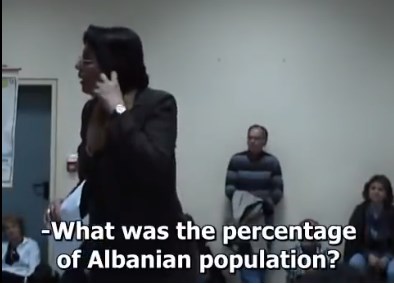
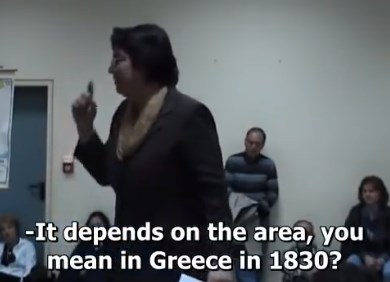
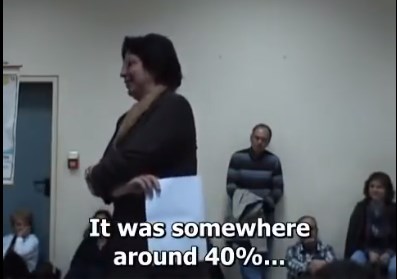
Another example would be Maria Efthimiou, a modern Greek historian, who teaches World History and Greek History of the Turkish occupation period:

MLetKym.jpg

FCHZTaI.jpg

6dax3dT.jpg

P8ajvYj.jpg
 
Back
Top