• Welcome to the new Macedonian Truth Forum. All posts, members and private messages have been moved over from the old forum.

    Passwords from the old forum could not be carried over, so please use Forgot your password? to set a new one. The reset link is emailed to the address on your account.

  • Rules and Regulations at the forum of the Macedonian Truth Organisation (MTO)

    (1) The national-ethnic and cultural-linguistic identity of the Macedonian people is historically Macedonian, and derives its character from the native, indigenous and geographic homeland of the Macedonians, which is called Macedonia. To ensure that their human rights, integrity and heritage are appropriately respected, the only nouns and adjectives acceptable when reference is made to the above character and identity markers is Macedon, Macedonia, Macedonian and Macedonians.

    (2) The nation-state of the Macedonian people is the Republic of Macedonia, and is to be referred to by this official title so long as the 'republic' prefix is consistently applied to other states. Alternative references are the Macedonian Republic, or simply, Macedonia.

    (3) The 'ethnic' prefix is only acceptable for Macedonians in cases where differentiation is specifically required - so long as it is in context and consistent where it concerns its application to other ethnic groups.

    (4) Should any other differentiation be specifically required, the names of other ethnic groups that reside with Macedonians in either the Republic of Macedonia or the occupied Macedonian regions in Greece, Bulgaria, Serbia or Albania, are to be given a prefix.

    (5) Negating the identity, language and culture of the Macedonian people by deliberate avoidance of the terms Macedonia, Macedonian and Macedonians, or by any other means, is not permitted.

    (6) Systematic anti-Macedonian propaganda and rhetoric are not permitted.

    (7) Threads irrelevant to the Macedonian Cause, the community at the Macedonian Truth Organisation or the Macedonians in general may be considered as spam or not in the spirit of the forum. In such cases they are not permitted.

    (8) Continual posting of messages in threads with the sole purpose of deviating from the initial topics with the use of unrelated and unnecessary information is not permitted.

    (9) All posts, external articles, reports, etc that are cited in languages other than Macedonian or English, must be accompanied with a translation in one or both of the said languages.

    (10) Despite the possibility of some conversations and debates becoming heated, extreme abuse and/or racism, vulgar language and/or terminology, threats, revelation of personal information about others, harassment, and other such behavior will not be permitted. If deemed necessary all relevant information including member details will be reported to the appropriate authorities for investigation which may result in legal action.

    (11) Threads that are created must have a summary of a topic or excerpt of an article found in pertinent link(s) that have been included. One line threads will be considered unaccetable spam and are therefore not permitted.

    (12) Compulsive and deliberate lies, irrespective of the topic, are not permitted.

    (13) Any symbols or avatars found to be perceived as offensive to Macedonians are not permitted.

    (13) Any explicit or extreme material is not permitted.

    Failure to adhere to the above rules and regulations will result in a ban after 3 breaches. This may be reconsidered in some cases should the circumstances be of an unorthodox nature and/or require special consideration. To assure an effective deterrent against an individual or individuals with the sole purpose of causing dissent through spamming, racism or other improper means, the above rules will be strictly enforced.

    The MTO administration will monitor all discussions as reasonably practical and reserve the right to remove any post and/or member from the forum, and update the rules and regulations as required. Members are encouraged to immediately report any post and/or member to the MTO administration if they feel that these rules have not been abided by.

    The views expressed on this forum are those of the individuals. The only official representation of the MTO is made by the "Macedonian Truth Organisation (Site Owner)" username, and no other.

  • Macedonian Cause

    The Macedonian Truth Organisation calls on God in Heaven to protect, bless and guide the endeavour it is committing to undertake, and that is to work towards:

    Securing Macedonia as a free, independent and democratic republic in which sovereignty lies with the Macedonian citizens; as the nation-state of the Macedonian people in which they can preserve their culture, language and identity; as a state in which the Macedonian language and culture form the basis of public life and act as important unifying elements of Macedonian society; as the home of all its citizens to which it guarantees and obliges their inalienable natural rights and corresponding responsibilities;

    The acknowledgment as self-evident and irrefutable the existence of the:

    1) Indigenous, ethnonational name of Macedonia;
    2) Macedonian people, language and identity;
    3) Macedonian culture, symbols and folklore;
    4) Macedonian ancestry, heritage and history in its entirety; and
    5) Macedonian Orthodox Church;

    Securing recognition by the International Community of the tragedies endured by the Macedonian people, of the division of Macedonia with the signing of the Treaty of Bucharest on August 10, 1913, and the genocide committed against the Macedonian people at the hands of the Greek, Bulgarian and Serbian states and their respective churches during the 19th and 20th centuries;

    Ensuring that the Interim Accord is declared ‘null and void’ and that all constitutional provisions, acts, commitments, agreements, legislation, regulations, policies or programs emanating from, supporting or consequential to the Interim Accord are also declared ‘null and void’, including the use of any symbols and the completion of any acts imposed by, or originating from, the Interim Accord.

    Ensuring that the Framework Agreement is abolished and that all constitutional provisions, acts, commitments, agreements, legislation, regulations, policies and programs emanating from, supporting or consequential to the Framework Agreement are also abolished and replaced by a framework of constitutional and statutory law based on inalienable natural rights and corresponding responsibilities and universally codified human rights mechanisms.

    Securing the abolishment of any existing constitutional provisions, acts, agreements, legislation, regulations, policies and programs that discriminate against the Macedonian people, in any international organisation or any of the countries of the International Community where such constitutional provisions, acts, agreements, legislation, regulations, policies and programs exist, and thereby ensuring the freedom for Macedonians to exercise their inalienable natural rights and fulfil their corresponding responsibilities, and practice their culture, language and religious faiths in all the countries of the International Community without hindrance;

    The empowerment of Macedonians to undertake a moral revolution and to instil and/or reinvigorate within themselves a deep-rooted national, cultural, linguistic and historical dignity and a commitment to the exercise of freedom based on inalienable natural rights and corresponding responsibilities;

    The recognition of the Macedonian minorities in the neighbouring states of Macedonia as well as the respect for the inalienable rights and freedoms of the Macedonian minorities, as provided for by natural law and as codified by the United Nations Charter, the Universal Declaration of Human Rights and other universally codified human rights mechanisms;

    The full and unreserved respect of, and the support for, the rights of all people of non-Macedonian descent living in Macedonia and around the world, who share a reciprocal full and unreserved respect for the Macedonian people, their homeland and their state;

    The cultural unification and solidarity of the Macedonian people living in all parts of historical Macedonia and adjacent territories, as well as Macedonians throughout the world;

    The unity of all Macedonians on the principles, objectives and achievement of the Macedonian cause as defined by this declaration.

The Real Ethnic Composition of Modern Greece

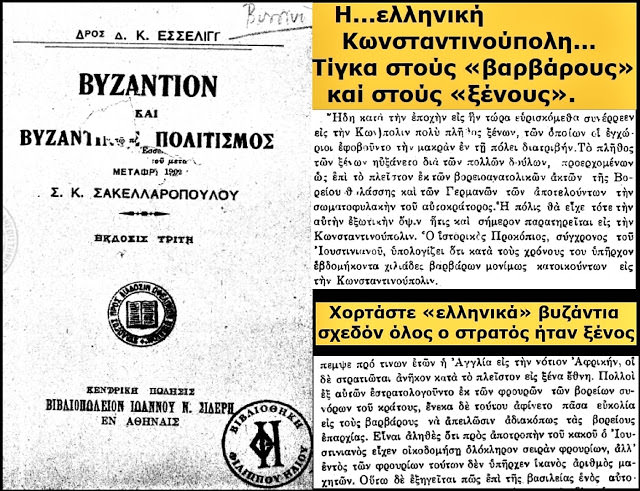
The "hellenic" Constantinople ... full of barbarians and foreigners. Almost the entire "hellenic" byzantine army were foreigners.
 
Mainland Greeks Genetically Diverged From Islanders in the Middle Ages

Genetic analysis proves that following thousands of years of conquests and migrations, peoples living around the Mediterranean today share common ancestors, with one surprising outlier: Greece


URL:
https://www.haaretz.com/amp/archaeo...genetically-diverged-in-middle-ages-1.5489323

Elizabeth Sloane, Ruth Schuster
29.06.2017 | 17:58

The peoples living today around the Mediterranean Sea are all related, after thousands of years of intermittently attacking and loving each other, a new genetic study has unsurprisingly shown. However, the data from the international team of scientists found a startling exception: mainland Greeks, who seem to be genetically closer to Albanians than to their brethren in the Greek islands.

Different genes for different Greeks

The scientists did find the expected degree of genetic continuity extending from Sicily to Cyprus.

The scientists were not expecting to find that the people in the Greek islands appear genetically closer to southern Italians than to the people in continental Greece.

Meanwhile, the mainland Greeks, including the Peloponnese in southern Greece, had become slightly differentiated. They clustered with populations from the southern Balkans, including Kosovo and Albania.

Great find, although I can't say I'm surprised by this.

On the context of genetics, there is an upcoming genetic analysis in the Balkans which is apart of the One Family One World Project:
https://www.eupedia.com/genetics/regional_dna_project_southeast_europe.shtml

Prepare for more scientific revelations about modern-day Hellenism.

maco2envy, yes it is nothing new or surprising at all.

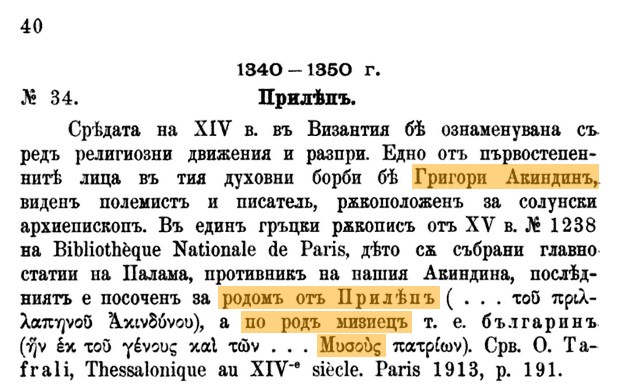
I've also added the find regarding Г. Акиндин to the thread you mentioned - thank you.
 
Mainland Greeks Genetically Diverged From Islanders in the Middle Ages

Genetic analysis proves that following thousands of years of conquests and migrations, peoples living around the Mediterranean today share common ancestors, with one surprising outlier: Greece


URL:
https://www.haaretz.com/amp/archaeo...genetically-diverged-in-middle-ages-1.5489323

Elizabeth Sloane, Ruth Schuster
29.06.2017 | 17:58

The peoples living today around the Mediterranean Sea are all related, after thousands of years of intermittently attacking and loving each other, a new genetic study has unsurprisingly shown. However, the data from the international team of scientists found a startling exception: mainland Greeks, who seem to be genetically closer to Albanians than to their brethren in the Greek islands.

Different genes for different Greeks

The scientists did find the expected degree of genetic continuity extending from Sicily to Cyprus.

The scientists were not expecting to find that the people in the Greek islands appear genetically closer to southern Italians than to the people in continental Greece.

Meanwhile, the mainland Greeks, including the Peloponnese in southern Greece, had become slightly differentiated. They clustered with populations from the southern Balkans, including Kosovo and Albania.

The closer you are geographically the higher is the portability to score genetically. So it is no brainier that Albanians, Greeks, Italians, South Slavs to be close to each other. Significant genetic evidence comes from a bigger distance like that of Southern Italians with British isles.
 
Speaking of Southern Italy:

Zancle/Messina - In 288 BC the Mamertines seized the city by treachery, killing all the men and taking the women as their wives. (Romans renamed Zancle, Messina)
Himera- The city itself was utterly destroyed, its buildings razed to the ground, and even the temples themselves were not spared.Diodorus, who relates the total destruction of Himera, tells us expressly that it was never rebuilt, and that the site remained uninhabited down to his own times.
The explanation of this difficulty is furnished by Cicero, who tells us that, after the destruction of Himera, those citizens who had survived the calamity of the war established themselves at Thermae, within the confines of the same territory, and not far from their old town.

Lentini - At the beginning of the FOURTH century, Leontines was taken by the Syracusan troops. The inhabitants are deported to Syracuse where they receive citizenship. From that time Leontines disappeared from the ancient sources.

Catania - In 403 BC, Dionysius the Elder , a tyrant of Syracuse, once again pursued a policy of expansion on the eastern side of Sicily in order to strengthen his power before confronting the Carthaginians again . Catania is taken and sacked by the troops of the tyrant. An eruption of Etna consumed the city in 121 . The Greeks built a theater on the acropolis in the 5TH century BC. J.-C .; It was then rebuilt by the Romans and could accommodate 7000 people.
Selinunte - According to sources, 16,000 of the citizens of Selinunte were killed, 5,000 were taken prisoner, and 2,600 under the command of Empedion escaped to Acragas. Subsequently, a considerable number of the survivors and fugitives were gathered together by Hermocrates of Syracuse, and established within the walls of the city. But before the close of the war (about 250 BCE), when the Carthaginians were beginning to pull back, and confine themselves to the defense of as few places as possible, they removed all the inhabitants of Selinunte to Lilybaeum and destroyed the city. It seems certain that it was never rebuilt. Pliny the Elder mentions its name (Selinus oppidum[30]), as if it still existed as a town in his time, but Strabo distinctly classes it with extinct cities.

Megara Hyblaea - Nothing more is known of Megara till the period of its destruction by Gelon of Syracuse, about 483 BC, who, after a long siege, made himself master of the city by a capitulation; but, notwithstanding this, caused the bulk of the inhabitants to be sold into slavery, while he established the more wealthy and noble citizens at Syracuse. (Herod. vii. 156; Thuc. vi. 4.) Strabo asserts: The cities no longer exist, it is true, but the name of Hybla still endures, because of the excellence of the Hyblaean honey.

Gela - In 406 the Carthaginians conquered Agrigento and destroyed it. , Gela was ruined and its treasures sacked (405). The survivors took refuge in Syracuse. In 397 they returned home and joined Dionysius II in his struggle for freedom from the invaders, and in 383 BC they saw their independence acknowledged. The city subsequently disappeared from the chronicles. Under Roman rule, a small settlement still existed, which is mentioned by Virgil, Pliny the Elder, Cicero, and Strabo.


Agrigento - Agrigento was neutral in the war between Athens and Syracuse in 413 BCE but was attacked, besieged for seven months, and then destroyed by the Carthaginians in 406 BCE - emphatic revenge for their defeat at Himera in 480 BCE. The town did eventually recover and became an important Hellenistic settlement, but Agrigento was again sacked in 262 BCE and 210 BCE, this time by the Romans.

Eraclea Minoa - The city is reported in the Verrine of Cicero among the decumanae civitates of Roman Sicily [2] . In 131 BC, the Praetor Publio Rupilio came to the conclusion of a colony [3] , which is supposed that the city was almost completely depopulated during the First Servant War . Archaeological excavations document the abandonment of the city shortly after the middle of the 1st century BC

Casmenae - It was founded in 643 BC from Syracuse, 90 years after Syracuse's own foundation in 734 or 733 BC. ''.But the Camarinaeans being expelled by arms by the Syracusans for having revolted, Hippocrates, tyrant of Gela, some time later receiving their land in ransom for some Syracusan prisoners, resettled Camarina, himself acting as its founder. Lastly, it was again depopulated by Gelo, and settled once more for the third time by the Geloans.'' The city was abandoned around the end of the 4th century BC, with gradual Syracusan decadence, hence the relatively undisturbed nature of the site. To the south of ancient Casmene, on the site now known as "Terravecchia", is the former site of Giarratana (Jarratana), abandoned by its inhabitants in 1693.

Xiphonia- In 475 BC the area was repopulated by ten thousand Syracusans. This caused tensions and frustration with the former inhabitants who culminate in a crushing battle under Ducezio and will force settlers to flee. Conquered by the Romans, probably around the 2nd century BC , it was called Akis and cited by Theokritus and Aeschylus . Even in this case it will not be called in a unique way: Ovid and Silio Italico will cite it as " Acis ", Claudiano instead as " Acin ".
In the following centuries the wars, plunder and destruction due to eruptions and earthquakes forced the inhabitants to move further south, information about this period was confusing enough and the mysterious Xiphonia and Akis lost track of it. In the following centuries the wars, plunder and destruction due to eruptions and earthquakes forced the inhabitants to move further south, information about this period was confusing enough and the mysterious Xiphonia and Akis lost track of it.

1200px-Magna_Graecia_ancient_colonies_and_dialects-en.svg.png
 
Last edited:
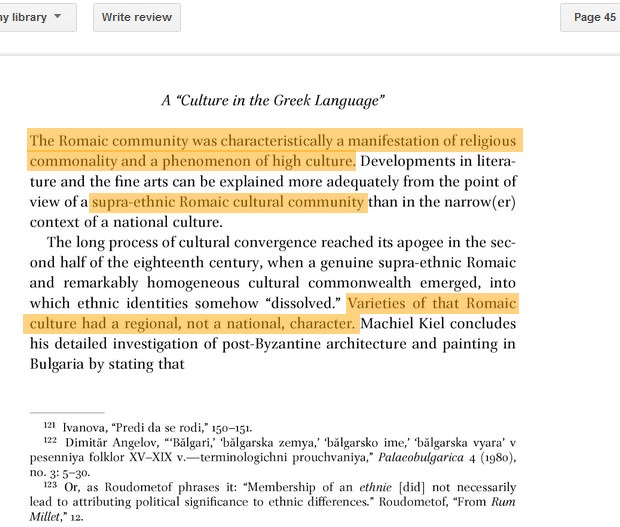
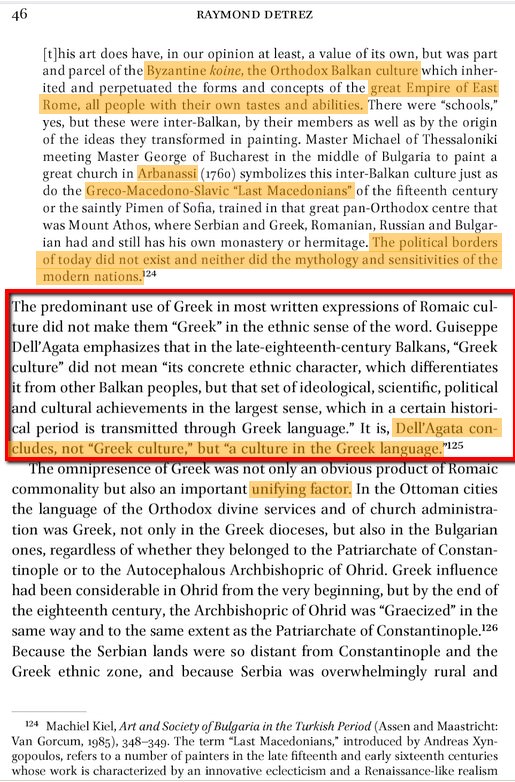
Entangled Histories of the Balkans - Volume One: National Ideologies and Language Policies

Edited by Roumen Daskalov and Tchavdar Marinov


"The modern Greeks are not, in reality, the direct descendants of the ancients; numerous wars, invasions and migrations have changed their ethnology entirely."

- Journal of the American Medical Association in 1912.
 
Since the Chronicle of Ioannina does not mention any influx of Albanians after Serbian Kral Stefan Dugan's death, this immigration peaked between 1341 and 1355, that is, during the conquests of the latter. But even if the Serbs had employed Albanian mercenaries giving them titles, properties and privileges, Albanian migration had commenced half a century before, and some Albanians were already in Epirus before the Serbian conquest, while the conquerors probably installed there other Albanian vassals. incorporated into their army after the conquest of Albania. The proportion of each category is unfortunately impossible to determine. Consequently, the Albanian migrations are not the consequence of the Serbian conquests: both phenomena, of course linked between them, are consequences of Greek weakness, in the political, military and demographic fields, a weakness that interior reasons, mostly the second Byzantine civil war of 1341-1347 and the Black Death, can largely explain. After the death of Kral Dugan in 1355, Nicephorc II, son of the last Despot of Epirus, took power in Thessaly and Epirus, and fought against the Albanians, trying to expel them from Epirusn. But he was defeated and killed by them in 1359 at the battle of Acheloos". Symeon, heir of Kral Dugan, seized back Thessaly and Epirus. But governing Thessaly was a hard enough task for him, and, as the Chronicle of Ioannina says, he left Epirus to the Albanians. In the early 1360s, Epirus indeed was divided between Albanian clans: the clan of Peter Iiosha held Arta, the clan of Muriki Boua Spata" held Etoloacarnania, with Angelokastron as capital, and their leaders held the Byzantine titles of Despots from Symeon". Only the city of Ioannina WAS still governed by Greeks". In the north and west of this city, the clans of the Malakasaioi and of the Mazarakaioi held a territory which cannot be precisely defined''. Then, the clan of the Zenebisaioi held the north-west of Ioannina, including Dryinopolis, Bela and Vagenctia". Ioannina was the only city that did not fall under Albanian domination. This resistance by Ioannina must be placed in the specific context of this city, which was, as previously stated, the centre of the Byzantine imperial ideology. It is therefore logical that the city should make every effort to evade the clutches of the, allegedly barbarous, Albanian population. With the specific aim of resistance, they successively offered power to three foreign Despots, Thomas Preljubovie. (1367-1384), Esau Bondelmonti (1385-1411) and Carlo Tocco (1411-1429), who all used the Ottoman alliance to defend the city. The first despot adopted a really harsh attitude toward the Albanians. who attacked the city almost every year. He wanted to be called "A/Pavtrorrovec", that is "the Albanian-slayer", and tortured his Albanian prisoners in order to terrorize his enemies". Then, Esaii Buondelrnonti, even though twice defeated by the Albanians" generally managed to avoid war with them, even making an alliance in 1410 with them against his own nephew. Carlo Tocco, the Italian Count of Cephalonia". Finally, the latter brought about the end of the rule of the Albanian clan leaders in Epirus.

http://www.cliohworld.net/onlread/5/44.pdf PAGE 12
 
Last edited:
Since the Chronicle of Ioannina does not mention any influx of Albanians after Serbian Kral Stefan Dugan's death, this immigration peaked between 1341 and 1355, that is, during the conquests of the latter. But even if the Serbs had employed Albanian mercenaries giving them titles, properties and privileges, Albanian migration had commenced half a century before, and some Albanians were already in Epirus before the Serbian conquest, while the conquerors probably installed there other Albanian vassals. incorporated into their army after the conquest of Albania. The proportion of each category is unfortunately impossible to determine. Consequently, the Albanian migrations are not the consequence of the Serbian conquests: both phenomena, of course linked between them, are consequences of Greek weakness, in the political, military and demographic fields, a weakness that interior reasons, mostly the second Byzantine civil war of 1341-1347 and the Black Death, can largely explain. After the death of Kral Dugan in 1355, Nicephorc II, son of the last Despot of Epirus, took power in Thessaly and Epirus, and fought against the Albanians, trying to expel them from Epirusn. But he was defeated and killed by them in 1359 at the battle of Acheloos". Symeon, heir of Kral Dugan, seized back Thessaly and Epirus. But governing Thessaly was a hard enough task for him, and, as the Chronicle of Ioannina says, he left Epirus to the Albanians. In the early 1360s, Epirus indeed was divided between Albanian clans: the clan of Peter Iiosha held Arta, the clan of Muriki Boua Spata" held Etoloacarnania, with Angelokastron as capital, and their leaders held the Byzantine titles of Despots from Symeon". Only the city of Ioannina WAS still governed by Greeks". In the north and west of this city, the clans of the Malakasaioi and of the Mazarakaioi held a territory which cannot be precisely defined''. Then, the clan of the Zenebisaioi held the north-west of Ioannina, including Dryinopolis, Bela and Vagenctia". Ioannina was the only city that did not fall under Albanian domination. This resistance by Ioannina must be placed in the specific context of this city, which was, as previously stated, the centre of the Byzantine imperial ideology. It is therefore logical that the city should make every effort to evade the clutches of the, allegedly barbarous, Albanian population. With the specific aim of resistance, they successively offered power to three foreign Despots, Thomas Preljubovie. (1367-1384), Esau Bondelmonti (1385-1411) and Carlo Tocco (1411-1429), who all used the Ottoman alliance to defend the city. The first despot adopted a really harsh attitude toward the Albanians. who attacked the city almost every year. He wanted to be called "A/Pavtrorrovec", that is "the Albanian-slayer", and tortured his Albanian prisoners in order to terrorize his enemies". Then, Esaii Buondelrnonti, even though twice defeated by the Albanians" generally managed to avoid war with them, even making an alliance in 1410 with them against his own nephew. Carlo Tocco, the Italian Count of Cephalonia". Finally, the latter brought about the end of the rule of the Albanian clan leaders in Epirus.

http://www.cliohworld.net/onlread/5/44.pdf PAGE 12

1) Only the city of Ioannina WAS still governed by Greeks

Greeks = Armani - Romans (Byzantines)

Sir Arthur J. Evans:
"The truth is that a large number of those described as Greeks are really Roumans. Till within recent years Hellenism found a fertile field for propaganda among the representatives of the gifted Romance speaking race of the Pindus region. Today Janina has quite forgotten its Rouman origin, and has become a center of Hellenism."

2) (Re)Creating a National Identity in 19th Century Greece: National Identity, Education, and European Perceptions of Greece, Ted Zervas

URL:
http://www.academia.edu/2084653/_Re..._Education_and_European_Perceptions_of_Greece
The Greeks of Janina in 15th century are not related with the later Vlach inhabitants. The Vlachs back then were considered barbarians and probably part of the Albanians. (many Byzantine writers mixed them as one)

If Vlachs formed the absolute majority and were the elite of the empire, it would've have extremely easy to find out because it was one of the greatest empires in the Middle Ages.
 
Last edited:
The Greeks of Janina in 15th century are not related with the later Vlach inhabitants. The Vlachs back then were considered barbarians and probably part of the Albanians. (many Byzantine writers mixed them as one)

If Vlachs formed the absolute majority and were the elite of the empire, it would've have extremely easy to find out because it was one of the greatest empires in the Middle Ages.

You may be right ........

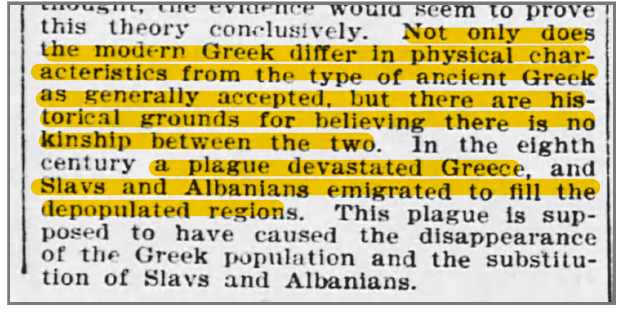
In 1368 (14th century), the plague devastated Ioannina. According to the chronicle of Ioannina, it left thousands dead and many Greek widows, which the Serbian despot Thomas Preliubovic forced to marry Serbian soldiers.

(Ioannina was devastated more than once by the plague. Outbreaks occurred in Arta as well. Just in 1816, half the population of Arta died from plague.)

It seems that the Greeks of Janina/Ioannina - in 15th century - had some Serbian ancestry.

When I have time, I will mention some additional historical facts as well as Discrepancies. Here is a source from 1903:

"Most of the merchants and leading persons at Janina and Metsovo are Vlachs. These Vlachs of Epirus would esteem it an offence to be considered of a comrade race with the Roumans."


Papers by Command - Volume 87 - Page 104 (Great Britain. Parliament. House of Commons - 1903)
 
Last edited:
Let's continue with Ioannina - let's challenge some preconceived notions/assumptions and illustrate an obvious discrepancy, which can be quite easily reconciled by demonstrating that (bilingual) Armani/Vlachs =Greeks.

I will start with a couple of quotes and then provide a quick overview/analysis. While reading this, please keep in mind the two well-known quotes which we have already seen, that is, how "Janina has quite forgotten its Rouman origin" (by Evans) and other one "Most of the merchants and leading persons at Janina and Metsovo are Vlachs" (Great Britain. Parliament. House of Commons - 1903).

Once again, note that I am providing here merely two additional quotes.

1) On page 68 of the book "The Life of Ali Pasha, of Tepeleni, Vizier of Epirus, Surnamed Aslan, Or the ..." By Richard Alfred Davenport (year 1837), we read the following about Ioannina:

"Estimates of the population vary from thirty-five to fifty thousand persons. Forty thousand is, perhaps, about the real number. It forms a heterogeneous mass of Greeks, Turks, Albanians, Franks, Jews, Arabs, Moors, and Negroes; among whom the Greeks are the most numerous, respectable, and long established, many of the families having been settled at Ioannina for centuries."

URL is:
https://books.google.ca/books?id=R3... plague devastated greeks established&f=false

2) The following is from A. Koukoudis, "The Vlachs of Aspropotamos: The conditions and the agents of development". It is important to note that he is a researcher (well respected in Greece), who in my opinion, has shown a tendency to minimize the number (and presence) of Vlachs in different regions of Greece. In many cases, I'd say he completely excised the Vlachs from the history of many places. Nevertheless, the URL is http://www.vlachs.gr/en/the-vlachs-metropolis-and-diaspora/the-conditions-of-development, and the quote follows:

"A typical case is Ioannina, where Vlach traders and craftsmen mainly from Vlahodzoumerko (Kalarites and Syrrako) and Hora Metsovou settled and became very active in economic, corporate, and communal affairs. The same applies to the Lambros, Tourtouris, Sgouros, and Damiris families from Kalarites, who apparently supplanted older Ioanniot craftsmen in the Ioannina market in the time of Ali Pasha. There were a considerable number of Vlachs in the echelons of Ali’s crowded and much talked-about court, from the humble Metsovite porters who bore his litter on their shoulders to secretaries like Hristodoulos Hadzipetros from Neraïdohori in Aspropotamos (later King Otto’s aide-de-camp), the inspector of the Ioannina market Anastassios Samariniotis, privy councellors like the wealthy merchant Yeoryios Tourtouris from Kalarites, and European-trained doctors like Ioannis Kolettis from Syrrako (later Prime Minister of Greece) and Yeoryios Tsapraslis from Kalarites (who wrote one of the first grammars of the Vlach language). Vlachs from Kalarites, Syrrako, and Metsovo settled en masse in Ioannina and played an active part in revitalising that ruined town after the Greek War of Independence."

Summary (& discrepancies):

- Davenport: Greeks are the most numerous population of Ioannina in the early-mid 19th century; long established, many of the families having been settled at Ioannina for centuries. No mention of "Vlachs". Well and good.

- Koukoudis:
--> "Vlach" traders and craftsmen were very active and prominent in economic, corporate, and communal affairs.
--> There were a considerable number of Vlachs in the echelons of Ali’s crowded and much talked-about court.
--> The inspector of the Ioannina market was Anastassios Samariniotis.
--> Vlachs from Kalarites, Syrrako, and Metsovo settled en masse in Ioannina.

Analysis:

As we can see, Davenport noted a heterogeneous mass of different ethnicities in Ioannina with Greeks being the most numerous - while the "Vlachs" are invisible; no mention at all whatsoever. We have an obvious discrepancy, because from the researcher Koukoudis we see that "Vlachs" were quite numerous in Ioannina, settled en masse there, played an active and prominent role in all sorts of city affairs, and - as an example - A. Samariniotis was the inspector of the Ioannina market. A safe guess and assumption would be that the "Vlachs" were (at least) more numerous than say Franks, Jews, Arabs, Moors, or Negroes (?).

Furthermore, these "Vlachs" were not Albanians. It would be quite fair to say and conclude that the "Vlachs" knew Greek (were bilingual), and were "part" of the local Greek community. They considered themselves as Greeks - as we saw from the quote where it is explicitly stated that many distinguished Greeks are of Vlach extraction, how most of the merchants and leading persons at Janina and Metsovo are Vlachs, or that the Vlachs of Epirus would esteem it an offence to be considered of a comrade race with the Roumans.

It is very easy to see then that Davenport's Ioannina Greeks were, at the very minimum = Vlachs and Greeks. What we can also conclude is the following: Davenport did not care, bother, or knew to distinguish Vlachs from Greeks. Additionally, he was then unable to say with precision which families were long established, or which of the families having been settled at Ioannina for centuries. (The important point though is that there is a connection going back centuries.)

What completely tipped the scales here so to speak, in allowing us to easily conclude that Greeks are really Vlachophones are testimonies from Sir Arthur J. Evans and Great Britain Parliament House of Commons. In conclusion, Davenport's Ioannina Greeks were then "Vlachs"/bilingual Vlachophones who were the most numerous, respectable, and long established, many of the families having been settled at Ioannina for centuries.
 
From the paper of post#654, how little things change in 700 years.

The author of the Chronicle of the Tocco, probably a Greek from Ioannina, also emphasizes this cultural gap:

They thought that in Ioannina there were Albanians
Pig-keepers of their kind, and that they would submit to them;
But there were Roman archons and courageous soldiers.

Actually the Chronicle of the Tocco multiplies the contemptuous comments about Albanian customs and Albanians generally, frequently recounting their ignorance (underlined by words like ἀμάθητοι, “the ones who did not learn”, ἀπαιδευσία, “lack of education”, ἀγνωσία, “lack of knowledge”, χονδρότητα, “roughness”, παχύτητα, “coarseness”) and their vulgar language and lack of morality (underlined by words as λείξευροι, λείξουροι, “greedy”, σκληροί, “cruel”, κακόγνωμοι, “bad-tempered”, ἐπίορκοι, “perjurers”, κλέπται, “thieves”), all of which characteristics were supposedly the consequence of their “Albanian nature”.

The same source offers more positive descriptions on some Albanians, or at least does not use such pejorative terms. This is the case of course when they are allied to Carlo Tocco, but also, for example, of Gjin Boua Spata, despot of Arta, who often made war against Ioannina and against Carlo Tocco. These descriptions however do not gainsay the fact that, for the most part, the Chronicle proclaims an inveterate hostility between the two populations.

The Chronicle of Ioannina although less aggressive, recounts the δυστροπία [peevishness] and the κακογνωμία [bad-temperedness] of the Albanians.
 
Back
Top